
Manufacturing Scheduling by Industry: How Requirements Differ
 User Solutions Team
Manufacturing scheduling is not a one-size-fits-all discipline. The production scheduling requirements for an aerospace contractor managing multi-year defense programs bear almost no resemblance to those of a food processor juggling perishable ingredients and allergen changeovers. After working with manufacturers across dozens of industries for over 35 years, the team at User Solutions has seen firsthand how deeply industry context shapes every scheduling decision.
This pillar guide breaks down how production scheduling by industry differs across six major sectors. Whether you are evaluating scheduling software for the first time or looking to improve an existing system, understanding these industry-specific requirements is the foundation of better planning.
Why Scheduling Requirements Differ by Industry
At the highest level, every manufacturer shares the same goal: produce the right products, at the right time, with minimal waste. But the constraints that shape how you achieve that goal vary enormously.
Several factors drive scheduling differences across industries:
- Regulatory environment - FDA, FAA, ITAR, FSMA, and ISO standards each impose unique documentation, traceability, and validation requirements that scheduling systems must enforce.
- Product complexity - A semiconductor wafer with 400+ process steps requires fundamentally different scheduling logic than a stamped metal bracket.
- Demand patterns - Automotive OEMs demand JIT delivery with takt-time precision, while aerospace programs plan production years in advance.
- Material characteristics - Perishable ingredients, hazardous chemicals, and temperature-sensitive compounds impose time-based constraints that scheduling must respect.
- Order mix - High-volume repetitive lines need rate-based scheduling; high-mix job shops need dynamic priority dispatching.
- Supply chain depth - Industries with long-lead-time raw materials (titanium forgings, specialty resins) must integrate procurement planning tightly with production scheduling.
Understanding where your industry falls on each of these dimensions is the first step toward selecting the right production scheduling approach.
Aerospace and Defense: Multi-Year Horizons and Compliance
Aerospace and defense manufacturing represents one of the most complex scheduling environments in existence. Programs like the F-35 or commercial aircraft platforms involve bills of material with tens of thousands of components, production timelines spanning years, and regulatory requirements that touch every aspect of operations.
Key Scheduling Challenges
Multi-year program management: Unlike most industries, aerospace manufacturers must plan capacity and material procurement 18-36 months ahead. Scheduling software needs to bridge long-range program planning with daily shop floor execution seamlessly.
Compliance and traceability: ITAR (International Traffic in Arms Regulations), DFARS (Defense Federal Acquisition Regulation Supplement), and AS9100 quality standards require complete audit trails. Every scheduling decision - from work order creation to operator assignment - must be traceable.
Complex routings: A single aerospace component may require 50+ operations across milling, turning, heat treatment, NDT inspection, surface finishing, and assembly. Scheduling must respect operation dependencies, qualified machine lists, and certified operator requirements.
Long lead-time materials: Titanium forgings, specialty alloys, and castings can have 6-12 month lead times. The scheduler must integrate material availability dates as hard constraints.
What Scheduling Software Must Deliver
Aerospace manufacturers need finite capacity scheduling that handles:
- Multi-level BOM explosion with program-level master scheduling
- Machine and operator certification tracking
- Government contract milestone integration
- Concurrent engineering change order management
- Earned value management (EVM) integration for defense contracts
Learn more about aerospace-specific approaches in our detailed guide on aerospace and defense scheduling. We also cover defense contractor production planning and MRO scheduling for maintenance, repair, and overhaul operations.
Automotive: JIT, Takt Time, and Line Balancing
Automotive manufacturing operates at the opposite end of the scheduling spectrum from aerospace. Where aerospace plans in months and years, automotive production schedules in hours and minutes. The relentless cadence of just-in-time delivery and the precision of takt time calculations define automotive scheduling.
Key Scheduling Challenges
Just-in-time delivery: OEMs expect suppliers to deliver components within narrow time windows - sometimes measured in hours. Late deliveries trigger costly line stoppages; early deliveries consume warehouse space the supplier often pays for.
Takt time precision: Every station on an automotive line must complete its work within the takt time (available production time divided by customer demand). Scheduling must ensure no station becomes a bottleneck.
Mixed-model sequencing: Modern automotive plants produce multiple vehicle models on the same line. Scheduling must sequence units to balance workload across stations while respecting paint color batching, option complexity, and supplier delivery patterns.
Supplier synchronization: Tier 1 and Tier 2 automotive suppliers must synchronize their production schedules with OEM pull signals, EDI releases, and kanban replenishment triggers.
What Scheduling Software Must Deliver
Automotive scheduling solutions require:
- Rate-based scheduling with takt time calculations
- Mixed-model line balancing algorithms
- EDI integration for customer releases and ASNs
- Kanban and pull-signal management
- Sequence-dependent setup optimization for paint, weld, and assembly
Our guides on automotive production scheduling and tier-1 supplier scheduling dive deeper into these requirements. For suppliers managing stamping and forming operations, see stamping and metal forming scheduling.
Food and Beverage: Perishability, Batch Sequencing, and FSMA
Food and beverage manufacturing introduces scheduling constraints that do not exist in discrete manufacturing. Time becomes an enemy - ingredients expire, batches have shelf-life windows, and allergen cross-contamination risks dictate production sequencing.
Key Scheduling Challenges
Perishability constraints: Raw ingredients and finished products have finite shelf lives. Scheduling must optimize production timing to maximize remaining shelf life at the point of shipment. A yogurt manufacturer, for example, might need products to ship within 48 hours of production to meet retailer freshness requirements.
Allergen and clean-in-place sequencing: Switching between products containing different allergens (dairy, nuts, gluten) requires validated cleaning procedures. Intelligent scheduling sequences production runs to minimize changeovers - running all nut-free products before allergen-containing products, for instance.
Batch genealogy and traceability: The FDA's Food Safety Modernization Act (FSMA) requires complete batch genealogy. Scheduling systems must track lot numbers through every production step to enable rapid recalls when necessary.
Co-product and by-product management: Many food processes produce multiple outputs from a single batch. A meat processor creates prime cuts, trim for ground product, and rendering by-products simultaneously. Scheduling must account for all outputs.
Seasonal demand spikes: Food manufacturers face dramatic seasonal demand shifts - ice cream in summer, soup in winter, candy before holidays. Scheduling must handle rapid ramp-ups and inventory building strategies.
What Scheduling Software Must Deliver
- Shelf-life-aware scheduling with FEFO (First Expired, First Out) logic
- Allergen sequencing optimization
- CIP (Clean-in-Place) scheduling integration
- Batch genealogy and lot tracking
- Co-product yield management
- Seasonal demand planning and inventory pre-build
Explore more in our guides on food and beverage scheduling, and dairy processing scheduling.
Medical Devices and Pharmaceuticals: GMP, FDA, and Traceability
Medical device and pharmaceutical manufacturing operates under some of the strictest regulatory requirements of any industry. Good Manufacturing Practice (GMP) regulations, FDA 21 CFR Part 11 electronic records requirements, and validation protocols create a scheduling environment where compliance is non-negotiable.
Key Scheduling Challenges
Validated processes: Every production process must be validated, and scheduling changes can trigger revalidation requirements. The scheduler must understand which changes are permissible within validated parameters and which require quality review.
Electronic records compliance: FDA 21 CFR Part 11 requires electronic records to have audit trails, electronic signatures, and access controls. Scheduling software must meet these requirements natively - not as an afterthought.
Cleanroom and environmental constraints: Many medical device and pharmaceutical products require cleanroom manufacturing. Scheduling must manage cleanroom capacity as a constrained resource, including gowning time, environmental monitoring, and room changeover procedures.
Batch record integration: Production batch records in pharma manufacturing are legal documents. Scheduling must generate and sequence work orders that align with master batch record templates and ensure deviation management workflows are triggered when schedules change.
Stability and expiry management: Pharmaceutical products have stability-tested shelf lives. Scheduling must ensure production timing allows for quality hold periods (often 2-4 weeks for release testing) while still meeting customer delivery dates.
What Scheduling Software Must Deliver
- 21 CFR Part 11 compliant electronic records and signatures
- Validated scheduling workflows with change control
- Cleanroom capacity management
- Quality hold period scheduling
- Device History Record (DHR) integration for medical devices
- Serialization and track-and-trace scheduling for pharma
Our detailed guides cover medical device scheduling, pharmaceutical production scheduling, and cleanroom scheduling.
Metal Fabrication and Machine Shops: High-Mix, Low-Volume
Metal fabrication shops and job shops represent the scheduling challenge of infinite variety. On any given day, a typical job shop might have 200-500 active jobs, each with unique routings, material requirements, and delivery dates. No two weeks look the same.
Key Scheduling Challenges
Extreme order variability: Unlike repetitive manufacturers, job shops cannot predict next month's product mix. Scheduling must handle constantly changing work order portfolios without manual intervention.
Routing flexibility: The same part might be producible on multiple machines with different cycle times. Scheduling must select optimal machine assignments while balancing overall shop load.
Nested and shared setups: Metal fabricators often nest multiple customer orders onto a single sheet of material. Scheduling must coordinate nesting optimization with order priorities and due dates.
Subcontract operations: Many job shop routings include external processing steps - heat treatment, plating, anodizing. Scheduling must account for subcontractor lead times and transportation.
Quoting accuracy: In job shops, scheduling data feeds back into quoting. Accurate capacity visibility helps estimators quote realistic lead times - and win more profitable work.
What Scheduling Software Must Deliver
- Dynamic priority dispatching with drag-and-drop Gantt charts
- Alternate routing and machine selection
- Real-time capacity visibility across all work centers
- Subcontract operation scheduling with lead-time offsets
- Quote-to-delivery lead time estimation
- Finite capacity scheduling with what-if analysis
User Solutions has deep expertise in job shop scheduling - it is the environment where our RMDB scheduling software has the longest track record. See our guides on job shop scheduling, metal fabrication scheduling, machine shop scheduling, and custom manufacturing scheduling.
Electronics and Semiconductors: Multi-Step Process Control
Electronics and semiconductor manufacturing combines extreme process complexity with demanding quality requirements. A semiconductor fabrication process can involve 400-700 individual steps, while even printed circuit board assembly requires precise component placement scheduling across high-speed pick-and-place lines.
Key Scheduling Challenges
Massive step counts: Semiconductor wafer fabrication involves hundreds of sequential and parallel process steps. Scheduling must manage re-entrant flows where wafers return to the same equipment multiple times for different process layers.
Equipment qualification: Not every tool can process every product. Equipment qualification matrices determine which tools can run which recipes. Scheduling must respect these constraints while maximizing tool utilization.
Batch and lot processing: Many semiconductor and electronics processes operate in batch mode - diffusion furnaces, wave soldering, reflow ovens. Scheduling must optimize batch formation to minimize wait times while maximizing batch fill rates.
Yield-driven scheduling: In semiconductor manufacturing, yield rates vary by product, process, and equipment. Scheduling must account for expected yield loss and start additional wafers to meet output requirements.
Rapid product lifecycles: Consumer electronics markets demand fast product introductions. Scheduling must accommodate engineering lots, qualification runs, and rapid ramp-ups alongside production orders.
What Scheduling Software Must Deliver
- Re-entrant flow scheduling for semiconductor fabs
- Equipment qualification matrix management
- Batch formation and optimization algorithms
- Yield-adjusted start quantity calculations
- Engineering lot priority management
- WIP balance optimization across process steps
Our guides on electronics manufacturing scheduling and semiconductor scheduling provide detailed implementation strategies. For PCB assembly operations, see PCB assembly scheduling.
Choosing Scheduling Software for Your Industry
Selecting the right scheduling software starts with understanding your industry's unique constraints. Here is a framework for evaluation:
Step 1: Map Your Constraint Profile
Create a ranked list of your top scheduling constraints:
| Constraint Type | High Priority Industries | Example |
|---|---|---|
| Regulatory compliance | Aerospace, Pharma, Medical, Food | FDA audit trails, ITAR tracking |
| Time-based constraints | Food, Pharma, Chemicals | Shelf life, stability testing holds |
| Setup optimization | Automotive, Metal Fab, Food | Changeover sequencing, allergen management |
| Capacity precision | All industries | Finite capacity vs. infinite assumptions |
| Material synchronization | Aerospace, Electronics | Long-lead-time procurement integration |
| Labor qualification | Aerospace, Pharma, Medical | Certified operator assignments |
Step 2: Evaluate Core Capabilities
Every scheduling system should provide these foundational capabilities regardless of industry:
- Finite capacity scheduling - respecting actual resource constraints
- Visual scheduling - Gantt charts for intuitive schedule management
- What-if analysis - simulating schedule changes before committing
- Real-time integration - connecting to your ERP and shop floor systems
- Exception management - alerting when constraints are violated
Step 3: Validate With Your Data
The only reliable way to evaluate scheduling software is to load your actual data - orders, routings, resources, and constraints - and verify the system produces viable schedules. At User Solutions, we offer pilot implementations for exactly this purpose.
Step 4: Consider Total Cost of Ownership
Look beyond license fees to evaluate:
- Implementation timeline and services cost
- Training requirements for planners and shop floor
- Ongoing support and upgrade path
- Integration development with existing ERP (see our pricing)
For more guidance, explore our posts on scheduling software selection, ERP vs. APS comparison, and scheduling software ROI.
Expert Q&A: Deep Dive
Our team at User Solutions draws on 35+ years of experience helping manufacturers across every industry. Here are answers to the questions we hear most often from production managers evaluating industry-specific scheduling approaches.
How do you approach scheduling for a manufacturer that operates across multiple industries?
At User Solutions, we frequently work with manufacturers who serve both aerospace and automotive customers from the same facility. The key is building scheduling models that can enforce the strictest compliance rules (like ITAR for aerospace) while maintaining the speed and flexibility automotive JIT demands. Our RMDB platform handles this through configurable constraint layers - you activate the rules relevant to each work order without slowing down the entire schedule.
What is the most common scheduling mistake you see across industries?
After 35+ years working with manufacturers, the most common mistake is scheduling to infinite capacity - assuming every machine and worker is always available. This creates plans that look perfect on paper but collapse on the shop floor. Finite capacity scheduling, where the system respects actual machine hours, labor availability, and tooling constraints, eliminates 80% of schedule breaks before they happen.
How should a manufacturer evaluate scheduling software for their specific industry?
Start with your constraints, not features. List the top 10 rules that govern your production - whether that is FDA batch traceability, automotive takt time requirements, or aerospace program milestones. Then evaluate whether the software can model those constraints natively. We always recommend running a proof-of-concept with your real data. That is why User Solutions offers pilot implementations - we load your actual orders, routings, and constraints to demonstrate results before you commit. Contact our team to discuss a pilot.
What role does AI play in modern manufacturing scheduling?
AI and machine learning are increasingly used to predict maintenance windows, optimize sequencing across hundreds of variables, and adjust schedules dynamically when disruptions occur. However, AI works best as an enhancement to solid finite capacity scheduling foundations. A manufacturer needs reliable constraint-based scheduling first - then AI can layer on predictive adjustments. EDGEBIC, the current generation of RMDB, adds a two-layer optimizer (a best-of-N multi-run search plus Google OR-Tools CP-SAT) on top of that finite capacity foundation, and the planner reviews each result before accepting it.
Frequently Asked Questions
Ready to see how scheduling software handles your industry's unique requirements? User Solutions has helped manufacturers across aerospace, automotive, food and beverage, medical devices, electronics, and metal fabrication optimize their production scheduling for over 35 years. Request a demo with your actual production data, or explore our scheduling solutions to learn more.
Continue exploring this cluster
Dive deeper into specific aspects of industry-specific manufacturing scheduling with these related guides from our content library:
- 3D Printing & Additive Manufacturing Scheduling
- Aerospace & Defense Production Scheduling Guide
- Automotive Production Scheduling: Challenges & Solutions
- Chemical Manufacturing Scheduling: Process vs Discrete
- CNC Machine Scheduling Optimization Guide
- Consumer Goods Production Scheduling: Meeting Demand
- Contract Manufacturing Scheduling: Multi-Customer Balancing
- Electronics Manufacturing Scheduling: Best Practices
- Food & Beverage Production Scheduling Guide
- Furniture & Woodworking Production Scheduling
- Heavy Equipment Manufacturing Scheduling
- Li-Ion Battery Production Scheduling Guide
- Machine Shop Scheduling: From Chaos to Control
- Medical Device Manufacturing Scheduling & Compliance
- Metal Fabrication Scheduling: Optimizing Throughput
- Packaging Manufacturing Scheduling: Speed & Flexibility
- Pharmaceutical Production Scheduling: GMP & Compliance
- Plastics & Rubber Manufacturing Scheduling Guide
- Precision Manufacturing Scheduling: Tight Tolerances, Tight Deadlines
- Semiconductor Manufacturing Scheduling Guide
- Sheet Metal Manufacturing Scheduling Guide
- Textile & Garment Production Scheduling
Expert Q&A: Deep Dive
Q: How do you approach scheduling for a manufacturer that operates across multiple industries?
A: At User Solutions, we frequently work with manufacturers who serve both aerospace and automotive customers from the same facility. The key is building scheduling models that can enforce the strictest compliance rules (like ITAR for aerospace) while maintaining the speed and flexibility automotive JIT demands. Our RMDB platform handles this through configurable constraint layers - you activate the rules relevant to each work order without slowing down the entire schedule.
Q: What is the most common scheduling mistake you see across industries?
A: After 35+ years working with manufacturers, the most common mistake is scheduling to infinite capacity - assuming every machine and worker is always available. This creates plans that look perfect on paper but collapse on the shop floor. Finite capacity scheduling, where the system respects actual machine hours, labor availability, and tooling constraints, eliminates 80% of schedule breaks before they happen.
Q: How should a manufacturer evaluate scheduling software for their specific industry?
A: Start with your constraints, not features. List the top 10 rules that govern your production - whether that is FDA batch traceability, automotive takt time requirements, or aerospace program milestones. Then evaluate whether the software can model those constraints natively. We always recommend running a proof-of-concept with your real data. That is why User Solutions offers pilot implementations - we load your actual orders, routings, and constraints to demonstrate results before you commit.
Q: What role does AI play in modern manufacturing scheduling?
A: AI and machine learning are increasingly used to predict maintenance windows, optimize sequencing across hundreds of variables, and adjust schedules dynamically when disruptions occur. However, AI works best as an enhancement to solid finite capacity scheduling foundations. A manufacturer needs reliable constraint-based scheduling first - then AI can layer on predictive adjustments. EDGEBIC, the current generation of RMDB, adds a two-layer optimizer (a best-of-N multi-run search plus Google OR-Tools CP-SAT) on top of that finite capacity foundation, and the planner reviews each result before accepting it.
Frequently Asked Questions
Ready to Transform Your Production Scheduling?
User Solutions has been helping manufacturers optimize their production schedules for over 35 years. One-time license, 5-day implementation.

User Solutions Team
Manufacturing Software Experts
User Solutions has been developing production planning and scheduling software for manufacturers since 1991. Our team combines 35+ years of manufacturing software expertise with deep industry knowledge to help factories optimize their operations.
Share this article
Related Articles
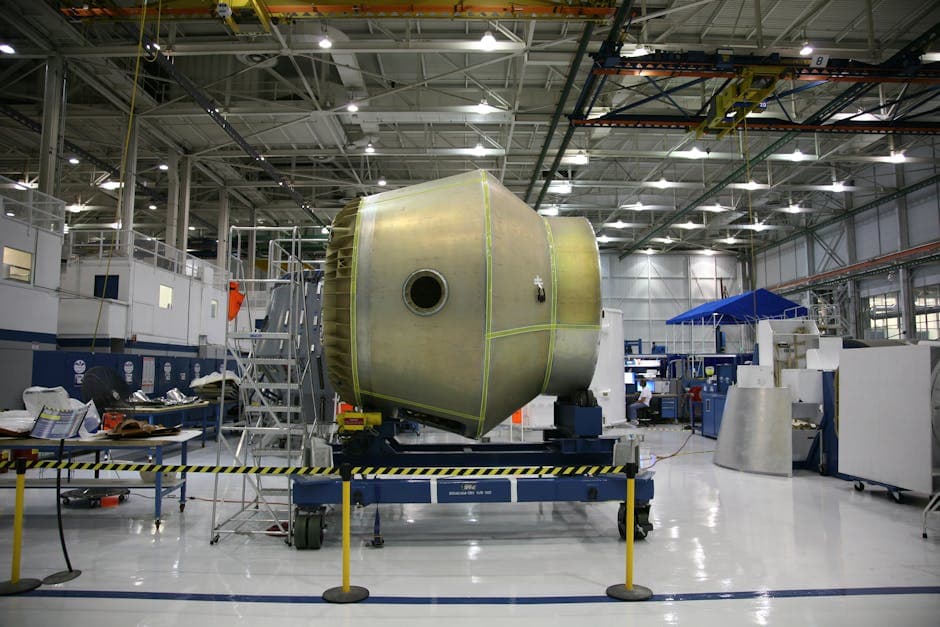
Composite Manufacturing Scheduling: Cure Time Constraints, Autoclave Capacity, and Layup Sequencing
Composite manufacturing scheduling software that handles autoclave cure cycles, prepreg shelf life, layup sequencing, and NDT inspection holds for aerospace and automotive suppliers.

Fastener and Hardware Manufacturing Scheduling: High-Throughput, Die-Constrained Production
Fastener manufacturing scheduling software that manages heading die life, heat treat batch loads, plating line capacity, and kanban replenishment for screws, bolts, and rivets.
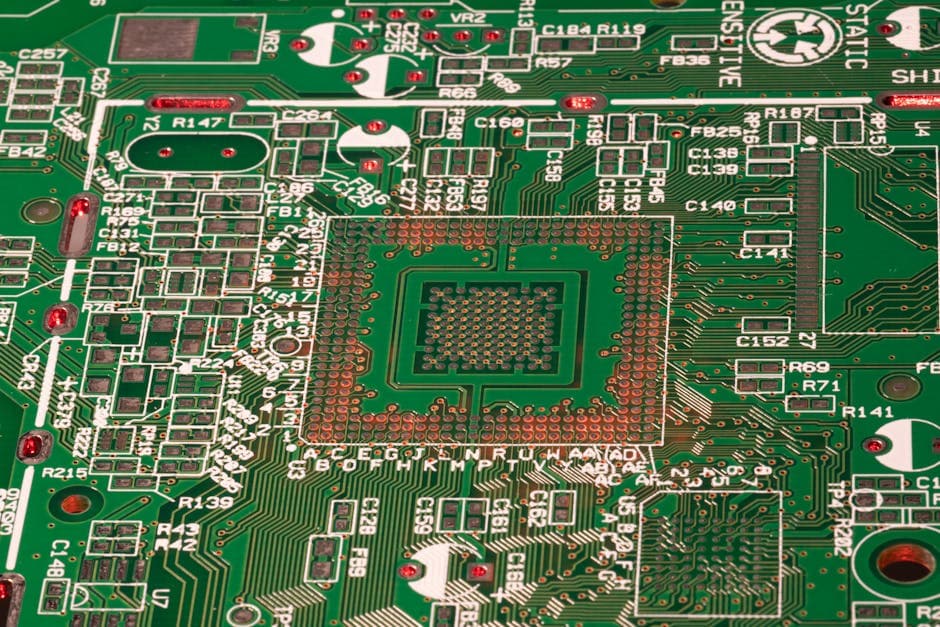
PCB Fabrication Scheduling: Managing Phototool Sequences, Plating Tanks, and Layer Constraints
PCB fabrication scheduling software that handles phototool sequencing, plating bath chemistry, drill allocation, and AOI queues. Built for electronics manufacturers.