
PCB Fabrication Scheduling: Managing Phototool Sequences, Plating Tanks, and Layer Constraints
 User Solutions Team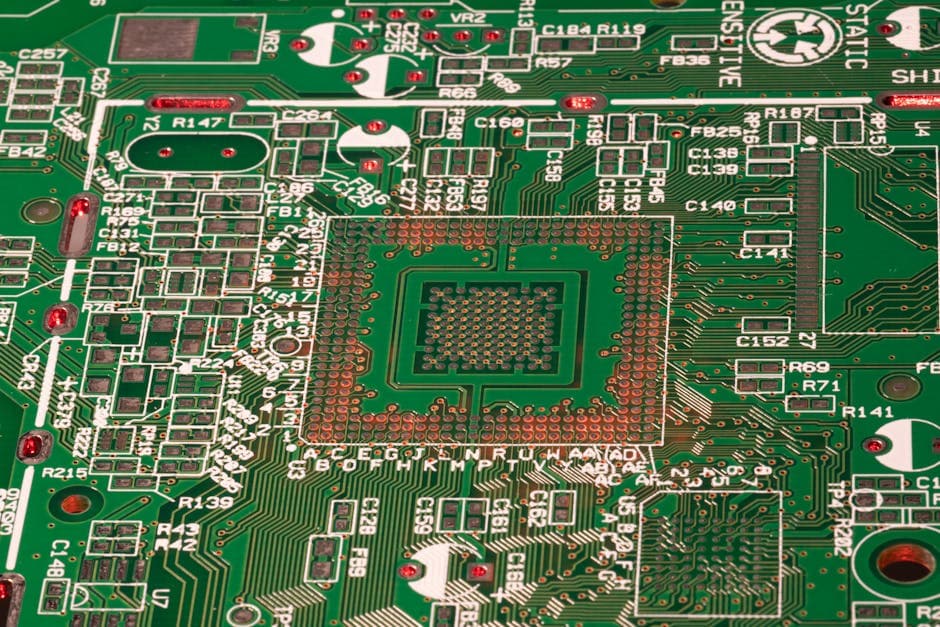
PCB fabrication is among the most scheduling-intensive processes in electronics manufacturing. Unlike a machine shop where a single operation transforms a workpiece, a multilayer PCB passes through dozens of tightly sequenced steps - inner layer imaging, oxide treatment, lamination, drilling, plating, outer layer imaging, etching, solder mask, surface finish, electrical test, and final routing - where each step depends on the precise state of shared, constrained resources.
Generic manufacturing schedulers fail here. They treat operations as independent tasks with resource requirements and duration. They do not understand that two inner layers of the same board cannot be exposed simultaneously on the same phototool, that a plating bath has a chemistry limit measured in ampere-hours rather than just a time slot, or that a lamination press cure cycle is a fixed physical process that cannot be shortened to meet a delivery date. The result is a schedule that looks valid on paper and causes line stoppages the first morning it runs.
For over 35 years, User Solutions has worked with manufacturers who run processes with exactly this kind of hard, physics-driven constraint. This post walks through each of the major scheduling constraints specific to PCB fabrication and explains how a finite capacity scheduling approach handles them correctly.
Phototool Sequencing: The Hidden Shared Resource
In multilayer PCB fabrication, the phototool - whether a silver-halide film master or a glass artwork panel - is the means by which circuit patterns are exposed onto inner and outer copper layers. A facility running 8-layer production needs four inner layer phototools per board design, each unique to its layer pair. A facility running multiple designs simultaneously may have dozens of phototools in rotation.
The scheduling problem: most facilities have fewer phototools than active layer exposures at any moment. If your scheduler does not model phototool availability as a discrete, tracked resource, it will happily schedule two layer-2 exposures across different jobs at the same time on the same phototool - a physical impossibility.
Proper phototool scheduling requires:
Resource identity tracking. Each phototool is assigned a unique resource ID in the scheduling system. Each layer exposure operation in every active job is linked to the specific phototool required for that design and layer.
Conflict detection and sequencing. When the scheduler resolves the sequence of operations across all active jobs, it recognizes phototool conflicts and sequences exposures to avoid double-booking. Jobs with lower priority or later due dates yield phototool time to higher-priority work.
Setup and storage time. Retrieving a phototool from storage, aligning it in the exposure frame, and returning it after use all consume real time. These setup durations are modeled as changeover operations between exposures, preventing the scheduler from assigning back-to-back exposures with no transition time.
Damage and replacement tracking. Phototools degrade. Some facilities track use cycles per phototool and model replacement as a scheduled maintenance event. When a phototool hits its replacement threshold, its availability drops to zero until the replacement artwork is procured and verified.
Plating Tank Constraints: Chemistry as a Scheduling Variable
Electroplating - copper plating for hole-wall conductivity, tin-lead or HASL for solderability - involves chemistry that degrades with use. A plating bath has a defined capacity: both in terms of how many panel square inches can be processed simultaneously (surface area loading) and how many ampere-hours can be accumulated before the bath requires replenishment or replacement.
Generic schedulers model a plating tank as a machine with a cycle time. That is insufficient. The real constraints are:
Bath loading limits. Each panel loaded into the bath contributes surface area and draws current. The bath has a maximum current density and a maximum total surface area that can be plated simultaneously without violating deposit uniformity specifications. A properly configured scheduler assigns jobs to the tank only when their combined load does not exceed these limits.
Ampere-hour accumulation. Chemistry degrades as a function of the total electrical charge that has passed through it, not just the number of cycles. A scheduler that models only cycle count will under- or over-estimate when a bath refresh is required. The correct model accumulates ampere-hours per job and triggers a chemistry refresh operation before the threshold is breached.
Chemistry refresh as a scheduled operation. A bath refresh is not just downtime - it is a planned maintenance operation that consumes time, materials, and technician attention. It must appear in the schedule so downstream operations that depend on the plating step are not planned against a resource that is temporarily offline.
Incompatible loads. Some facilities run multiple plating chemistries on the same line with tank changeovers between product families. The scheduler must respect chemistry compatibility rules: it cannot mix copper plating loads with gold plating loads in the same bath, and it must plan changeover time when switching between product types.
Drill Bit Allocation and Bit Life Management
CNC drilling is a volume operation in PCB fabrication - a single board may require thousands of holes across multiple layers, and drill bits have a finite hit count before they must be replaced or re-sharpened. Scheduling drill operations without modeling bit life results in either excessive bit breakage (scheduling too many hits per bit) or excessive downtime (bits pulled before their life is consumed).
Effective drill scheduling tracks:
Bit inventory by diameter. Each drill diameter is a separate tracked resource. Scheduling must confirm that bits of the required diameter are available in sufficient quantity before assigning a drill operation to a machine.
Hit count accumulation. Each job consumes a defined number of hits per bit diameter. The scheduler accumulates hit counts per bit and triggers replacement when the threshold is approached. Replacement operations - pulling bits, inspecting, re-sharpening, or discarding - appear in the schedule rather than being treated as unplanned events.
Machine-bit compatibility. Not all drill machines handle the same diameter range. Smaller-diameter bits often require specific spindle configurations or speed ranges that not every machine in the facility supports. The scheduler must match drill operations to machines that are compatible with the required bit diameter.
Panel stack height constraints. Drilling is often done in stacks of multiple panels simultaneously. Stack height is constrained by bit length and required hole tolerance. The scheduler models stack size as a throughput parameter: more panels per stack increases throughput but may require slower feed rates, affecting cycle time estimates.
Lamination Press Scheduling: Cure Cycles as Fixed Operations
Multilayer PCB fabrication requires laminating inner layers with prepreg and copper foil under heat and pressure to produce the layer stack before drilling and plating. The lamination press cure cycle is defined by a time-temperature-pressure profile that cannot be shortened. The press must reach temperature, hold for the cure duration, then cool before panels can be removed.
This creates a scheduling constraint that differs fundamentally from ordinary machining: the operation duration is physically fixed regardless of how urgently a job is needed. Schedulers that allow users to compress cycle times to meet due dates will produce defective product.
Press capacity planning. Each press has a defined book capacity - how many panel stacks can be processed per load. Maximizing press utilization requires grouping jobs with compatible lay-up configurations into the same press load. The scheduler must evaluate which active jobs can share a press load, considering thickness, layer count, and material compatibility.
Cure cycle as an inviolable duration. The scheduler must enforce a minimum operation duration for lamination that matches the qualified cure cycle for the material set being run. Changing material suppliers or prepreg grades may require a different cure cycle - the scheduler must track material-specific cure profiles per job, not a single global cycle time.
Press cooldown and book opening. After cure, the press must cool to a safe extraction temperature before panels are removed. This cooldown period is part of the lamination operation duration and must not be compressed. Many schedules incorrectly start the drill queue before the press has cooled, creating a false sense of available capacity.
AOI and Electrical Test: Managing Inspection Queues
Automated optical inspection (AOI) and electrical test (bare board test) are 100% inspection operations in most PCB fabrication facilities. Every panel is tested before proceeding to the next stage. This creates natural queue points in the process flow where work accumulates if inspection throughput does not match upstream production throughput.
A finite capacity scheduler handles inspection queues by:
Treating inspection as a resource with throughput limits. AOI and electrical test equipment have defined cycle times per panel. If upstream production is delivering panels faster than inspection can clear them, the queue will grow. The scheduler projects queue depth over the planning horizon, flagging situations where inspection backlogs will delay downstream lamination or routing.
Modeling hold states. A panel that fails AOI or electrical test cannot proceed until the disposition is resolved - either scraped and replaced or reworked and retested. Rework is a separate operation with its own resource requirements and duration. The scheduler models hold states and rework loops explicitly, so the schedule accounts for the realistic probability of rework cycles rather than assuming 100% first-pass yield.
Impedance verification holds. For controlled impedance designs, coupon test results must be reviewed before the lot can proceed to surface finish and final operations. This hold can last hours if the test lab is backed up. The scheduler builds this hold into the routing sequence and does not plan the surface finish operation until the impedance clearance is confirmed.
Integrating Material Shelf Life: Prepreg and Dry Film
Prepreg - the resin-impregnated fiberglass used in lamination - and dry film photoresist both have shelf lives measured in weeks or months under refrigerated storage. Using out-of-life material produces defective lamination or poor photoresist resolution, leading to yield loss and potential field failures.
Scheduling must account for:
Material lot tracking. Each roll of dry film and each sheet of prepreg must be tracked by lot number and expiration date. Jobs should be assigned to material lots with sufficient remaining life to complete the job, including any queue time before the material is consumed.
First-expiring, first-used allocation. The scheduler should assign the oldest material lot to the next job requiring that material, preventing situations where newer material is consumed while older material expires unused.
Refrigerated storage capacity. Prepreg and dry film stored in refrigeration must be acclimated to room temperature before use. Acclimation time is a scheduling dependency: the material must be pulled from refrigeration and acclimated before the lamination or imaging operation can begin. This creates a planning dependency that must appear in the schedule.
Batch Sizing for Chemistry Efficiency
PCB fabrication processes are batch processes - the economics are driven by how many panels can be processed simultaneously. Thin batches waste chemistry and machine time; oversized batches exceed capacity limits or delay other jobs waiting for their turn.
A finite capacity scheduler helps optimize batch sizing by:
Grouping jobs with compatible process requirements. Jobs that require the same plating chemistry, same lamination lay-up, or same surface finish can often be batched together. The scheduler identifies grouping opportunities across active jobs and proposes batch assignments that maximize resource utilization without violating capacity limits.
Balancing batch size against due date constraints. Larger batches improve chemistry efficiency but may delay jobs that could start sooner individually. The scheduler evaluates the trade-off explicitly - showing planners the due date impact of different batch sizes - so the decision is made with full information rather than by habit.
Preventing chemistry waste from undersized batches. When a bath is refreshed for a small load, the effective cost per panel rises sharply. A scheduler that projects upcoming job arrivals can recommend holding a job for a short period to combine it with another job and fill the bath more efficiently, if the due date allows.
From Spreadsheets to Finite Capacity Scheduling
Many PCB fabrication facilities still manage production scheduling with a combination of spreadsheets, whiteboard planning, and tribal knowledge about which lines can run which products. This approach works at low volume and low variety but breaks down as order complexity increases, lead times shorten, and customers demand real-time delivery commitments.
Finite capacity scheduling software replaces these manual systems with a model of the actual factory - resources, constraints, material dependencies, and operation sequences - that updates dynamically as jobs are released, priorities change, and operations complete. Planners see the realistic schedule, not an optimistic one that ignores the plating bath refresh that is due on Thursday morning.
RMDB from User Solutions is built on this principle. It models discrete resource constraints, fixed-duration operations, batch grouping logic, and material dependencies - the exact requirements of PCB fabrication scheduling. EDGEBI provides the analytics layer, giving production managers visibility into throughput trends, queue depths, and on-time delivery performance across the full facility.
PCB fabrication involves tightly coupled, sequential processes where each operation depends on precise resource states - phototool availability per layer, plating bath chemistry, drill bit wear, and lamination cure cycles. A generic scheduler treats each operation independently; a PCB-specific scheduler models these interdependencies explicitly, preventing situations like scheduling two layers on the same phototool simultaneously or loading a bath beyond its chemical capacity.
Finite capacity scheduling models each plating tank as a resource with defined capacity limits - both panel surface area and chemical load. The scheduler tracks bath age, calculates remaining capacity before required chemistry refresh, and sequences jobs to maximize throughput within those limits. Jobs requiring incompatible bath chemistry are prevented from sharing a refresh cycle, and downtime for replenishment is built into the forward schedule automatically.
A phototool is the film or glass master used to expose circuitry onto a PCB layer. Most facilities have a limited set of phototools, and each can only expose one layer on one panel at a time. If your scheduler doesn't model phototool availability as a discrete resource, you'll double-book them - causing re-exposure delays and yield loss. Proper sequencing plans layer exposures across all active jobs to prevent collisions and maintain throughput.
Yes. A properly configured finite capacity scheduler treats AOI and electrical test as operations with their own resource requirements and queues. Inspection holds - where a panel cannot advance until test results are cleared - are modeled as mandatory wait states. The scheduler can also plan inspection queue depth, flagging when inspection backlogs will delay downstream lamination or routing operations before the bottleneck actually occurs.
Ready to replace your PCB fabrication spreadsheet with a scheduler that actually understands your process? Contact User Solutions to see how RMDB handles phototool sequencing, plating tank chemistry constraints, and multi-layer job scheduling for electronics manufacturers. Trusted by GE, BAE Systems, and Cummins for 35+ years.
Expert Q&A: Deep Dive
Q: We run 8-layer and 16-layer boards on the same lines. How do we keep phototool scheduling from becoming a spreadsheet nightmare?
A: After 35 years working with electronics manufacturers, the answer is always the same: model the phototool as a finite resource with a defined utilization calendar, just like a machine. Each layer of each active job gets an exposure operation that requires a specific phototool ID. The scheduler resolves conflicts automatically - it won't assign the same phototool to two simultaneous layer exposures. You stop managing it on a spreadsheet the moment you stop treating it as a background assumption and start treating it as a schedulable constraint.
Q: Our plating chemists tell us bath loading rules matter more than cycle time for quality. How do we encode that in a production schedule?
A: This is one of the most overlooked scheduling inputs in PCB fabrication. Bath loading is a combination of surface area per unit volume of electrolyte and ampere-hour accumulation between refreshes. In RMDB, we model this as a capacity constraint on the tank resource - not just a time constraint. Each job contributes a defined load value; the scheduler accumulates load across queued jobs and forces a chemistry refresh operation before any job would breach the limit. Your chemists define the threshold; the scheduler enforces it without requiring them to watch every batch.
Frequently Asked Questions
Ready to Transform Your Production Scheduling?
User Solutions has been helping manufacturers optimize their production schedules for over 35 years. One-time license, 5-day implementation.

User Solutions Team
Manufacturing Software Experts
User Solutions has been developing production planning and scheduling software for manufacturers since 1991. Our team combines 35+ years of manufacturing software expertise with deep industry knowledge to help factories optimize their operations.
Share this article
Related Articles
Composite Manufacturing Scheduling: Cure Time Constraints, Autoclave Capacity, and Layup Sequencing
Composite manufacturing scheduling software that handles autoclave cure cycles, prepreg shelf life, layup sequencing, and NDT inspection holds for aerospace and automotive suppliers.
Fastener and Hardware Manufacturing Scheduling: High-Throughput, Die-Constrained Production
Fastener manufacturing scheduling software that manages heading die life, heat treat batch loads, plating line capacity, and kanban replenishment for screws, bolts, and rivets.
Remanufacturing Scheduling: Variable Yield, Uncertain Content, and Teardown-to-Rebuild Workflows
Remanufacturing scheduling software that handles variable work content, probabilistic routing, core inventory constraints, and serial number traceability for rebuilt engines and equipment.