


Aerospace and defense production scheduling ranks among the most complex scheduling environments in all of manufacturing. With program timelines spanning years, bills of material containing thousands of components, and regulatory frameworks like ITAR and AS9100 governing every decision, aerospace manufacturers need scheduling systems that go far beyond basic capacity planning.
This guide covers the unique scheduling challenges facing aerospace and defense manufacturers, the capabilities your scheduling software must have, and how User Solutions has helped defense contractors and aerospace suppliers optimize their production operations for over 35 years. Whether you are a Tier 1 supplier managing multi-year programs or a precision machine shop serving the defense supply chain, the principles here apply directly to your operation.
Why Aerospace Scheduling Is Uniquely Complex
The aerospace and defense industry operates under constraints that most manufacturing sectors never encounter. Understanding these constraints is the first step toward building a scheduling system that works.
Multi-Year Program Horizons
Unlike consumer goods or general industrial manufacturing, aerospace programs unfold over years and sometimes decades. A single aircraft platform may have a production run spanning 15-20 years. This creates a scheduling paradox: you must plan capacity and material procurement 18-36 months in advance while simultaneously managing daily shop floor execution with precision.
Your scheduling software must bridge these time horizons seamlessly. Long-range capacity reservations need to flow down into medium-range work order planning and ultimately into daily dispatch lists. When a program milestone shifts - and they always shift - the scheduling system must cascade that change through every affected level of the production plan.
Regulatory and Compliance Requirements
Aerospace manufacturing operates under a web of overlapping regulations that directly impact how you schedule production:
- ITAR (International Traffic in Arms Regulations) - Controls access to defense-related technical data, including production schedules containing controlled information
- DFARS (Defense Federal Acquisition Regulation Supplement) - Imposes cybersecurity requirements (NIST 800-171) on all systems handling Controlled Unclassified Information
- AS9100 Rev D - Requires documented production plans, risk assessment for schedule changes, and on-time delivery monitoring
- NADCAP - Mandates qualified special processes (heat treating, NDT, plating) that create scheduling bottlenecks
Each of these frameworks creates constraints that your scheduling system must enforce automatically. Manual compliance tracking through spreadsheets or tribal knowledge is a recipe for audit failures. For a comprehensive view of compliance-aware scheduling, see our manufacturing compliance scheduling guide.
Deep and Complex Bills of Material
A commercial aircraft assembly can contain 300,000 to 500,000 individual components. Even subassemblies at Tier 2 and Tier 3 suppliers involve hundreds of parts across dozens of manufacturing operations. Scheduling these multi-level BOMs requires a system that understands parent-child relationships, can schedule operations in the correct sequence across work centers, and can propagate delays from lower-level components up through the entire assembly timeline.
Core Scheduling Challenges in Aerospace Manufacturing
Beyond the general complexity, aerospace manufacturers face specific scheduling challenges that demand specialized solutions.
Long Material Lead Times
Specialty aerospace materials - titanium forgings, Inconel castings, composite prepregs, and exotic alloys - frequently have lead times of 20-52 weeks. This means your scheduling system must look far enough ahead to trigger procurement at the right time. If the system only schedules 4-6 weeks out, you will constantly find yourself with machine capacity and labor available but no material to process.
Effective aerospace scheduling integrates material availability as a hard constraint. Work orders should not appear on the executable schedule until all required materials are confirmed available or have firm delivery commitments. This integration between production scheduling and material planning is non-negotiable for aerospace operations.
Specialized Resources and Certifications
Aerospace manufacturing relies on certified operators, calibrated equipment, and qualified special processes. Not every machinist can run every job - certifications, security clearances, and process qualifications create resource constraints that the schedule must respect.
Your scheduling system needs to model these constraints explicitly:
- Operator certifications - Only qualified operators assigned to specific operations
- Machine qualifications - Certain jobs can only run on validated equipment
- Special process bottlenecks - Heat treat, NDT, and surface treatment operations with limited capacity and mandatory hold times
- Tooling constraints - Expensive, long-lead fixtures that must be shared across programs
Without finite capacity scheduling that respects all of these constraints simultaneously, aerospace manufacturers end up with schedules that look achievable on paper but collapse on the shop floor.
Engineering Changes and Configuration Management
Aerospace products undergo frequent engineering changes throughout their production lifecycle. An engineering change order (ECO) can affect active work orders, require material substitutions, alter routings, and change inspection requirements. Your scheduling system must absorb these changes rapidly and show the downstream impact on delivery dates across the entire affected program.
Manufacturers who rely on spreadsheets or basic MRP for scheduling typically need days to assess the full impact of an engineering change. With finite capacity scheduling software, that assessment happens in minutes.
How Scheduling Software Addresses Aerospace Challenges
The right scheduling software transforms aerospace production planning from a reactive scramble into a proactive, data-driven process.
Finite Capacity Scheduling Across All Constraints
The foundation of effective aerospace scheduling is finite capacity planning that respects every resource constraint simultaneously - machines, labor, materials, tooling, and certifications. Infinite capacity MRP systems generate planned orders without considering whether you actually have the capacity to execute them. Finite capacity scheduling generates executable plans from day one.
RMDB by User Solutions was designed specifically for complex, multi-constraint manufacturing environments. The scheduling engine considers machine availability, operator qualifications, material delivery dates, and tooling constraints in a single pass, producing schedules that your shop floor team can actually execute.
Visual Scheduling with Gantt Charts
Aerospace program managers need visual representations of their production plans to identify conflicts, assess capacity loading, and communicate timelines to customers. The Gantt views in EDGEBIC, the current generation of RMDB, provide interactive charts where planners can see every job across every work center, identify bottlenecks at a glance, and make real-time adjustments through drag-and-drop scheduling.
This visual capability is especially valuable during program reviews and customer status meetings, where stakeholders need to see the production timeline without wading through spreadsheets.
What-If Scenario Analysis
When a prime contractor requests an accelerated delivery or a new program opportunity arises, aerospace manufacturers need to evaluate the impact on existing commitments before making promises. What-if scenario analysis allows planners to model the new requirement against current capacity and see exactly which existing orders would be affected.
This capability replaces gut-feel decision-making with data-driven answers. Instead of saying "we think we can do it," you can say "here is exactly what shifts and by how many days."
Traceability and Audit Trails
Every scheduling decision in an aerospace environment may need to be justified during an audit. Your scheduling software should maintain a complete history of schedule changes - who made the change, when, why, and what the schedule looked like before and after. This audit trail supports AS9100 compliance, ITAR documentation requirements, and internal quality system audits.
EDGEBIC (RMDB 2.0) Capabilities for Aerospace
User Solutions has served aerospace and defense manufacturers for over 35 years, including subcontractors to BAE Systems, GE Aviation, and US Navy facilities. RMDB and its current generation, EDGEBIC, include capabilities specifically designed for aerospace scheduling requirements.
Multi-Level BOM Scheduling
RMDB handles complex, multi-level bills of material natively. The scheduling engine understands parent-child relationships and sequences operations across all BOM levels to ensure that subassemblies are completed before final assembly operations begin. When a lower-level component is delayed, the system automatically adjusts all dependent operations upstream through the assembly hierarchy.
On-Premise Deployment for ITAR Compliance
For defense manufacturers operating under ITAR, RMDB offers full on-premise deployment. All scheduling data - including part numbers, production rates, delivery schedules, and capacity information - remains within your facility on your network. No data is transmitted to external servers, and access is controlled entirely by your IT policies. This eliminates every cloud-related ITAR compliance question.
ERP Integration
Aerospace manufacturers typically run ERP systems like SAP, Oracle, Epicor, or Infor for their business systems. RMDB integrates with these platforms through flexible import/export mechanisms, reading work orders, routings, and material data from your ERP and feeding optimized schedule dates back. This means you do not need to replace your existing systems - RMDB fills the scheduling gap that most ERPs leave open.
Rapid Implementation
Enterprise APS systems designed for aerospace can take 6-18 months to implement. User Solutions offers a 5-day rapid implementation program that gets your scheduling system operational quickly. For aerospace manufacturers dealing with immediate scheduling challenges, this speed-to-value is a significant advantage.
Best Practices for Aerospace Production Scheduling
Based on 35 years of experience with aerospace manufacturers, these best practices consistently produce the best scheduling outcomes.
Build Scheduling Models at Multiple Time Horizons
Maintain three scheduling views: long-range (12-36 months) for program planning and material procurement, medium-range (4-12 weeks) for work order sequencing and capacity balancing, and short-range (daily/weekly) for operator dispatch and shop floor execution. Your scheduling software should connect all three levels.
Model Every Constraint Explicitly
Do not rely on tribal knowledge for resource constraints. If an operation requires a specific certification, that constraint belongs in the scheduling model. If a special process has a maximum throughput, model it. The more accurately your scheduling model reflects reality, the more your shop floor team will trust and follow the schedule.
Integrate Material Availability
Material constraints are the most common source of schedule breaks in aerospace manufacturing. Integrate material availability dates into your scheduling system so that work orders only appear on the executable schedule when materials are confirmed. This eliminates the waste of scheduling jobs that cannot run.
Measure Schedule Adherence
Track the percentage of operations that start and complete on the dates specified by the schedule. Aerospace manufacturers with effective scheduling systems achieve schedule adherence rates above 90%. If yours is below 80%, the root cause is typically inaccurate routing data or unmodeled constraints. Monitoring manufacturing KPIs like schedule adherence provides the feedback loop needed for continuous improvement.
Prepare for Disruptions
Machine breakdowns, material delays, and engineering changes will happen. The question is whether your scheduling system can recover quickly. Practice rescheduling scenarios regularly so that your planning team is proficient with the tools before a real disruption occurs.
Expert Q&A: Deep Dive
Q: How do you handle the tension between long-range aerospace program planning and daily shop floor execution?
A: This is the central challenge in aerospace scheduling. Programs are planned in years, but the shop floor operates in hours and days. At User Solutions, we address this by building scheduling models at multiple planning horizons. The long-range view locks in material procurement and capacity reservations for program milestones 12-36 months out. The medium-range view (4-12 weeks) creates detailed work order sequences. The short-range view (daily/weekly) generates executable dispatch lists for operators.
RMDB connects all three levels so that a change at any horizon cascades appropriately through the others. When a prime contractor shifts a delivery milestone, the system recalculates downstream impact across all affected work centers within minutes.
Q: What specific ITAR considerations affect scheduling software selection?
A: ITAR compliance in scheduling goes beyond simply storing data on US soil. Your scheduling system likely contains controlled technical data - part numbers for defense articles, production quantities, delivery timelines, and process parameters that reveal manufacturing capabilities. If any of this data qualifies as technical data under ITAR, your scheduling system must restrict access to US persons only, maintain audit trails of all data access, and never transmit data to non-compliant systems.
This is why many of our defense customers, including subcontractors to BAE Systems and US Navy facilities, choose on-premise RMDB deployment. It eliminates every cloud-related ITAR question and keeps all schedule data within the physical facility.
Q: How should aerospace manufacturers handle scheduling for long-lead-time materials like titanium forgings?
A: Long-lead-time materials are the Achilles heel of aerospace scheduling. A titanium forging might have a 40-week lead time, which means your scheduling system needs to look that far ahead to trigger procurement. We solve this by integrating material availability constraints directly into the scheduling engine. RMDB can model material lead times and availability dates as hard constraints, ensuring that work orders are not scheduled to start before materials arrive. For critical path materials, the system highlights procurement triggers automatically.
Frequently Asked Questions
Schedule an Aerospace Scheduling Demo
User Solutions has served aerospace and defense manufacturers - including BAE Systems suppliers and US Navy facilities - for over 35 years. Our RMDB scheduling software delivers finite capacity scheduling with ITAR-ready on-premise deployment, multi-level BOM support, and 5-day implementation.
Schedule a Free Demo | See EDGEBIC (RMDB 2.0) | View Pricing
📚 Continue learning: This article is part of our Manufacturing Scheduling by Industry: How Requirements Differ pillar guide - the comprehensive resource for industry-specific manufacturing scheduling.
Expert Q&A: Deep Dive
Q: How do you handle the tension between long-range aerospace program planning and daily shop floor execution?
A: This is the central challenge in aerospace scheduling. Programs are planned in years, but the shop floor operates in hours and days. At User Solutions, we address this by building scheduling models at multiple planning horizons. The long-range view locks in material procurement and capacity reservations for program milestones 12-36 months out. The medium-range view (4-12 weeks) creates detailed work order sequences. The short-range view (daily/weekly) generates executable dispatch lists for operators. RMDB connects all three levels so that a change at any horizon cascades appropriately through the others. When a prime contractor shifts a delivery milestone, the system recalculates downstream impact across all affected work centers within minutes.
Q: What specific ITAR considerations affect scheduling software selection?
A: ITAR compliance in scheduling goes beyond simply storing data on US soil. Your scheduling system likely contains controlled technical data - part numbers for defense articles, production quantities, delivery timelines, and process parameters that reveal manufacturing capabilities. If any of this data qualifies as technical data under ITAR, your scheduling system must restrict access to US persons only, maintain audit trails of all data access, and never transmit data to non-compliant systems. This is why many of our defense customers, including subcontractors to BAE Systems and US Navy facilities, choose on-premise RMDB deployment. It eliminates every cloud-related ITAR question and keeps all schedule data within the physical facility.
Q: How should aerospace manufacturers handle scheduling for long-lead-time materials like titanium forgings?
A: Long-lead-time materials are the Achilles heel of aerospace scheduling. A titanium forging might have a 40-week lead time, which means your scheduling system needs to look that far ahead to trigger procurement. We solve this by integrating material availability constraints directly into the scheduling engine. RMDB can model material lead times and availability dates as hard constraints, ensuring that work orders are not scheduled to start before materials arrive. For critical path materials, the system highlights procurement triggers automatically. This integration between scheduling and material planning prevents the most expensive failure mode in aerospace - having labor and machine capacity available but no material to process.
Frequently Asked Questions
Ready to Transform Your Production Scheduling?
User Solutions has been helping manufacturers optimize their production schedules for over 35 years. One-time license, 5-day implementation.

User Solutions Team
Manufacturing Software Experts
User Solutions has been developing production planning and scheduling software for manufacturers since 1991. Our team combines 35+ years of manufacturing software expertise with deep industry knowledge to help factories optimize their operations.
Share this article
Related Articles

Composite Manufacturing Scheduling: Cure Time Constraints, Autoclave Capacity, and Layup Sequencing
Composite manufacturing scheduling software that handles autoclave cure cycles, prepreg shelf life, layup sequencing, and NDT inspection holds for aerospace and automotive suppliers.

Fastener and Hardware Manufacturing Scheduling: High-Throughput, Die-Constrained Production
Fastener manufacturing scheduling software that manages heading die life, heat treat batch loads, plating line capacity, and kanban replenishment for screws, bolts, and rivets.
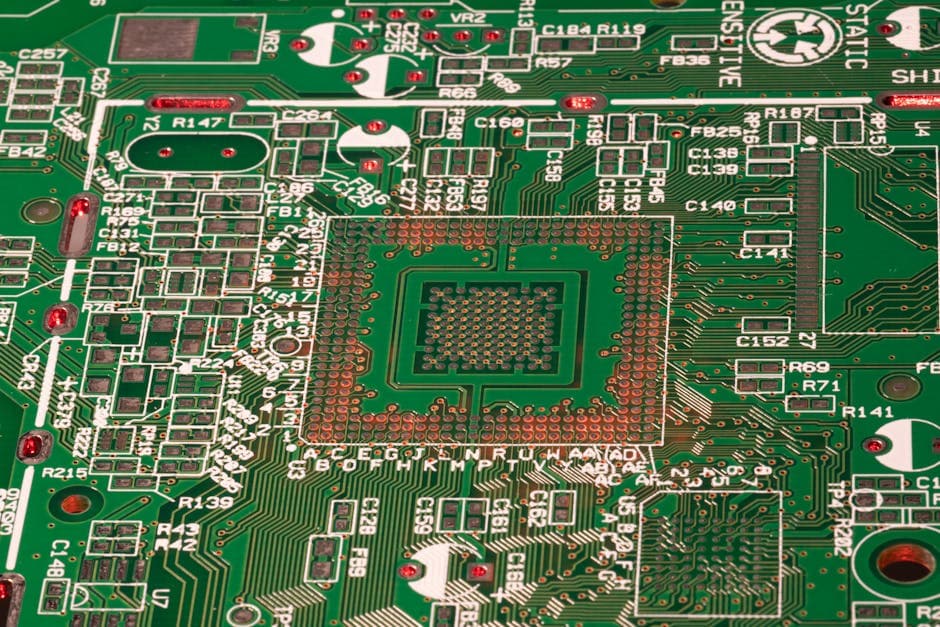
PCB Fabrication Scheduling: Managing Phototool Sequences, Plating Tanks, and Layer Constraints
PCB fabrication scheduling software that handles phototool sequencing, plating bath chemistry, drill allocation, and AOI queues. Built for electronics manufacturers.