

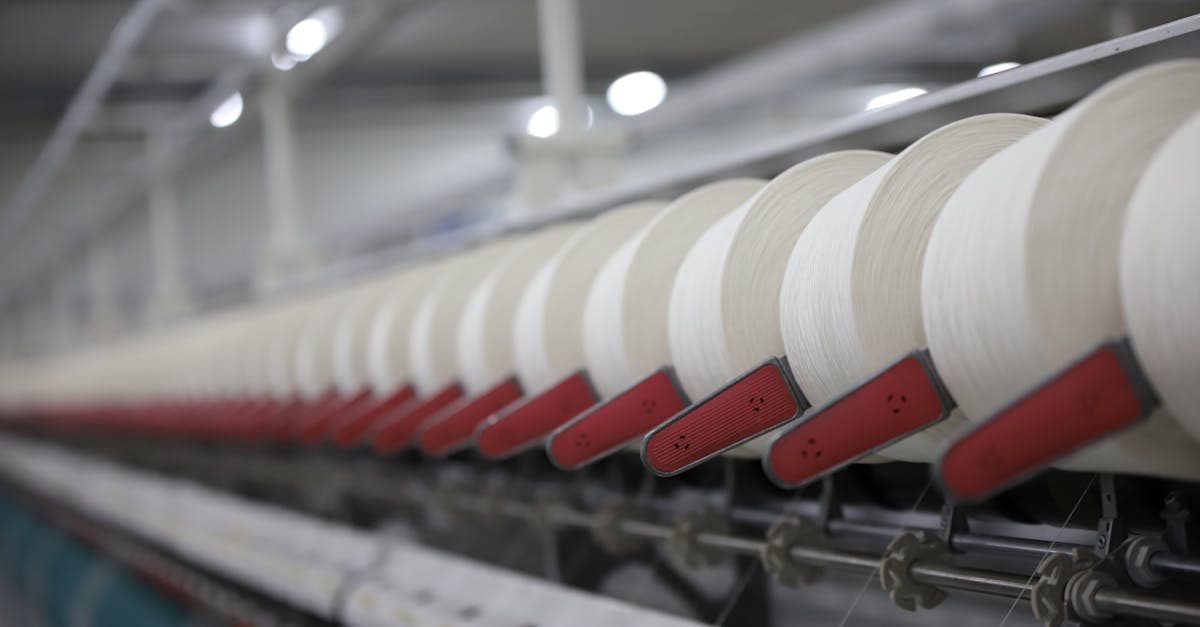
Textile and garment manufacturing operates in one of the most labor-intensive and style-driven scheduling environments in manufacturing. Unlike metal fabrication or electronics assembly where product designs are stable for months or years, garment manufacturers may introduce dozens of new styles every season while managing rapid replenishment of core products. The production schedule must balance fashion urgency against operational efficiency across cutting rooms, sewing floors, and finishing departments.
This guide covers the scheduling strategies that textile and garment manufacturers need to manage style complexity, labor variability, and the accelerating pace of fashion demand cycles. At User Solutions, we have spent 35+ years building scheduling software that handles the labor-intensive, high-changeover environments that define garment production.
What Makes Textile and Garment Scheduling Unique
Garment manufacturing scheduling is shaped by several factors that distinguish it from other industries:
Labor is the primary constraint: Unlike capital-intensive industries where machine capacity is the bottleneck, garment manufacturing is dominated by labor constraints. The sewing floor may have 50 to 500 operators with varying skill levels, and the schedule's feasibility depends on matching the right operators to the right operations.
Style changeovers are frequent and costly: Each new style requires pattern changes, sewing sequence adjustments, and operator learning curves. A sewing line that produces 500 units per hour of a familiar style may produce only 300 units per hour of a new style during the first day of production.
Size and color multiplication: A single style in 6 sizes and 4 colors creates 24 SKU variants, each requiring specific material allocation and potentially different production sequencing through printing, embroidery, or wash treatments.
Seasonal demand compression: Fashion seasons compress production into tight windows. Spring/summer production must be complete and shipped by specific dates, and late deliveries result in markdowns or order cancellations.
Scheduling by Production Stage
Fabric Sourcing and Incoming Inspection
Production scheduling begins with fabric availability. Fabric lead times of 4 to 12 weeks from mills create the longest lead-time constraint in garment manufacturing. The schedule must track:
- Fabric delivery dates by style, color, and quantity
- Incoming inspection queues - fabric must be inspected for defects, shade variation, and shrinkage before cutting
- Fabric relaxation time - knit fabrics require 24 to 48 hours of relaxation after unrolling to achieve dimensional stability before cutting
The scheduling system should not release cutting orders until fabric has been received, inspected, and cleared. Scheduling cutting optimistically based on expected fabric delivery is the most common cause of schedule breaks in garment manufacturing.
Cutting Room Scheduling
The cutting room converts raw fabric into cut components using computerized marker plans and automated or manual cutting equipment. Scheduling the cutting room requires:
Marker optimization: Markers (the layout of pattern pieces on fabric) must be planned before cutting begins. The schedule should allocate marker planning time and ensure markers are ready when cutting is scheduled.
Batch sizing: Cutting batches must balance efficiency (large batches spread marker planning costs over more units) against delivery urgency (small batches move through sewing faster). The scheduling system should recommend batch sizes based on order priority and cutting capacity.
Spreading and cutting capacity: Fabric spreading (laying out fabric layers) and cutting are sequential operations with different cycle times. The schedule must balance spreading crew capacity with cutting machine capacity.
Bundle tracking: After cutting, components are bundled by size, color, and operation sequence. The scheduling system should track bundle assignments to ensure all components for a given lot flow through subsequent operations together.
Sewing Floor Scheduling
The sewing floor is where scheduling complexity peaks in garment manufacturing. A typical sewing floor has multiple lines or modules, each staffed with operators of different skill levels performing different operations.
Line balancing: The most critical scheduling task is balancing work content across operators in a sewing line. If one operation takes twice as long as others, it creates a bottleneck that halves the line's throughput. The scheduling system should model operation times by skill level and balance workload across the line.
Skill-based scheduling: Not every operator can perform every operation. Complex operations like collar setting, buttonhole placement, and zipper insertion require experienced operators. The schedule must assign operators based on their demonstrated skills, not just availability.
Learning curve effects: When a line switches to a new style, operators need time to reach full production speed. Scheduling should account for reduced output during the first 1 to 3 days of a new style, gradually increasing the planned rate as operators gain proficiency.
Progressive bundle system vs. modular manufacturing: Different sewing floor layouts require different scheduling approaches. Progressive bundle systems move bundles sequentially through specialized operators, while modular manufacturing uses cross-trained teams that complete entire garments. The scheduling system must support whichever layout the factory uses.
Finite capacity scheduling is essential for the sewing floor because the interaction between operator skills, style requirements, and line configurations creates constraints that are impossible to manage manually at scale.
Finishing Operations
Post-sewing operations - pressing, inspection, folding, tagging, and packing - are often treated as an afterthought in scheduling but can become significant bottlenecks:
- Washing and treatment - garment-dyed, enzyme-washed, or specialty-finished products require additional processing with dedicated equipment
- Pressing and quality inspection - each garment must be pressed and inspected, creating a throughput-limited operation
- Packaging compliance - retail customers require specific packaging, labeling, and carton configurations
Including finishing in the production scheduling model prevents the common scenario where sewing is complete but orders sit for days in finishing - eroding the lead-time savings achieved by efficient sewing scheduling.
Managing Style Changeovers
Style changeovers are the central tension in garment scheduling. Longer production runs of a single style improve efficiency through:
- Reduced setup time
- Operator learning curve benefits
- Better marker utilization in cutting
However, customers need multiple styles delivered simultaneously, forcing manufacturers to balance run length against delivery responsiveness.
Campaign Scheduling for Garments
Group styles that share similar construction characteristics into campaigns. Schedule a series of styles that use the same sewing operations in sequence, minimizing the skill-change disruption for operators. For example, schedule all polo shirts together, followed by all button-down shirts, rather than alternating between dramatically different construction types.
Style Overlap Scheduling
Instead of completing one style entirely before starting the next, overlap styles by starting cutting for Style B while Style A is still in sewing. This maintains cutting room utilization while allowing sewing lines to finish current work before changeover. The scheduling system must manage this overlap to prevent cutting from outpacing sewing and creating excessive WIP.
Fast Fashion and Quick Response Scheduling
Fast fashion has compressed the traditional design-to-delivery cycle from 6 months to as little as 2 weeks. This requires scheduling capabilities that traditional seasonal planning cannot provide:
- Rapid order ingestion - new styles must be scheduled within hours, not days
- Dynamic reprioritization - existing schedules must be reshuffled to accommodate high-priority urgent orders
- Short-run efficiency - production runs of 200 to 500 units must be scheduled profitably despite high changeover overhead
- Real-time capacity visibility - merchandisers need to know immediately whether a new style can meet the requested delivery date
What-if scenario analysis is essential in fast fashion environments. When a buyer calls with a rush order, the scheduler needs to model the impact of inserting that order into the active schedule before committing to a delivery date.
Labor Planning and Scheduling
In garment manufacturing, labor planning is production planning. Key labor scheduling considerations include:
Multi-skill matrices: Document each operator's skills and proficiency levels across different operations. The scheduling system should match operators to operations based on demonstrated capability, not just departmental assignment.
Absenteeism modeling: Garment manufacturing facilities typically experience 5 to 15 percent daily absenteeism. The scheduling system should plan at realistic labor availability levels rather than assuming full attendance.
Overtime and shift management: Peak season may require extended shifts, Saturday production, or additional shifts. The schedule must model these flexible labor options and their cost implications.
Training integration: Schedule time for operators to learn new operations or styles, recognizing that training time reduces productive capacity in the short term but builds scheduling flexibility long term.
KPIs for Textile and Garment Scheduling
- Sewing floor efficiency - actual output versus standard output, target above 70%
- Style changeover time - hours lost to changeover per week
- Cut-to-ship cycle time - total days from cutting start to shipping
- Operator utilization - percentage of paid hours that are productive
- On-time delivery - percentage of orders shipped by the customer-requested date
- Fabric utilization - percentage of fabric consumed versus purchased, affected by marker efficiency
Monitor these metrics alongside your broader manufacturing KPIs for a complete picture of scheduling performance.
Frequently Asked Questions
Need to bring structure to your garment production schedule? User Solutions has 35+ years of experience scheduling labor-intensive manufacturing operations. Request a demo to see how RMDB handles skill-based labor scheduling, style changeover optimization, and the fast-paced demands of textile and garment production.
📚 Continue learning: This article is part of our Manufacturing Scheduling by Industry: How Requirements Differ pillar guide - the comprehensive resource for industry-specific manufacturing scheduling.
Expert Q&A: Deep Dive
Q: What scheduling advice do you give to garment manufacturers transitioning from manual planning?
A: Start with your bottleneck operation - in most garment factories, that is sewing. Map every sewing operator's skill set and typical production rate for each operation type. Then model your sewing floor as a finite capacity resource with skill-based constraints. This single step typically reveals 20 to 30 percent of hidden capacity that was being lost to poor operator-to-operation matching. Once sewing is scheduled properly, extend the model backward to cutting and forward to finishing.
Q: How do you handle the complexity of multi-size, multi-color production runs?
A: Size and color variation multiplies scheduling complexity because each combination may have different material requirements and production sequences. We model size-color combinations as variants within a style, sharing the same base routing but with variant-specific material allocations. The scheduling system groups similar variants for efficient cutting (maximizing marker utilization) while maintaining delivery priority sequencing through sewing and finishing. This approach keeps the scheduling model manageable while preserving the detail needed for accurate material planning.
Frequently Asked Questions
Ready to Transform Your Production Scheduling?
User Solutions has been helping manufacturers optimize their production schedules for over 35 years. One-time license, 5-day implementation.

User Solutions Team
Manufacturing Software Experts
User Solutions has been developing production planning and scheduling software for manufacturers since 1991. Our team combines 35+ years of manufacturing software expertise with deep industry knowledge to help factories optimize their operations.
Share this article
Related Articles

Composite Manufacturing Scheduling: Cure Time Constraints, Autoclave Capacity, and Layup Sequencing
Composite manufacturing scheduling software that handles autoclave cure cycles, prepreg shelf life, layup sequencing, and NDT inspection holds for aerospace and automotive suppliers.

Fastener and Hardware Manufacturing Scheduling: High-Throughput, Die-Constrained Production
Fastener manufacturing scheduling software that manages heading die life, heat treat batch loads, plating line capacity, and kanban replenishment for screws, bolts, and rivets.
PCB Fabrication Scheduling: Managing Phototool Sequences, Plating Tanks, and Layer Constraints
PCB fabrication scheduling software that handles phototool sequencing, plating bath chemistry, drill allocation, and AOI queues. Built for electronics manufacturers.