
Automotive Production Scheduling: Challenges & Solutions
 User Solutions Team
Automotive production scheduling operates under pressure that few other manufacturing sectors experience. OEM customers demand just-in-time delivery with takt-time precision, zero defects, and the flexibility to adjust volumes on short notice. A single late shipment can halt an assembly line, costing hundreds of thousands of dollars per hour and damaging supplier relationships that took years to build.
This guide explores the scheduling challenges unique to automotive manufacturing - from takt time management and mixed-model sequencing to multi-tier supply chain coordination. Whether you are an OEM managing final assembly or a Tier 2 supplier running stamping presses for multiple programs, effective production scheduling is the foundation of automotive competitiveness. At User Solutions, we have helped automotive manufacturers and their suppliers optimize production operations for over 35 years.
The Unique Demands of Automotive Scheduling
Automotive manufacturing places demands on scheduling systems that reflect the industry's relentless focus on efficiency, quality, and delivery precision. Understanding these demands is essential before selecting or optimizing your scheduling approach.
Just-In-Time and Takt Time Requirements
The automotive industry pioneered just-in-time manufacturing, and JIT principles still govern scheduling decisions at every tier of the supply chain. Production must be paced to takt time - the rate at which finished units must be produced to meet customer demand without building excess inventory.
For a final assembly plant producing 1,000 vehicles per day across two shifts, takt time is approximately 57 seconds per vehicle. Every workstation, every supplier delivery, and every material movement must synchronize to this rhythm. Your scheduling system needs to maintain takt time compliance while absorbing the inevitable variability in cycle times, material availability, and workforce attendance.
This level of precision demands finite capacity scheduling that models every constraint and produces executable plans - not optimistic projections based on infinite capacity assumptions.
Mixed-Model Production Sequencing
Modern automotive production lines build multiple vehicle variants on the same line. A single shift might produce sedans, SUVs, and crossovers in varying configurations, each with different component requirements and cycle times. The scheduling challenge is sequencing these variants to balance workstation loading, manage option-specific component availability, and maintain takt time compliance.
Poor sequencing creates workstation overloads that cascade through the line. If three consecutive vehicles all require a high-labor-content option (like a premium interior), the workstation handling that option falls behind takt time, creating a bottleneck that backs up every upstream station. Effective mixed-model scheduling prevents these clusters by distributing high-content vehicles evenly through the production sequence.
Supply Chain Synchronization
Automotive scheduling extends far beyond the four walls of your facility. The entire multi-tier supply chain must synchronize to deliver components exactly when needed. Tier 1 suppliers receive sequenced delivery schedules from OEMs. Tier 2 suppliers receive releases from multiple Tier 1 customers. At every level, scheduling must translate customer demand into executable production plans that respect internal capacity constraints.
This synchronization requires scheduling systems that can import customer demand signals (typically via EDI), translate them into internal production orders, schedule those orders against finite capacity, and communicate delivery commitments back to customers. When demand signals change - and in automotive, they change weekly - the scheduling system must rebalance rapidly.
Key Automotive Scheduling Challenges
Demand Volatility and Forecast Accuracy
OEM production schedules fluctuate based on consumer demand, dealer inventory levels, and competitive pressures. Suppliers receive forecasts that can change significantly between releases. A Tier 1 supplier might see demand increase 20% in a single week's EDI release, with the expectation that deliveries will adjust immediately.
Scheduling software must handle this volatility by distinguishing between firm orders and forecast, maintaining capacity buffers for expected variability, and enabling rapid rescheduling when demand signals change. Without this flexibility, suppliers either carry excessive finished goods inventory (costly) or risk late deliveries (catastrophic).
Changeover and Setup Optimization
Automotive suppliers running stamping, molding, or machining operations face frequent changeovers between part numbers. A stamping plant producing 300 different part numbers across 12 presses may perform 30-50 changeovers per day. Each changeover consumes productive capacity.
The scheduling challenge is grouping similar parts to minimize changeover frequency and duration while still meeting delivery dates for every part number. This is where intelligent scheduling algorithms deliver significant value - a well-optimized schedule can reduce total changeover time by 15-25%, recovering productive hours without any capital investment. Understanding lean manufacturing principles like SMED (Single Minute Exchange of Die) complements software-driven changeover optimization.
Quality Integration and Containment
Automotive quality standards (IATF 16949) require that scheduling systems support quality containment actions. When a quality issue is detected, affected production lots must be quarantined and the schedule must be adjusted to account for rework, sorting, or replacement production. Your scheduling system needs the flexibility to insert containment actions into the active schedule without disrupting unaffected production streams.
Launch and Ramp Management
New product launches are among the most challenging scheduling events in automotive manufacturing. Production must ramp from prototype quantities to full production volume while managing learning curves, provisional tooling, and evolving quality requirements. Launch scheduling requires the ability to model increasing production rates over time, schedule trial runs alongside ongoing production, and adjust capacity allocations as the launch progresses.
How Scheduling Software Solves Automotive Challenges
Finite Capacity Scheduling for Realistic Plans
The foundation of automotive scheduling effectiveness is finite capacity scheduling that produces executable plans. RMDB by User Solutions schedules every operation against actual available capacity - machines, labor, tooling, and materials - ensuring that the production plan reflects reality rather than assumptions.
For automotive suppliers, this means work orders are sequenced in a way that respects changeover constraints, takt time requirements, and delivery priorities simultaneously. The schedule tells your shop floor team exactly what to run, in what order, on which machine - and the plan is achievable.
Visual Gantt Charts for Production Control
The drag-and-drop Gantt views in EDGEBIC, the current generation of RMDB, provide interactive charts that give production managers instant visibility into the entire production plan. You can see capacity loading across all work centers, identify bottlenecks before they cause delivery problems, and make real-time adjustments through drag-and-drop scheduling.
For automotive operations where minutes matter, this visual capability replaces hours of spreadsheet analysis with immediate insight. When an OEM sends a schedule change, your planner can see the impact on every active order within seconds.
ERP Integration for Seamless Data Flow
Automotive manufacturers run ERP systems (SAP, Oracle, Epicor, Plex) that manage customer orders, inventory, and shipping. RMDB integrates with these systems, importing work orders and routings from your ERP and feeding optimized schedule dates back. This eliminates dual data entry and ensures that your scheduling decisions are based on current, accurate data. Learn more about how scheduling software complements existing ERP systems.
Rapid Rescheduling for Demand Changes
When customer demand shifts, RMDB reschedules the entire production plan in minutes - not hours or days. The scheduling engine recalculates every operation across all work centers, respecting all constraints, and shows you the new plan immediately. This speed is critical in automotive environments where suppliers may receive multiple schedule revisions per week.
EDGEBIC (RMDB 2.0) for Automotive Manufacturing
User Solutions' scheduling platform offers specific advantages for automotive manufacturers:
- Setup optimization that groups similar parts to minimize changeover time across shared equipment
- Multi-customer scheduling that balances delivery requirements from multiple OEMs and Tier 1 customers
- One-time license pricing that avoids the per-user subscription costs that escalate as your scheduling team grows
- 5-day implementation that gets you scheduling productively in a week, not months
- On-premise deployment as an installed Windows application, with a local database or a shared SQL Server
For automotive suppliers managing production KPIs like on-time delivery, schedule adherence, and machine utilization, EDGEBIC (RMDB 2.0) provides the visibility and control needed to hit targets consistently.
Expert Q&A: Deep Dive
Q: How do automotive suppliers manage scheduling when OEM demand signals change weekly?
A: Demand volatility is the defining challenge for automotive suppliers. OEMs release forecasts and EDI schedules that can change significantly from week to week, yet they expect 100% on-time delivery with zero line-down events. The key is building scheduling models that separate firm orders from forecast and maintain capacity buffers for the expected variability.
In RMDB, we set up scheduling with firm horizons (typically 2-3 weeks of locked production) and flexible horizons beyond that. When an OEM adjusts their releases, the scheduling system absorbs the change in the flexible horizon while protecting the firm schedule. This gives your shop floor stability while accommodating the reality of automotive demand variability.
Q: What scheduling approach works best for automotive Tier 2 and Tier 3 suppliers running high-mix production?
A: Many automotive suppliers operate more like job shops than assembly lines - especially Tier 2 and Tier 3 companies running stamping, machining, or injection molding for multiple OEM programs. These operations need scheduling that handles hundreds of active part numbers across shared equipment with frequent changeovers.
The best approach combines finite capacity scheduling with intelligent setup optimization. RMDB groups similar parts to minimize changeover time while still meeting delivery dates. For a stamping operation running 200+ part numbers across 8 presses, this kind of optimization can recover 15-20% of productive capacity that was previously lost to excessive changeovers. For more on high-mix scheduling, see our job shop scheduling guide.
Q: How should automotive manufacturers prepare their scheduling systems for EV production transitions?
A: The transition to electric vehicle production fundamentally changes scheduling requirements. EV powertrains have fewer components than ICE vehicles but introduce battery module assembly, high-voltage testing, and thermal management system integration - all with different cycle times and quality requirements.
Manufacturers transitioning to EV production need scheduling systems flexible enough to handle both legacy ICE and new EV lines simultaneously, often sharing some resources. RMDB supports this dual-product scheduling through configurable work center grouping and constraint modeling.
Frequently Asked Questions
Accelerate Your Automotive Production Scheduling
User Solutions has helped automotive manufacturers and suppliers optimize production scheduling for over 35 years. Our RMDB platform delivers finite capacity scheduling with setup optimization, ERP integration, and one-time licensing - implemented in as few as 5 days.
Schedule a Free Demo | See EDGEBIC (RMDB 2.0) | View Pricing
📚 Continue learning: This article is part of our Manufacturing Scheduling by Industry: How Requirements Differ pillar guide - the comprehensive resource for industry-specific manufacturing scheduling.
Expert Q&A: Deep Dive
Q: How do automotive suppliers manage scheduling when OEM demand signals change weekly?
A: Demand volatility is the defining challenge for automotive suppliers. OEMs release forecasts and EDI schedules that can change significantly from week to week, yet they expect 100% on-time delivery with zero line-down events. The key is building scheduling models that separate firm orders from forecast and maintain capacity buffers for the expected variability. In RMDB, we set up scheduling with firm horizons (typically 2-3 weeks of locked production) and flexible horizons beyond that. When an OEM adjusts their releases, the scheduling system absorbs the change in the flexible horizon while protecting the firm schedule. This gives your shop floor stability while accommodating the reality of automotive demand variability.
Q: What scheduling approach works best for automotive Tier 2 and Tier 3 suppliers running high-mix production?
A: Many automotive suppliers operate more like job shops than assembly lines - especially Tier 2 and Tier 3 companies running stamping, machining, or injection molding for multiple OEM programs. These operations need scheduling that handles hundreds of active part numbers across shared equipment with frequent changeovers. The best approach combines finite capacity scheduling with intelligent setup optimization. RMDB groups similar parts to minimize changeover time while still meeting delivery dates. For a stamping operation running 200+ part numbers across 8 presses, this kind of optimization can recover 15-20% of productive capacity that was previously lost to excessive changeovers.
Q: How should automotive manufacturers prepare their scheduling systems for EV production transitions?
A: The transition to electric vehicle production fundamentally changes scheduling requirements. EV powertrains have fewer components than ICE vehicles but introduce battery module assembly, high-voltage testing, and thermal management system integration - all with different cycle times and quality requirements. Manufacturers transitioning to EV production need scheduling systems flexible enough to handle both legacy ICE and new EV lines simultaneously, often sharing some resources. RMDB supports this dual-product scheduling through configurable work center grouping and constraint modeling. The software does not assume a single product flow - it can manage multiple product families with different routing structures across shared and dedicated resources.
Frequently Asked Questions
Ready to Transform Your Production Scheduling?
User Solutions has been helping manufacturers optimize their production schedules for over 35 years. One-time license, 5-day implementation.

User Solutions Team
Manufacturing Software Experts
User Solutions has been developing production planning and scheduling software for manufacturers since 1991. Our team combines 35+ years of manufacturing software expertise with deep industry knowledge to help factories optimize their operations.
Share this article
Related Articles
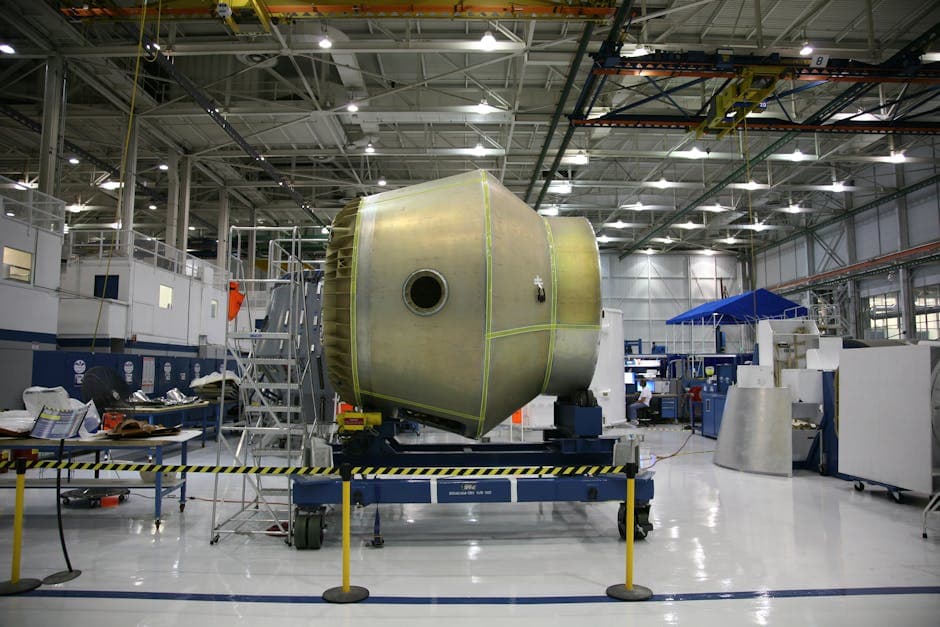
Composite Manufacturing Scheduling: Cure Time Constraints, Autoclave Capacity, and Layup Sequencing
Composite manufacturing scheduling software that handles autoclave cure cycles, prepreg shelf life, layup sequencing, and NDT inspection holds for aerospace and automotive suppliers.

Fastener and Hardware Manufacturing Scheduling: High-Throughput, Die-Constrained Production
Fastener manufacturing scheduling software that manages heading die life, heat treat batch loads, plating line capacity, and kanban replenishment for screws, bolts, and rivets.
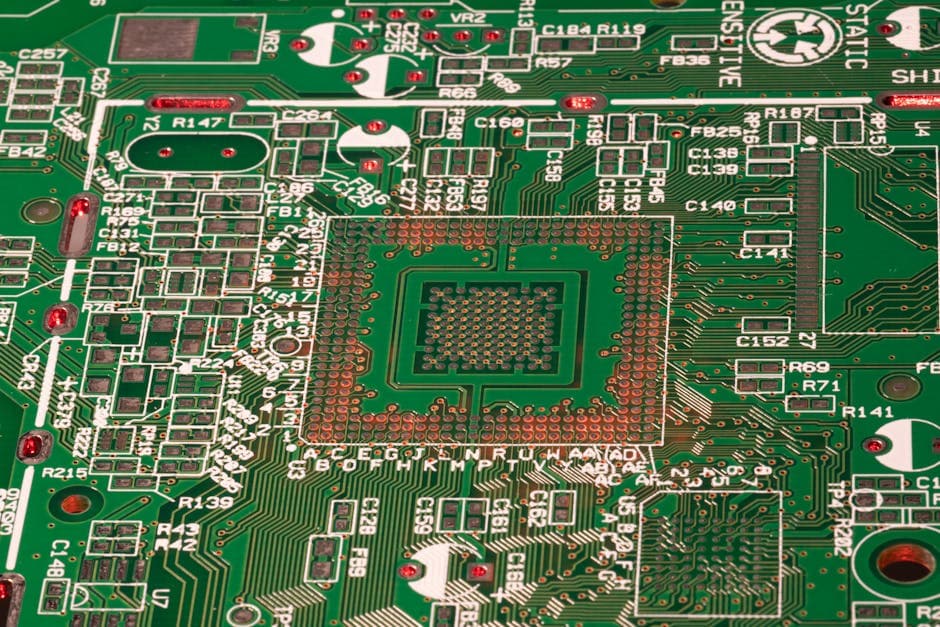
PCB Fabrication Scheduling: Managing Phototool Sequences, Plating Tanks, and Layer Constraints
PCB fabrication scheduling software that handles phototool sequencing, plating bath chemistry, drill allocation, and AOI queues. Built for electronics manufacturers.