
Precision Manufacturing Scheduling: Tight Tolerances, Tight Deadlines
 User Solutions Team
Precision manufacturing exists at the intersection of extreme quality requirements and unforgiving delivery deadlines. When your customers demand tolerances measured in tenths of thousandths of an inch, every scheduling decision carries quality implications. A setup performed by the wrong operator, a part measured before thermal equilibration, or an inspection step skipped under schedule pressure can scrap components worth thousands of dollars.
This guide covers the scheduling strategies that precision manufacturers need to maintain quality while meeting delivery commitments. At User Solutions, we have worked with precision manufacturers in aerospace, medical devices, electronics, and defense for 35+ years, implementing finite capacity scheduling that respects the quality constraints unique to tight-tolerance production.
Why Precision Manufacturing Demands Specialized Scheduling
Precision manufacturing adds layers of scheduling complexity that general machining operations do not encounter:
Inspection as a production step: In general machining, inspection happens at the end. In precision manufacturing, in-process inspection after critical operations is mandatory. CMM time becomes a schedulable - and often constrained - resource.
Operator certification matters: Not every machinist can run precision work. Operators must be qualified for specific machines, operations, and tolerance ranges. The schedule must match work to certified operators.
Environmental dependencies: Temperature, humidity, and vibration affect precision. Parts and gauges must equilibrate to controlled temperatures before measurement. Some operations can only run during periods of minimal vibration (away from heavy traffic or construction).
Material stabilization holds: Stress relief, thermal cycling, and aging operations between rough and finish machining add hours or days to lead times. These are not optional - they are mandatory for dimensional stability.
First article gates: First article inspection (FAI) must be completed and approved before production quantities are released. This creates a quality gate that blocks production scheduling until approval.
These factors make scheduling precision manufacturing fundamentally different from scheduling general production. A scheduling system that cannot model inspection capacity, operator certifications, environmental constraints, and quality gates will produce schedules that look feasible but fail in execution.
Scheduling the Precision Workflow
Rough Machining
Rough machining in precision manufacturing follows similar scheduling principles to general CNC scheduling, with one critical addition: roughing operations must leave adequate stock for finishing, and the schedule must account for material behavior between rough and finish operations.
For parts requiring stress relief after roughing, the schedule must include:
- Rough machining operation (1-4 hours depending on complexity)
- Stress relief or thermal stabilization (2-48 hours depending on material and method)
- Re-qualification measurement to verify the part remains in tolerance after stress relief
Scheduling these intermediate operations explicitly prevents the common error of scheduling finish machining immediately after roughing for materials that require stabilization.
Finish Machining
Finish machining is the most schedule-sensitive operation in precision manufacturing:
Machine assignment: Finish operations must be assigned to machines with adequate accuracy for the required tolerances. A machine with 0.0002-inch positioning accuracy cannot reliably produce 0.0001-inch tolerance features.
Setup time: Precision setups take significantly longer than general machining setups because every fixture and tool must be precisely aligned, indicated, and verified. Schedule 2 to 3 times the setup duration of general work.
Thermal stability: Machines should be warmed up and thermally stable before precision finishing begins. The scheduling system should include warm-up time for first operations of the day or after extended idle periods.
Operator assignment: Finish operations on critical features should be assigned to the shop's most experienced operators. The scheduling system must enforce these skill-based assignments.
In-Process Inspection
In-process inspection is where precision manufacturing scheduling diverges most sharply from general machining. After critical machining operations, parts must be inspected before proceeding:
CMM capacity as a constrained resource: Coordinate measuring machines are expensive ($50,000 to $500,000+) and limited in number. Every precision part competing for CMM time creates a scheduling bottleneck.
Temperature equilibration: Parts must reach the inspection environment temperature (typically 68 degrees F / 20 degrees C) before measurement. Hot parts from machining may need 30 to 120 minutes to equilibrate. The schedule must include this hold time.
Inspector availability: CMM operation requires trained inspectors. Like operator skill constraints on the machining side, inspector availability is a scheduling constraint on the inspection side.
Hold-for-inspection queues: Parts waiting for inspection consume floor space and represent work-in-process inventory. The scheduling system should minimize inspection queue time by scheduling CMM capacity in sync with machining output.
RMDB models inspection resources alongside machining resources, scheduling CMM time as a finite capacity operation linked to the production routing. This prevents the common scenario where parts complete machining on schedule but sit for days waiting for inspection.
First Article Inspection as a Quality Gate
First article inspection is the most critical quality gate in precision manufacturing. The schedule must treat FAI as a blocking constraint:
- Schedule first article machining as a separate work order or operation set
- Schedule FAI on the CMM with realistic duration (often 4-16 hours for complex parts)
- Block production release until FAI is approved
- Schedule production quantity starting after FAI approval date
Without this structure, shops either run production parts before FAI approval (risking lot scrap) or schedule production immediately after machining the first article (unrealistic if FAI takes 2 days on the CMM).
For aerospace and defense precision work, FAI requirements are documented in AS9102 (First Article Inspection Requirements). Compliance demands that your scheduling process formally separates first article from production. See our manufacturing compliance guide for more on compliance-driven scheduling.
Scheduling for Different Precision Sectors
Aerospace Precision Components
Aerospace precision parts combine tight tolerances with regulatory compliance (AS9100, ITAR, Nadcap). Scheduling must account for:
- Special process certifications (heat treat, NDT, surface treatment) often performed by external Nadcap-certified vendors
- Material certifications that must be verified before machining begins
- Extended FAI requirements per AS9102
- Customer source inspection that requires scheduling inspector visits
Medical Device Components
Medical precision components require FDA 21 CFR Part 820 compliance. Scheduling considerations include:
- Device history record (DHR) requirements that link production to specific schedule dates
- Validated process sequences that cannot be reordered without deviation approval
- Biocompatibility testing holds for implant-grade components
- Clean room capacity constraints for components requiring controlled environments
Optical and Photonic Components
Optical precision manufacturing involves unique scheduling constraints:
- Clean room scheduling for assembly and coating operations
- Coating chamber batch scheduling (optical coatings run in vacuum chamber batches)
- Interferometric measurement queues that can bottleneck production
- Environmental sensitivity requiring temperature-controlled machining and inspection
Material Management for Precision
Precision materials are expensive and often have long lead times:
- Aerospace alloys (Inconel, titanium, Hastelloy): 8-16 week lead times
- Medical-grade materials: Require certified material with full traceability
- Optical materials: Specialty glasses and crystals with limited suppliers
The scheduling system must integrate with MRP to ensure that material is available before operations are scheduled. Scheduling a job without confirmed material availability wastes finite capacity planning effort and creates schedule breaks.
KPIs for Precision Manufacturing Scheduling
- First-pass yield - percentage of parts that pass inspection without rework, target above 95%
- CMM utilization - productive inspection time versus available time
- Inspection queue time - average hours parts wait for inspection, target under 4 hours
- Schedule adherence - percentage of operations completed within the planned window
- FAI cycle time - days from first article start to FAI approval
- On-time delivery - accounting for inspection and documentation completion, not just machining
Track these with manufacturing KPI dashboards to identify improvement opportunities across the precision workflow.
Technology for Precision Scheduling
Precision manufacturers need scheduling software that goes beyond machine capacity to model inspection resources, quality gates, operator certifications, and environmental constraints. RMDB provides this multi-constraint scheduling capability, and EDGEBI's visual Gantt interface makes the entire precision workflow - from rough machining through final inspection - visible at a glance.
For an overview of how scheduling requirements differ across industries, see our pillar guide on manufacturing scheduling by industry.
Frequently Asked Questions
Need scheduling that respects the demands of precision manufacturing? User Solutions has 35+ years of experience scheduling precision operations for aerospace, medical, and defense manufacturers. Request a demo to see how RMDB handles the quality gates, inspection constraints, and certification requirements that define precision production.
Expert Q&A: Deep Dive
Q: What is the most common scheduling mistake in precision manufacturing?
A: The most common mistake is scheduling precision parts with the same assumptions as general machining. Precision manufacturers who schedule based on cutting time alone consistently miss delivery dates because they underestimate setup time (precision setups take 2 to 3 times longer than general work), inspection time (in-process CMM checks add hours per operation), and stabilization requirements (thermal and stress relief holds between operations). When we implement RMDB for precision manufacturers, we model these precision-specific operations explicitly, and lead time estimates immediately become accurate.
Q: How do you recommend precision shops handle first article inspection in the schedule?
A: First article inspection (FAI) should be scheduled as a dedicated operation with realistic duration. For complex precision parts, FAI can take 4 to 16 hours on the CMM - longer than the machining itself. We schedule FAI as a quality gate that blocks subsequent production until results are approved. RMDB models this as a hold constraint: the first article runs, goes to inspection, and the remaining quantity is not released to production until the inspection operation is marked complete. This prevents the common problem of running production parts before FAI is approved, which risks scrapping the entire lot.
Q: What scheduling strategy works best for prototype-to-production transitions in precision manufacturing?
A: Prototype-to-production is a critical transition because prototype scheduling is inherently uncertain while production scheduling needs to be predictable. We recommend maintaining separate scheduling capacity pools for prototype and production work. Prototype jobs get a defined capacity allocation that protects production schedules from the inevitable overruns and surprises that prototyping involves. As a prototype transitions to production, the scheduling model is refined with actual cycle times from the prototype run, making the production schedule immediately accurate.
Frequently Asked Questions
Ready to Transform Your Production Scheduling?
User Solutions has been helping manufacturers optimize their production schedules for over 35 years. One-time license, 5-day implementation.

User Solutions Team
Manufacturing Software Experts
User Solutions has been developing production planning and scheduling software for manufacturers since 1991. Our team combines 35+ years of manufacturing software expertise with deep industry knowledge to help factories optimize their operations.
Share this article
Related Articles
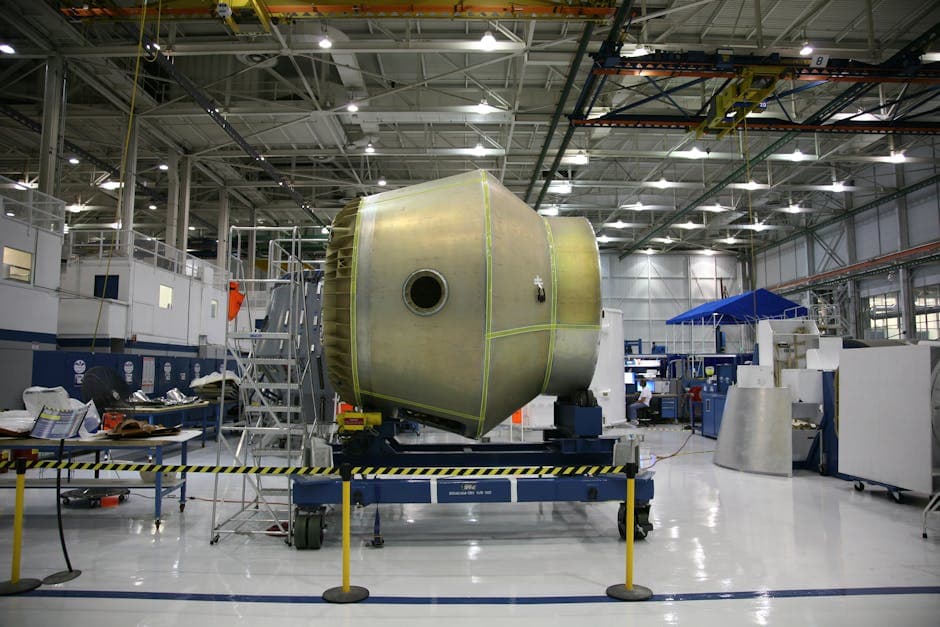
Composite Manufacturing Scheduling: Cure Time Constraints, Autoclave Capacity, and Layup Sequencing
Composite manufacturing scheduling software that handles autoclave cure cycles, prepreg shelf life, layup sequencing, and NDT inspection holds for aerospace and automotive suppliers.
Fastener and Hardware Manufacturing Scheduling: High-Throughput, Die-Constrained Production
Fastener manufacturing scheduling software that manages heading die life, heat treat batch loads, plating line capacity, and kanban replenishment for screws, bolts, and rivets.
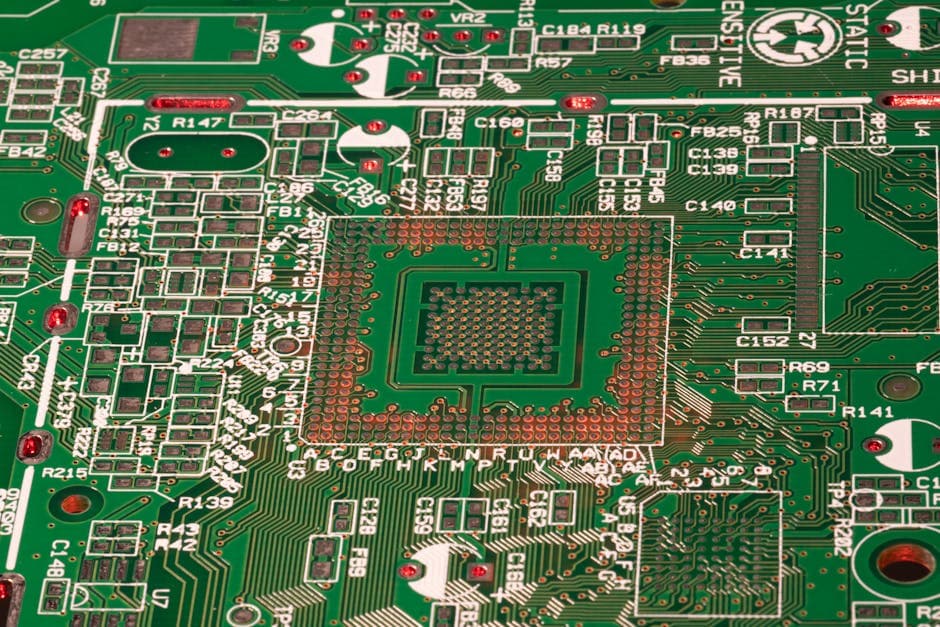
PCB Fabrication Scheduling: Managing Phototool Sequences, Plating Tanks, and Layer Constraints
PCB fabrication scheduling software that handles phototool sequencing, plating bath chemistry, drill allocation, and AOI queues. Built for electronics manufacturers.