
Fastener and Hardware Manufacturing Scheduling: High-Throughput, Die-Constrained Production
 User Solutions Team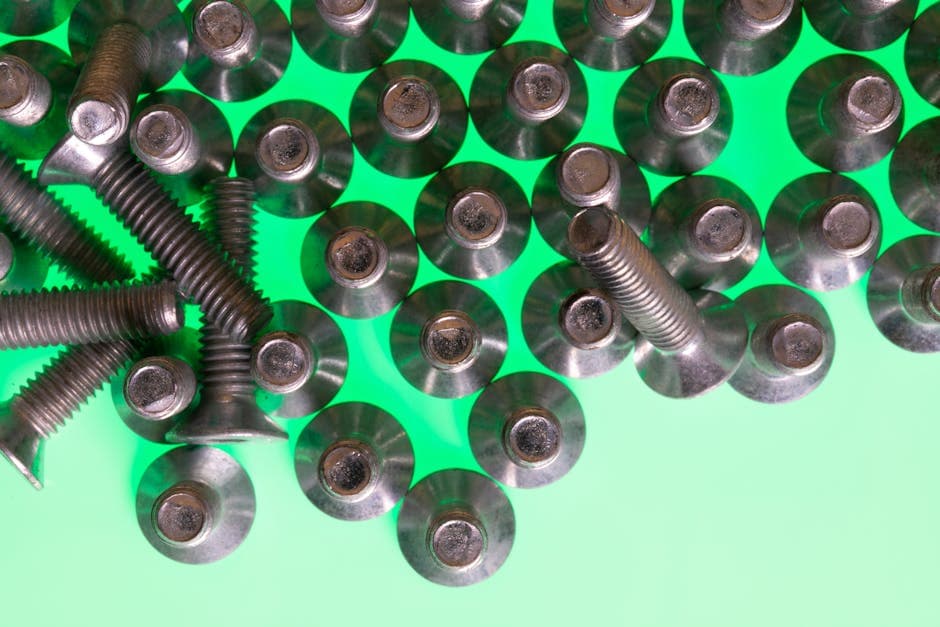
Fastener manufacturing - bolts, screws, rivets, washers, pins, and the broader category of standard and custom hardware - is among the highest-volume discrete manufacturing operations in existence. A single heading machine running at production speed can produce tens of thousands of blanks per shift. Threading, heat treating, plating, inspection, and packaging follow in rapid succession, each with its own throughput rate, batch size requirement, and constraint.
The scheduling challenge in fastener manufacturing is not complexity of routing - most fasteners follow a well-defined multi-step process - but the sheer volume of work flowing through constrained shared resources. A heading die that fails mid-run, a heat treat furnace with undersized loads, a plating tank loaded past its chemistry limit - each of these is a preventable scheduling failure that erodes throughput and drives up cost per piece.
User Solutions has worked with high-volume manufacturers for 35 years, including facilities running mixed standard/custom fastener production where inventory replenishment scheduling and customer-order scheduling must coexist in the same system. This post covers each major scheduling constraint specific to fastener and hardware manufacturing.
Heading Die Life: Scheduling Maintenance Before Failure
The cold heading die is the most critical tooling resource in fastener manufacturing. Each die is precision-machined to form the head geometry of a specific fastener, and it degrades with each stroke. Die failure in-process means a machine stoppage, scrap of the in-process material in the die cavity, potential machine damage, and an unplanned maintenance event that was not in the schedule.
Die life management as a scheduling constraint means:
Tracking stroke counts per die set. Every production run consumes a known number of strokes from each die set. The scheduling system accumulates stroke counts across all production runs assigned to each die and compares accumulated strokes against the maintenance threshold.
Triggering planned die changes during scheduled downtime. When a die approaches its maintenance threshold, the schedule automatically generates a die change work order timed to coincide with the next planned setup or shift break. The die is reconditioned before it would fail in production, eliminating the unplanned stoppage.
Modeling reconditioning lead time as a resource constraint. When a die is pulled for reconditioning, it is unavailable until the reconditioning cycle is complete - typically several hours to a few days depending on the severity of wear and the capacity of the die room. The scheduling system marks the die as unavailable for this period, preventing the scheduler from assigning production runs that require the die while it is being reconditioned.
Die inventory across multiple machines. A fastener plant may have multiple heading machines capable of running the same part number, each with its own die set. The scheduler tracks die availability across all machines and can automatically redirect production to an alternate machine when a primary die is pulled for reconditioning - maintaining output rate without manual replanning.
Thread rolling die management. Thread rolling dies - the flat or cylindrical dies that cold-form thread profiles - have similar life constraints to heading dies. They are subject to the same stroke-count-to-maintenance-threshold model and require the same planned replacement scheduling.
Heat Treat Batch Scheduling: Filling the Furnace Economically
Most fasteners require heat treatment - typically carbonitriding, carburizing, or neutral hardening - to achieve the specified mechanical properties. Heat treating is a batch process: parts are loaded into baskets, baskets are loaded into the furnace, and the furnace runs the specified thermal cycle.
The economics of heat treating are driven by batch fullness. Running a furnace at 50% load costs nearly as much as running it at 100% load in terms of energy, atmosphere gas, and technician time. Every undersized furnace load is a direct cost penalty.
Effective heat treat scheduling requires:
Grouping by thermal cycle specification. Fasteners with the same hardness requirement and the same base material can share a furnace load. Parts with different specifications - for example, medium carbon steel bolts requiring a different cycle than case-hardened stainless - cannot be mixed in the same furnace load without risk of processing to the wrong specification.
Basket loading optimization. Parts are loaded into baskets by weight per basket and total basket count per furnace load. The scheduler calculates how many parts from each pending production run will fit in a standard basket and how many baskets fill a single furnace load. Jobs are grouped to fill loads completely, and partial loads are avoided unless due date constraints require it.
Aligning furnace load timing with upstream completion. A furnace load cannot start until all the parts that will be in that load have completed threading and pre-clean operations upstream. The scheduler back-calculates when each job must complete threading to be ready for the planned furnace load, then checks whether the heading and threading operations can complete in time given available resource capacity.
Single-shift furnace coverage. Many fastener plants run heat treat on a single shift while heading machines run three shifts. This mismatch means material queues in front of the furnace overnight. The schedule must account for this queue explicitly - planning furnace loads that will process the accumulated overnight queue during the available heat treat shift, rather than planning as if the furnace runs continuously.
Plating Line Capacity: Chemistry and Current Constraints
Surface finishing for fasteners - zinc electroplating, hot-dip galvanizing, nickel plating, black oxide, chrome plating - protects against corrosion and provides the specified coefficient of friction for torque-tension performance. Like all electroplating operations, fastener plating has chemistry constraints that go beyond simple cycle time.
Rack and barrel capacity. Fasteners are plated either in barrels (tumbling plating for small, simple geometries) or on racks (for larger or more complex parts requiring precise plating distribution). Each barrel and rack has a defined weight capacity. The scheduler assigns parts to barrels or racks based on part geometry and weight, ensuring loads do not exceed rated capacity.
Tank current density limits. Each plating tank operates at a defined current density range - amps per square inch of part surface area. Too low a current density produces thin, non-uniform deposits; too high causes burning and rough deposits. The scheduler models total surface area per load and limits loads to the tank's rated current range.
Ampere-hour chemistry tracking. As in PCB plating, chemistry degrades with accumulated ampere-hours. The scheduler tracks cumulative ampere-hour throughput per tank and triggers chemistry maintenance - partial or full bath replacement, additive replenishment - before the bath degrades below specification.
Coating type segregation. Different coating types require different tank chemistries. A plating line that runs zinc, nickel, and black oxide on different jobs must prevent cross-contamination. The scheduler segregates coating types and plans changeover operations - tank drain, rinse, and refill - between coating type switches.
REACH and RoHS compliance tracking. Many fastener customers require documentation that parts were plated using compliant chemistry - no hexavalent chromium, no restricted substance content above threshold. The scheduler must associate each production run with the plating chemistry in use and generate the necessary compliance documentation per lot.
Sorting, Inspection, and Packaging Queues
After plating, fasteners pass through 100% inspection - optical, dimensional, or functional - before packaging and shipment. Inspection equipment throughput varies by part size, complexity, and specification. High-volume standard fasteners run through automated vision systems at high rates; custom or close-tolerance hardware may require manual verification.
Inspection as a scheduled resource. The scheduler models inspection equipment and inspectors as resources with defined throughput rates per part type. When upstream plating delivers large batches simultaneously, inspection queues will grow. The scheduler projects queue depth over the planning horizon and signals when bottlenecks are developing.
Packaging and co-packing schedules. Fasteners may be packaged in bulk bags, boxes, or on reels for automotive applications. Co-packing - where a manufacturer assembles assortments or kits - adds complexity: not all components of a kit may be ready simultaneously. The scheduler tracks kit readiness across all component part numbers and flags kits where one item is holding up shipment.
Customer-specific marking and traceability. Some customers require lot-specific marking - laser etching, ink marking, or lot tagging - applied after final inspection. These marking operations consume time on dedicated equipment. The scheduler treats marking as a distinct operation with its own resource requirements rather than bundling it into a generic "finishing" step.
Standard vs. Custom Fasteners: Two Scheduling Streams in One Plant
Most fastener manufacturers produce a mix of standard fasteners - catalog items replenished to finished goods inventory - and custom fasteners produced against specific customer orders. These two streams have fundamentally different scheduling drivers:
Standard fasteners are scheduled against inventory replenishment targets. The scheduler compares on-hand inventory against reorder points and generates replenishment production orders to keep stock above the reorder threshold. Standard work fills available capacity during periods when custom orders are not consuming it.
Custom fasteners are scheduled against customer-specified due dates. Lead time is quoted at order entry based on available capacity; the scheduler confirms or flags capacity conflicts before the quote is committed. Custom jobs take priority over standard replenishment when capacity is constrained.
Mixed-stream capacity balancing. When a facility runs both streams, the scheduler must allocate capacity across both simultaneously. A system that manages only one stream - either inventory replenishment or customer orders - forces planners to manage the other stream manually, reintroducing the spreadsheet complexity that scheduling software is meant to eliminate.
RMDB from User Solutions handles both scheduling streams in a single system, providing fastener manufacturers with a unified view of their capacity, material status, and due date performance across all active work.
Integrating Fastener Scheduling with Job Shop Scheduling Principles
Although fasteners are high-volume parts, the scheduling logic that applies to them draws heavily from job shop scheduling principles - specifically, the need to manage shared, constrained resources (dies, furnaces, plating tanks, inspection equipment) across a large number of simultaneous production orders with different priorities and due dates.
The difference is scale: where a job shop might manage 50–200 active jobs, a fastener plant might manage thousands of active production orders across hundreds of active part numbers simultaneously. This scale demands scheduling software that can evaluate resource conflicts and sequence operations computationally rather than relying on a planner's working memory.
EDGEBI provides the analytics layer for fastener operations, giving production managers visibility into die utilization rates, furnace efficiency trends, plating throughput by tank, and on-time delivery performance by customer - turning scheduling data into actionable production metrics.
Heading dies have a finite stroke count before they require inspection, reconditioning, or replacement. If your schedule doesn't track die stroke counts against active production runs, you'll encounter unplanned die failures mid-run - stopping the machine, scrapping in-process material, and creating a rush reconditioning event. Scheduling systems that track die life accumulation per part number can trigger planned die changes during scheduled downtime rather than letting failures drive the schedule.
Heat treat furnaces run most efficiently when loaded to capacity - the energy cost per pound drops significantly with full loads. Scheduling optimizes heat treat by grouping parts that share the same thermal cycle specification, filling baskets to rated capacity, and timing furnace loads to align with upstream heading and threading completion times. Parts that complete threading ahead of schedule can be held for the next full furnace load rather than run as an undersized batch, reducing energy cost without impacting due dates that allow the wait.
Fastener plating lines - zinc, nickel, black oxide, chrome - are batch operations with chemistry constraints. Each plating tank has a defined load capacity (pounds per rack, amps per square inch), a chemistry refresh cycle governed by ampere-hour accumulation, and incompatibility between certain coating types. Scheduling must assign parts to plating racks and tanks such that load limits are not exceeded, chemistries are compatible, and refresh cycles are planned rather than reactive.
Standard fasteners run against finished goods inventory targets - the schedule replenishes stock to reorder points based on demand history. Custom fasteners run against specific customer orders with defined due dates. A scheduling system manages both simultaneously: it fills standard work into available capacity during periods when custom orders are not consuming it, and it prioritizes custom orders automatically as due dates approach. The planner sees a single schedule covering both streams rather than managing two separate planning processes.
Running a fastener plant on spreadsheets and die-room gut instinct? Contact User Solutions to see how RMDB manages heading die life, heat treat batching, and plating line chemistry for high-volume fastener and hardware manufacturers. Trusted by GE, Cummins, and BAE Systems for 35+ years.
Expert Q&A: Deep Dive
Q: Our heading machines run three shifts but heat treat only runs one shift. How do we keep material from piling up in front of the furnace?
A: This is the most common scheduling mismatch we see in fastener plants - a high-throughput upstream process feeding into a batch downstream process with limited shift coverage. The solution is to schedule heading production at a rate that fills the furnace at its planned batch frequency, not at the maximum rate the headers can run. In RMDB, you set the heat treat resource as the constraint, plan furnace loads first, then back-schedule heading to deliver finished material at the rate the furnace can absorb. The headers run at a sustainable pace aligned to furnace capacity rather than running flat-out and building a queue that ties up floor space and complicates material tracking.
Q: We have 200+ active die sets. How do we know which dies need maintenance before they fail in production?
A: After 35 years working with high-volume manufacturers, die life management is almost always the answer to the question of why unplanned downtime is higher than it should be. Each die set should have a stroke count threshold - set conservatively below the failure point - that triggers a maintenance work order automatically when the production schedule accumulates that many strokes against the die. In RMDB, this is modeled as a maintenance resource that is consumed by each production run. When the maintenance resource is depleted, the die is flagged for reconditioning before it can be scheduled again. You stop relying on operators to remember which dies are near their limit.
Frequently Asked Questions
Ready to Transform Your Production Scheduling?
User Solutions has been helping manufacturers optimize their production schedules for over 35 years. One-time license, 5-day implementation.

User Solutions Team
Manufacturing Software Experts
User Solutions has been developing production planning and scheduling software for manufacturers since 1991. Our team combines 35+ years of manufacturing software expertise with deep industry knowledge to help factories optimize their operations.
Share this article
Related Articles
Composite Manufacturing Scheduling: Cure Time Constraints, Autoclave Capacity, and Layup Sequencing
Composite manufacturing scheduling software that handles autoclave cure cycles, prepreg shelf life, layup sequencing, and NDT inspection holds for aerospace and automotive suppliers.
PCB Fabrication Scheduling: Managing Phototool Sequences, Plating Tanks, and Layer Constraints
PCB fabrication scheduling software that handles phototool sequencing, plating bath chemistry, drill allocation, and AOI queues. Built for electronics manufacturers.
Remanufacturing Scheduling: Variable Yield, Uncertain Content, and Teardown-to-Rebuild Workflows
Remanufacturing scheduling software that handles variable work content, probabilistic routing, core inventory constraints, and serial number traceability for rebuilt engines and equipment.