

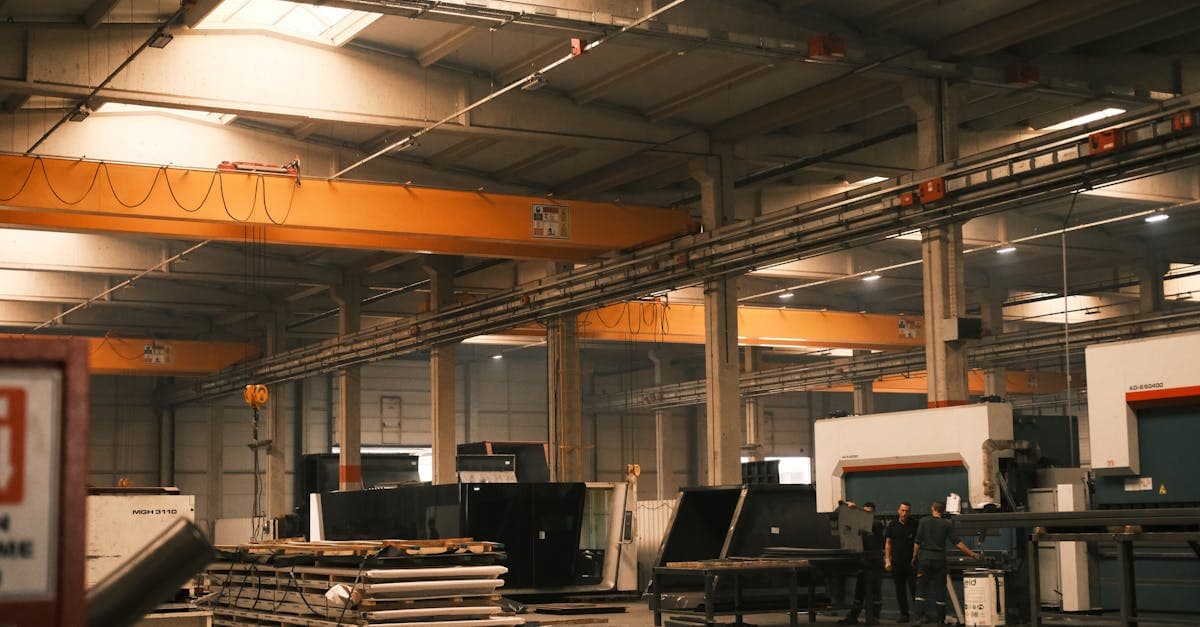
Sheet metal fabrication shops operate in a scheduling environment defined by diverse part routings, shared equipment bottlenecks, and the constant challenge of synchronizing parts that take different paths through the shop before converging at assembly or shipping. A single customer order might include flat laser-cut parts, multi-bend press brake parts, welded assemblies, and hardware-inserted components - all of which must arrive at packing simultaneously.
This guide covers the scheduling strategies that sheet metal fabricators need to manage the cut-bend-weld-finish workflow efficiently. At User Solutions, we have worked with metal fabricators and job shops for 35+ years, implementing finite capacity scheduling that brings visibility and control to the inherently complex flow of sheet metal production.
The Sheet Metal Workflow: A Scheduling Perspective
Sheet metal fabrication follows a general flow, but every part takes a different path through that flow:
Cutting (laser, turret punch, plasma, waterjet) → Forming (press brake, roll forming) → Welding (MIG, TIG, spot, robotic) → Hardware insertion (PEM nuts, studs, standoffs) → Finishing (deburring, powder coating, plating, painting) → Assembly → Inspection and shipping
Not every part requires every operation. A simple flat blank might go directly from cutting to finishing. A complex weldment might pass through cutting, forming, welding, grinding, and then finishing before assembly. The scheduling system must handle this routing diversity while maintaining delivery synchronization.
Scheduling the Cutting Operation
Laser cutters and turret punch presses are typically the highest-throughput operation in a sheet metal shop. A modern fiber laser can cut faster than all downstream operations can process, creating a classic push-pull scheduling tension.
Nesting and Scheduling Integration
Nesting - arranging multiple parts on a single sheet for cutting - is both a material optimization and a scheduling decision. Key considerations:
Multi-order nesting: Parts from different customer orders are often nested on the same sheet to minimize material waste. The scheduler must ensure that cutting these mixed nests does not delay high-priority parts because they are waiting for low-priority parts to complete the nest.
Material batching: Group jobs that use the same material thickness and grade to minimize material changeovers on the cutting table. A sheet metal shop using 10 different material specifications should schedule cutting campaigns by material to reduce handling time.
Downstream pacing: Schedule cutting output to match downstream forming and welding capacity. Running the laser at maximum throughput when press brakes are already overloaded creates piles of WIP that consume floor space and increase handling damage risk.
RMDB schedules cutting as a finite capacity operation linked to downstream work centers, preventing the common problem of optimizing cutting independently from the rest of the shop.
Press Brake Scheduling: The Common Bottleneck
Press brake forming is the scheduling bottleneck in the majority of sheet metal shops. While lasers cut parts in seconds, press brakes form them in minutes - and the setup between different parts can take 15 to 45 minutes depending on tooling complexity.
Tonnage and bed length constraints: Not every press brake can form every part. Large parts require high-tonnage machines with long beds. The scheduling system must match parts to machines based on forming requirements.
Setup sequence optimization: Group parts that use the same tooling setup in sequence to minimize changeover time. A press brake running 12 different setups per day at 30 minutes each loses 6 hours. Batching to 6 setups recovers 3 hours of productive time.
Operator skill matching: Complex multi-bend parts with tight angle tolerances require experienced operators. The scheduling system should assign these jobs to qualified operators while routing simpler parts to less experienced staff.
Offline setup: Where possible, schedule tooling preparation offline so that dies and tooling are staged before the machine finishes the current run. The scheduling system should allocate setup technician time alongside machine time.
Welding Scheduling
Welding introduces additional scheduling complexity because it is labor-intensive, highly variable in cycle time, and quality-sensitive:
Welder certification requirements: Different welding processes (MIG, TIG, stick) and material types require certified welders. The schedule must match welding operations to certified personnel.
Fixture and jig requirements: Welded assemblies often require fixtures that hold components in position. Fixture availability becomes a scheduling constraint, especially when multiple assemblies share the same fixture type.
Thermal distortion management: Some assemblies require specific welding sequences to minimize distortion, and parts may need cooling time between weld passes. The scheduling system should model these process constraints.
Inspection after welding: Weld inspection - visual, dimensional, or NDT (non-destructive testing) - adds time and may create a quality gate where parts cannot proceed until inspection is complete.
Finishing Operations
Finishing is frequently the hidden bottleneck that sheet metal schedulers overlook:
In-House Finishing
Powder coating operations run in batches by color. The scheduling system should group parts of the same color for batch efficiency while respecting delivery priorities. A powder coat oven running a batch of 50 blue parts is more efficient than running 5 batches of 10 parts in different colors.
Deburring and grinding are labor-intensive operations that compete for skilled workers. Include deburring capacity in the finite capacity model.
Outsourced Finishing
Many sheet metal shops outsource plating, anodizing, or specialty coatings. Outsourced finishing adds 3 to 10 business days of lead time that the scheduling system must account for. The schedule should release parts to outside finishing early enough to return for assembly and shipping deadlines.
Synchronizing Multi-Part Orders
The most challenging aspect of sheet metal scheduling is ensuring that all parts for a customer order arrive at assembly or shipping simultaneously. A typical order might include:
- 5 laser-cut flat blanks (complete in 1 day)
- 3 press brake formed parts (complete in 3 days)
- 2 welded subassemblies (complete in 5 days)
- All parts powder coated blue (complete in 2 days after forming/welding)
Without scheduling, the flat blanks sit completed for a week while welded assemblies catch up. With finite capacity scheduling, the system backward schedules from the shipping date and determines the latest start date for each operation path - preventing premature cutting while ensuring welded assemblies start early enough.
RMDB's linked work order capability connects parent orders to child operations across different work centers, automatically flagging when a delay in one path threatens the overall order delivery date.
Material Management
Sheet metal shops must coordinate material availability with cutting schedules:
- Sheet and plate inventory - different material types, thicknesses, and sizes must be available for scheduled cutting runs
- Remnant tracking - usable material remnants from previous cutting jobs can reduce material costs if the scheduling system considers remnant availability during nest planning
- Vendor lead times - specialty materials (stainless steel, aluminum alloys, exotic metals) may have 2 to 6 week lead times that the schedule must respect
Integrating MRP with production scheduling ensures material is ordered and available before cutting is scheduled.
KPIs for Sheet Metal Scheduling
- Press brake utilization - productive hours versus available hours at the bottleneck, target above 70%
- Setup time ratio - setup hours divided by total press brake hours, target below 25%
- Order synchronization rate - percentage of orders where all parts arrive at shipping within 1 day of each other
- On-time delivery - the customer-facing metric, target above 90%
- Material utilization - percentage of purchased sheet material that becomes shipped parts (versus scrap and remnants)
- WIP between operations - particularly between cutting and forming, lower is better
Track these metrics through manufacturing KPI dashboards for continuous improvement visibility.
Technology for Sheet Metal Scheduling
Sheet metal shops that have outgrown whiteboards and spreadsheets need scheduling software that understands multi-operation fabrication workflows. The most effective approach is an ERP scheduling add-on like RMDB that integrates with your existing system while providing finite capacity scheduling across every work center.
The job shop scheduling principles that apply to general machine shops apply equally to sheet metal fabrication, with the added complexity of nesting integration and multi-part order synchronization.
For shops looking to gain immediate visual control of their schedule, EDGEBI's Gantt chart interface provides drag-and-drop scheduling that shows every job across every machine - making bottlenecks and conflicts visible at a glance.
Frequently Asked Questions
Ready to bring scheduling control to your sheet metal shop? User Solutions has 35+ years of experience scheduling fabrication operations. Request a demo to see how EDGEBIC, the current generation of RMDB, handles the multi-operation complexity of sheet metal manufacturing.
📚 Continue learning: This article is part of our Manufacturing Scheduling by Industry: How Requirements Differ pillar guide - the comprehensive resource for industry-specific manufacturing scheduling.
Expert Q&A: Deep Dive
Q: What scheduling approach do you recommend for sheet metal shops that are constantly expediting?
A: Constant expediting is a symptom of scheduling to infinite capacity. The fix is implementing finite capacity scheduling at your bottleneck operation - which in most sheet metal shops is either press brakes or welding. When you can see true capacity at the bottleneck, you stop over-committing and the expediting cycle breaks. We typically see expediting drop by 60 to 80 percent within the first month of RMDB implementation. The scheduler goes from spending half their day walking the floor to spending that time planning ahead.
Q: How should sheet metal shops handle the transition from flat part cutting to formed and welded assemblies?
A: This is the critical scheduling junction in sheet metal fabrication. The laser or turret punch can cut parts much faster than press brakes can form them or welders can join them. Without scheduling, you end up with mountains of flat parts waiting for bending and welding. We model the cutting operation as feeding a constrained downstream flow. RMDB schedules cutting based on downstream capacity availability, not maximum cutting throughput. This means the laser may not run at 100 percent utilization, but the overall shop throughput improves because parts flow through the entire process rather than piling up after cutting.
Frequently Asked Questions
Ready to Transform Your Production Scheduling?
User Solutions has been helping manufacturers optimize their production schedules for over 35 years. One-time license, 5-day implementation.

User Solutions Team
Manufacturing Software Experts
User Solutions has been developing production planning and scheduling software for manufacturers since 1991. Our team combines 35+ years of manufacturing software expertise with deep industry knowledge to help factories optimize their operations.
Share this article
Related Articles
Composite Manufacturing Scheduling: Cure Time Constraints, Autoclave Capacity, and Layup Sequencing
Composite manufacturing scheduling software that handles autoclave cure cycles, prepreg shelf life, layup sequencing, and NDT inspection holds for aerospace and automotive suppliers.
Fastener and Hardware Manufacturing Scheduling: High-Throughput, Die-Constrained Production
Fastener manufacturing scheduling software that manages heading die life, heat treat batch loads, plating line capacity, and kanban replenishment for screws, bolts, and rivets.
PCB Fabrication Scheduling: Managing Phototool Sequences, Plating Tanks, and Layer Constraints
PCB fabrication scheduling software that handles phototool sequencing, plating bath chemistry, drill allocation, and AOI queues. Built for electronics manufacturers.