
Composite Manufacturing Scheduling: Cure Time Constraints, Autoclave Capacity, and Layup Sequencing
 User Solutions Team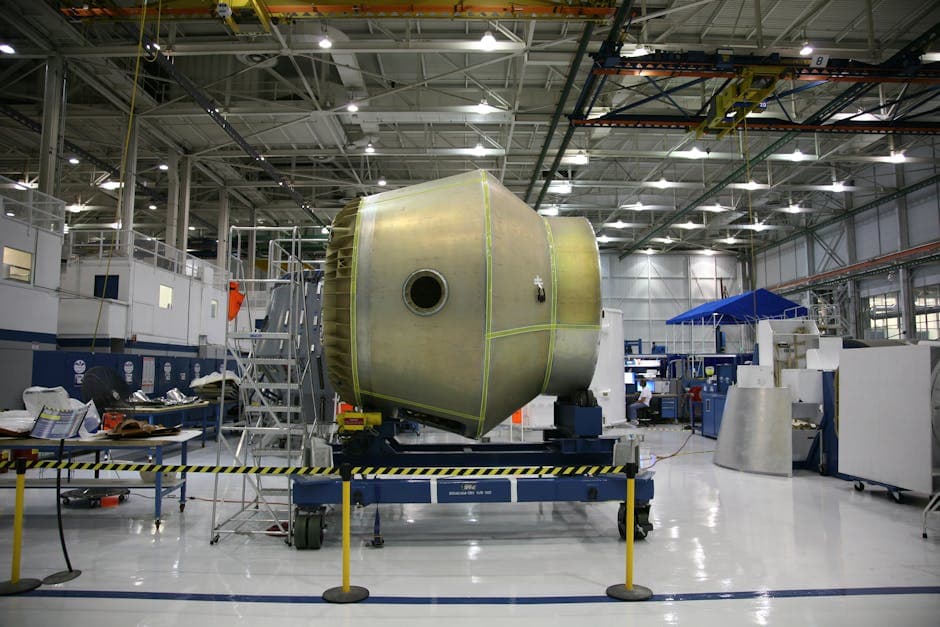
Composite manufacturing sits at the intersection of advanced materials science and high-precision manufacturing - and it presents scheduling challenges that have no equivalent in conventional metalworking. The physics of polymer matrix composites impose hard constraints on production timing that cannot be negotiated away by a plant manager under delivery pressure: a cure cycle is a cure cycle, prepreg that has exceeded its out-time is scrap, and a part that bypasses NDT is a liability.
For aerospace and automotive composite suppliers, these constraints make scheduling simultaneously more critical and more difficult. A missed autoclave load means a half-filled cure cycle and wasted energy. An out-of-sequence layup means material that expires before it reaches the press. An NDT hold that is not planned for means a part that sits finished but un-shippable while the customer's assembly line waits.
User Solutions has spent 35 years helping manufacturers build schedules that respect the physical realities of their processes. Composite manufacturing requires that same discipline, applied to a uniquely demanding material set. This post covers each major scheduling constraint in composite production and explains how finite capacity scheduling addresses them.
Autoclave Cure Cycles: The Non-Negotiable Operation Duration
The autoclave is typically the constraining operation in composite manufacturing - and it is the operation where schedulers most commonly make errors of optimism. Cure cycles for structural aerospace composites commonly run 6–12 hours, including heat-up, hold, and cool-down phases. The cure profile - the specific sequence of temperatures, pressures, and hold times - is qualified against the material specification and cannot be modified without requalification.
This creates a scheduling constraint that differs fundamentally from conventional machining: you cannot compress the duration to recover schedule slip. If a job is late arriving at the autoclave, the earliest it can ship is the current time plus the full cure cycle duration. There is no accelerated cure option for a qualified structural composite part.
Finite capacity scheduling handles this by treating the cure cycle as a fixed-duration, resource-locked operation:
Cure cycle duration is immutable. The scheduler enforces minimum operation durations tied to the qualified cure profile for each material system. A planner cannot manually shorten the autoclave operation to make a due date - the system flags the violation and forces a realistic completion date forward.
Cure profile compatibility determines co-cure eligibility. Different part families may require different temperature profiles or peak pressures. Parts that require incompatible cure cycles cannot share an autoclave load. The scheduler tracks cure profile per part and groups only compatible parts into the same load.
Heat-up and cool-down are part of the operation. An autoclave that requires 90 minutes to reach cure temperature and 120 minutes to cool to extraction temperature is not available for 3.5 hours plus the hold time, not just the hold time. Schedulers that model only the hold phase will systematically underestimate autoclave cycle time and produce an over-committed schedule.
Autoclave Capacity Optimization: Solving the Bin-Packing Problem
An autoclave is an expensive, slow-cycling piece of capital equipment. Its utilization rate drives unit cost directly - a half-empty autoclave run costs nearly as much as a full one. The economic pressure to maximize load per cycle is intense, but the constraints that govern load composition are complex.
Interior volume and fixture allocation. Parts are cured on tools - caul plates, mandrels, lay-up fixtures - that occupy physical volume and footprint inside the autoclave. The scheduler must model the interior dimensions of each autoclave and the footprint of each tool to evaluate which combinations of parts physically fit in a single load.
Weight limits. Some autoclaves have load-bearing limits on their carts or internal supports. Heavy tooling for large structural parts may limit how many tools can be loaded simultaneously even if volume permits additional parts.
Grouping by due date and priority. The optimal load from a pure utilization standpoint may not be the optimal load from a delivery standpoint. A scheduler must balance autoclave utilization against individual part due dates - sometimes accepting a lighter load to get a critical part to the customer on time, sometimes holding a near-done part one cycle to fill the load more efficiently when the delivery timing allows.
Thermal uniformity requirements. Large, complex parts may require specific thermocouple survey data to confirm thermal uniformity within the autoclave interior. Parts with strict thermal uniformity requirements may need to be positioned away from the door or near specific heating elements, which further constrains how loads are assembled.
A finite capacity scheduler evaluates all of these constraints simultaneously when proposing load groupings, presenting planners with the highest-utilization feasible loads rather than requiring planners to work out the combinations manually.
Prepreg Shelf Life: Two Clocks Running Simultaneously
Prepreg - fabric or unidirectional fiber pre-impregnated with partially cured resin - is the raw material of most structural composite manufacturing. It is temperature-sensitive: at freezer temperatures (typically -18°C or below), the resin advancement rate is very slow, and the material retains its properties for months. At room temperature, advancement accelerates, and the material's usable life is measured in days.
Two independent clocks govern prepreg usability:
Freezer life measures total calendar time from the material's manufacture date. Even a roll that has never been removed from the freezer will eventually reach the end of its freezer life and become unusable regardless of out-time.
Out-time measures cumulative time at room temperature. Every time a roll is removed from the freezer, the out-time clock starts. Returning the roll to the freezer pauses the clock but does not reset it. When out-time reaches the material's specification limit, the roll is scrap - even if freezer life remains.
Production scheduling must account for both:
Material lot tracking at the roll level. The scheduling system must track freezer life and accumulated out-time per material roll, not just per material type. Different rolls of the same material type may have different remaining lives depending on how long each has been in storage and how many times each has been removed.
Job-to-material assignment respecting remaining life. When assigning a prepreg roll to a layup job, the scheduler must confirm that the roll has sufficient remaining out-time to complete the layup operation, including any planned queue time before the layup begins. Assigning a roll with 4 hours of out-time remaining to a layup that will not start for 6 hours produces scrap.
First-expiring, first-used sequencing. Scheduling should consume the rolls with the least remaining life first, provided the job requirements are met. This minimizes material waste from expiration and ensures that the most recently manufactured material - with the longest remaining life - is held in reserve.
Thaw time as a planning dependency. Prepreg removed from the freezer must acclimate to room temperature before it can be laid up. Acclimation typically takes 4–8 hours depending on roll mass. The schedule must pull material from the freezer sufficiently in advance of the layup operation to complete acclimation - making freezer release a planned operation rather than an afterthought.
Layup Room Capacity and Cleanliness Requirements
Composite layup is performed in environmentally controlled rooms where temperature and humidity are held within tight limits to prevent premature resin advancement and to control fiber placement precision. Layup room capacity is therefore a real scheduling constraint, not just floor space.
Clean room throughput. The layup room can accommodate a defined number of active layups simultaneously, limited by table space, operator count, and access for inspection. The scheduler models layup room capacity as a resource and limits concurrent layup operations to match available capacity.
Operator certification. Composite layup for structural aerospace applications typically requires certified technicians, qualified on specific material-process combinations. Not every technician in the facility is qualified to lay up every part. The scheduler matches layup operations to certified operators rather than treating all operators as interchangeable.
Debulking cycles between plies. Many thick laminates require debulking - applying vacuum pressure between layers of plies to remove trapped air and consolidate the layup - at defined intervals. A 40-ply laminate may require 6–8 debulking cycles, each running 15–30 minutes, before the layup is complete. These cycles are not idle time - the technician may begin other tasks - but they extend the elapsed time of the layup operation and must be modeled in cycle time estimates.
Contamination prevention. Layup rooms must be protected from contamination by moisture, oils, and foreign objects. Traffic control - limiting who enters and when - is a real constraint on how operations are sequenced within the room.
NDT Inspection Holds: Managing the Post-Cure Queue
After cure, structural composite parts must undergo non-destructive testing before they are accepted for assembly or delivery. Common NDT methods include ultrasonic testing (UT) for void content and delamination, thermography for large-area bond integrity, and X-ray for complex geometry parts.
NDT is a 100% inspection requirement for structural aerospace composites. Every part is inspected before acceptance. This makes the NDT queue a critical path constraint - a part cannot ship until inspection is complete and the results are accepted.
Inspection queue as a scheduled resource. The scheduler models NDT equipment and inspectors as resources with defined throughput rates. When autoclave loads deliver multiple parts simultaneously, inspection must clear all of them before the parts can proceed. The scheduler projects queue depth over the planning horizon, showing planners when a large autoclave load will create an inspection surge.
Hold state modeling. When a part enters NDT, it cannot advance to final machining, assembly, or shipping until the inspection is complete and accepted. This hold state is modeled explicitly in the schedule - downstream operations are not planned until the hold is cleared.
Rejections and rework routing. Parts that fail NDT inspection may be eligible for repair rather than scrap. Repair routing - injecting resin into voids, performing bolted repair, or applying external doublers - is a separate work stream with its own resource requirements and durations. The scheduler routes rejected parts into the repair workflow automatically rather than treating them as lost from the schedule.
Lot traceability. Structural composite parts require full material and process traceability. Each part must be traceable to the prepreg lot, the autoclave cycle parameters, the cure record, and the NDT inspection result. Scheduling software that integrates with material tracking and process record systems ensures that traceability documentation is complete before a part is released for shipment.
Integrating Composite Scheduling with Finite Capacity Planning
The constraints described above - fixed cure cycles, shelf-life-governed material, certified operator requirements, inspection holds, and autoclave load optimization - are not exotic edge cases. They are the daily reality of every composite manufacturer operating under AS9100 or Nadcap approval.
A finite capacity scheduling system built to handle these constraints gives composite manufacturers something they rarely have today: a schedule they can trust. One that will not plan a layup on material that will expire before the autoclave load is complete. One that will not schedule two incompatible cure profiles in the same autoclave load. One that shows the inspection queue surge coming three days in advance rather than the morning the parts arrive at the NDT table.
RMDB from User Solutions models resource constraints, fixed-duration operations, material lot dependencies, and inspection hold states - exactly the requirements of composite manufacturing scheduling. EDGEBI provides visibility into autoclave utilization rates, NDT queue depth trends, and on-time delivery performance for program managers and customers.
Autoclave cure cycles are defined by the material supplier's qualified process specification and validated through coupon testing and structural analysis. The time-temperature-pressure profile drives the degree of cure in the resin matrix, which directly determines the mechanical properties of the finished part. Shortening the cure cycle produces an under-cured part that may appear acceptable visually but will fail under structural load. No delivery deadline justifies shipping an out-of-spec composite structure.
Prepreg shelf life is measured in two ways: freezer life (total time remaining from manufacture date) and out-time (cumulative time at room temperature). Both clocks run simultaneously once a roll is pulled from the freezer. A scheduling system that tracks both clocks can prevent out-of-life material from reaching the layup table and can sequence jobs to minimize out-time waste - for example, grouping jobs that use the same prepreg roll into consecutive layup sessions rather than thawing and refreezing repeatedly.
Autoclave utilization optimization requires solving a bin-packing problem across all ready-to-cure parts: which combination of parts fits within the autoclave's interior volume and tool fixture capacity, shares a compatible cure cycle profile, and satisfies due date constraints? Finite capacity scheduling software evaluates these combinations explicitly, grouping parts into loads that fill the autoclave without mixing incompatible cure cycles. A well-scheduled autoclave runs fewer cycles with higher average load per cycle, directly reducing unit cost.
Out-time is the cumulative time a prepreg material spends at room temperature outside freezer storage. Each time a roll is pulled from the freezer, the out-time clock starts. It stops when the roll returns to storage. When out-time reaches the material-specified limit, the roll is no longer usable regardless of remaining freezer life. A production schedule that tracks out-time per roll prevents planners from inadvertently assigning a roll that will expire before the layup operation completes.
Tired of half-empty autoclave runs and last-minute material scraps? Contact User Solutions to see how RMDB handles cure cycle constraints, prepreg shelf life, and NDT hold scheduling for aerospace and automotive composite manufacturers. Trusted by GE, BAE Systems, and Cummins for 35+ years.
Expert Q&A: Deep Dive
Q: We have three autoclaves of different sizes. How do we decide which parts go into which autoclave without a scheduling system?
A: In our experience working with aerospace composite suppliers, the answer before a scheduling system is usually seniority and gut instinct - your most experienced planner knows which parts fit, which cure profiles are compatible, and how to fill the load. The problem is that knowledge walks out the door when they retire, and it doesn't scale when you add a fourth autoclave or a new product family. A finite capacity scheduling system encodes those rules - interior volume, fixture count, cure profile compatibility - so any planner can make the right call consistently, and you stop leaving 30% of autoclave capacity empty because someone wasn't sure what could be co-cured.
Q: Our NDT inspection team is always the bottleneck after autoclave. How do we fix that in our schedule?
A: After 35 years working with manufacturers, the inspection bottleneck is almost always a scheduling problem rather than an inspection capacity problem. The issue is usually that the autoclave delivers a large batch of parts simultaneously, creating a surge demand that overwhelms inspection. Staggering autoclave loads - even by a few hours - flattens the inspection queue significantly. A finite capacity scheduler models inspection as a resource with throughput limits and projects queue depth over the planning horizon, so you can see the surge coming days in advance and either stagger the loads or temporarily reallocate inspection resources before the bottleneck actually hits.
Frequently Asked Questions
Ready to Transform Your Production Scheduling?
User Solutions has been helping manufacturers optimize their production schedules for over 35 years. One-time license, 5-day implementation.

User Solutions Team
Manufacturing Software Experts
User Solutions has been developing production planning and scheduling software for manufacturers since 1991. Our team combines 35+ years of manufacturing software expertise with deep industry knowledge to help factories optimize their operations.
Share this article
Related Articles
Fastener and Hardware Manufacturing Scheduling: High-Throughput, Die-Constrained Production
Fastener manufacturing scheduling software that manages heading die life, heat treat batch loads, plating line capacity, and kanban replenishment for screws, bolts, and rivets.

PCB Fabrication Scheduling: Managing Phototool Sequences, Plating Tanks, and Layer Constraints
PCB fabrication scheduling software that handles phototool sequencing, plating bath chemistry, drill allocation, and AOI queues. Built for electronics manufacturers.
Remanufacturing Scheduling: Variable Yield, Uncertain Content, and Teardown-to-Rebuild Workflows
Remanufacturing scheduling software that handles variable work content, probabilistic routing, core inventory constraints, and serial number traceability for rebuilt engines and equipment.