
Consumer Goods Production Scheduling: Meeting Demand
 User Solutions Team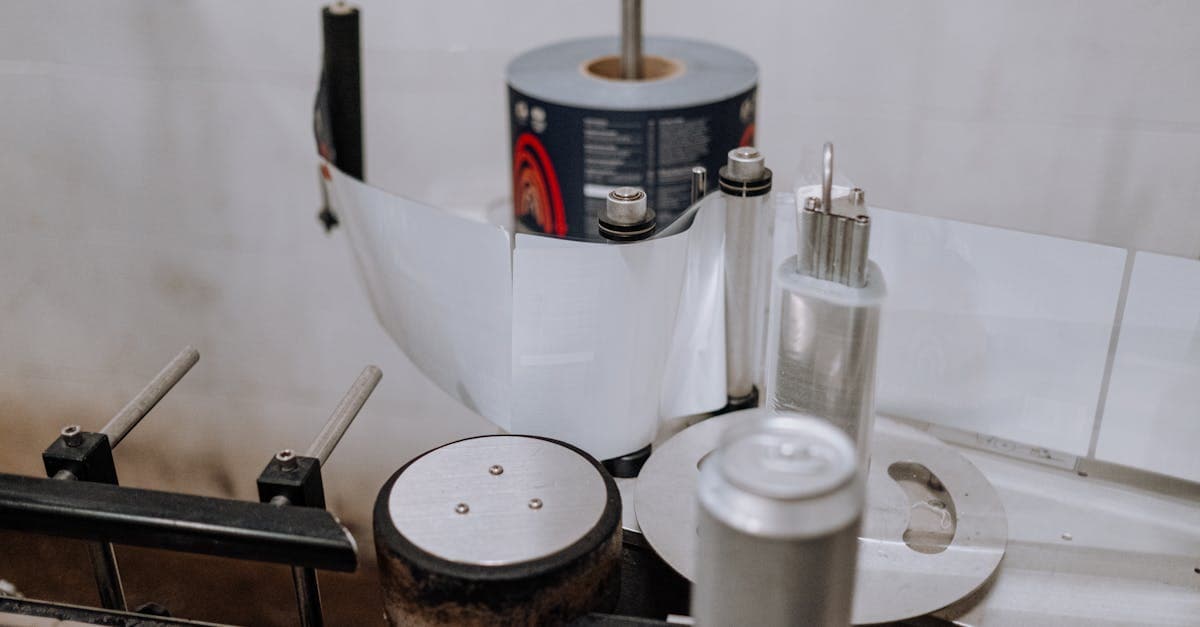
Consumer goods manufacturing operates in a scheduling environment where demand is volatile, product variety is high, and delivery windows are unforgiving. A retailer does not care that your packaging line broke down or that your promotional packaging arrived late - they care that their shelves are stocked on the promised date. Miss that window, and they fill it with a competitor's product.
This guide to consumer goods production scheduling covers the strategies that keep production aligned with demand, minimize changeover losses, and handle the seasonal and promotional surges that define the consumer products industry. At User Solutions, we have helped consumer goods manufacturers including Sleepmaster and Smart Coffee implement scheduling systems that bring order to demand-driven production.
The Consumer Goods Scheduling Challenge
Consumer goods scheduling is fundamentally different from make-to-order industrial manufacturing. The key differences that drive scheduling complexity include:
- Demand-driven production - schedules are built from forecasts, retail replenishment signals, and promotional plans rather than firm customer orders
- High SKU counts - a single production facility may manufacture 50 to 500+ SKUs, each with unique formulations, packaging, and labeling
- Frequent changeovers - switching between SKUs requires cleaning, tooling changes, and quality verification that consume productive capacity
- Seasonal and promotional peaks - demand can swing 200 to 400 percent between baseline and peak periods
- Retailer compliance requirements - strict delivery windows, shelf-life minimums, and labeling accuracy requirements with financial penalties for non-compliance
These factors make finite capacity scheduling essential. Infinite capacity plans that assume production lines are always available produce schedules that collapse during peak periods.
Demand-Driven Scheduling Strategies
Base Demand and Promotional Overlays
Effective consumer goods scheduling separates base demand (the steady-state replenishment volume) from promotional and seasonal overlays. Base demand is relatively predictable and can be scheduled in recurring production campaigns. Promotional and seasonal demand is layered on top, and the scheduling system must identify where this additional volume creates capacity conflicts.
The scheduling process follows this sequence:
- Lock base demand production campaigns - schedule recurring production runs for high-volume SKUs
- Overlay promotional volumes - add promotional production requirements based on the marketing calendar
- Identify capacity conflicts - determine where total demand exceeds available capacity
- Resolve conflicts - pull production forward, extend shifts, or negotiate delivery timing with retail partners
- Finalize and release - lock the schedule and communicate material requirements to procurement
This layered approach prevents the common problem where promotional orders constantly displace base demand production, creating stock-outs on core SKUs.
Campaign Scheduling
Campaign scheduling groups similar SKUs into production runs that minimize changeovers. Instead of producing each SKU independently, the scheduler sequences products that share formulations, packaging formats, or flavor families.
For example, a beverage manufacturer might schedule all citrus-flavored products in sequence (lemon, lime, orange, grapefruit) because the changeover between citrus flavors requires only a brief rinse rather than a full CIP (clean-in-place) cycle. This reduces changeover time from 90 minutes per full clean to 15 minutes per rinse, recovering hours of productive capacity per week.
Campaign scheduling requires a scheduling system that understands product-to-product changeover matrices - the time required to switch from any SKU to any other SKU. RMDB supports changeover matrix modeling, allowing the scheduler to automatically sequence products for minimum changeover time within each campaign.
Managing Seasonal Peaks
Consumer goods manufacturers experience dramatic seasonal demand variation. Holiday seasons, back-to-school periods, and weather-dependent product categories can double or triple production requirements within a narrow window.
Pre-Build Strategies
The most effective approach to seasonal peaks is pre-building inventory of shelf-stable products during low-demand periods. The scheduling system must balance:
- Storage capacity - pre-built inventory consumes warehouse space that may be limited
- Working capital - inventory ties up cash that may be needed for seasonal raw material purchases
- Shelf life - products with limited shelf life cannot be pre-built too far in advance
- Forecast accuracy - pre-building the wrong SKU mix wastes capacity and creates obsolete inventory
What-if analysis allows planners to model different pre-build scenarios and evaluate the tradeoff between pre-build inventory costs and peak-period overtime costs.
Flexible Capacity Planning
When pre-build is insufficient, manufacturers must flex capacity during peak periods through:
- Overtime scheduling - extending shifts and adding weekend production runs
- Temporary labor - adding workers for packaging and manual operations
- Co-manufacturing - outsourcing overflow volume to contract manufacturers
- Line speed optimization - running at maximum validated speed during critical periods
The scheduling system must model these flexible capacity options to give planners realistic visibility into peak-period throughput. Without finite capacity scheduling, manufacturers often discover they are over-committed only when it is too late to recover.
Changeover Optimization
In consumer goods manufacturing, changeover time directly reduces available production capacity. A facility running 20 changeovers per week at 90 minutes each loses 30 hours - nearly an entire shift - to non-productive time.
Changeover Reduction Strategies
Sequence optimization: Schedule products in families that minimize changeover complexity. A scheduling system with changeover matrix logic sequences automatically for minimum total changeover time.
SMED principles: Apply Single-Minute Exchange of Die methodology to reduce changeover duration. While this is an operational improvement, the scheduling system should reflect current changeover times accurately and update as improvements are made.
Dedicated lines: For very high-volume SKUs, dedicating a line eliminates changeovers entirely. The scheduling system helps evaluate whether dedicating a line improves overall throughput or creates bottlenecks elsewhere.
Run length optimization: Longer production runs reduce changeover frequency but increase inventory. The scheduling system should help planners find the optimal run length that balances changeover losses against inventory carrying costs.
Packaging and Labeling Coordination
Consumer goods packaging is more complex than it appears. A single product may have multiple packaging configurations - single units, multi-packs, club store sizes, promotional bundles - each requiring different packaging materials, label artwork, and line tooling.
Scheduling must coordinate:
- Packaging material availability - printed cartons, labels, and promotional inserts often have 6 to 10 week lead times
- Artwork version control - seasonal and promotional packaging requires different artwork that must match the scheduled production run
- Line tooling changes - switching between package sizes requires mechanical adjustments
- Co-packing operations - promotional bundles and variety packs may require a secondary packaging step
Integrating packaging material MRP with production scheduling ensures that packaging arrives in sync with production - preventing the frustrating scenario where product is ready but packaging is not.
Retailer Compliance and Delivery Windows
Major retailers enforce strict delivery compliance requirements that directly affect production scheduling:
- Must-arrive-by-date (MABD) - orders that arrive late are refused or subject to chargebacks
- Minimum shelf life requirements - retailers may require 75% or more remaining shelf life at delivery
- Case labeling accuracy - incorrect labels or missing promotional stickers result in chargebacks
- Pallet configuration standards - specific stacking patterns and pallet labels required
Production scheduling must work backward from these delivery requirements to determine the latest possible production date. The scheduling system should flag any schedule that produces product too late to meet delivery windows or too early to meet shelf-life requirements.
KPIs for Consumer Goods Scheduling
- Overall equipment effectiveness (OEE) - combines availability, performance, and quality into a single metric, target above 75%
- Changeover time as percentage of available time - target below 10%
- Schedule adherence - percentage of planned runs completed on time, target above 90%
- Case fill rate - percentage of orders shipped complete, target above 97%
- Inventory turns - higher is better, balancing against stock-out risk
- Retailer compliance rate - percentage of deliveries meeting MABD and other requirements
Track these alongside your broader manufacturing KPIs to maintain a complete view of scheduling performance.
Technology for Consumer Goods Scheduling
Consumer goods manufacturers often outgrow their ERP system's built-in scheduling capability as SKU counts and demand complexity increase. The most effective approach is an ERP scheduling add-on that pulls demand and BOM data from the ERP while providing the finite capacity scheduling, changeover optimization, and what-if analysis that consumer goods require.
RMDB integrates with existing ERP systems to provide this scheduling layer. The Turner Suspension Bicycles success story demonstrates how what-if scenario analysis helped a consumer products manufacturer secure their largest customer order by modeling production capacity before committing to the delivery date.
Frequently Asked Questions
Ready to take control of consumer goods scheduling? User Solutions has helped consumer products manufacturers from Sleepmaster to Smart Coffee implement scheduling systems that handle demand volatility, changeover complexity, and seasonal peaks. Request a demo to see how RMDB can optimize your production scheduling.
📚 Continue learning: This article is part of our Manufacturing Scheduling by Industry: How Requirements Differ pillar guide - the comprehensive resource for industry-specific manufacturing scheduling.
Expert Q&A: Deep Dive
Q: What patterns do you see in consumer goods manufacturers who struggle with scheduling?
A: The common thread is reactive scheduling. Consumer goods manufacturers who struggle are constantly firefighting - pulling scheduled runs to accommodate urgent orders, running partial batches that waste changeover time, and expediting shipments to cover missed production windows. The root cause is almost always a lack of finite capacity visibility. When you cannot see true capacity 4 to 8 weeks out, you cannot plan for promotional surges or seasonal peaks. You end up running overtime to catch up rather than planning ahead. RMDB gives consumer goods manufacturers that forward visibility so they can shift from reactive to proactive scheduling.
Q: How should consumer goods companies balance make-to-stock and make-to-order production?
A: Most consumer goods manufacturers run a hybrid model - high-volume base SKUs are made to stock, while limited editions, private label, and promotional packs are made to order. The scheduling system needs to handle both strategies on the same production lines without letting MTO orders constantly bump MTS production. We configure RMDB to protect base inventory build schedules while reserving defined capacity windows for MTO orders. This prevents the common scenario where promotional orders consume all available capacity and base SKU stock-outs follow.
Q: What is the most overlooked scheduling constraint in consumer goods manufacturing?
A: Packaging material availability. Everyone focuses on raw ingredients and production line capacity, but packaging - printed cartons, labels, shrink film, promotional inserts - often has 6 to 10 week lead times and requires coordination with external print suppliers. We have seen production lines sit idle because the product was ready but the promotional packaging had not arrived. Your scheduling system must include packaging material availability as a constraint alongside production capacity.
Frequently Asked Questions
Ready to Transform Your Production Scheduling?
User Solutions has been helping manufacturers optimize their production schedules for over 35 years. One-time license, 5-day implementation.

User Solutions Team
Manufacturing Software Experts
User Solutions has been developing production planning and scheduling software for manufacturers since 1991. Our team combines 35+ years of manufacturing software expertise with deep industry knowledge to help factories optimize their operations.
Share this article
Related Articles

Composite Manufacturing Scheduling: Cure Time Constraints, Autoclave Capacity, and Layup Sequencing
Composite manufacturing scheduling software that handles autoclave cure cycles, prepreg shelf life, layup sequencing, and NDT inspection holds for aerospace and automotive suppliers.

Fastener and Hardware Manufacturing Scheduling: High-Throughput, Die-Constrained Production
Fastener manufacturing scheduling software that manages heading die life, heat treat batch loads, plating line capacity, and kanban replenishment for screws, bolts, and rivets.
PCB Fabrication Scheduling: Managing Phototool Sequences, Plating Tanks, and Layer Constraints
PCB fabrication scheduling software that handles phototool sequencing, plating bath chemistry, drill allocation, and AOI queues. Built for electronics manufacturers.