

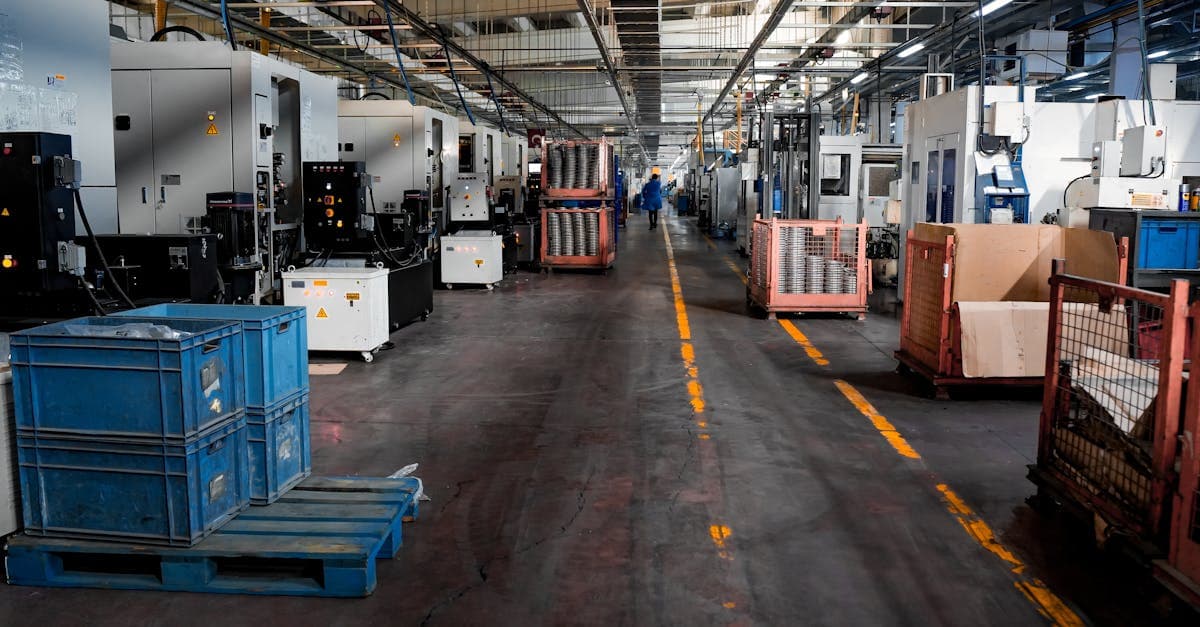
Lean manufacturing has transformed how factories operate worldwide - from Toyota's original production system to modern job shops cutting lead times in half. But most guides on lean stay theoretical: they list the tools without showing how to actually implement them on a real shop floor with real constraints. This guide is different. Drawing on 35+ years of helping manufacturers at companies like GE, BAE Systems, and the US Navy optimize their production operations, User Solutions provides a practical, step-by-step roadmap for implementing lean manufacturing - whether you run a 20-person job shop or a 500-person multi-plant operation.
What Is Lean Manufacturing?
Lean manufacturing is a systematic approach to identifying and eliminating waste - defined as any activity that consumes resources without creating value for the customer. A customer pays you to transform raw materials into finished products. Everything else - waiting, moving, storing, inspecting, reworking - is waste that lean seeks to minimize or eliminate.
The core idea is deceptively simple: make exactly what the customer wants, when they want it, in the quantity they want, with minimum waste. Achieving this requires rethinking how materials flow through your factory, how work is scheduled, and how problems are surfaced and solved.
The Two Pillars of Lean
The Toyota Production System - the origin of lean - rests on two pillars:
- Just-in-Time (JIT): Produce only what is needed, when it is needed, in the amount needed. This eliminates overproduction and excess inventory.
- Jidoka (Built-in Quality): Stop production when a defect is detected, fix the root cause, and prevent recurrence. This eliminates the waste of producing defective products.
Everything else in lean - 5S, Kanban, value stream mapping, Kaizen - supports these two pillars.
Lean Is Not About Cutting People
A critical point before we go further: lean manufacturing is not a headcount reduction program. It is about making your existing people more productive by removing the obstacles, waiting, and rework that prevent them from doing value-added work. The manufacturers who sustain lean gains are the ones who redeploy freed-up capacity into growth - more products, shorter lead times, better service - rather than layoffs.
The History and Evolution of Lean
Understanding where lean came from helps you understand why its principles work and how to adapt them to your environment.
Origins at Toyota (1940s-1970s)
After World War II, Toyota faced a challenge: how to compete with American automakers who had massive economies of scale. Taiichi Ohno and Shigeo Shingo developed the Toyota Production System (TPS) based on the insight that small-batch, flow-based production could be more efficient than mass production if waste was systematically eliminated.
Key innovations included:
- Quick changeover (SMED) - reducing die changes from hours to minutes
- Pull systems (Kanban) - producing only to replace what was consumed
- Andon cords - empowering any worker to stop the line for quality issues
- Standardized work - documenting the best known method for every operation
The Lean Movement Goes Global (1980s-1990s)
James Womack and Daniel Jones studied Toyota's methods and published The Machine That Changed the World (1990) and Lean Thinking (1996), introducing the term "lean" to Western manufacturers. The five lean principles they articulated remain the foundation:
- Define Value from the customer's perspective
- Map the Value Stream for each product family
- Create Flow by eliminating interruptions and batching
- Establish Pull so nothing is produced until downstream demands it
- Pursue Perfection through continuous improvement
Lean Today (2000s-Present)
Modern lean has expanded beyond automotive into aerospace, electronics, medical devices, food production, and job shop manufacturing. It has also merged with digital tools: finite capacity scheduling software, scheduling reports like those in EDGEBIC (RMDB 2.0), and IoT-enabled machine monitoring bring data-driven precision to lean principles that were originally managed with paper cards and whiteboards.
The 7 Wastes (Muda) of Lean Manufacturing
Waste identification is where lean implementation begins. Taiichi Ohno identified seven categories of waste. Learning to see these wastes in your own factory is the first step toward eliminating them.
1. Transport
Unnecessary movement of materials between processes. Every time a part is moved - from one building to another, from a machine to a staging area, from inspection back to production - it adds cost and lead time without adding value.
Real-world example: A machine shop moved parts between sawing (Building A) and milling (Building B) using a forklift, adding 45 minutes per batch. Rearranging equipment to create a saw-mill cell eliminated 3 hours of transport daily.
2. Inventory
Excess raw materials, WIP, or finished goods beyond what is immediately needed. Inventory hides problems - if you have 6 weeks of WIP, you will not notice a quality issue until 6 weeks after it started.
Real-world example: A defense contractor carried $3.2M in WIP across 400 open work orders. After implementing RMDB scheduling to control work order release, they reduced open orders to 180 and WIP to $1.8M - freeing $1.4M in working capital.
3. Motion
Unnecessary movement of people - walking, reaching, bending, searching. Motion waste is different from transport waste: transport moves materials, motion moves people.
Real-world example: An electronics assembly operator walked 2,400 steps per shift retrieving components from a central stockroom. Implementing point-of-use storage at the workstation eliminated 1,800 steps and reclaimed 35 minutes of productive time per shift.
4. Waiting
Idle time when people or machines are waiting for the next process step, material delivery, information, or approval.
Real-world example: CNC operators waited an average of 22 minutes per job for programming to deliver G-code to the machine. Implementing a pre-staging process where programs were loaded 2 jobs ahead cut wait time to under 3 minutes.
5. Overproduction
Making more than the customer ordered or making it earlier than needed. Ohno considered overproduction the worst waste because it causes all the other wastes - excess inventory, transport, motion, and waiting all increase when you overproduce.
Real-world example: A stamping shop ran full batches of 5,000 parts when the customer only needed 1,200 per month, because "the setup takes too long for small batches." After applying SMED to reduce setup from 90 minutes to 18 minutes, they switched to monthly batches of 1,200, eliminating 4 months of excess inventory per part number.
6. Overprocessing
Doing more work than the customer values - tighter tolerances than required, extra finishing steps, redundant inspections, unnecessary documentation.
Real-world example: A precision shop ground surfaces to 16 Ra when the customer specification called for 32 Ra. The extra grinding added $4.50 per part across 8,000 parts annually - $36,000 in waste per year on a single operation.
7. Defects
Scrap, rework, and warranty returns that consume resources to produce something the customer cannot use.
Real-world example: A sheet metal shop had a 6% first-pass yield loss on brake forming. Root cause analysis revealed the press brake's back gauge was drifting 0.008" after every 200 cycles. A $400 maintenance fix eliminated $78,000 in annual scrap.
The 8th Waste: Underutilized Talent
Many lean practitioners add an eighth waste: not leveraging the knowledge and creativity of your workforce. Your operators see waste every day. If you do not have a system for capturing and acting on their ideas, you are wasting your most valuable resource.
Core Lean Tools and Techniques
Lean provides a toolkit of proven methods. Here are the essential ones, with practical guidance on implementation.
5S: The Foundation
5S creates organized, clean, standardized workplaces. It is always the starting point because other lean tools fail in a chaotic environment.
- Sort (Seiri) - Remove everything not needed for current production
- Set in Order (Seiton) - Organize remaining items with designated locations
- Shine (Seiso) - Clean the area and inspect equipment during cleaning
- Standardize (Seiketsu) - Create visual standards so anyone can see if things are out of place
- Sustain (Shitsuke) - Audit regularly and make 5S part of daily routine
Implementation tip: Start with one work cell. Do not try to 5S the entire factory at once. A successful 5S in one area builds momentum and creates a model for others.
Kanban: Pull-Based Production
Kanban uses visual signals (cards, bins, electronic triggers) to authorize production or material movement. Instead of pushing work based on a forecast, Kanban pulls work based on actual consumption.
Simple two-bin Kanban example: Your assembly line uses M6 bolts. You have two bins of 500. When the first bin empties, the empty bin goes to the supplier (or stockroom) as a replenishment signal. The operator starts the second bin. Replenishment arrives before the second bin empties. No stockouts, no excess inventory.
For production Kanban in a job shop environment, RMDB can function as an electronic Kanban system - releasing work orders to the shop floor only when downstream capacity is available to process them.
Value Stream Mapping (VSM)
VSM is a diagnostic tool that maps every step in the production process for a product family - from raw material receipt to customer shipment. It captures:
- Process times (value-added)
- Wait times (non-value-added)
- Inventory quantities at each stage
- Information flow (how orders and schedules move)
- Material flow (how parts move)
The output is a current state map showing where waste exists and a future state map showing the target condition. The gap between current and future state becomes your lean improvement roadmap.
Kaizen: Continuous Improvement
Kaizen means "change for the better." In practice, it takes two forms:
- Daily Kaizen: Small, incremental improvements made by operators and supervisors as part of routine work
- Kaizen Events: Focused 3-5 day workshops where a cross-functional team tackles a specific problem
Kaizen event structure:
- Day 1: Define the problem, observe the current process, collect data
- Day 2: Analyze root causes, brainstorm solutions
- Day 3: Implement changes (move equipment, redesign workflows, create standards)
- Day 4: Test and refine
- Day 5: Document new standards, present results, plan sustainment
SMED: Single-Minute Exchange of Dies
SMED is a systematic method for reducing changeover time. Developed by Shigeo Shingo at Toyota, SMED separates changeover activities into:
- Internal activities - must be done while the machine is stopped
- External activities - can be done while the machine is still running the previous job
The three-step SMED process:
- Separate internal and external activities
- Convert internal activities to external where possible
- Streamline all remaining activities
Example: A plastic injection molder reduced die changes from 72 minutes to 11 minutes by pre-staging the next mold on a roller cart (external), pre-heating the mold to operating temperature (external), and standardizing clamp heights so bolts did not need to be fully removed (streamlined internal).
Lean Scheduling: Connecting Lean to Production Planning
Lean principles directly influence how you should schedule production. Without lean scheduling, you end up with islands of efficiency surrounded by oceans of waste.
Heijunka: Level Loading
Heijunka means leveling the production schedule so that the mix and volume of products are distributed evenly over time. Instead of running all of Product A on Monday, all of Product B on Tuesday, and all of Product C on Wednesday, heijunka distributes A, B, and C across each day.
Why it matters: Level loading reduces the amplification effect where small changes in demand cause huge swings in production. It also keeps every resource busy with a steady workload rather than alternating between overloaded and starved.
RMDB's finite capacity scheduler supports heijunka by distributing work across time periods to minimize load peaks and valleys.
Pull Scheduling vs. Push Scheduling
| Aspect | Push Scheduling | Pull Scheduling |
|---|---|---|
| Trigger | Forecast or MRP explosion | Actual consumption or customer order |
| WIP impact | Tends to build excess WIP | Controls WIP by design |
| Overproduction risk | High | Low |
| Responsiveness | Slow - committed to forecast | Fast - responds to real demand |
| Best suited for | High-volume, stable demand | Variable demand, make-to-order |
Most job shops and make-to-order manufacturers benefit from pull-based scheduling, where work is released only when the next work center has capacity. Finite capacity scheduling naturally implements pull logic by refusing to schedule work on resources that are already full.
Takt Time and Production Rate
Takt Time = Available Production Time / Customer Demand
Example: You have 450 minutes of available production time per shift and customer demand is 30 units per day.
Takt Time = 450 / 30 = 15 minutes per unit
This means you need to complete one unit every 15 minutes to meet demand without overproduction. If any workstation cycle time exceeds 15 minutes, that station is a bottleneck. If all stations are well under 15 minutes, you have excess capacity.
For job shops where every order is different, takt time applies at the product family level rather than individual parts.
Implementing Lean in Your Factory: A Step-by-Step Roadmap
Here is a practical implementation sequence based on what works in real manufacturing environments - not textbook theory.
Month 1-2: Foundation
Objective: Create stability and visibility.
- 5S one pilot area - choose a high-visibility work cell with a willing supervisor
- Establish baseline metrics - measure current lead time, WIP, on-time delivery, and first-pass yield
- Train team leads on lean basics - 8-hour introductory workshop, not a week-long classroom event
- Install visual management - production boards showing daily targets vs. actuals
Month 3-4: Diagnose
Objective: Understand where the waste is.
- Value stream map your top 3 product families
- Time studies on bottleneck operations - actual setup, run, and wait times
- Calculate takt time for each product family
- Identify the constraint resource using load data from the Resource Load view in EDGEBIC (RMDB 2.0) or manual observation
Month 5-8: Attack the Big Wins
Objective: Deliver measurable improvements.
- SMED event on the constraint resource - reduce setup time by 40-60%
- Implement Kanban for high-volume raw materials and common components
- Kaizen event on the highest-waste process identified in the value stream map
- Implement finite capacity scheduling with RMDB to enforce pull-based work release and eliminate overproduction
Month 9-12: Expand and Sustain
Objective: Scale what works and embed lean into daily operations.
- 5S all production areas using the pilot cell as the model
- Leader standard work - supervisors audit lean practices daily on a fixed route
- Cross-train operators to increase flexibility and reduce the waste of waiting for specialized skills
- Monthly value stream reviews - update current state maps and adjust the improvement backlog
Ongoing: Continuous Improvement
Lean is never "done." Establish:
- Daily huddles (15 minutes) at production boards
- Weekly Kaizen suggestions reviewed and acted on
- Quarterly value stream map updates
- Annual strategic planning that sets lean improvement targets tied to business goals
Lean Manufacturing KPIs and Metrics
You cannot improve what you do not measure. These KPIs tell you whether lean is working.
Overall Equipment Effectiveness (OEE)
OEE = Availability x Performance x Quality
- Availability: Actual run time / Planned production time
- Performance: Actual output / Theoretical maximum output during run time
- Quality: Good parts / Total parts produced
Example: A CNC machine runs for 7 hours of an 8-hour shift (87.5% availability), produces 420 parts vs. a theoretical max of 480 (87.5% performance), with 410 good parts out of 420 (97.6% quality).
OEE = 0.875 x 0.875 x 0.976 = 74.7%
World-class OEE is considered 85%+. Most manufacturers start between 55-65%.
Key Lean Metrics Dashboard
| Metric | What It Measures | Target Direction |
|---|---|---|
| Lead time (dock-to-dock) | Total time from material receipt to shipment | Reduce |
| WIP inventory turns | How fast WIP converts to shipped product | Increase |
| First pass yield | Percentage of units right the first time | Increase |
| On-time delivery | Orders shipped by promised date | Increase (>95%) |
| Setup/changeover time | Minutes lost between jobs | Reduce |
| Floor space utilization | Revenue per square foot | Increase |
| Suggestion implementation rate | Percentage of employee ideas acted on | Increase (>60%) |
EDGEBIC (RMDB 2.0) reports on-time delivery, utilization and OEE straight from the schedule and shop-floor actuals, providing the visibility lean requires to drive daily improvement.
Lean vs. Six Sigma vs. Agile Manufacturing
These methodologies overlap but have distinct focuses. Understanding the differences helps you choose the right approach - or combine them.
| Dimension | Lean | Six Sigma | Agile Manufacturing |
|---|---|---|---|
| Primary focus | Eliminate waste, improve flow | Reduce variation, eliminate defects | Rapid response to market changes |
| Core method | Value stream mapping, Kaizen | DMAIC (Define, Measure, Analyze, Improve, Control) | Flexible production systems, modular design |
| Key metric | Lead time, WIP | Defects per million (DPMO), Sigma level | Time-to-market, product mix flexibility |
| Typical tool | 5S, Kanban, SMED | Control charts, DOE, regression analysis | Reconfigurable cells, cross-trained teams |
| Best for | Waste reduction, flow improvement | Quality problems, process variation | High product variety, volatile demand |
| Cultural emphasis | Everyone improves every day | Black belt experts lead projects | Organizational flexibility |
Combining Lean and Six Sigma
Many manufacturers practice Lean Six Sigma, using lean tools for flow and waste reduction and Six Sigma tools for quality and variation reduction. The combination is powerful: lean gets parts flowing faster, and Six Sigma ensures each step produces consistent quality.
Where Scheduling Fits
Regardless of which methodology you follow, production scheduling is the operational backbone that translates strategy into daily action. RMDB supports lean (pull-based scheduling, level loading), Six Sigma (schedule stability for process control), and agile (rapid rescheduling for mix changes) approaches.
Lean for Small and Mid-Size Manufacturers
Lean was developed at Toyota - a global giant. But small and mid-size manufacturers (SMMs) often see the fastest and largest relative gains from lean implementation.
Why Lean Works Well for SMMs
- Shorter decision chains - the owner can approve changes in minutes, not months
- Closer to the work - leadership sees the shop floor daily
- Higher impact per improvement - a 20% lead time reduction at a $5M shop means $1M more throughput potential
- Flexible workforce - operators often know multiple machines, enabling cell-based flow
Common SMM Challenges with Lean
- Limited resources for improvement - you cannot pull people off production for week-long Kaizen events
- High product mix - standard lean examples assume repetitive production
- Customer concentration - one big customer's changing demands disrupt all lean efforts
Practical Lean for SMMs
- Start with 5S - it costs almost nothing and delivers visible results in days
- Focus SMED on your constraint - one setup reduction project at the bottleneck is worth ten at non-bottlenecks
- Use scheduling software as your lean engine - RMDB enforces pull, level loading, and WIP control without requiring a lean coordinator on staff
- Run half-day Kaizen events instead of full-week events - same structure, compressed timeline
- Track 3 KPIs, not 30 - lead time, on-time delivery, and WIP are sufficient to start
Lean ROI for a Typical SMM
Consider a $10M/year job shop with 45 employees:
- WIP reduction of 30%: From $1.5M to $1.05M = $450K cash freed
- Lead time reduction of 35%: From 6 weeks to 3.9 weeks = faster quoting, more competitive
- Overtime reduction of 40%: From $180K/year to $108K/year = $72K annual savings
- Scrap reduction of 25%: From $200K/year to $150K/year = $50K annual savings
- First-year total impact: Over $570K in tangible benefits
These are conservative numbers based on what we have seen across hundreds of implementations over 35+ years.
Expert Q&A: Deep Dive
How do you sustain lean improvements after the initial excitement fades?
Sustainability is the hardest part of lean. Three things make the difference: (1) visual management - make the standard visible so deviations are obvious; (2) leader standard work - supervisors and managers audit lean practices on a fixed schedule, not when they feel like it; (3) tie improvements to metrics people care about. If operators see that their 5S discipline directly correlates with fewer lost tools and less overtime, the behavior sticks. We have seen manufacturers lose 80% of their lean gains within 6 months because they treated lean as a project with an end date instead of a permanent operating system.
What is the relationship between lean manufacturing and finite capacity scheduling?
Lean and finite capacity scheduling are natural partners. Lean tells you to eliminate overproduction - finite scheduling prevents it by releasing work only when capacity exists. Lean says reduce batch sizes - RMDB calculates optimal lot sizes based on setup time vs. carrying cost. Lean demands level loading (heijunka) - the scheduler balances load across resources and time periods automatically. Without finite scheduling, many lean principles remain aspirational rather than operational.
How should a job shop approach lean differently than a repetitive manufacturer?
Job shops cannot implement lean the same way Toyota does. Takt time is meaningless when every order is different. Instead, job shops should focus on: reducing setup times (SMED) since setups are a huge percentage of total time in high-mix environments; implementing pull at the constraint resource rather than everywhere; using value stream mapping on product families rather than individual parts; and leveraging scheduling software to achieve the flow that repetitive manufacturers get from dedicated lines.
What is the biggest misconception about lean manufacturing?
That lean is about cutting headcount. Lean is about eliminating waste so that your existing people can produce more value. When Toyota implemented lean, they famously committed to no layoffs - freed-up workers were redeployed to improvement projects or new production lines. Manufacturers who use lean as a disguise for layoffs destroy the trust needed for continuous improvement. Your operators know where the waste is; they will not tell you if they think the reward is a pink slip.
How do you calculate the ROI of lean manufacturing?
Measure before and after on: inventory carrying costs (WIP + finished goods), overtime hours, scrap and rework costs, lead time (which affects working capital), and floor space freed up. A typical lean implementation in a mid-size shop reduces WIP by 25-40%, cuts lead times by 30-50%, and reduces scrap by 20-30%. If your shop carries $2M in WIP and reduces it 30%, you just freed $600K in cash - that alone often justifies the entire lean investment within the first year.
Frequently Asked Questions
Start Your Lean Journey with the Right Tools
Lean manufacturing is not a destination - it is a discipline. The manufacturers who succeed with lean are the ones who commit to daily improvement, support their teams with the right tools, and measure what matters.
User Solutions has helped manufacturers implement lean-aligned production scheduling for over 35 years. RMDB enforces lean principles operationally - pull-based work release, level loading, WIP control, and constraint-focused scheduling - while EDGEBIC, its current generation, adds the Gantt views, reports and shop-floor kiosk that give lean the visibility it demands for continuous improvement.
Whether you are starting with 5S in one work cell or rolling out a full lean transformation across multiple plants, the right scheduling software makes the difference between lean as a poster on the wall and lean as a competitive advantage.
Schedule a personalized demo to see how EDGEBIC (RMDB 2.0) supports lean manufacturing. View pricing to learn about our one-time license model - no per-user monthly fees. Or explore success stories from manufacturers who have combined lean principles with finite capacity scheduling to transform their operations.
Continue exploring this cluster
Dive deeper into specific aspects of lean manufacturing with these related guides from our content library:
- 5S Methodology Implementation: Step-by-Step Guide for Manufacturers
- Continuous Flow Manufacturing: Eliminating Batch-and-Queue Production
- Gemba Walks: A Practical Guide for Production Managers
- Just-in-Time (JIT) Manufacturing: Principles, Benefits, and Implementation
- Kaizen Events: How to Plan and Run Rapid Improvement Projects
- Kanban System in Manufacturing: How Pull-Based Production Works
- Lean Manufacturing for Small Manufacturers: A Practical Guide
- Lean Manufacturing KPIs: The Metrics That Drive Continuous Improvement
- Lean Scheduling Techniques: How to Schedule Production the Lean Way
- Lean Supply Chain Management: Principles & Implementation
- Lean vs Agile Manufacturing: Which Approach Fits You?
- OEE (Overall Equipment Effectiveness): Formula, Calculation, and Improvement
- PDCA Cycle in Manufacturing: Plan-Do-Check-Act Explained
- Poka-Yoke (Error Proofing): Preventing Defects at the Source
- Six Sigma in Manufacturing: DMAIC, Tools, and Real-World Applications
- SMED (Single-Minute Exchange of Die): Quick Changeover Guide
- Standard Work in Manufacturing: Building the Foundation for Improvement
- The 7 Wastes of Lean Manufacturing: Identification and Elimination Guide
- Total Productive Maintenance (TPM): The Complete Manufacturing Guide
- Value Stream Mapping: A Complete Guide for Manufacturers
Expert Q&A: Deep Dive
Q: How do you sustain lean improvements after the initial excitement fades?
A: Sustainability is the hardest part of lean. Three things make the difference: (1) visual management - make the standard visible so deviations are obvious; (2) leader standard work - supervisors and managers audit lean practices on a fixed schedule, not when they feel like it; (3) tie improvements to metrics people care about. If operators see that their 5S discipline directly correlates with fewer lost tools and less overtime, the behavior sticks. We have seen manufacturers lose 80% of their lean gains within 6 months because they treated lean as a project with an end date instead of a permanent operating system.
Q: What is the relationship between lean manufacturing and finite capacity scheduling?
A: Lean and finite capacity scheduling are natural partners. Lean tells you to eliminate overproduction - finite scheduling prevents it by releasing work only when capacity exists. Lean says reduce batch sizes - RMDB calculates optimal lot sizes based on setup time vs. carrying cost. Lean demands level loading (heijunka) - the scheduler balances load across resources and time periods automatically. Without finite scheduling, many lean principles remain aspirational rather than operational.
Q: How should a job shop approach lean differently than a repetitive manufacturer?
A: Job shops cannot implement lean the same way Toyota does. Takt time is meaningless when every order is different. Instead, job shops should focus on: reducing setup times (SMED) since setups are a huge percentage of total time in high-mix environments; implementing pull at the constraint resource rather than everywhere; using value stream mapping on product families rather than individual parts; and leveraging scheduling software to achieve the flow that repetitive manufacturers get from dedicated lines.
Q: What is the biggest misconception about lean manufacturing?
A: That lean is about cutting headcount. Lean is about eliminating waste so that your existing people can produce more value. When Toyota implemented lean, they famously committed to no layoffs - freed-up workers were redeployed to improvement projects or new production lines. Manufacturers who use lean as a disguise for layoffs destroy the trust needed for continuous improvement. Your operators know where the waste is; they will not tell you if they think the reward is a pink slip.
Q: How do you calculate the ROI of lean manufacturing?
A: Measure before and after on: inventory carrying costs (WIP + finished goods), overtime hours, scrap and rework costs, lead time (which affects working capital), and floor space freed up. A typical lean implementation in a mid-size shop reduces WIP by 25-40%, cuts lead times by 30-50%, and reduces scrap by 20-30%. If your shop carries $2M in WIP and reduces it 30%, you just freed $600K in cash - that alone often justifies the entire lean investment within the first year.
Frequently Asked Questions
Ready to Transform Your Production Scheduling?
User Solutions has been helping manufacturers optimize their production schedules for over 35 years. One-time license, 5-day implementation.

User Solutions Team
Manufacturing Software Experts
User Solutions has been developing production planning and scheduling software for manufacturers since 1991. Our team combines 35+ years of manufacturing software expertise with deep industry knowledge to help factories optimize their operations.
Share this article
Related Articles

Andon-Triggered Rescheduling: How Real-Time Machine Alerts Should Change Your Production Schedule
Andon alerts signal a production problem - but most plants stop at the alert. Learn the complete andon-to-reschedule workflow that protects delivery commitments when things go wrong.
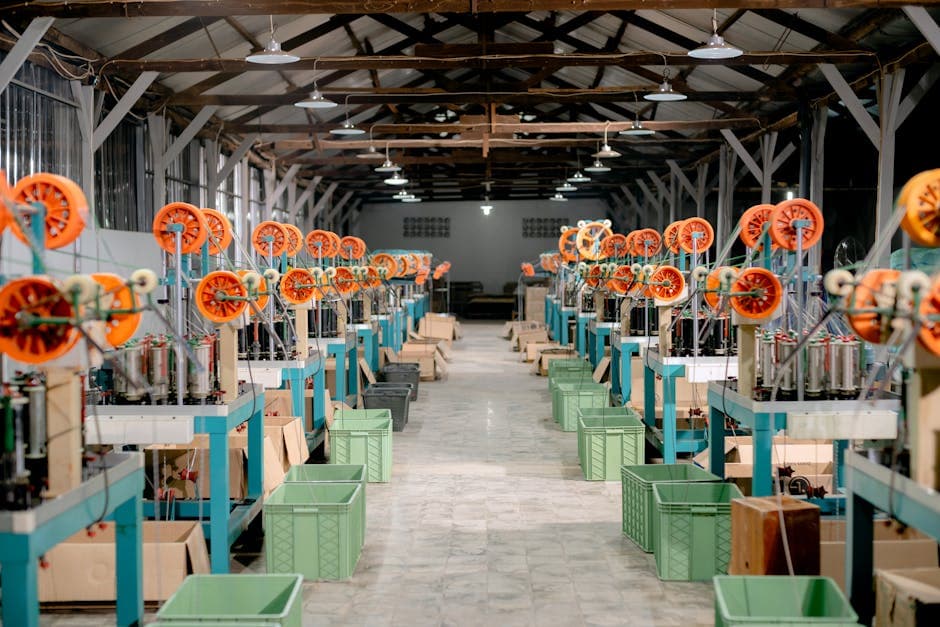
Cellular Manufacturing Scheduling: How Dedicated Cells Change Your Scheduling Approach
When you create manufacturing cells, the scheduling problem changes fundamentally. Learn how cell scheduling differs from functional layout and when to make a cell dedicated vs. shared.
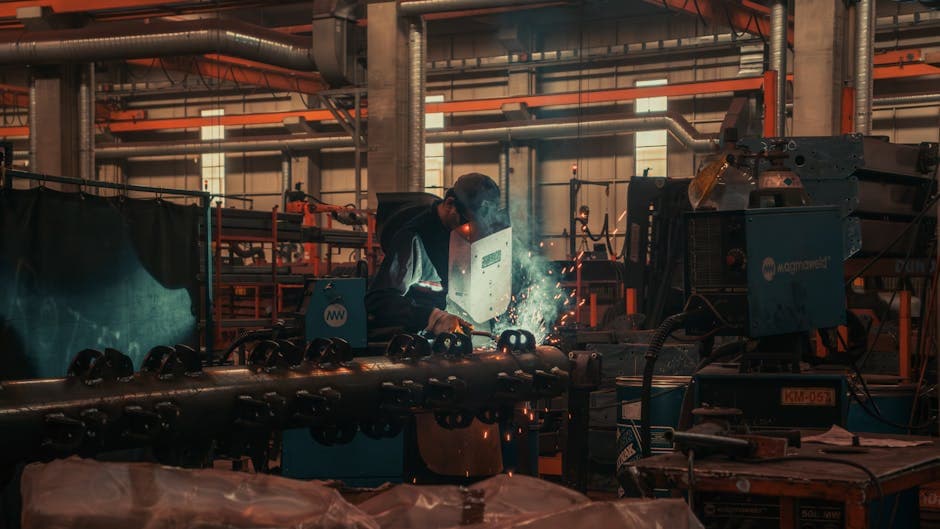
Can You Do Lean Manufacturing in a Job Shop? Yes - Here's How to Adapt It
Lean manufacturing works in job shops - with the right adaptations. Learn which principles transfer directly and which need modification for high-mix, low-volume production.