
The 7 Wastes of Lean Manufacturing: Identification and Elimination Guide
 User Solutions Team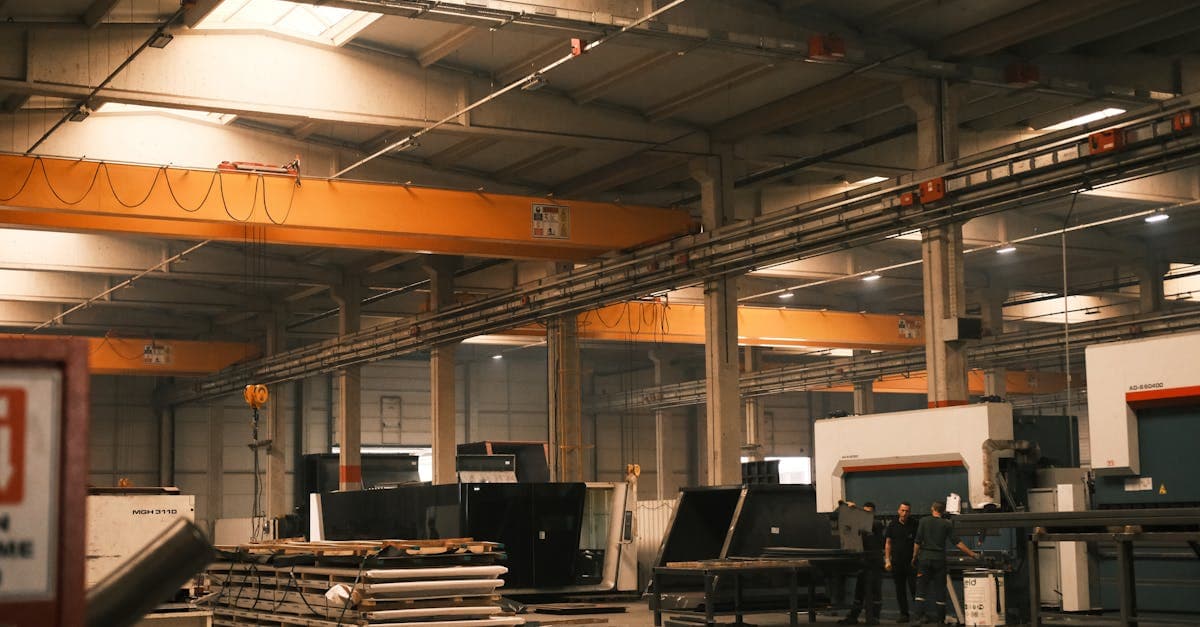
Understanding the 7 wastes of lean manufacturing is the first step toward building a more efficient, profitable production operation. Originally identified by Taiichi Ohno as part of the Toyota Production System, these seven categories of waste - collectively known by the acronym TIMWOOD - represent every activity in your factory that consumes resources without creating value for the customer. For manufacturers running job shops, make-to-order operations, or mixed-mode production environments, waste hides in plain sight: parts waiting in queues, operators walking across the plant for tools, machines producing batches nobody ordered yet. This guide breaks down each waste with real examples, shows you how to find waste in your own operation, and explains how lean manufacturing principles combined with finite capacity scheduling eliminate waste systematically.
What Are the 7 Wastes (TIMWOOD)?
The acronym TIMWOOD provides an easy framework for remembering all seven waste categories. Each letter represents a specific type of non-value-added activity that lean practitioners learn to see and eliminate.
T - Transport: Unnecessary movement of materials between processes or locations. Every time a part travels on a forklift, conveyor, or cart without being transformed, that movement is waste.
I - Inventory: Excess raw materials, work-in-process (WIP), or finished goods beyond what is immediately needed. Inventory ties up cash, consumes floor space, and hides quality problems.
M - Motion: Unnecessary movement of people - walking, reaching, bending, searching for tools or information. Motion waste often hides in poorly designed workstations.
W - Waiting: Idle time when materials, machines, people, or information are not ready. In most job shops, parts spend 80-95% of their total lead time waiting, not being processed.
O - Overproduction: Making more than the customer ordered or making it earlier than needed. Taiichi Ohno considered this the worst waste because it directly causes most of the other six.
O - Overprocessing: Performing work beyond what the customer requires or is willing to pay for. Polishing a surface that will be painted, holding tolerances tighter than specified, or running unnecessary inspections.
D - Defects: Products or components that do not meet specifications, requiring rework, scrap, or sorting. Defects waste the materials, time, and energy invested in producing them.
The 8th Waste: Underutilized Talent
Modern lean practitioners often add an eighth waste - the failure to leverage the skills, ideas, and creativity of your workforce. When operators who understand the production process intimately are never asked for improvement suggestions, you waste the most valuable resource in your factory: human intelligence.
Waste #1: Transport - Moving Materials Without Adding Value
Transport waste occurs whenever materials move between locations without being transformed. In a typical job shop, parts may travel thousands of feet through the facility during their production journey, but the actual machining, welding, or assembly occupies only a fraction of that distance.
Real-world example: A precision machining shop tracked the travel path of a typical aerospace bracket through their facility. The part traveled 2,400 feet across six departments over 11 days. Actual machining time was 4.5 hours. By reorganizing equipment into product-family cells, they reduced travel to 180 feet and cut lead time from 11 days to 3 days.
How to reduce it: Create manufacturing cells that group operations by product family. Use value stream mapping to visualize material flow paths. Locate related operations adjacent to each other rather than grouping machines by type.
Waste #2: Inventory - The Hidden Cost of Excess Stock
Inventory waste is the silent killer of manufacturing profitability. Every dollar tied up in excess raw materials, WIP, or finished goods is a dollar that cannot be invested in growth, equipment, or people. Worse, excess inventory masks problems - when you have a three-week buffer of WIP, you never feel the urgency to fix the quality issue at station 3 or the unreliable setup at station 5.
The real cost of inventory: Beyond the obvious carrying costs (typically 20-30% of inventory value annually), excess inventory causes:
- Floor space consumption - racking, staging areas, and warehousing for parts that are not shipping yet
- Obsolescence risk - engineering changes can make stocked parts worthless
- Quality degradation - parts sitting in WIP get damaged, corroded, or contaminated
- Cash flow constraints - materials purchased months before they generate revenue
Real-world example: A contract electronics manufacturer carried 45 days of WIP inventory as a buffer against unreliable scheduling. After implementing RMDB for finite capacity scheduling, they reduced WIP to 12 days while improving on-time delivery from 78% to 94%. The inventory reduction freed $1.2 million in working capital.
How to reduce it: Implement pull systems like Kanban to control WIP levels. Use finite capacity scheduling to release work orders only when downstream capacity is available. Reduce batch sizes to decrease the total inventory in the production pipeline.
Waste #3: Motion - When People Move Instead of Produce
Motion waste refers to unnecessary physical movement by operators - walking to retrieve tools, searching through drawers for fixtures, bending to access materials stored at floor level, or scrolling through screens to find job information. Unlike transport (which moves materials), motion waste moves people without producing value.
Key statistic: Studies consistently show that operators in unorganized shops spend 15-25% of their shift on non-productive motion. In an 8-hour shift, that is 72 to 120 minutes of paid time that produces nothing.
How to reduce it: Implement 5S methodology to organize workstations. Place frequently used tools within arm's reach. Use shadow boards so every tool has a designated location. Provide digital work instructions at each station so operators do not walk to an office for paperwork.
Waste #4: Waiting - The Biggest Time Thief in Manufacturing
Waiting is typically the largest waste category by time in job shop and make-to-order environments. Parts wait in queues between operations. Operators wait for materials, instructions, quality approvals, or machine availability. Machines wait for setup, tooling changes, or the next batch.
The numbers are stark: In a typical job shop with a 4-week lead time, actual processing time (cutting, forming, assembling) accounts for only 5-15% of total lead time. The remaining 85-95% is queue time - parts sitting in totes or on pallets, waiting for the next operation.
Real-world example: A defense subcontractor mapped their value stream for a missile component family and discovered that total processing time was 6.2 hours spread across 5 operations, but average lead time was 18 working days. The parts spent 97% of their time waiting. By implementing lean scheduling techniques with RMDB to synchronize operations and reduce batch sizes, they cut lead time to 5 days.
How to reduce it: Synchronize operations with finite capacity scheduling so parts arrive at each work center just as capacity becomes available. Reduce batch sizes to move parts through the value stream faster. Cross-train operators so labor constraints do not create bottlenecks. Use the Resource Load view in EDGEBIC, the current generation of RMDB, to show supervisors booked hours against available hours at every work center.
Waste #5: Overproduction - The Root of All Manufacturing Waste
Overproduction is making more than the customer ordered, or making it before it is needed. Ohno singled out overproduction as the most dangerous waste because it directly generates inventory, transport, motion, waiting, and defect waste downstream.
Why manufacturers overproduce: The reasons are understandable but costly. Shops overproduce to keep machines busy (the utilization trap), to amortize long setup times over larger batches, to buffer against uncertain demand, or simply because the MRP system told them to. Every one of these reasons can be addressed with better scheduling and lean practices.
The utilization trap: Many manufacturers measure success by machine utilization - and a machine sitting idle feels wasteful. But producing parts nobody ordered just to keep a machine running creates far more waste than an idle machine. The correct metric is not machine utilization; it is throughput of customer-valued products. OEE (Overall Equipment Effectiveness) provides a more balanced view by factoring in availability, performance, and quality.
How to reduce it: Implement pull-based production using Kanban signals. Use RMDB to schedule to actual demand rather than forecast. Reduce setup times with SMED techniques so smaller batches become economically viable. Track and limit WIP at each work center.
Waste #6: Overprocessing - Doing More Than the Customer Pays For
Overprocessing means performing operations or achieving quality levels beyond what the customer requires. Common examples include holding tighter tolerances than specified, applying surface finishes that will be covered by paint or plating, running 100% inspection when statistical sampling would suffice, and generating reports that nobody reads.
Real-world example: A medical device manufacturer discovered they were inspecting every part at three different stations - incoming, in-process, and final. Analysis showed that the in-process inspection caught the same defects as final inspection with 95% overlap. By implementing statistical process control at the in-process station and reducing final inspection to sampling, they freed one full-time inspector for value-added quality engineering work.
How to reduce it: Review customer specifications carefully - do not assume tighter is better. Implement poka-yoke (error-proofing) to prevent defects rather than inspecting for them. Challenge every operation: does the customer value this step? Would they pay extra for it?
Waste #7: Defects - The Cost of Getting It Wrong
Defects are the most visible waste because they have direct, measurable costs: scrapped material, rework labor, expedited shipping for replacement parts, warranty claims, and damaged customer relationships. But the indirect costs are often larger - the disruption to the schedule when a batch fails inspection, the overtime to recover lost capacity, and the engineering time spent investigating root causes.
The multiplier effect: A defect caught at final inspection costs 10 times more than one caught at the operation that caused it. A defect found by the customer costs 100 times more. This is why lean emphasizes building quality in at the source (jidoka) rather than inspecting it in at the end.
How to reduce it: Implement poka-yoke devices to prevent errors. Use standard work to ensure every operator follows the proven best method. Apply PDCA cycles to investigate and permanently fix root causes. Track first-pass yield as a key lean KPI.
How to Find Waste in Your Factory
Identifying waste requires going to where the work happens and observing with fresh eyes. Here is a structured approach:
Step 1: Walk the Gemba
Gemba walks take leadership to the production floor to observe processes firsthand. Walk the path a part takes from raw material receipt to shipment. Time each operation, each transport step, and each queue. Document what you see without trying to fix anything yet.
Step 2: Map the Value Stream
Value stream mapping creates a visual representation of material and information flow for a product family. It distinguishes value-added time from non-value-added time and makes waste impossible to ignore. A typical first value stream map reveals that 90% or more of lead time is waste.
Step 3: Quantify and Prioritize
Not all waste is equal. Quantify each waste category in terms of time and dollars. A waste worth $500,000 annually in excess inventory deserves more attention than $5,000 in unnecessary motion. Use a Pareto chart to focus on the vital few rather than the trivial many.
Step 4: Implement Countermeasures
For each priority waste category, select the appropriate lean tool:
| Waste | Primary Lean Tool |
|---|---|
| Transport | Cellular manufacturing, facility layout redesign |
| Inventory | Kanban, pull systems, finite capacity scheduling |
| Motion | 5S, workstation redesign |
| Waiting | Flow manufacturing, synchronized scheduling |
| Overproduction | Pull systems, RMDB scheduling |
| Overprocessing | Standard work, specification review |
| Defects | Poka-yoke, SPC, PDCA |
Using Scheduling Software to Eliminate Waste Systematically
While lean tools address waste at the workstation level, the biggest waste reductions come from improving how work flows through the entire factory. This is where finite capacity scheduling software becomes essential.
RMDB by User Solutions prevents the two most damaging wastes - overproduction and waiting - at their source:
- Prevents overproduction by releasing work orders only when customer demand and actual capacity align
- Reduces waiting by synchronizing operations so parts arrive at each work center just as capacity becomes available
- Controls inventory by limiting WIP releases based on downstream capacity constraints
- Eliminates expediting waste by creating schedules that are achievable from day one
Combined with the reports in EDGEBIC, the current generation of RMDB (OEE, utilization and on-time delivery), you can see where waste accumulates, enabling continuous improvement driven by data rather than guesswork.
Frequently Asked Questions
The 7 wastes (known as TIMWOOD) are Transport, Inventory, Motion, Waiting, Overproduction, Overprocessing, and Defects. Each represents an activity that consumes resources without adding value for the customer. Many practitioners now include an 8th waste - underutilized talent.
Overproduction is widely considered the worst waste because it directly causes most of the other six. Making more than the customer needs creates excess inventory, additional transport, more motion to manage stock, waiting for downstream processes, risk of overprocessing, and higher defect exposure.
Start with a Gemba walk - go to the production floor and observe without judgment. Use value stream mapping to document every step in your process, then classify each step as value-added, necessary non-value-added, or pure waste. Timing studies and spaghetti diagrams also reveal hidden waste in transport and motion.
Muda is waste - activities that add no value. Mura is unevenness - fluctuations in workload that cause some resources to be overloaded while others sit idle. Muri is overburden - pushing people or machines beyond sustainable limits. Lean addresses all three, but most implementations focus primarily on Muda.
Finite capacity scheduling software like RMDB prevents overproduction by releasing work orders only when capacity is available. It reduces waiting by synchronizing operations across work centers, minimizes WIP inventory by controlling job release timing, and eliminates the waste of expediting by creating realistic, achievable schedules.
Start Eliminating Waste Today
The 7 wastes framework gives you a lens for seeing inefficiency that was previously invisible. But seeing waste is only the beginning - eliminating it requires the right tools and systems. RMDB finite capacity scheduling prevents overproduction and waiting at their source, while EDGEBIC, the current generation of RMDB, reports OEE, utilization and on-time delivery so you can see where waste accumulates so your Kaizen events target the highest-impact opportunities. Contact User Solutions to see how manufacturers have used lean principles combined with intelligent scheduling to cut lead times by 30-50% and reduce WIP inventory by 25-40%.
Expert Q&A: Deep Dive
Q: How do you prioritize which waste to attack first?
A: Start with overproduction - it is the root cause of most other wastes. If you stop making things nobody ordered, inventory drops, transport decreases, and defect exposure shrinks automatically. After overproduction, attack waiting time because it is typically 80-95% of total lead time in job shops. Use value stream mapping to quantify each waste category, then target the one consuming the most time or money. The data usually makes the priority obvious.
Q: Can you really eliminate all 7 wastes completely?
A: No, and that is not the goal. Some waste is necessary - you cannot avoid transporting parts between operations entirely, and some inspection is required for quality. The lean approach distinguishes between Type 1 Muda (necessary waste that cannot be eliminated today) and Type 2 Muda (pure waste that can be removed immediately). Focus on Type 2 first for quick wins, then continuously reduce Type 1 through process redesign and technology improvements.
Q: What role does overproduction play as the root waste in manufacturing?
A: Taiichi Ohno called overproduction the fundamental waste because it triggers a chain reaction. Make 200 parts when the customer ordered 100, and you need storage space (inventory waste), forklifts to move them (transport waste), people to count and track them (motion waste), and quality checks on parts that may never ship (overprocessing waste). Finite capacity scheduling with tools like RMDB directly prevents overproduction by tying production releases to actual customer demand and available capacity.
Frequently Asked Questions
Ready to Transform Your Production Scheduling?
User Solutions has been helping manufacturers optimize their production schedules for over 35 years. One-time license, 5-day implementation.

User Solutions Team
Manufacturing Software Experts
User Solutions has been developing production planning and scheduling software for manufacturers since 1991. Our team combines 35+ years of manufacturing software expertise with deep industry knowledge to help factories optimize their operations.
Share this article
Related Articles
Andon-Triggered Rescheduling: How Real-Time Machine Alerts Should Change Your Production Schedule
Andon alerts signal a production problem - but most plants stop at the alert. Learn the complete andon-to-reschedule workflow that protects delivery commitments when things go wrong.
Cellular Manufacturing Scheduling: How Dedicated Cells Change Your Scheduling Approach
When you create manufacturing cells, the scheduling problem changes fundamentally. Learn how cell scheduling differs from functional layout and when to make a cell dedicated vs. shared.
Can You Do Lean Manufacturing in a Job Shop? Yes - Here's How to Adapt It
Lean manufacturing works in job shops - with the right adaptations. Learn which principles transfer directly and which need modification for high-mix, low-volume production.