
Just-in-Time (JIT) Manufacturing: Principles, Benefits, and Implementation
 User Solutions Team
Just-in-time manufacturing is the foundational pillar of the Toyota Production System and one of the most transformative ideas in modern production. JIT means producing exactly what the customer needs, when they need it, in the quantity they need - no earlier, no more. While the concept sounds simple, implementing JIT requires disciplined execution of multiple lean manufacturing practices working in concert: pull systems, quick changeovers, reliable equipment, and quality at the source. This guide explains how JIT works, what prerequisites you need before attempting it, and how to implement JIT principles in your factory - whether you run a high-volume production line or a high-mix job shop.
The Philosophy Behind JIT
Traditional manufacturing operates on a push logic: forecast demand, build inventory to meet that forecast, and hope the forecast is right. When the forecast is wrong (and it usually is), you end up with too much of what customers do not want and not enough of what they do. Excess inventory ties up cash, consumes floor space, and creates the illusion of productivity while hiding quality problems, unreliable equipment, and inefficient processes.
JIT reverses this logic. Instead of producing to forecast, you produce to consumption. Material flows through the factory like water through a pipe - smoothly, continuously, and only in the volume needed downstream.
The Three JIT Principles
- Produce only what is needed: No speculative production. No building ahead. No "we have the raw material, so we might as well run it."
- Produce it when it is needed: Synchronize production timing with customer demand, not with machine availability or operator schedules.
- Produce only the quantity needed: No rounding up batch sizes for convenience. No extra parts "just in case."
JIT Is Not Zero Inventory
A critical misconception: JIT does not mean eliminating all inventory. It means eliminating waste inventory - the excess stock that exists because your processes are unreliable, your changeovers are too long, or your scheduling is imprecise. Strategic buffer inventory at calculated points in the value stream is part of a well-designed JIT system.
Prerequisites for JIT Success
JIT will expose every weakness in your production system. Before reducing inventory buffers, you need these capabilities in place:
1. Reliable Equipment (TPM)
If machines break down unpredictably, you cannot operate with minimal buffers because every breakdown starves downstream operations. Total productive maintenance builds the equipment reliability that JIT demands. Target: OEE above 85% at critical resources before implementing JIT.
2. Quick Changeovers (SMED)
JIT requires small batch sizes to match production mix to customer demand mix. Small batches require frequent changeovers, which are only economical if changeover times are short. SMED techniques reduce changeover times from hours to minutes, making small-batch JIT production feasible.
Example: A stamping shop producing 15 different part numbers cannot run JIT with 4-hour die changes - the changeover time forces large batches to amortize setup costs. After SMED reduces die changes to 12 minutes, producing every part number every day becomes practical.
3. Quality at the Source (Jidoka)
In a JIT environment with minimal buffers, every defective part creates an immediate shortage. Quality must be built into the process, not inspected after the fact. Poka-yoke devices prevent errors from occurring. Standard work ensures consistent execution. First-pass yield above 98% is a practical threshold before aggressive JIT implementation.
4. Stable, Leveled Demand
Pure JIT works best with relatively stable demand. Highly variable or seasonal demand requires modified approaches - level-loading the production schedule (heijunka) to smooth demand fluctuations, and maintaining strategic finished goods buffers for predictable demand spikes.
5. Reliable Suppliers
JIT extends beyond your factory walls. If raw materials arrive late, damaged, or in the wrong quantity, internal JIT flow breaks down. Building supplier partnerships with shared quality expectations, delivery reliability metrics, and communication systems is essential. Some manufacturers implement supplier Kanban to extend pull signals to key vendors.
How JIT Works on the Shop Floor
The Supermarket System
JIT uses controlled inventory points called supermarkets - small, carefully sized buffers between processes that cannot be directly linked in continuous flow. Unlike traditional WIP staging areas (where inventory accumulates without limit), supermarkets have fixed maximum quantities controlled by Kanban signals.
When a downstream process withdraws parts from the supermarket, a Kanban signal tells the upstream process to produce a replacement quantity - and only that quantity. The supermarket level never exceeds the calculated maximum.
The Pacemaker Process
In a JIT system, only one point in the value stream receives a production schedule. This is the pacemaker - typically the process closest to the customer that sets the tempo for the entire value stream. All upstream processes produce in response to pull signals, not schedules.
RMDB scheduling software schedules the pacemaker process with precision, leveling the production mix across the shift to create smooth demand on upstream processes. EDGEBI analytics monitors flow rates throughout the value stream to identify emerging bottlenecks before they disrupt JIT flow.
Heijunka: Level Loading the Schedule
Raw customer demand is lumpy - large orders followed by quiet periods, seasonal spikes, and random variation. JIT cannot function with lumpy demand because it creates surges that overwhelm some resources while leaving others idle.
Heijunka (production leveling) smooths the lumps by distributing production evenly across available time. Instead of producing 500 units of Part A on Monday and 500 units of Part B on Tuesday, heijunka produces 250A + 250B each day. This creates consistent demand on every resource and enables smaller, more frequent replenishment.
JIT Implementation Roadmap
Phase 1: Foundation (Months 1-3)
- Implement 5S across target production areas
- Begin TPM on critical equipment - target baseline OEE measurement
- Map the value stream for your highest-volume product family
- Identify the pacemaker process and constraint resources
Phase 2: Flow Creation (Months 3-6)
- Conduct SMED events on bottleneck changeovers - target 50% reduction
- Create manufacturing cells where possible to link operations in continuous flow
- Install FIFO lanes between processes that cannot be directly linked
- Implement Kanban supermarkets at calculated buffer points
Phase 3: Pull System Activation (Months 6-9)
- Activate Kanban pull signals - stop scheduling upstream processes
- Begin leveling the pacemaker schedule with heijunka
- Implement RMDB for finite capacity scheduling at the pacemaker
- Gradually reduce Kanban quantities to expose and solve problems
Phase 4: Optimization (Months 9-12+)
- Extend JIT principles to additional product families
- Implement supplier Kanban for key raw materials
- Continue Kaizen events to reduce setup times, improve quality, and increase equipment reliability
- Track lean KPIs through EDGEBI to identify next improvement targets
JIT in Job Shops: A Modified Approach
Pure JIT - every part produced only to order, no WIP buffers - is impractical in high-mix, low-volume job shops where every order is unique. But JIT principles still apply:
Internal JIT flow: Control WIP release so jobs enter the shop floor only when downstream capacity exists to process them. RMDB finite capacity scheduling accomplishes this by releasing work orders synchronized to actual resource availability - the scheduling equivalent of JIT.
JIT for common materials: Even in a job shop, raw materials like bar stock, sheet metal, and fasteners have predictable consumption patterns. Put these on Kanban replenishment while scheduling custom fabrication through the finite capacity scheduler.
CONWIP (Constant WIP): A simplified pull system for job shops that caps the total number of jobs on the floor. When one job ships, a new one is released. This controls total WIP without requiring traditional Kanban for every part number.
Real-world example: A 45-person aerospace job shop implemented CONWIP by limiting active jobs on the floor to 60 (down from an average of 110). Average lead time dropped from 22 days to 11 days. On-time delivery improved from 76% to 91%. Operators reported less chaos and fewer expedites because the shop was no longer drowning in WIP.
JIT After COVID-19: Building Resilience
The pandemic exposed vulnerabilities in JIT supply chains. Single-sourced materials from distant suppliers, minimal raw material buffers, and limited logistics alternatives created cascading shortages. The lesson is not to abandon JIT - the benefits of reduced waste and faster flow remain compelling. The lesson is to implement JIT with resilience:
- Dual-source critical materials: Maintain qualified backup suppliers for items that would halt production if unavailable
- Strategic raw material buffers: Calculate safety stock based on supply chain lead time variability, not just average lead time
- Supply chain visibility: Real-time monitoring of supplier status and in-transit materials
- Internal JIT: Even with larger raw material buffers, maintain JIT discipline for internal material flow - control WIP, pull between operations, level the production schedule
Frequently Asked Questions
Just-in-time (JIT) manufacturing is a production strategy where materials arrive and products are made only when needed to fulfill customer orders. The goal is to eliminate inventory waste by producing exactly what is needed, when it is needed, in the quantity needed - no earlier, no more.
JIT is one of the two pillars of lean manufacturing (the other being Jidoka/built-in quality). Lean is the broader philosophy encompassing all waste elimination; JIT specifically targets the wastes of overproduction, excess inventory, and waiting by synchronizing production with actual demand.
JIT creates vulnerability to supply chain disruptions because low inventory buffers mean any delay in material delivery can halt production. This was highlighted during COVID-19 when many JIT manufacturers faced shutdowns. Successful JIT requires reliable suppliers, stable demand patterns, and contingency plans for disruptions.
Yes, but with modifications. Small manufacturers may not have the leverage to demand JIT deliveries from suppliers, so they often implement JIT internally - controlling WIP flow between operations - while maintaining strategic raw material buffers. The principles of producing only what is needed, when needed, apply regardless of company size.
Kanban is the signaling mechanism that makes JIT work on the shop floor. JIT defines the philosophy (produce only to replace what was consumed); Kanban provides the practical method (cards or signals that authorize production and material movement). You cannot have effective JIT without some form of pull signal system.
Implement JIT With Confidence
Just-in-time manufacturing transforms your factory from a warehouse that occasionally processes parts into a flow system that delivers exactly what customers need. The prerequisite investments - TPM, SMED, quality at the source - pay dividends far beyond enabling JIT. When you are ready to implement the scheduling precision that JIT demands, RMDB provides finite capacity scheduling synchronized to actual demand, and EDGEBI gives you real-time visibility into flow performance. Contact User Solutions to learn how manufacturers have implemented JIT principles to cut lead times by 40-60% while improving on-time delivery above 95%.
Expert Q&A: Deep Dive
Q: How do you implement JIT without running out of parts?
A: This is the most common fear, and it is valid. The key is that JIT does not mean zero inventory - it means the right inventory. You need three prerequisites before reducing buffers: reliable equipment (implement TPM so machines do not break down unexpectedly), quality at the source (implement poka-yoke so defects do not consume your buffer), and short changeover times (implement SMED so you can produce small batches economically). Reduce inventory gradually - remove one hour of buffer, solve the problems that surface, stabilize, then remove another hour. Never reduce inventory faster than you improve process reliability.
Q: How did COVID-19 change the view of JIT manufacturing?
A: The pandemic exposed the fragility of JIT supply chains when disruptions cascade globally. But the lesson is not that JIT failed - it is that many companies implemented JIT incompletely. They reduced inventory without building the underlying capabilities (supplier partnerships, multi-sourcing, demand visibility) that Toyota considers prerequisites. Post-COVID, smart manufacturers are implementing 'JIT with resilience' - maintaining JIT internal flow while building strategic buffers for critical materials and diversifying supply sources.
Q: What is the connection between JIT and finite capacity scheduling?
A: JIT says produce only what is needed when it is needed. Finite capacity scheduling makes this operationally possible by determining exactly when each operation should start and finish based on real capacity constraints. Without scheduling precision, JIT becomes aspirational - you know you should not overproduce, but you lack the tool to determine what to produce when. RMDB provides that precision, releasing work orders synchronized to actual demand and available capacity.
Frequently Asked Questions
Ready to Transform Your Production Scheduling?
User Solutions has been helping manufacturers optimize their production schedules for over 35 years. One-time license, 5-day implementation.

User Solutions Team
Manufacturing Software Experts
User Solutions has been developing production planning and scheduling software for manufacturers since 1991. Our team combines 35+ years of manufacturing software expertise with deep industry knowledge to help factories optimize their operations.
Share this article
Related Articles
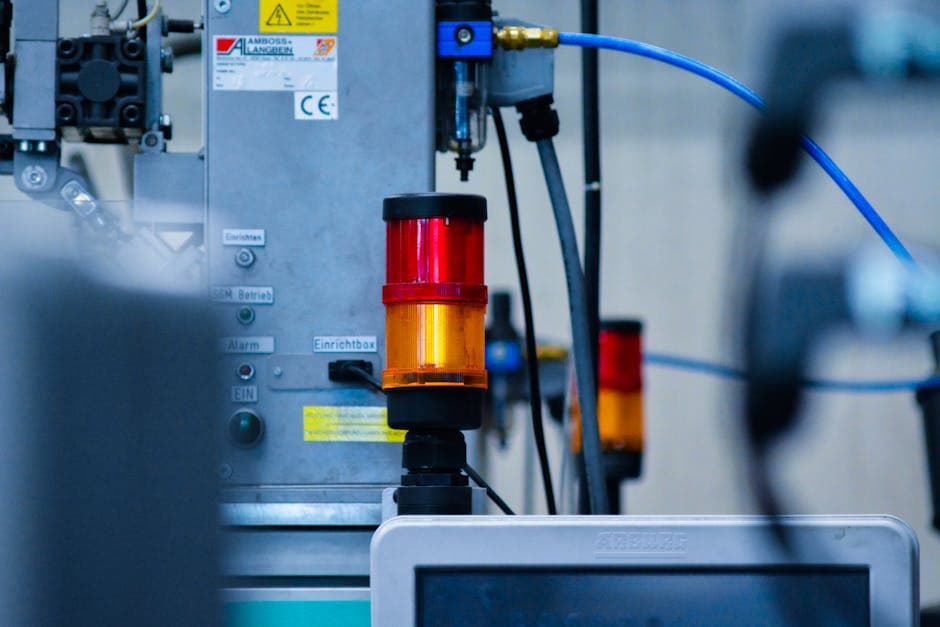
Andon-Triggered Rescheduling: How Real-Time Machine Alerts Should Change Your Production Schedule
Andon alerts signal a production problem - but most plants stop at the alert. Learn the complete andon-to-reschedule workflow that protects delivery commitments when things go wrong.
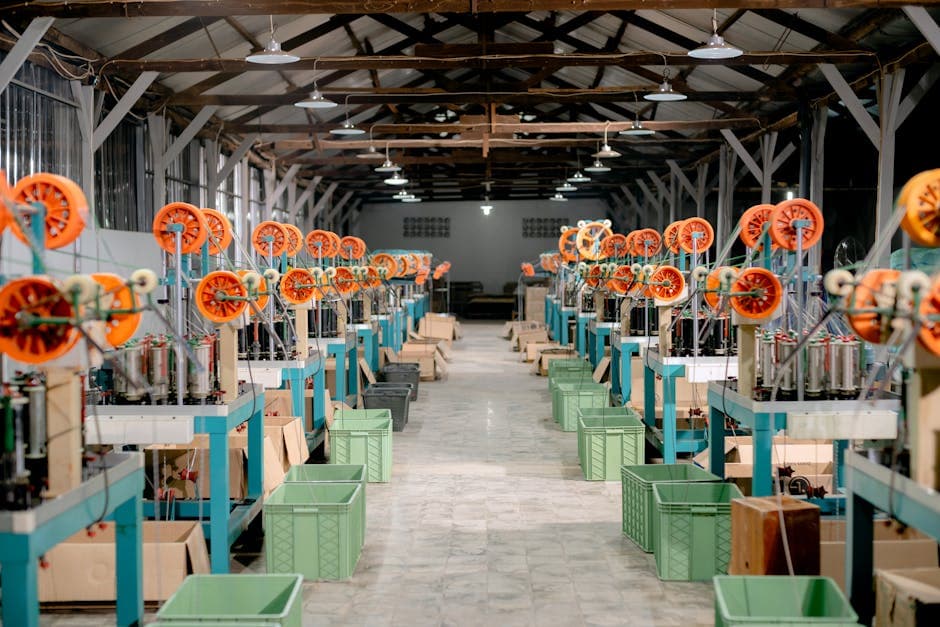
Cellular Manufacturing Scheduling: How Dedicated Cells Change Your Scheduling Approach
When you create manufacturing cells, the scheduling problem changes fundamentally. Learn how cell scheduling differs from functional layout and when to make a cell dedicated vs. shared.
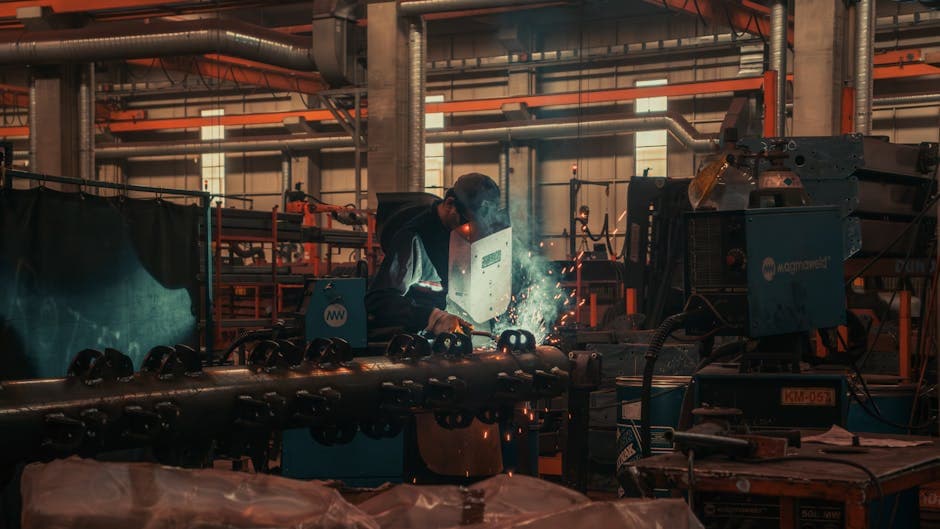
Can You Do Lean Manufacturing in a Job Shop? Yes - Here's How to Adapt It
Lean manufacturing works in job shops - with the right adaptations. Learn which principles transfer directly and which need modification for high-mix, low-volume production.