
Standard Work in Manufacturing: Building the Foundation for Improvement
 User Solutions Team
Standard work in manufacturing is the documented best-known method for performing every critical process in your factory. It is not paperwork for the sake of compliance - it is the foundation that makes every other lean manufacturing tool effective. Without standard work, you cannot see variation because there is no baseline. You cannot improve because there is no defined current state to improve from. And you cannot sustain improvements because there is no documented method to hold. Taiichi Ohno, the architect of the Toyota Production System, said it clearly: "Where there is no standard, there can be no Kaizen." This guide covers the three elements of standard work, how to create effective documents, and how standard work connects to scheduling accuracy and continuous improvement.
Why Standard Work Matters
In most factories, the same operation is performed differently by different operators. Operator A takes 8 minutes, Operator B takes 12, and Operator C takes 10. The 4-minute gap between them represents inconsistency that creates scheduling problems (which time should the scheduler use?), quality variation (which method produces the best quality?), and hidden waste (why does Operator B take 50% longer?).
Standard work eliminates this variability by defining the single best method based on current knowledge and requiring everyone to follow it - until a better method is discovered, at which point the standard is updated.
The Benefits Are Measurable
- Cycle time consistency: Variation drops 30-60% when all operators follow the same method
- Quality improvement: Defects decrease because the process that produces the best quality is documented and followed
- Training acceleration: New operators learn the correct method immediately instead of picking up habits from whoever trains them
- Scheduling accuracy: RMDB schedules with confidence when cycle times are consistent and predictable
- Improvement baseline: You can measure whether a change improved the process because you know exactly what the process was before
The Three Elements of Standard Work
1. Takt Time
Takt time sets the pace:
Takt Time = Available Production Time / Customer Demand
Every operation must be designed to complete within one takt time interval. If takt time is 4 minutes, each workstation must complete its standard work within 4 minutes.
Takt time is not a speed target for operators to chase - it is a design parameter for the process. If the work content exceeds takt time, you either redesign the task distribution or add resources.
2. Work Sequence
The work sequence defines the exact order of tasks the operator performs within one cycle. It specifies:
- The sequence of each step (first → second → third...)
- The time for each step
- The walking path between tasks
- Any parallel operations (machine running while operator loads the next machine)
The sequence is optimized to minimize waste - particularly motion waste (unnecessary walking, reaching, searching) and waiting waste (operator idle while machine cycles).
3. Standard Work-in-Process (SWIP)
SWIP is the minimum inventory within the process needed to maintain flow. In a multi-machine cell where one operator manages several machines, SWIP is the number of parts that must be in the cell for the operator to work continuously without waiting.
Example: An operator runs three machines in a cell. Machine A cycles for 3 minutes, Machine B for 2 minutes, Machine C for 4 minutes. The operator loads A, walks to B, loads B, walks to C, loads C, walks back to A. SWIP is 3 parts - one in each machine - so the operator always has a machine ready to unload when they return.
Creating Standard Work Documents
The Standard Work Combination Sheet
This is the core document. It shows, for one takt time cycle:
| Step | Manual Work Time | Walk Time | Machine Time | Total |
|---|---|---|---|---|
| Load Machine A | 0.4 min | - | - | 0.4 |
| Walk to Machine B | - | 0.2 min | 3.0 min (A cycles) | 0.2 |
| Load Machine B | 0.5 min | - | - | 0.5 |
| Walk to Machine C | - | 0.3 min | 2.0 min (B cycles) | 0.3 |
| Load Machine C | 0.4 min | - | - | 0.4 |
| Walk to Machine A | - | 0.3 min | 4.0 min (C cycles) | 0.3 |
| Unload and inspect | 0.3 min | - | - | 0.3 |
| Total operator time | 1.6 min | 0.8 min | - | 2.4 min |
If takt time is 3 minutes, the operator has 0.6 minutes of available time per cycle - usable for quality checks, autonomous maintenance, or absorbing minor variations.
The Standard Work Layout Diagram
A floor plan of the work area showing:
- Machine positions
- Operator walking path (drawn as a line with arrows)
- Material input and output points
- WIP locations and quantities (SWIP)
- Quality check points
This visual document is posted at the workstation so anyone - including new operators, supervisors, and Gemba walkers - can see whether the process is being followed.
The Production Capacity Sheet
Documents the capacity of each machine in the work sequence:
- Processing time per part
- Tool change frequency and time
- Manual load/unload time
- Calculated parts per shift
This data feeds directly into RMDB scheduling, ensuring the scheduler uses accurate capacity data.
Implementing Standard Work
Step 1: Observe the Current State
Watch 3-5 different operators perform the same task. Time each step. Note the variations. Identify the method that produces the best combination of speed, quality, and safety. This is your starting standard.
Step 2: Document the Best Method
Create the three standard work documents (combination sheet, layout diagram, capacity sheet). Use photos and simple diagrams - not dense text paragraphs that nobody reads.
Step 3: Train All Operators
Walk each operator through the standard work document at the workstation. Have them practice while you observe. Address questions and concerns. If an operator suggests a better method, test it - and update the standard if it proves superior.
Step 4: Post and Audit
Post the standard work documents at the workstation. Conduct weekly audits for the first month: observe the process, compare to the document, note deviations. Address deviations through coaching, not punishment.
Step 5: Improve and Update
Every Kaizen event that changes the process should produce an updated standard work document. Every SMED improvement, every poka-yoke addition, every layout change triggers a standard work revision. The document evolves with the process.
Standard Work and Scheduling
The connection between standard work and production scheduling is fundamental:
Accurate cycle times: Standard work provides the consistent, verified cycle times that RMDB needs to create accurate schedules. When every operator follows the same method, the scheduler can predict operation durations with confidence.
Reduced variability: Without standard work, cycle times might range from 8-14 minutes depending on the operator. With standard work, the range narrows to 9-11 minutes. Narrower ranges mean more accurate schedules and better on-time delivery.
Capacity data: Standard work capacity sheets provide the demonstrated (not theoretical) capacity for each resource - exactly the data RMDB needs for finite capacity scheduling.
EDGEBI analytics can compare actual cycle times against standard work times, identifying operations where the standard needs updating or where operators need additional training.
Standard Work Is Not a Constraint
A common objection: "Standard work kills creativity and makes people feel like robots." The opposite is true. Standard work frees people to be creative about improvement because it provides the baseline against which new ideas are tested.
Without a standard, every operator does it their own way, and there is no way to know which way is best. With a standard, an operator who discovers a better method can demonstrate that it is better by comparing results against the documented standard. If the new method beats the standard, it becomes the new standard - and everyone benefits.
Standard work is not about control. It is about capturing and sharing the best-known method so that every operator produces the best possible result, every time, until a better method is found.
Frequently Asked Questions
Standard work is a detailed, documented description of the best-known method for performing a process - specifying the sequence of steps, the time for each step, and the standard work-in-process required. It is not a static procedure but a living baseline that gets updated every time a better method is discovered.
The three elements are: Takt time (the rate at which you must produce to meet customer demand), Work sequence (the specific order of tasks the operator performs within one takt time cycle), and Standard WIP (the minimum in-process inventory needed to maintain flow without interruption).
Standard Operating Procedures (SOPs) describe what to do. Standard work goes further by specifying how long each step takes, the exact sequence that minimizes waste, and the standard inventory within the process. Standard work is visual, posted at the workstation, and continuously updated as improvements are made. SOPs tend to be text-heavy binder documents that rarely get updated.
Standard work should be created by the people who do the work - operators and team leaders - with support from engineering and supervision. When engineers create standard work without operator input, the documents describe theoretical methods rather than practical reality. When operators create it with guidance, the documents reflect what actually works.
Standard work should be updated whenever a Kaizen event or improvement activity discovers a better method. In practice, this means reviewing and potentially updating standard work monthly in active improvement areas. The key principle: standard work is the current best-known method, and 'current' means it changes as you learn.
Standardize, Then Improve
Standard work is not the end of improvement - it is the beginning. Every lean tool - 5S, SMED, Kaizen - produces better results when there is a defined standard to improve upon and an updated standard to sustain the gains. When your standard work feeds accurate data into RMDB scheduling and EDGEBI analytics, you create a production system where process consistency drives scheduling reliability and continuous improvement is measurable. Contact User Solutions to learn how manufacturers have built standard work into their scheduling and improvement systems.
Expert Q&A: Deep Dive
Q: How does standard work support continuous improvement?
A: Standard work is the baseline against which improvement is measured. Without a defined standard, you cannot see variation - every operator does it differently, and 'better' has no reference point. With standard work, deviations are visible, improvements can be measured against a defined baseline, and new methods can be tested against the current standard. Taiichi Ohno said 'where there is no standard, there can be no improvement.' Standard work makes the invisible visible.
Q: How do you get operators to follow standard work?
A: Two things drive compliance: involvement and logic. If operators help create the standard work, they feel ownership. If the standard work is genuinely the easiest, fastest way to do the job (because waste has been designed out), following it is easier than not following it. Resistance usually means either the operator was not consulted during creation, the standard work does not reflect reality, or the operator knows a better method that should be incorporated. All three are solvable through engagement.
Q: What is the relationship between standard work and scheduling?
A: Standard work provides the accurate cycle time and sequence data that scheduling depends on. When every operator follows the same method, cycle times are consistent and predictable - which means RMDB can schedule operations with accurate durations. Without standard work, cycle time varies by operator, making every schedule unreliable. The more consistent your processes, the more accurate your schedules, and the higher your on-time delivery.
Frequently Asked Questions
Ready to Transform Your Production Scheduling?
User Solutions has been helping manufacturers optimize their production schedules for over 35 years. One-time license, 5-day implementation.

User Solutions Team
Manufacturing Software Experts
User Solutions has been developing production planning and scheduling software for manufacturers since 1991. Our team combines 35+ years of manufacturing software expertise with deep industry knowledge to help factories optimize their operations.
Share this article
Related Articles

Andon-Triggered Rescheduling: How Real-Time Machine Alerts Should Change Your Production Schedule
Andon alerts signal a production problem - but most plants stop at the alert. Learn the complete andon-to-reschedule workflow that protects delivery commitments when things go wrong.
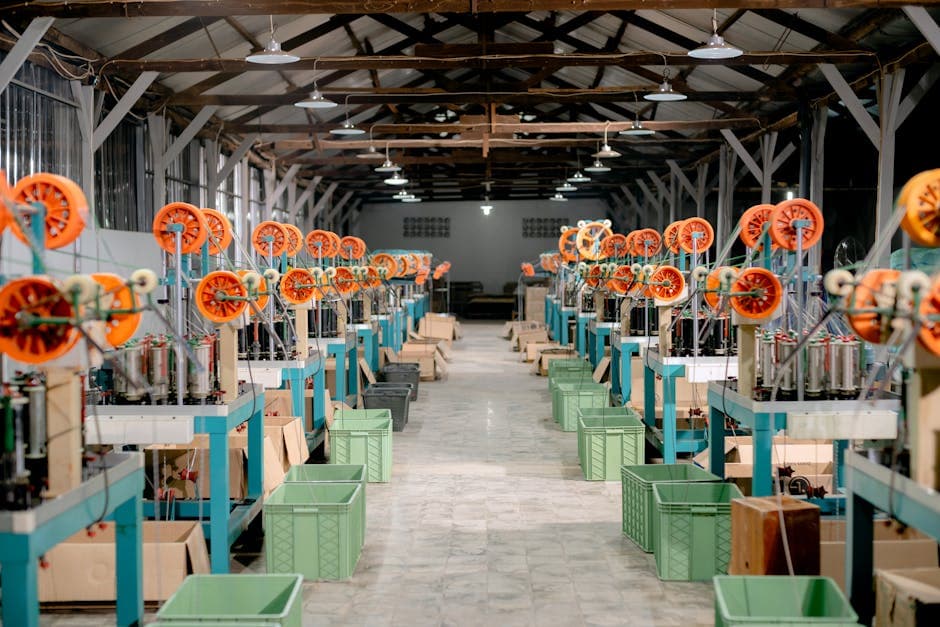
Cellular Manufacturing Scheduling: How Dedicated Cells Change Your Scheduling Approach
When you create manufacturing cells, the scheduling problem changes fundamentally. Learn how cell scheduling differs from functional layout and when to make a cell dedicated vs. shared.
Can You Do Lean Manufacturing in a Job Shop? Yes - Here's How to Adapt It
Lean manufacturing works in job shops - with the right adaptations. Learn which principles transfer directly and which need modification for high-mix, low-volume production.