
Lean Supply Chain Management: Principles & Implementation
 User Solutions Team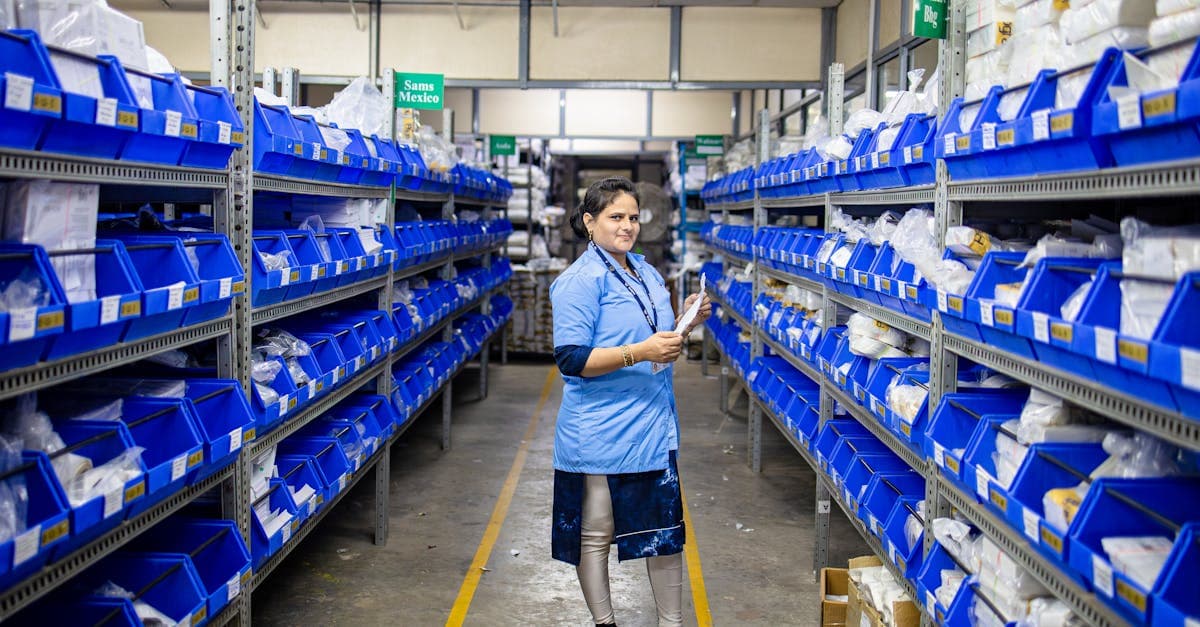
Lean supply chain management extends lean manufacturing principles beyond the four walls of your plant to encompass the entire flow of materials from suppliers through production to customers. While most lean implementations focus on the shop floor - reducing WIP, improving flow, eliminating the seven wastes - the supply chain often harbors more waste than the factory itself. Excess inventory sitting in warehouses, materials arriving weeks before production needs them, emergency expedites from unreliable suppliers, and transportation inefficiencies all represent waste that lean supply chain management systematically eliminates.
For manufacturers who have made progress on internal lean improvements, the supply chain is the next frontier for cost reduction and lead time improvement. This guide covers the core principles of lean supply chain management, practical implementation strategies, and how production scheduling enables the demand visibility that makes lean supply chains possible.
Core Principles of Lean Supply Chain
Principle 1: Pull-Based Replenishment
Traditional supply chains push materials based on forecasts. Purchasing departments order large batches based on predicted demand, creating mountains of inventory that may or may not be consumed. The lean alternative is pull-based replenishment, where actual consumption triggers new orders.
The kanban system is the most common pull mechanism for supply chain replenishment. When production consumes a container of material, the empty container or electronic signal triggers a replenishment order to the supplier. The supplier delivers only what was consumed - no more, no less.
Pull-based replenishment eliminates the overproduction waste that forecasting creates. Materials arrive because they are needed, not because a forecast predicted they might be needed.
Principle 2: Small, Frequent Deliveries
Traditional procurement optimizes for per-unit cost by ordering large quantities infrequently. The economic order quantity model reinforces this by calculating batch sizes that minimize the sum of ordering and carrying costs.
Lean supply chain management challenges this by questioning the ordering cost itself. If you reduce the cost of processing a purchase order (through blanket orders, EDI, vendor-managed inventory), the optimal order quantity drops. Smaller, more frequent deliveries mean less inventory, less warehouse space, less obsolescence risk, and faster response to demand changes.
The ideal is daily or even multiple-daily deliveries for high-volume materials. This is standard practice in automotive manufacturing and increasingly common in other industries. For your supplier, frequent deliveries also mean smoother production - they produce your parts in steady flow rather than lumpy batches.
Principle 3: Supplier Partnerships
Lean supply chains treat suppliers as partners, not adversaries. The traditional approach of squeezing suppliers on price, playing suppliers against each other, and switching for the lowest bid creates a supply base that is transactional, unreliable, and unwilling to invest in your success.
Lean supplier partnerships look different:
- Fewer, deeper relationships: Consolidate to fewer suppliers with stronger partnerships rather than distributing across many to "reduce risk"
- Long-term agreements: Multi-year contracts that give suppliers the confidence to invest in capacity, quality, and delivery improvements for your business
- Shared information: Give suppliers visibility into your demand forecasts, production schedules, and inventory levels so they can plan their own production more effectively
- Joint improvement: Work with suppliers on cost reduction and quality improvement instead of simply demanding lower prices
This does not mean ignoring cost. Lean partnerships often achieve lower total cost than adversarial relationships because they eliminate the hidden costs of poor quality, late deliveries, and emergency expedites.
Principle 4: Demand Visibility
Lean supply chains require accurate, timely demand signals. Suppliers cannot deliver just-in-time if they do not know what you need until a purchase order arrives. The lean approach shares demand information as early and as accurately as possible.
This is where production scheduling becomes the backbone of lean supply chain management. When RMDB creates a finite-capacity production schedule, it establishes exactly when each material is needed for each production order. This scheduled demand - not a forecast, not a guess, but a capacity-validated plan - becomes the demand signal that drives supplier deliveries.
Sharing the production schedule with key suppliers gives them the visibility to plan their own production, stage materials for delivery, and flag potential problems weeks before they become stockouts.
Implementing Lean Supply Chain: A Practical Roadmap
Step 1: Map Your Supply Chain Value Stream
Before improving the supply chain, map it. Value stream mapping applied to the supply chain reveals where inventory accumulates, where delays occur, and where non-value-added steps exist.
Map the flow of your top 10 materials by volume or value from supplier shipment to the point of use on your production floor. Include:
- Supplier production lead time
- Transit time
- Receiving and inspection time
- Warehouse storage time
- Internal transport to point of use
- Queue time at production
For most manufacturers, this exercise reveals that materials spend 80-90% of their total lead time waiting - in transit, in receiving, in the warehouse, at the workstation. The value-added processing time is a tiny fraction of the total lead time. Lean supply chain management attacks that waiting time.
Step 2: Segment Your Supply Base
Not every material deserves the same supply chain strategy. Segment your materials and suppliers to apply the right approach:
Strategic materials (high value, critical to production, limited sources): Focus on deep supplier partnerships, demand sharing, and dual sourcing for risk mitigation. These materials justify the investment in lean supply chain infrastructure.
Leverage materials (high value, many sources available): Negotiate favorable terms and efficient delivery schedules. Lean replenishment with periodic competitive review.
Bottleneck materials (low value but critical, limited sources): Carry some safety stock as insurance. Work with suppliers on lead time reduction and invest in qualifying alternative sources. Understand how safety stock in MRP can protect against stockouts for these items.
Routine materials (low value, many sources): Simplify procurement with blanket orders, vendor-managed inventory, or consignment stock. Minimize the management effort spent on materials that do not justify it.
Step 3: Establish Pull-Based Replenishment
For high-volume, repetitive materials, replace forecast-driven purchasing with pull-based replenishment:
- Calculate the replenishment quantity based on daily consumption rate and supplier lead time
- Set up kanban signals (physical cards, barcode scans, or electronic triggers) at the point of use
- Establish delivery frequency with the supplier (daily, twice weekly, weekly)
- Define minimum and maximum inventory levels for each material
- Monitor actual consumption vs. planned consumption and adjust kanban quantities quarterly
Start with 5-10 materials that have stable demand and reliable suppliers. Expand the pull system as you gain experience and confidence.
Step 4: Reduce Supplier Lead Times
Long supplier lead times force you to carry more inventory and rely more heavily on forecasts. Both are waste. Work with suppliers to reduce lead times through:
- Blanket orders: Pre-commit to annual volume so suppliers can stage raw materials and plan production without waiting for individual POs
- Simplified ordering: Use EDI or supplier portals to eliminate the days lost to manual PO processing
- Closer sourcing: Where possible, source from suppliers with shorter transit distances. The per-unit cost advantage of a distant supplier often disappears when you add inventory carrying costs and delivery risk
- Supplier kanban: Help suppliers implement their own lean production for your parts, reducing their internal lead times
Every day of lead time reduction is a day less inventory you need to carry. For MRP-driven purchasing, shorter lead times also mean more accurate material planning because you are ordering closer to the actual need date.
Step 5: Share the Production Schedule
The most powerful lean supply chain practice is sharing your production schedule with suppliers. Not the forecast - the actual, capacity-validated production schedule.
When suppliers see your confirmed production schedule two to four weeks out, they can:
- Plan their own production to align with your consumption pattern
- Stage materials for just-in-time delivery to your plant
- Flag capacity or material constraints early, giving you time to adjust
- Reduce their own finished goods inventory because they know exactly when you need each part
RMDB's scheduling output provides this demand visibility. The schedule shows which materials are needed, in what quantities, and on which dates - all validated against real production capacity. This is fundamentally more reliable than an MPS forecast, which may schedule more work than your plant can actually produce.
Measuring Lean Supply Chain Performance
Track these metrics to measure progress:
| KPI | Target | What It Measures |
|---|---|---|
| Supplier On-Time Delivery | 95%+ | Supplier reliability to your needs |
| Raw Material Inventory Turns | 8-12+ per year | How fast you consume inventory |
| Stockout Frequency | <2% of line items | Whether lean has gone too lean |
| Purchase Order Cycle Time | <24 hours | Speed from need identification to supplier commitment |
| Total Supply Chain Lead Time | Trending down | End-to-end time from supplier to customer |
| Inbound Quality (PPM) | <500 PPM | Supplier quality performance |
These KPIs connect to your broader manufacturing KPIs dashboard and should be reviewed monthly with your supply chain team and quarterly with strategic suppliers.
Common Lean Supply Chain Pitfalls
Going Too Lean Too Fast
The biggest risk is eliminating inventory buffers before the supply chain is reliable enough to support it. Lean supply chain management requires reliable suppliers, consistent quality, and stable demand signals. If you remove safety stock before these foundations are in place, you will experience stockouts that shut down production - and the resulting expedite costs will exceed the inventory savings.
Build supplier reliability first, then reduce buffers.
Confusing Cost Cutting with Lean
Lean supply chain management is not a purchasing cost reduction program. Beating suppliers on price while ignoring quality, delivery, and partnership is the opposite of lean. The goal is lowest total cost - which includes the cost of quality problems, late deliveries, expediting, and excess inventory, not just the per-unit purchase price.
Ignoring Internal Scheduling
A lean supply chain connected to a broken production schedule is worthless. If your internal scheduling is unreliable - changing daily, over-committing capacity, creating false urgency - your suppliers receive chaotic demand signals that make lean delivery impossible. Fix internal scheduling first. A finite capacity schedule provides the stable, reliable demand signal that lean supply chain management requires.
FAQ
Lean supply chain management applies lean principles - waste elimination, continuous flow, and pull-based replenishment - to the entire supply chain, from raw material suppliers through manufacturing to customer delivery. The goal is to deliver the right materials in the right quantities at the right time with minimum waste and inventory.
Traditional supply chain management focuses on cost optimization through large batch purchasing, safety stock buffers, and forecast-driven planning. Lean supply chain focuses on flow optimization through smaller, more frequent deliveries, pull-based replenishment, supplier partnerships, and demand-driven planning. Lean accepts slightly higher per-unit material costs in exchange for dramatically lower total system costs.
The biggest supply chain wastes are excess inventory (materials ordered too early or in quantities exceeding actual demand), transportation waste (unnecessary shipping steps or inefficient routing), waiting (production idle due to late material deliveries), and overprocessing (inspection and handling steps that do not add value). Excess inventory alone typically represents 20-30% of a manufacturer's working capital.
Yes, and small manufacturers often see faster results because they have fewer suppliers to manage and shorter decision chains. Start with your top 5-10 suppliers by spend volume. Implement pull-based replenishment for high-volume materials, establish delivery frequency agreements, and share demand visibility. These steps require no technology investment - just disciplined communication and partnership.
Production scheduling drives the demand signal that triggers lean supply chain replenishment. When RMDB creates a finite capacity schedule, it establishes exactly when materials are needed for each production order. This precise timing enables just-in-time deliveries, reduces the need for safety stock, and prevents materials from arriving weeks before production can use them.
Build a Supply Chain That Flows
Lean supply chain management starts with reliable production scheduling that gives suppliers the demand visibility they need. Contact User Solutions to see how RMDB finite capacity scheduling provides the stable demand signal that makes lean supply chains possible.
Expert Q&A: Deep Dive
Q: How do you handle supply chain disruptions in a lean system with minimal inventory buffers?
A: This is the most common criticism of lean supply chains, and it has some merit. A lean supply chain is more vulnerable to disruptions because there is less buffer inventory to absorb shocks. The lean answer is not to add inventory - it is to reduce vulnerability through diversified sourcing (never single-source critical materials), geographic proximity (shorter supply lines are less exposed to disruption), strong supplier relationships (partners communicate problems faster than transactional suppliers), and flexible scheduling that can quickly adjust production mix when a material is disrupted. RMDB's what-if analysis lets you simulate the production impact of a supply disruption and adjust the schedule before it becomes a crisis.
Q: What is the right balance between lean inventory and supply chain risk?
A: It varies by item. Segment your materials into four categories: (1) Critical, sole-source - carry safety stock and invest in supplier development; (2) Critical, multi-source - lean replenishment with a qualified backup supplier; (3) Non-critical, high-value - lean replenishment with tight inventory control; (4) Non-critical, commodity - can go very lean with minimal risk. The mistake is applying a blanket policy. Treating every material the same - either too much safety stock everywhere or too lean everywhere - optimizes nothing. A structured approach based on risk and criticality gives you lean benefits where it is safe and protection where it matters.
Frequently Asked Questions
Ready to Transform Your Production Scheduling?
User Solutions has been helping manufacturers optimize their production schedules for over 35 years. One-time license, 5-day implementation.

User Solutions Team
Manufacturing Software Experts
User Solutions has been developing production planning and scheduling software for manufacturers since 1991. Our team combines 35+ years of manufacturing software expertise with deep industry knowledge to help factories optimize their operations.
Share this article
Related Articles

Andon-Triggered Rescheduling: How Real-Time Machine Alerts Should Change Your Production Schedule
Andon alerts signal a production problem - but most plants stop at the alert. Learn the complete andon-to-reschedule workflow that protects delivery commitments when things go wrong.
Cellular Manufacturing Scheduling: How Dedicated Cells Change Your Scheduling Approach
When you create manufacturing cells, the scheduling problem changes fundamentally. Learn how cell scheduling differs from functional layout and when to make a cell dedicated vs. shared.
Can You Do Lean Manufacturing in a Job Shop? Yes - Here's How to Adapt It
Lean manufacturing works in job shops - with the right adaptations. Learn which principles transfer directly and which need modification for high-mix, low-volume production.