
Lean Scheduling Techniques: How to Schedule Production the Lean Way
 User Solutions Team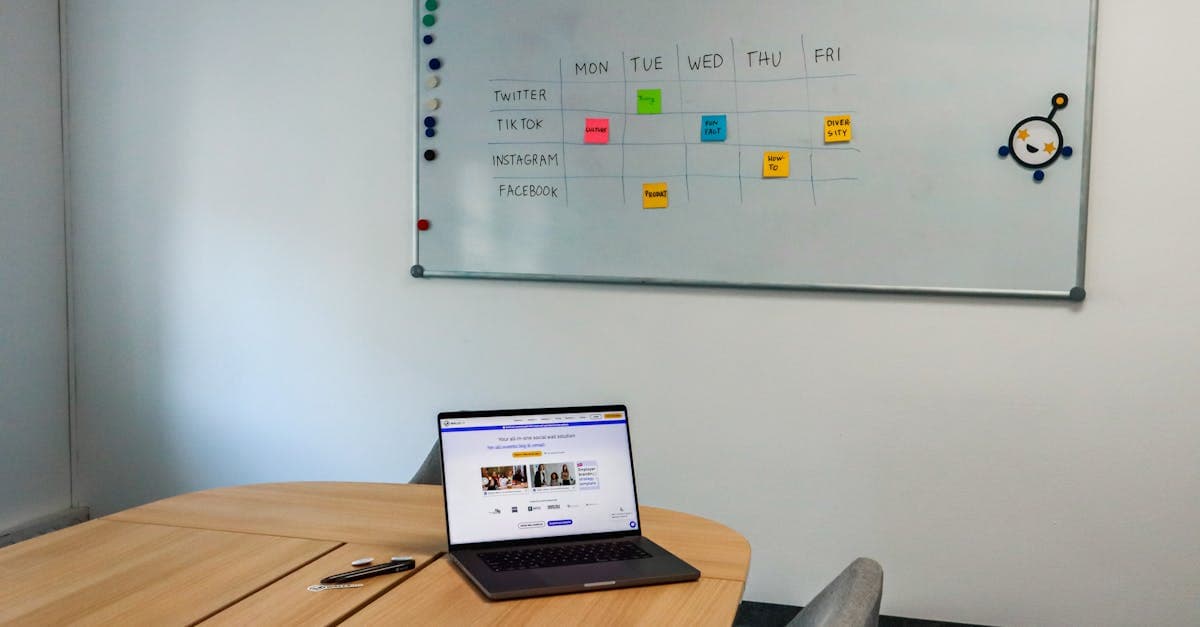
Lean scheduling techniques bridge the gap between lean manufacturing philosophy and daily production reality. You can implement 5S, reduce changeover times with SMED, and measure OEE - but if the scheduling system keeps pushing more work to the floor than it can handle, lean gains are overwhelmed by the chaos of overloaded resources and excessive WIP. Lean scheduling applies the same principles of waste elimination, pull-based flow, and continuous improvement to how work is planned, sequenced, and released. This guide covers the core lean manufacturing scheduling techniques - heijunka, pull-based scheduling, WIP limits, and pacemaker scheduling - and shows how finite capacity scheduling software operationalizes these concepts.
The Problem with Traditional Scheduling
Most manufacturers schedule with MRP logic: explode the BOM, calculate material requirements, generate work orders with start and finish dates based on lead time offsets, and release everything to the floor. This push-based approach has fundamental problems:
Infinite capacity assumption: MRP ignores resource capacity. It schedules 200 hours of work to a machine that has 40 available hours and calls it a "plan."
WIP explosion: Every released work order becomes WIP. When MRP releases all work orders simultaneously, the floor drowns in jobs competing for the same resources.
Queue time dominance: Parts spend 85-95% of their lead time waiting in queues created by the overloaded schedule.
Constant expediting: When everything is late because the schedule was never achievable, expediting becomes the real scheduling method - supervisors deciding minute by minute what to run next.
Lean scheduling addresses each of these failures.
Technique 1: Heijunka (Production Leveling)
Heijunka - production leveling - is the practice of distributing production volume and mix evenly across available time periods.
Volume Leveling
Instead of producing in large batches driven by MRP lot-sizing rules, level the daily production volume:
Before heijunka: 2,000 units on Monday-Wednesday, 0 units Thursday-Friday (because the batch for the week was completed early)
After heijunka: 400 units every day, Monday through Friday
Volume leveling creates consistent demand on every resource, enables stable staffing, and prevents the feast-or-famine cycle that burns out workers and equipment.
Mix Leveling
Instead of running all of one product before switching to the next, level the product mix within each day:
Before heijunka: Monday = all Part A, Tuesday = all Part B, Wednesday = all Part C
After heijunka: Every day = Part A + Part B + Part C in proportion to demand
Mix leveling requires short changeover times (SMED is a prerequisite) but delivers enormous benefits: smaller finished goods buffers, faster response to demand changes, and smoother material consumption for upstream processes and suppliers.
The Heijunka Box
A heijunka box is a physical scheduling board with rows for each product type and columns for time intervals (typically pitch increments - the time to produce one container quantity). Kanban cards placed in the box slots define what to produce and when. The operator withdraws the next card from the box, produces that quantity, and returns for the next card.
Technique 2: Pull-Based Work Release
The most impactful lean scheduling technique is controlling when work is released to the floor.
The Release Discipline
Release work orders only when:
- All materials are available
- Downstream capacity exists to process the job within the planned lead time
- Total WIP on the floor is below the target level
This simple discipline - do not release work that cannot flow - eliminates the root cause of most scheduling chaos. RMDB enforces this discipline automatically by checking material availability and capacity constraints before scheduling work order starts.
CONWIP for Job Shops
For job shops where traditional Kanban is impractical, CONWIP (Constant Work-in-Process) provides a pull mechanism. Set a maximum WIP limit for the entire shop (or for each value stream). When a job completes and ships, release a new job from the backlog. The WIP cap prevents overloading regardless of demand fluctuations.
Real-world example: A 35-person fabrication shop limited active floor jobs to 45 (down from an average of 95). Average lead time dropped from 24 days to 10 days. On-time delivery improved from 73% to 89%. The shop produced the same revenue with less than half the WIP.
Technique 3: Pacemaker Scheduling
In a lean production system, only one point in the value stream receives a production schedule: the pacemaker. All upstream processes produce in response to pull signals (Kanban or FIFO lanes), and all downstream processes flow continuously.
Selecting the pacemaker: Choose the process closest to the customer where production can be leveled. In many value streams, this is the final assembly or the constraint resource.
Scheduling the pacemaker: RMDB schedules the pacemaker process with finite capacity logic, leveling the production mix and releasing work at a rate that matches customer demand (takt time). Upstream processes respond to pull signals generated by the pacemaker's consumption.
This simplifies scheduling enormously. Instead of scheduling every operation independently (which creates conflicting priorities and desynchronized flow), you schedule one point and let pull systems coordinate everything else.
Technique 4: Pitch-Based Scheduling
Pitch is the time required to produce one pack-out quantity (one container, one pallet, one kit). Instead of scheduling in hours or shifts, lean schedulers use pitch increments to create a rhythmic production cadence.
Pitch = Takt Time x Pack-Out Quantity
If takt time is 2 minutes per part and the pack-out quantity is 30 parts, pitch is 60 minutes. Every 60 minutes, one container of finished goods should flow to the next process or to shipping.
Scheduling by pitch creates a heartbeat that is easy to monitor. If a pitch interval passes without a container completing, the problem is visible immediately - not at the end of the shift or the end of the week.
Technique 5: Visual Scheduling and Andon
Lean scheduling makes the plan visible to everyone on the floor:
- Production status boards showing planned vs. actual output by hour or by pitch
- Andon systems that signal when production falls behind plan (color-coded lights: green = on track, yellow = behind, red = stopped)
- Queue depth displays showing WIP levels at each work center relative to target
EDGEBIC, the current generation of RMDB, provides digital versions of these visual management tools: Gantt views of every work center, a Resource Load view of booked against available hours, a shop-floor kiosk for actuals, and on-time delivery and utilization reports.
Integrating Lean Scheduling with Finite Capacity Software
Lean scheduling principles and finite capacity scheduling software are natural partners:
| Lean Principle | RMDB Implementation |
|---|---|
| Level loading (heijunka) | Scheduler distributes work evenly across time periods |
| Pull-based release | Work orders released only when capacity and materials are available |
| WIP limits | CONWIP and work center WIP caps enforced by release logic |
| Pacemaker scheduling | Constraint resource scheduled first; other resources respond |
| Pitch-based rhythm | Schedule granularity matched to production increments |
| Visual management | EDGEBIC Gantt views and the shop-floor kiosk show schedule status |
The combination of lean philosophy (what to do) and scheduling software (how to do it) creates a production system that is both principled and precise.
Measuring Lean Scheduling Performance
Track these lean KPIs to evaluate scheduling effectiveness:
- WIP turns: Higher turns = faster flow = lean scheduling working
- Lead time (dock-to-dock): Decreasing lead time confirms reduced queue times
- Schedule adherence: Actual start/finish vs. planned - should improve as overloading is eliminated
- On-time delivery: The ultimate measure of scheduling effectiveness
- Touch time ratio: Processing time / total lead time - lean scheduling increases this ratio
Frequently Asked Questions
Lean scheduling applies lean principles - pull-based production, level loading (heijunka), WIP limits, and flow optimization - to how production work is planned and released to the shop floor. The goal is to create schedules that minimize overproduction, reduce WIP, and synchronize operations with actual customer demand.
Heijunka is the lean practice of leveling the production schedule so that the same mix and volume of products is produced consistently across time periods. Instead of producing 1,000 units of Part A on Monday and 1,000 of Part B on Tuesday, heijunka produces 500A + 500B each day. This smooths demand on all resources and enables smaller, more frequent replenishment.
Traditional MRP pushes work orders to the floor based on forecasts and planned start dates, regardless of actual floor conditions. Lean scheduling pulls work based on actual consumption and limits WIP to prevent overloading. MRP focuses on material availability; lean scheduling focuses on flow and capacity synchronization.
Yes, with modifications. Job shops cannot use pure pull systems for custom work, but they can apply lean scheduling principles: limit WIP releases (CONWIP), schedule only the constraint resource, level-load across time periods, and use finite capacity scheduling software to prevent overloading. RMDB combines lean scheduling logic with the flexibility needed for high-mix environments.
The pacemaker is the single point in the value stream that receives the production schedule. Typically it is the process closest to the customer. All upstream processes produce in response to pull signals rather than individual schedules. This simplifies scheduling and prevents the bullwhip effect of multiple independent schedules.
Schedule Lean, Deliver On Time
Lean scheduling transforms your production system from push-based chaos to pull-based flow. The techniques are proven; the results are measurable. When you are ready to implement lean scheduling with the precision of finite capacity logic, RMDB provides the proven engine and EDGEBIC, its current generation, carries it forward with Gantt views, reports and a shop-floor kiosk. Contact User Solutions to see how manufacturers have combined lean scheduling principles with intelligent software to cut lead times, reduce WIP, and consistently hit delivery dates.
Expert Q&A: Deep Dive
Q: How do you balance lean scheduling with customer urgency and rush orders?
A: Lean scheduling actually improves rush order response. When WIP is low and lead times are short (the result of lean scheduling), inserting a rush order causes minimal disruption because fewer jobs are affected. In a traditional overloaded schedule with 6 weeks of WIP, a rush order displaces dozens of jobs. In a lean-scheduled shop with 1 week of WIP, the same rush order displaces 2-3 jobs. RMDB's what-if scenarios show the exact impact of rush order insertion so you can make informed decisions.
Q: What is CONWIP and how does it relate to lean scheduling?
A: CONWIP (Constant Work-in-Process) is a simplified pull system for job shops. Instead of managing individual Kanban loops for each part, CONWIP caps the total number of active jobs on the floor. When one job ships, a new one is released. This controls total WIP without requiring traditional Kanban infrastructure. It is particularly effective in high-mix, low-volume environments where pure Kanban is impractical. RMDB can enforce CONWIP limits by controlling work order release timing.
Frequently Asked Questions
Ready to Transform Your Production Scheduling?
User Solutions has been helping manufacturers optimize their production schedules for over 35 years. One-time license, 5-day implementation.

User Solutions Team
Manufacturing Software Experts
User Solutions has been developing production planning and scheduling software for manufacturers since 1991. Our team combines 35+ years of manufacturing software expertise with deep industry knowledge to help factories optimize their operations.
Share this article
Related Articles

Andon-Triggered Rescheduling: How Real-Time Machine Alerts Should Change Your Production Schedule
Andon alerts signal a production problem - but most plants stop at the alert. Learn the complete andon-to-reschedule workflow that protects delivery commitments when things go wrong.
Cellular Manufacturing Scheduling: How Dedicated Cells Change Your Scheduling Approach
When you create manufacturing cells, the scheduling problem changes fundamentally. Learn how cell scheduling differs from functional layout and when to make a cell dedicated vs. shared.
Can You Do Lean Manufacturing in a Job Shop? Yes - Here's How to Adapt It
Lean manufacturing works in job shops - with the right adaptations. Learn which principles transfer directly and which need modification for high-mix, low-volume production.