
Real-Time Production Scheduling: Benefits & Implementation
 User Solutions Team
Real-time production scheduling is the practice of continuously updating and adjusting the manufacturing schedule as shop floor conditions change. In an environment where machine breakdowns, rush orders, material delays, and quality issues are daily realities, a static schedule created Monday morning is often obsolete by Monday afternoon. Real-time scheduling closes the gap between plan and reality, giving manufacturers the responsiveness they need to keep deliveries on track and resources productive.
At User Solutions, we have seen firsthand how real-time scheduling transforms manufacturing operations. This article explains the benefits, the practical implementation steps, and how modern production scheduling software makes real-time scheduling achievable for shops of any size.
Why Static Schedules Fail
Traditional scheduling follows a batch process: the scheduler creates a plan at the start of the week (or day), distributes it to the shop floor, and hopes conditions hold. They rarely do.
Common disruptions that invalidate a static schedule:
- Machine breakdowns - a critical resource goes offline, blocking every job in its queue
- Rush orders - a high-priority order arrives and must be inserted into the schedule
- Material delays - a supplier shipment is late, and dependent jobs cannot start
- Quality issues - a batch fails inspection and must be reworked or scrapped
- Absenteeism - a skilled operator is unavailable, limiting what can run on certain machines
- Job duration variance - an operation takes longer (or shorter) than the estimated run time
Each disruption cascades. A two-hour machine breakdown does not just delay the current job - it pushes back every job behind it in the queue, potentially affecting dozens of downstream operations and delivery dates. With a static schedule, the scheduler may not discover these cascading impacts until it is too late to act.
What Real-Time Scheduling Looks Like
Real-time scheduling incorporates new information into the schedule as it becomes available. Here is what this looks like in practice:
Morning: The scheduler opens the system and imports overnight production data - which operations completed, which are still in progress, and any new orders received. The system recalculates the schedule in seconds, showing the current state of every resource and every job.
Mid-morning: A CNC machine develops a tooling issue and will be down for 3 hours. The scheduler marks the machine as unavailable for that window. The system instantly recalculates, showing which jobs are delayed, which deliveries are at risk, and where alternative resources might be available. The scheduler uses drag-and-drop rescheduling to move critical jobs to alternate machines.
Afternoon: A customer calls with an urgent order. The scheduler adds it to the system and runs a what-if analysis to see the impact of inserting it. Within minutes, they have a plan that accommodates the rush job while minimizing disruption to other orders.
End of day: The schedule is current, reflecting all changes made throughout the day. The night shift supervisor can see exactly what to run, in what order, with confidence that the schedule accounts for everything that happened during the day shift.
Benefits of Real-Time Production Scheduling
Faster Response to Disruptions
The average manufacturer experiences 3-5 significant disruptions per week. With static scheduling, each disruption triggers a manual rescheduling exercise that can take hours. With real-time scheduling, the response time drops to minutes. The scheduler makes the change, the system recalculates, and the shop floor has an updated plan immediately.
Improved On-Time Delivery
When the schedule reflects reality, delivery date predictions are accurate. Manufacturers using real-time scheduling typically see 15-25% improvements in on-time delivery because problems are identified and addressed before they impact the customer.
Better Resource Utilization
Real-time visibility into machine status reveals idle capacity that a static schedule hides. If a machine finishes a job early, real-time scheduling can immediately pull the next job forward, keeping the resource productive rather than waiting for the next scheduled start time.
Reduced Overtime
When you can see capacity problems in advance - even just hours ahead - you can redistribute work, authorize selective overtime, or negotiate delivery dates. This targeted approach replaces the blunt instrument of across-the-board overtime that static schedules often require.
Increased Shop Floor Trust
Operators and supervisors trust a schedule that matches what they see on the floor. When the schedule is always current, people follow it. When it is stale and inaccurate, they create their own priority lists - which defeats the purpose of scheduling entirely.
Implementing Real-Time Scheduling
Level 1: Daily Schedule Refresh
The simplest form of real-time scheduling is a daily refresh. At the start of each day (or each shift), the scheduler:
- Imports completed operations from the previous period
- Updates any jobs that are ahead or behind plan
- Adds new orders received since the last refresh
- Reschedules and publishes the updated plan
This level requires minimal infrastructure. If you can export job completions from your ERP and import them into your scheduling tool, you can do daily refreshes. RMDB from User Solutions supports flexible data import that makes this process straightforward.
Level 2: Event-Driven Updates
At this level, the schedule is updated whenever a significant event occurs:
- A machine goes down or comes back online
- A rush order is received
- A material shipment arrives (or is delayed)
- A quality issue forces rework
- An operation finishes significantly early or late
The scheduler makes these updates throughout the day, and the system recalculates the downstream impact immediately. This requires the scheduler to have the scheduling tool open and accessible throughout the day - not just during a morning planning session.
Level 3: Automated Data Integration
The most advanced level connects shop floor data collection directly to the scheduling system:
- Barcode scanning at each work center reports job start and completion in real time
- Machine monitoring (IoT sensors) detects downtime events automatically
- ERP integration pushes new orders to the scheduling system as they are entered
- Material receiving updates propagate to the scheduler automatically
This level requires investment in data collection infrastructure but delivers the highest accuracy and fastest response times.
Choosing Your Starting Level
Most manufacturers should start at Level 1 and progress from there. Daily refreshes deliver 80% of the benefit with minimal cost and complexity. As you build confidence and processes, move to Level 2 event-driven updates. Level 3 automation is valuable but not required for excellent scheduling performance.
Technology Requirements
Real-time scheduling does not require expensive infrastructure. The core requirements are:
Fast scheduling engine. The software must recalculate the schedule in seconds, not minutes or hours. RMDB handles schedules with thousands of operations in seconds, making frequent recalculation practical.
Visual schedule display. A Gantt chart that updates dynamically as changes are made. EDGEBI's visual interface shows the schedule in real time with drag-and-drop adjustment capability.
Data import capability. The ability to pull production data from your ERP or shop floor system. RMDB supports multiple import formats (CSV, database connections, API) to match your existing infrastructure.
Finite capacity scheduling. Real-time recalculation is only valuable if the schedule respects resource constraints. Infinite capacity rescheduling will produce the same unrealistic results whether you run it once a week or ten times a day.
Common Pitfalls to Avoid
Over-reacting to every change. Not every disruption requires rescheduling the entire shop. Develop guidelines for when to reschedule (a bottleneck machine goes down) versus when to handle locally (a non-critical job takes 30 minutes longer than estimated).
Neglecting data quality. Real-time scheduling amplifies data problems. If your routings have inaccurate run times, frequent rescheduling will not help - it will just cycle through different versions of an inaccurate plan. Invest in routing accuracy as a prerequisite.
Skipping the scheduler role. Real-time scheduling software is a tool, not a replacement for human judgment. You still need someone (even part-time) who owns the schedule, makes rescheduling decisions, and communicates changes to the shop floor.
Ready to move from static to real-time scheduling? Contact User Solutions for a demo of EDGEBIC, the current generation of RMDB. We will show you how fast and effective real-time scheduling can be - even in complex manufacturing environments.
Real-time production scheduling is the ability to update and adjust the production schedule dynamically as conditions change on the shop floor. Instead of creating a static schedule once per day or week, the schedule reflects current machine status, job progress, material availability, and new orders in near real-time.
Traditional scheduling creates a plan at a fixed point in time (weekly or daily) and assumes conditions remain stable. Real-time scheduling continuously incorporates new information - completed operations, machine breakdowns, rush orders, material arrivals - and recalculates the schedule to reflect current reality.
While automated data collection (barcode scanning, MES systems, IoT sensors) enhances real-time scheduling, it is not strictly required. Even manual job completions entered into the scheduling system provide valuable schedule updates. Start with what you have and add automation over time.
Modern scheduling software like RMDB recalculates schedules with thousands of operations in seconds. This speed enables schedulers to respond to disruptions immediately rather than waiting until the next planning cycle.
Expert Q&A: Deep Dive
Q: We update our schedule once a week. Is that frequent enough?
A: For most manufacturers, weekly scheduling is not frequent enough. A week-old schedule is typically 30-50% inaccurate by Friday due to accumulated disruptions - machine breakdowns, material delays, rush orders, quality issues, and absenteeism. Daily scheduling is the minimum for most shops. Best practice is to refresh the schedule at the start of each shift, incorporating completed jobs and new information. With RMDB, this refresh takes minutes - import updated data, reschedule, and publish. The improvement in schedule accuracy and shop floor confidence is dramatic.
Frequently Asked Questions
Ready to Transform Your Production Scheduling?
User Solutions has been helping manufacturers optimize their production schedules for over 35 years. One-time license, 5-day implementation.

User Solutions Team
Manufacturing Software Experts
User Solutions has been developing production planning and scheduling software for manufacturers since 1991. Our team combines 35+ years of manufacturing software expertise with deep industry knowledge to help factories optimize their operations.
Share this article
Related Articles
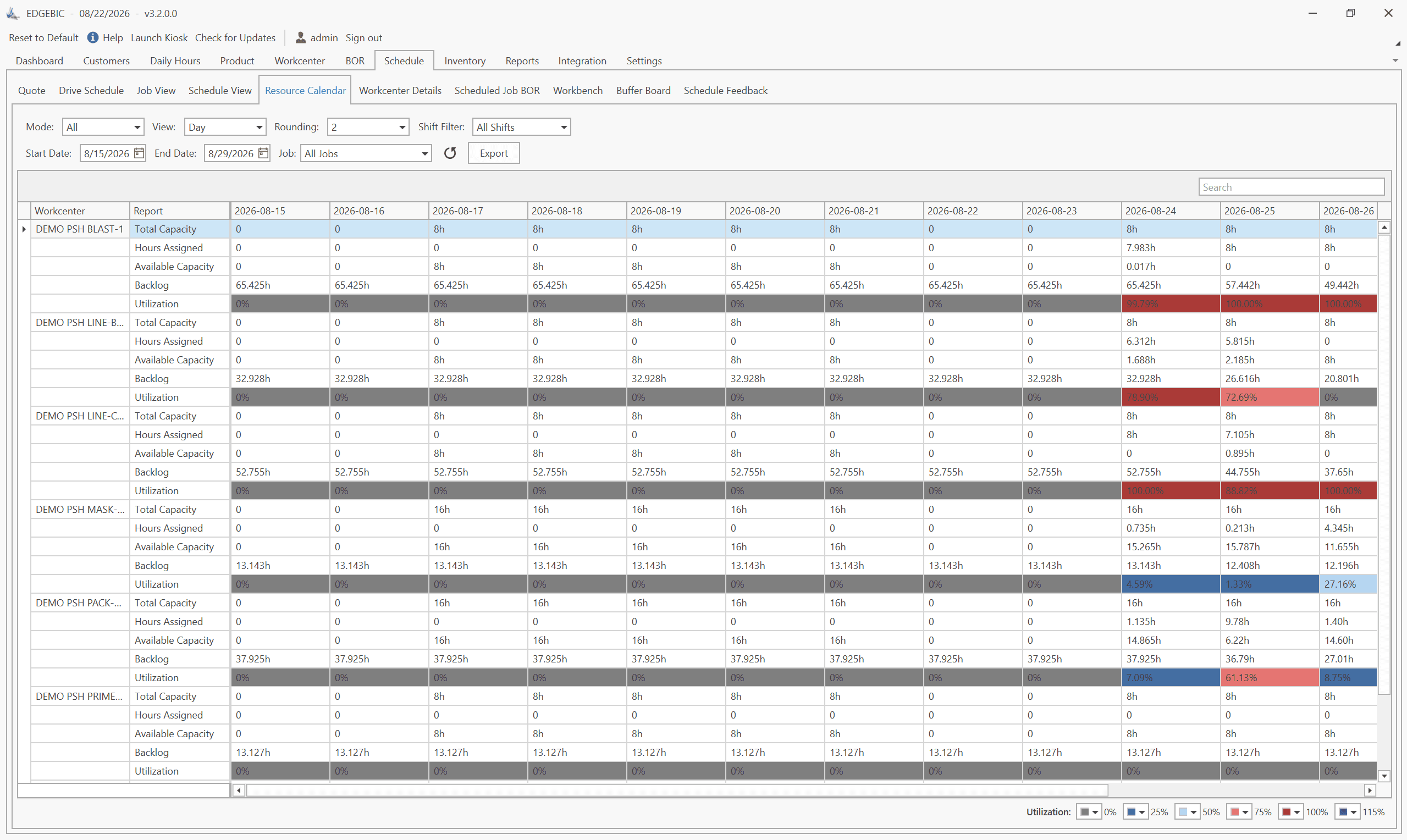
How to Create a Production Schedule in 7 Steps (Free Template)
How to create a production schedule step by step: horizon, real capacity, work orders, load check, sequence, dates, then publish. Worked example included.
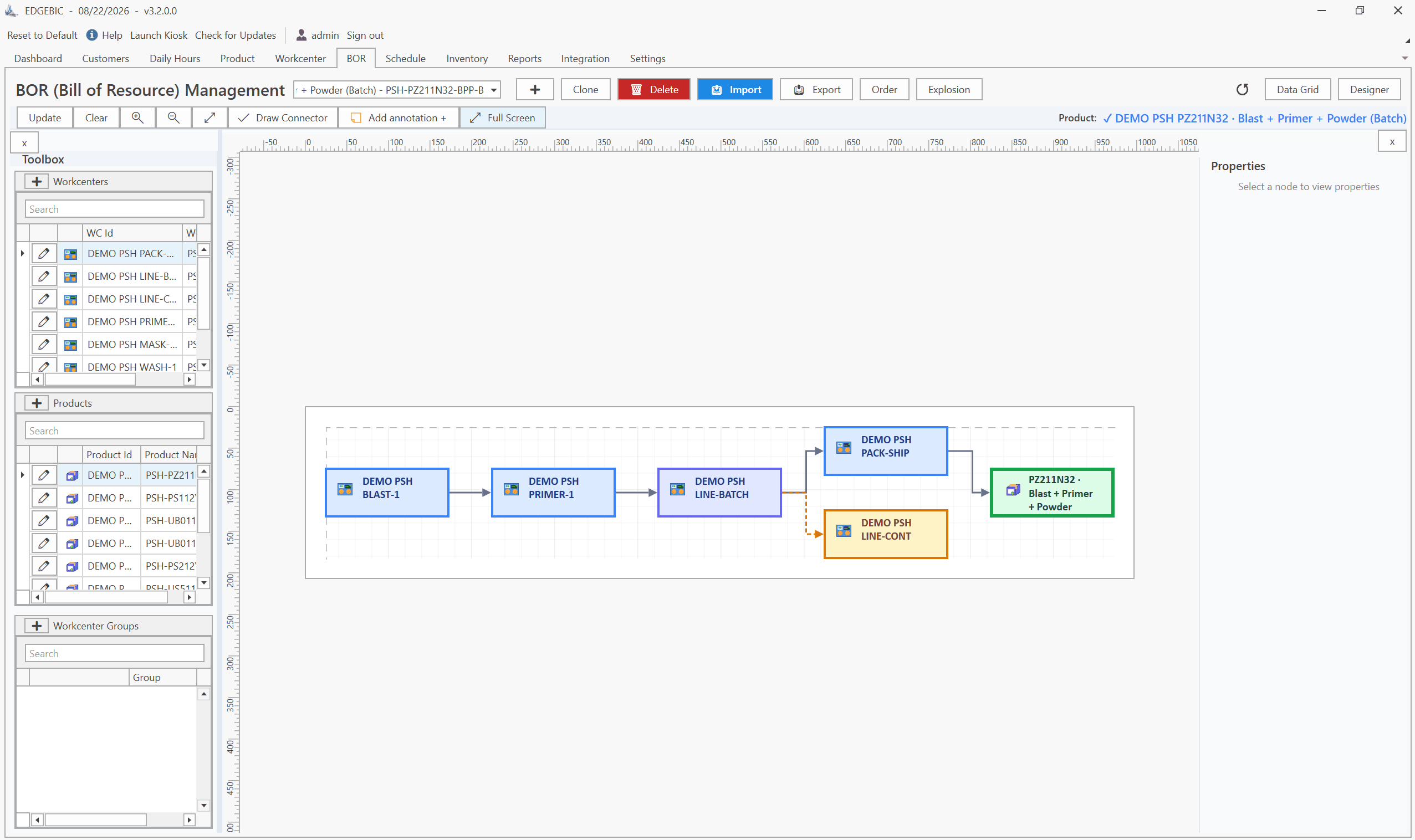
Production Planning and Control (PPC): Functions and Examples
Production planning and control explained: routing, loading, scheduling, sequencing, dispatching and expediting, the types of scheduling, and worked examples.

Sequence-Dependent Setup Times: The Scheduling Problem That Costs You Capacity
When changeover time depends on what ran before, standard scheduling fails. Learn how setup matrices, sequence optimization, and APS software recover 10-25% of hidden capacity in paint lines, food, and coating operations.