
How Production Scheduling Improves On-Time Delivery
 User Solutions Team
Production scheduling and on-time delivery are inseparable. Every late shipment traces back to a scheduling failure - an over-committed work center, a material that was not ordered in time, a job sequence that created unnecessary bottlenecks, or a delivery promise made without checking capacity. Yet most manufacturers still schedule production using methods that virtually guarantee late deliveries: spreadsheets with infinite-capacity assumptions, ERP systems that ignore real constraints, or the tribal knowledge of a planner who retires next year.
This guide explains exactly how modern production scheduling software transforms on-time delivery performance and why finite capacity scheduling is the single highest-leverage improvement most manufacturers can make.
Why Most Manufacturers Struggle with On-Time Delivery
The average manufacturer operates at 80-88% on-time delivery. That means one or two out of every ten orders ships late. The financial impact is severe: expediting costs, premium freight charges, overtime premiums, customer penalties, and - worst of all - lost customers who quietly take their business elsewhere.
The root cause is almost always the same: schedules that do not reflect reality.
The Infinite Capacity Trap
Most ERP systems schedule production by backward-scheduling from the due date using standard lead times. The critical flaw is that these calculations assume infinite capacity - they do not check whether the required machines, labor, and materials are actually available when needed.
The result is predictable:
- Overlapping jobs: Three orders are scheduled on the same machine for the same time slot
- Hidden bottlenecks: The schedule looks feasible in the system but creates impossible queues at constraint resources
- Unrealistic promises: Sales quotes delivery dates based on standard lead times that ignore current shop load
- Cascade failures: When one late job pushes into another job's time slot, the lateness spreads across the entire schedule
This is why manufacturers who invest heavily in ERP systems still struggle with delivery. The ERP tracks orders beautifully but schedules them poorly. For a deeper comparison, see our guide on ERP scheduling limitations.
The Spreadsheet Ceiling
Manufacturers who schedule in Excel face different but equally damaging problems. A skilled planner can manage perhaps 50-100 active jobs in a spreadsheet before the complexity overwhelms them. They cannot quickly re-sequence when priorities change, cannot see ripple effects of inserting a rush order, and cannot optimize setups while respecting due dates. The result is a schedule that is always slightly wrong and gets worse as volume grows. We have documented this progression in detail in our Excel to APS migration guide.
How Finite Capacity Scheduling Fixes Delivery
Finite capacity scheduling solves the on-time delivery problem by building schedules that respect real-world constraints. Instead of assuming infinite capacity and hoping for the best, finite scheduling loads work against actual available hours on each machine, checks material availability, and respects labor constraints.
Realistic Promise Dates
The first and most impactful improvement is accurate delivery promises. When a customer asks "When can you deliver?" finite capacity scheduling gives you a real answer based on:
- Current shop floor load across all work centers
- Available capacity on the specific machines needed for this order
- Material availability and supplier lead times
- Labor constraints by skill set and shift
- Setup time requirements based on the current job sequence
Instead of promising "4-6 weeks" based on a standard lead time, you can say "We can deliver by March 18th" with confidence. Accurate promises eliminate the most common source of late deliveries - over-promising - before work even starts.
Intelligent Job Sequencing
Finite capacity scheduling sequences jobs to minimize conflicts and maximize throughput at bottleneck resources. The scheduler considers:
- Due date priority: Jobs due sooner are scheduled earlier, with buffer time for variability
- Setup optimization: Jobs requiring similar setups are grouped to reduce changeover time, freeing capacity for more production
- Bottleneck focus: The constraint resource's schedule drives the overall plan, ensuring the bottleneck is never starved or overloaded
- Material synchronization: Jobs are not released to the floor until all required materials are available
This intelligent sequencing means more work flows through the same resources in less time. Manufacturers regularly find 15-25% hidden capacity simply by scheduling smarter, which directly translates to better delivery performance. Understanding production scheduling methods helps you appreciate why sequencing matters so much.
What-If Analysis for Rush Orders
Rush orders are a leading cause of missed deliveries - not because of the rush order itself, but because of the unintended impact on other orders. When a planner manually inserts a rush order, they often cannot see which other orders will slip.
With what-if analysis in scheduling software like RMDB, you can simulate the impact of a rush order before committing. The system shows exactly which orders will be affected, by how many days, and whether any will miss their due dates. You make informed trade-offs instead of blind ones.
The Five Scheduling Practices That Drive 95%+ OTD
Reaching and sustaining 95%+ on-time delivery requires more than just software. It requires disciplined scheduling practices that the software enables and enforces.
Practice 1: Schedule to Finite Capacity Every Time
Never release a schedule that exceeds available capacity. This sounds obvious, but it is the single most violated principle in manufacturing scheduling. When demand exceeds capacity, the answer is not to overload the schedule and hope operators work faster. The answer is to communicate realistic dates, negotiate priorities, or add capacity through overtime or outsourcing. RMDB enforces finite capacity automatically - you literally cannot overload a resource without the system flagging the conflict.
Practice 2: Protect the Bottleneck
Your on-time delivery is governed by your bottleneck resource. Every minute lost at the bottleneck is a minute of throughput lost for the entire plant. Scheduling practices that protect the bottleneck include maintaining a time buffer before the bottleneck so it never waits for work, scheduling preventive maintenance during off-hours, and ensuring the bottleneck runs the most efficient job sequence. Learn more about this in our guide to production bottleneck identification.
Practice 3: Build in Realistic Buffers
Schedules with zero slack are schedules that will fail. Normal variability - a machine jam, a quality check that takes longer than expected, an operator who calls in sick - requires time buffers. World-class schedulers build buffers strategically: more buffer before the bottleneck, more buffer before the shipping dock, and tighter schedules at non-constraint resources where a small delay does not cascade.
Practice 4: Update the Schedule Daily
A schedule that is not updated is a schedule that is wrong. Actual production never perfectly matches the plan. Daily schedule updates - incorporating actual completions, new orders, material status changes, and machine availability - keep the schedule aligned with reality. RMDB supports real-time schedule updates so deviations are caught and corrected before they cause late deliveries.
Practice 5: Measure and Manage Schedule Adherence
Schedule adherence is the leading indicator of on-time delivery. If you are completing 95% of scheduled jobs on time, your delivery performance will follow. If schedule adherence drops, you have early warning to intervene before customers are affected. Track schedule adherence daily and treat deviations as problems to solve, not noise to ignore.
Measuring the Impact: From Scheduling to Delivery
The connection between scheduling improvement and delivery improvement is direct and measurable. Here is what typical manufacturers experience after implementing finite capacity scheduling:
| Metric | Before | After 90 Days | After 6 Months |
|---|---|---|---|
| On-Time Delivery | 78-85% | 88-92% | 93-97% |
| Schedule Adherence | 65-75% | 85-90% | 92-98% |
| Expediting Costs | Baseline | -40% | -70% |
| Average Lead Time | Baseline | -15% | -30% |
| WIP Inventory | Baseline | -10% | -20% |
These improvements compound. Better delivery performance means fewer expedites, which means less schedule disruption, which means even better delivery. It is a virtuous cycle that builds momentum over time. For a broader view of metrics to track, see our manufacturing KPIs guide.
Real-World Results: How Manufacturers Improved OTD
The theory is compelling, but the proof is in the results. Manufacturers across industries have used User Solutions' RMDB scheduling software to transform their delivery performance.
A precision machining job shop went from 79% on-time delivery to 96% within four months of implementing RMDB. The primary driver was eliminating scheduling conflicts at their 5-axis CNC bottleneck. By sequencing jobs to minimize setups and respect capacity limits, they gained the equivalent of a full extra shift of capacity without adding equipment or overtime.
An aerospace manufacturer improved OTD from 82% to 97% while simultaneously reducing WIP inventory by 22%. The key was replacing their MRP-driven scheduling with finite capacity scheduling that accounted for the complex routing and certification requirements unique to aerospace production.
These are not isolated stories. They are the predictable outcome of replacing guesswork with math-based scheduling. Our scheduling success stories document dozens of similar transformations.
Getting Started: The Path to Better Delivery
Improving on-time delivery through better scheduling does not require a massive IT project. User Solutions has refined a 5-day implementation process that gets manufacturers scheduling with RMDB within a single business week.
The process starts with loading your current orders, routings, and resource data into RMDB, then generating a finite capacity schedule that immediately reveals conflicts and over-commitments in your current plan. Most manufacturers have an "aha moment" on day one when they see why their current schedule cannot possibly achieve the delivery dates they have promised.
From there, the scheduler optimizes job sequences, identifies realistic completion dates, and provides the visibility needed to make informed decisions about priorities, capacity, and customer commitments.
FAQ
Production scheduling improves on-time delivery by creating feasible plans based on real machine capacity, material availability, and labor constraints. Instead of promising dates based on guesswork, finite capacity scheduling calculates realistic completion dates and sequences work to meet them. Manufacturers typically see OTD improvements from 80% to 95%+ within 3-6 months.
World-class on-time delivery is 98% or higher. Most manufacturers without scheduling software operate between 75-88%. With finite capacity scheduling, 92-97% is achievable within the first year. The key is creating schedules that reflect real capacity rather than infinite-capacity assumptions.
Yes. Finite capacity scheduling software like RMDB lets you insert rush orders and immediately see the ripple effect on every other order. You can evaluate trade-offs before committing, move less urgent jobs, and communicate revised dates proactively rather than discovering conflicts when it is too late.
Most manufacturers see measurable OTD improvement within the first 30-60 days, with significant gains by 90 days. The fastest improvements come from eliminating scheduling conflicts and over-commitments that cause chronic lateness. Full optimization typically takes 3-6 months as teams refine data inputs and scheduling rules.
Take Control of Your Delivery Performance
If late deliveries are costing you customers, the problem is almost certainly your scheduling method - not your people or your equipment. Contact User Solutions to see how RMDB finite capacity scheduling can transform your on-time delivery performance within weeks, not months.
Expert Q&A: Deep Dive
Q: What is the single biggest scheduling mistake that kills on-time delivery?
A: Scheduling to infinite capacity. Most ERP systems and spreadsheet-based schedules assume unlimited machine and labor capacity, meaning they will happily schedule 200 hours of work into a 40-hour week. The result is predictable: everything is late. Finite capacity scheduling with RMDB eliminates this by scheduling only what your shop floor can actually produce. When every order has a realistic completion date based on real constraints, on-time delivery improves dramatically.
Q: How should manufacturers handle the trade-off between on-time delivery and machine utilization?
A: This is a false trade-off that trips up many production managers. Chasing 100% utilization actually hurts delivery because it eliminates the buffer needed to absorb normal variability - machine breakdowns, quality issues, material delays. The sweet spot for most manufacturers is 85-90% planned utilization, which provides enough capacity buffer to maintain 95%+ on-time delivery while keeping equipment productive. RMDB helps you find this balance by modeling both utilization and delivery performance simultaneously.
Q: Does improving on-time delivery require hiring more people or buying more machines?
A: Almost never. In our experience with hundreds of manufacturers, poor on-time delivery is a scheduling problem, not a capacity problem. Most shops have 15-25% hidden capacity locked up in excessive changeovers, poor sequencing, material wait time, and scheduling conflicts. Finite capacity scheduling unlocks this hidden capacity by optimizing the sequence and timing of work. We routinely see manufacturers improve OTD from the low 80s to the mid-90s without adding a single machine or operator.
Frequently Asked Questions
Ready to Transform Your Production Scheduling?
User Solutions has been helping manufacturers optimize their production schedules for over 35 years. One-time license, 5-day implementation.

User Solutions Team
Manufacturing Software Experts
User Solutions has been developing production planning and scheduling software for manufacturers since 1991. Our team combines 35+ years of manufacturing software expertise with deep industry knowledge to help factories optimize their operations.
Share this article
Related Articles
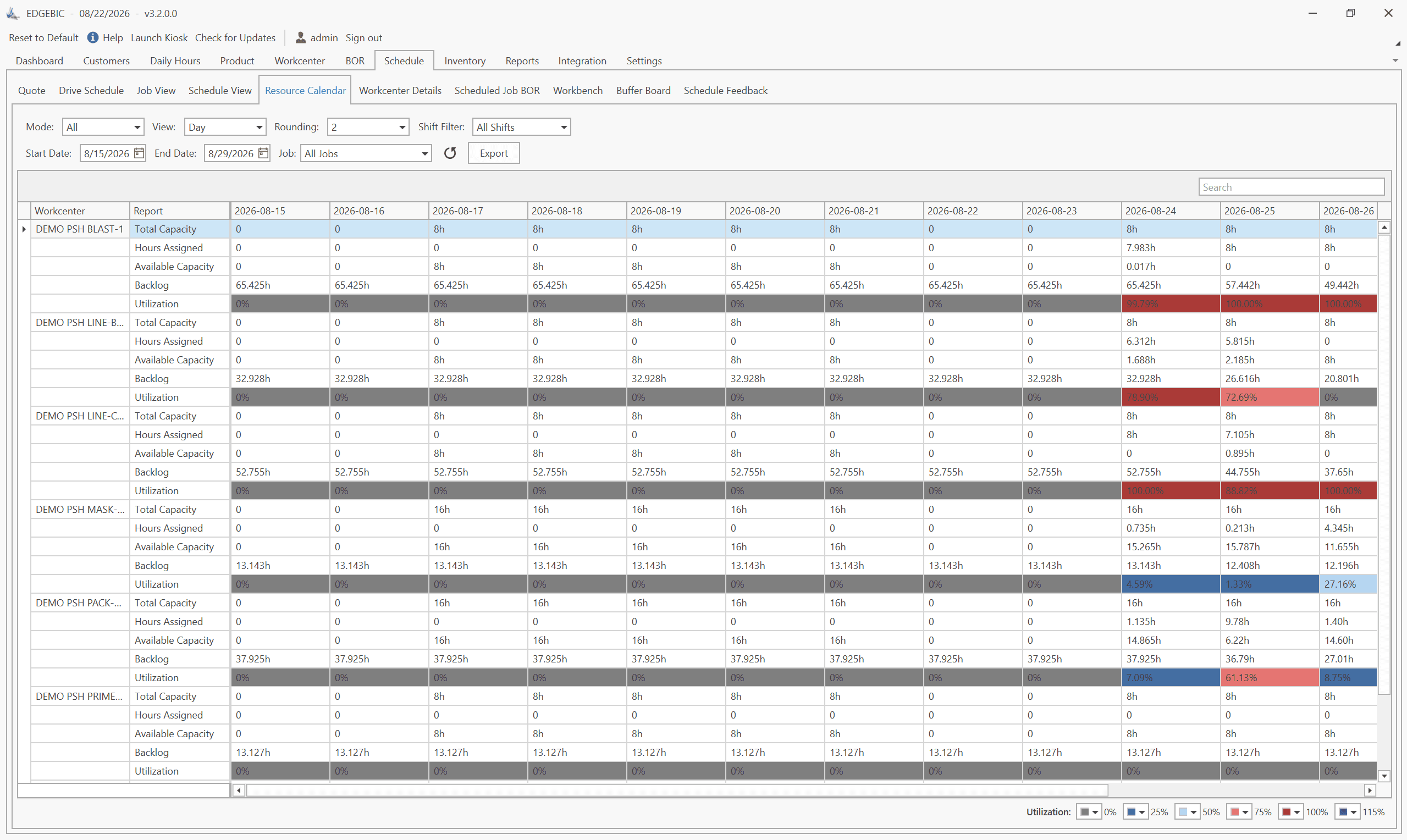
How to Create a Production Schedule in 7 Steps (Free Template)
How to create a production schedule step by step: horizon, real capacity, work orders, load check, sequence, dates, then publish. Worked example included.
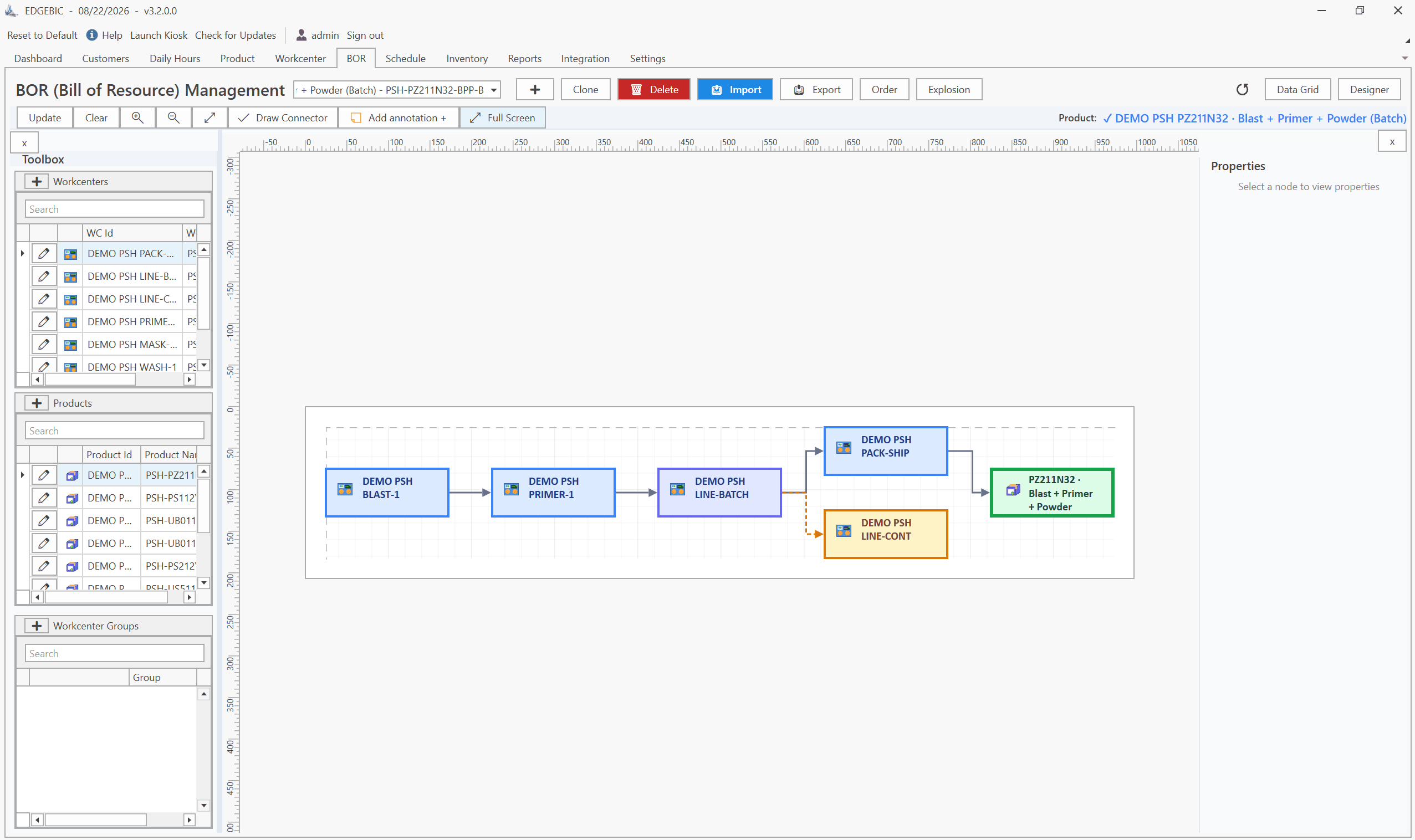
Production Planning and Control (PPC): Functions and Examples
Production planning and control explained: routing, loading, scheduling, sequencing, dispatching and expediting, the types of scheduling, and worked examples.

Sequence-Dependent Setup Times: The Scheduling Problem That Costs You Capacity
When changeover time depends on what ran before, standard scheduling fails. Learn how setup matrices, sequence optimization, and APS software recover 10-25% of hidden capacity in paint lines, food, and coating operations.