
Sequence-Dependent Setup Times: The Scheduling Problem That Costs You Capacity
 User Solutions Team
Most production scheduling textbooks treat setup time as a property of the job: this part takes 45 minutes to set up, that part takes 20 minutes. The scheduler adds the setup time before each job and moves on. Clean, simple, and wrong - for a significant subset of manufacturing operations.
In paint lines, coating baths, food production, pharmaceutical manufacturing, and plastics compounding, the setup time isn't a property of the job. It's a property of the transition between jobs. Running white paint after white paint? Fifteen minutes. Running white paint after black? Ninety minutes for a full system flush. The difference isn't in what comes next - it's in what ran last. That's the core of sequence-dependent setup times, and it's a scheduling problem that standard MRP and basic scheduling systems handle not at all.
We've worked with manufacturers for 35+ years and have seen sequence-dependent setups quietly consume 25-35% of available production capacity on paint lines, coating operations, and food production equipment - all of it invisible in the official schedule because nobody modeled the transition costs. This article explains how to surface that hidden cost and recover it.
For the broader scheduling framework, see our complete guide to production scheduling software.
What Sequence-Dependent Setup Times Actually Are
A standard setup time assumes that changing over Machine A from Product X to Product Y always takes the same amount of time, regardless of what ran on Machine A before Product X. In many machining and assembly operations, this is approximately true. A CNC machine going from Part #101 to Part #102 takes roughly the same setup time whether it previously ran Part #99 or Part #87.
Sequence-dependent setup times break this assumption. The changeover time from Product X to Product Y depends on what Product X actually is - specifically, on what characteristics of Product X must be removed or neutralized before Product Y can run acceptably.
The classic examples:
- Color sequencing in liquid painting: Dark colors bleed into light colors during system flush. Light-to-dark changeover is fast (15-30 minutes). Dark-to-light requires a full purge (60-120 minutes).
- Formulation sequencing in food processing: Allergen-containing formulations require extensive sanitation before non-allergen products can run. Same-family transitions (peanut product to peanut product) are short. Allergen-to-clean transitions are long.
- Coating bath chemistry: Electroplating baths require different pre-treatment sequences depending on the base metal and previous bath chemistry. Certain transitions require partial bath dump and recharge.
- Pharmaceutical formulation: API (active pharmaceutical ingredient) carryover between formulations is a regulatory concern. Low-potency to low-potency transitions are fast. High-potency to any other product requires enhanced cleaning with validated protocols.
- Plastic compounding: Pigment carryover in extruders follows a light-to-dark logic similar to paint - running dark compound after light compound purges quickly, but light after dark requires significant purge material and time.
- Adhesive and sealant production: Viscosity and chemistry differences between formulations require different equipment flush procedures. Some transitions require partial vessel cleanout; others require complete vessel sanitation.
The Setup Matrix: Quantifying Transition Costs
The tool for modeling sequence-dependent setups is the setup matrix - a table where every cell represents the changeover time when transitioning from the row product to the column product.
For a paint line with six standard colors, the setup matrix is a 6×6 table with 36 cells. Most cells are small (short transitions within the same color family). A subset of cells - the dark-to-light transitions - are large. The matrix makes the transition costs explicit and usable by a scheduler.
Building a setup matrix starts with changeover time observation. For each possible transition pair, record the actual time from last good part on the outgoing product to first good part on the incoming product. In a 6-color paint line, that's 30 distinct transitions to measure (excluding same-product transitions). In a pharmaceutical facility with 40 active formulations, the matrix has 1,560 cells - which is why pharmaceutical scheduling is a specialized APS problem.
For operations with many product variants, a full matrix is impractical to measure directly. The practical alternative is a rule-based matrix: define product families (light colors, medium colors, dark colors) and assign transition times based on the direction of transition between families (within-family: 20 min; light-to-dark: 30 min; dark-to-medium: 60 min; dark-to-light: 90 min). The family-based matrix captures 80-90% of the actual transition cost variation with a fraction of the measurement effort.
Why Standard Scheduling Fails at Sequence-Dependent Setups
Standard MRP and basic finite capacity scheduling systems handle setup in one of two ways: either a fixed setup time per job (the same time regardless of what ran before), or no setup time at all (common in flow-oriented systems). Neither captures sequence dependence.
The consequence of using fixed setup times on a sequence-dependent line is that the scheduler makes sequence decisions without knowing their cost. If all setups appear equal, the scheduler sorts jobs by due date, customer priority, or some other criterion - and the resulting sequence is essentially random from a changeover cost perspective. On a paint line where due-date sequencing produces an average of six 90-minute dark-to-light transitions per week, you're spending 9 hours per week in avoidable changeovers. That's 9 hours of productive capacity consumed by a scheduling algorithm that didn't know the transition was expensive.
The math is stark: a paint line running 40 hours per week with 30% time in changeovers (12 hours/week) could plausibly reduce changeovers to 18% (7.2 hours/week) through sequence optimization - recovering 4.8 hours/week of productive capacity, or 12% of available time. No capital investment. No new headcount. Just smarter sequencing.
How APS Software Handles Sequence-Dependent Setups
Advanced Planning and Scheduling (APS) systems - including RMDB - can model sequence-dependent setup times using the setup matrix. The scheduler uses the matrix to evaluate the changeover cost of different job sequences and finds the sequence that minimizes total setup time while respecting due dates and capacity constraints.
This is a computationally intensive optimization problem. For small product sets (under 20 variants), exact optimization is feasible. For larger product sets, the APS system uses heuristic algorithms - nearest-neighbor or insertion heuristics adapted from the Traveling Salesman Problem literature - that find near-optimal sequences in practical computation time.
The scheduler's job is to balance two competing objectives: minimize total setup time (which favors grouping similar products regardless of due date) and meet customer due dates (which may require breaking up the optimal sequence to get an urgent job out). A well-designed APS system handles this trade-off explicitly, allowing the planner to see the due-date cost of a setup-optimized sequence and the setup cost of a due-date-optimized sequence, and choose a point between them.
In practice, most operations have enough date flexibility in their planning horizon that 80-90% of jobs can be sequenced for setup efficiency without violating any due date commitments. The 10-20% of jobs that create genuine date-versus-setup conflicts are the ones that need planner judgment - and the APS system should surface them explicitly rather than hiding the conflict in the sequence.
SMED Applied to Worst-Case Transitions
SMED (Single-Minute Exchange of Die) is a lean methodology for reducing setup time that is typically discussed in the context of die changes in stamping or injection molding. Its principles - separating internal setup (done while the machine is stopped) from external setup (done while the machine is running), converting internal to external where possible, and standardizing the remaining internal setup - apply equally to sequence-dependent transitions.
For sequence-dependent setups, SMED analysis focuses specifically on the worst-case transitions: the longest, most disruptive changeovers in the matrix. A 90-minute dark-to-light flush on a paint line is the SMED target, not the 15-minute light-to-dark transition that's already efficient.
A typical SMED analysis on a worst-case transition finds three categories of improvement:
Pre-positioning: Materials and cleaning supplies for the incoming product prepared during the final run of the outgoing product. On a paint line, the flush solvent, the first-fill volume of the new color, and the spray gun configuration for the new color can all be staged before the outgoing job ends. This converts internal setup to external setup.
Parallel operations: Tasks that the standard procedure performs sequentially can be parallelized with a second technician. If a two-person flush procedure can run in 60 minutes and a one-person procedure runs in 90 minutes, the labor cost of the second technician is paid back within two avoided transitions per week.
Process standardization: Worst-case transitions are often long because the procedure isn't standardized - each operator does the flush differently, with different dwell times and flush volumes. Writing a standard operating procedure for the worst-case transitions alone, and training to it, typically reduces the worst-case time by 20-30% without any equipment change.
At a paint line with six 90-minute worst-case transitions per week, SMED improvements that reduce the worst case to 60 minutes recover 3 hours per week. Combined with sequence optimization that reduces the frequency of worst-case transitions from six to two per week, total recovery can reach 5-6 hours per week - meaningful capacity at no capital cost.
Practical Implementation: Getting Started
You don't need to build a 100-product setup matrix and implement APS optimization simultaneously to start recovering capacity from sequence-dependent setups. A staged approach works:
Week 1-2: Measure. Observe and record actual changeover times for the 10 most common transitions on your highest-volume sequence-dependent line. You don't need the full matrix - you need enough data to identify which transitions are genuinely expensive.
Week 3-4: Visualize. Plot the transitions you've measured on a simple matrix (rows = from-product, columns = to-product, cells = changeover time). Identify the expensive cells - the dark-to-light equivalents for your process.
Week 5-8: Sequence manually. Before implementing APS, try manual sequence optimization: group jobs with similar characteristics in your planning window and sequence within groups by transition cost. This requires your planner to spend 30-60 minutes per week on sequencing analysis but doesn't require new software.
Ongoing: Quantify the savings. Track total changeover hours per week before and after manual sequence optimization. Most shops see 15-25% reduction in changeover hours within 60 days of consistent application.
When volume justifies it: Implement APS. When manual sequencing becomes complex enough that the planner can no longer hold the full sequence optimization problem in their head - typically when you have more than 15-20 active product variants or more than 50 active jobs per week - APS optimization with a formal setup matrix becomes the right tool.
The RMDB scheduler supports setup matrix entry and sequence-dependent optimization for exactly this use case. Combined with EDGEBI analytics showing actual vs. optimized changeover performance, you build a closed-loop system that continuously improves sequence efficiency as product mix and demand volumes evolve.
Sequence-dependent setup times occur when the changeover time between two jobs depends on which job ran immediately before - not just on the job coming next. Running white after white might take 15 minutes to set up, but running black after white might take 90 minutes because you must completely flush and clean the system. The optimal sequence minimizes total setup time across all jobs, which requires knowing the changeover time between every possible pair of product types.
A setup matrix is a table that records the changeover time between every pair of products or configurations that run on a machine. Rows represent the 'from' product and columns represent the 'to' product. The cell value is the expected setup time when transitioning from that specific product to the next. Standard scheduling uses a single setup time per job; sequence-dependent scheduling uses the matrix to find the job sequence that minimizes total setup time.
Across paint lines, food production, coating operations, and pharmaceutical manufacturing, optimizing job sequences to minimize sequence-dependent setup time typically recovers 10-25% of available capacity. A paint line running 40 hours per week with 30% of time in changeovers could reduce changeover time to 18-20% through sequence optimization - recovering 4-6 hours per week of productive capacity without any capital investment.
Standard MRP and basic scheduling software cannot. They either use a fixed setup time per job or a fixed setup time per machine - neither of which captures sequence dependency. Advanced Planning and Scheduling (APS) systems like RMDB can model a full setup matrix and optimize job sequences to minimize total setup time while respecting due dates and capacity constraints.
Are sequence-dependent setups costing you 20-30% of your paint line or coating capacity? Contact User Solutions to see how RMDB and EDGEBI model setup matrices and optimize job sequences for sequence-dependent operations - recovering real capacity without capital investment. Trusted by GE, Cummins, BAE Systems, and manufacturers across North America for 35+ years.
Expert Q&A: Deep Dive
Q: We run a liquid paint line with 8 standard colors. Our changeover from light colors to dark is 15 minutes, but dark to light is 90 minutes because we have to do a full flush. Right now we schedule jobs in due-date order and we're spending about 35% of available time in changeovers. How do we get out of this trap?
A: You're in the classic color sequencing trap, and 35% changeover time is severe - industry benchmarks for well-optimized paint lines run 12-18%. The due-date-only sequencing is the root cause. When you sequence purely by due date, you get random color transitions: you might run dark-light-dark-light four times in a day, generating four 90-minute flushes when intelligent sequencing would have generated zero. The solution is a modified due-date sequencing rule that groups color families within due-date windows. The algorithm works in two passes: first, identify all jobs due within a common window (say, the next 3 days); second, sequence those jobs by light-to-dark color progression, with all light colors running before medium, medium before dark. If you have a job due today that's dark-to-light, that's a genuine conflict - you decide whether to take the 90-minute flush or negotiate with the customer for a 1-day delivery extension. Most shops find that only 5-10% of jobs create genuine date-versus-sequence conflicts. The other 90-95% can be intelligently sequenced without any delivery impact. At your volumes, that likely means going from six 90-minute flushes per week to one or two. That's 6-8 hours of recovered capacity per week - equivalent to adding a day of production.
Q: We manufacture dietary supplements and our changeovers between formulations vary dramatically - 20 minutes when switching between similar vitamin products, 4 hours when switching from a product containing allergens to one that doesn't. How do we factor this into our production schedule without it taking over the planner's entire day?
A: The allergen-to-non-allergen transition is the most extreme form of sequence-dependent setup in food and pharma - it's not just time, it's a regulatory and quality requirement that has to be planned around, not improvised around. The scheduling approach is to treat allergen-containing products as a distinct sequence family and build explicit rules: all allergen products run in dedicated blocks, followed by a mandatory 4-hour allergen clearance sequence before any non-allergen product runs. In the production schedule, this looks like a standing rule that allergen-to-non-allergen transitions are only permitted at defined changeover points in the week - typically twice per week, planned, never ad hoc. The 4-hour transition is budgeted as a known, scheduled cost. Everything else - the 20-minute within-family changeovers - is handled by the standard sequence optimization. The practical result is that your planner stops reacting to allergen conflicts on the fly and instead manages them as a predictable structural element of the weekly schedule. You know every Monday and Thursday will have a 4-hour allergen transition. Everything else optimizes within the allergen-family blocks. Planner cognitive load drops dramatically because 80% of the sequencing is now rule-based, not case-by-case.
Frequently Asked Questions
Ready to Transform Your Production Scheduling?
User Solutions has been helping manufacturers optimize their production schedules for over 35 years. One-time license, 5-day implementation.

User Solutions Team
Manufacturing Software Experts
User Solutions has been developing production planning and scheduling software for manufacturers since 1991. Our team combines 35+ years of manufacturing software expertise with deep industry knowledge to help factories optimize their operations.
Share this article
Related Articles
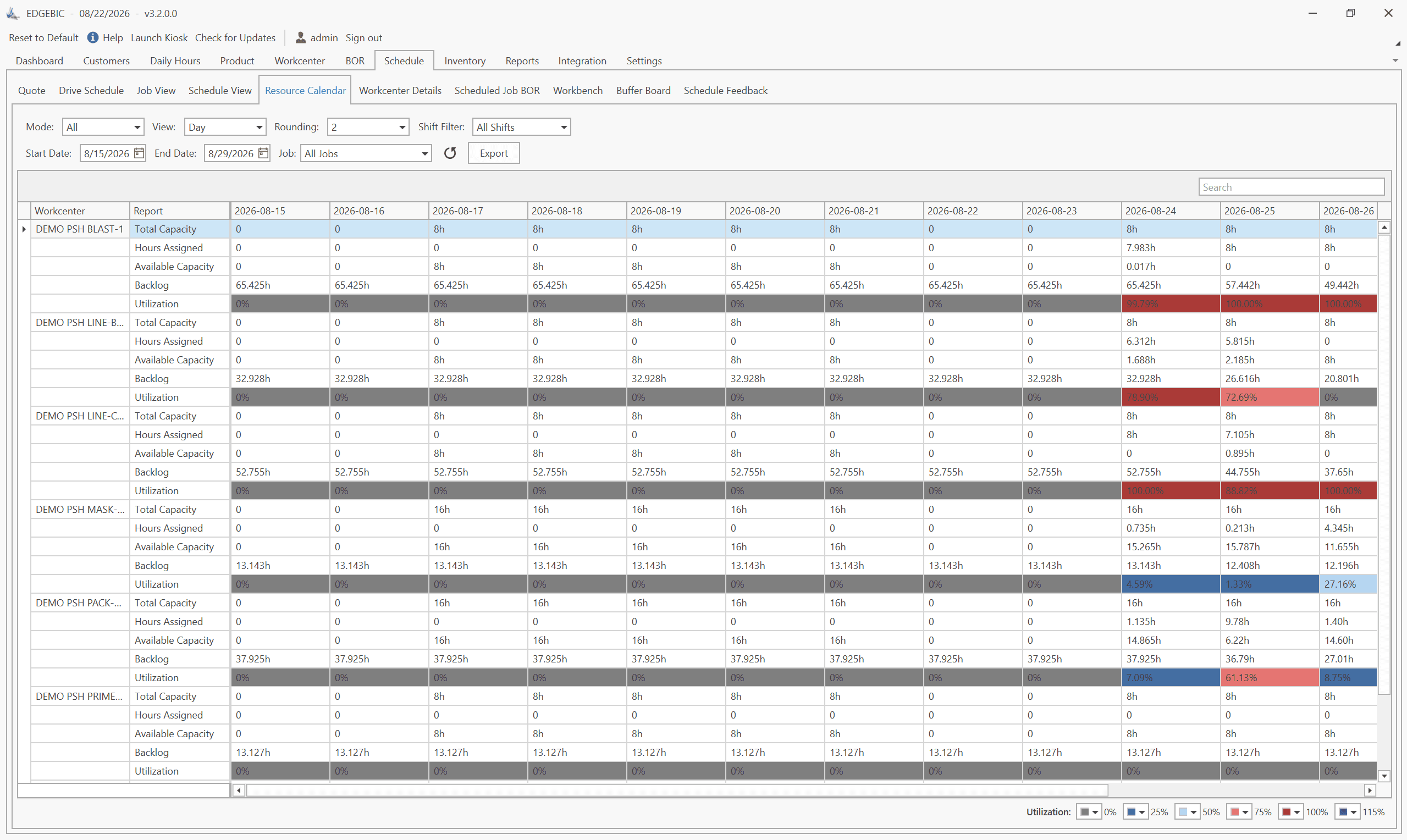
How to Create a Production Schedule in 7 Steps (Free Template)
How to create a production schedule step by step: horizon, real capacity, work orders, load check, sequence, dates, then publish. Worked example included.
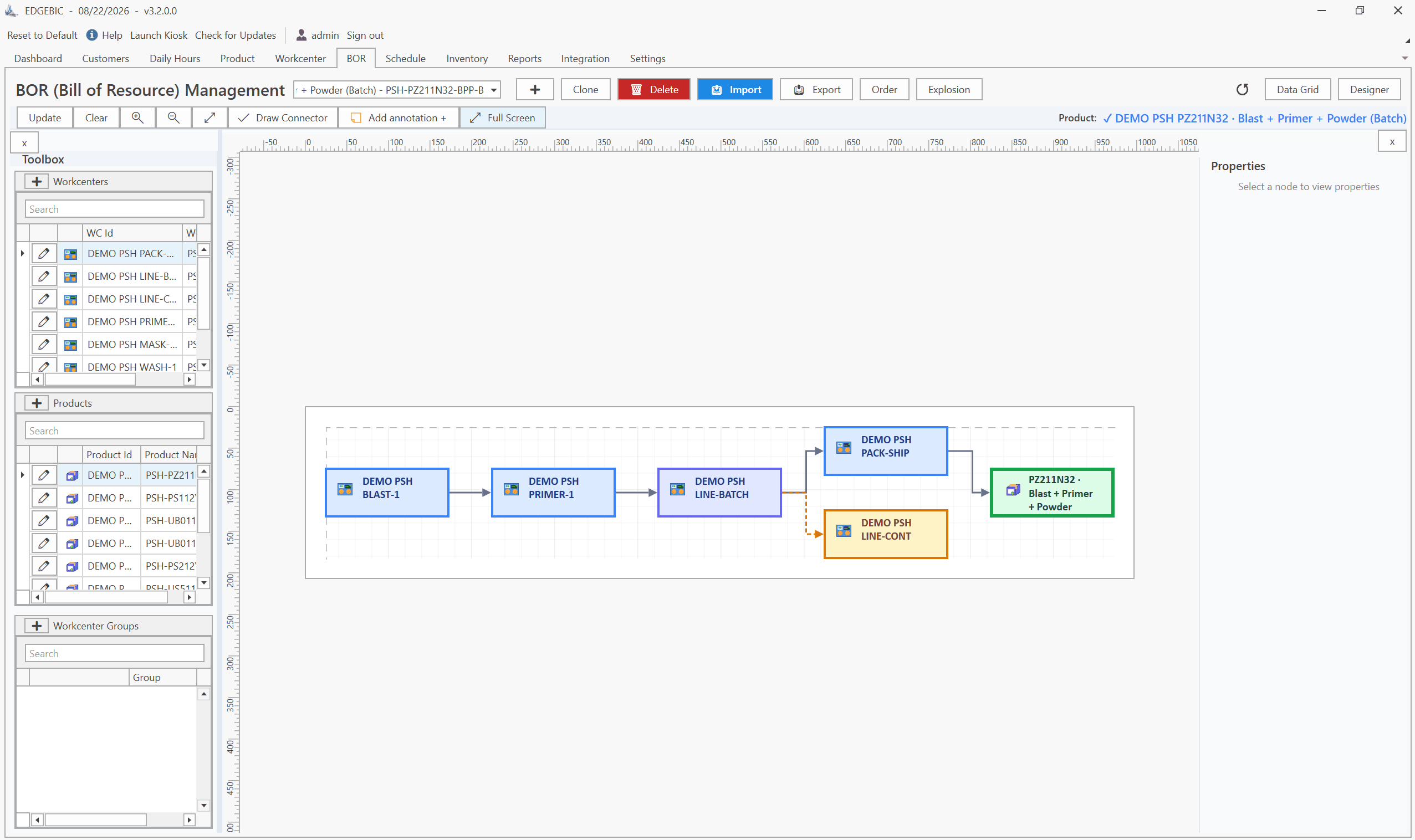
Production Planning and Control (PPC): Functions and Examples
Production planning and control explained: routing, loading, scheduling, sequencing, dispatching and expediting, the types of scheduling, and worked examples.

Subcontracting in Your Production Schedule: When and How to Outsource Operations
Learn how subcontracting changes your production schedule - modeling OP lead times, outside processing routing steps, vendor capacity constraints, and single-source subcontractor risk.