
Multi-Constraint Scheduling: How to Handle Complex Manufacturing
 User Solutions Team
Multi-constraint scheduling is the practice of scheduling production operations against all required resources simultaneously - not just the primary machine, but also operators, tooling, fixtures, materials, and any other resource the operation depends on. In real manufacturing, a job does not just need a machine. It needs the right machine, the right operator, the right tool, and the right material - all at the same time. Multi-constraint scheduling is what makes that coordination possible.
At User Solutions, multi-constraint scheduling has been a core capability of RMDB since its earliest versions. This article explains why single-constraint scheduling falls short, how multi-constraint scheduling works, and how it applies to real manufacturing complexity. For broader context, see our production scheduling software guide.
Why Single-Constraint Scheduling Falls Short
Most basic scheduling tools consider only one constraint: the primary machine. They check whether Machine A is available at 10 AM, and if so, they schedule the job there. But a CNC milling operation might require:
- Machine: CNC Mill #3 (or alternate CNC Mill #4)
- Operator: A programmer certified on 5-axis machining
- Tooling: The specialized fixture for this part family
- Material: Aluminum bar stock, lot #2847
- Predecessor: The turning operation on the lathe must be complete
If the scheduling system only checks machine availability, it will happily schedule the job at 10 AM - even if the operator is assigned to another machine, the fixture is in use elsewhere, the material has not arrived from receiving, or the turning operation is not yet finished.
The result: the job arrives at the machine and cannot run. The operator waits. The machine sits idle. The schedule falls apart. This scenario plays out multiple times per day in shops that rely on single-constraint scheduling.
The Types of Constraints
Multi-constraint scheduling addresses several categories of constraints:
Primary Resource Constraints
The main machine or work center the operation requires. This is the constraint every scheduling system handles. The operation runs on this resource for its scheduled duration.
Secondary Resource Constraints
Additional resources required simultaneously with the primary machine:
- Fixtures and jigs - limited in quantity and shared across machines
- Specialized tooling - cutting tools, molds, or dies that are not interchangeable
- Inspection equipment - shared measurement devices like CMMs
- Cranes or material handling - required for loading/unloading heavy parts
Labor Constraints
Operators with specific skills or certifications:
- Skill-based assignment - only certain operators can run certain machines or programs
- Labor pool limits - you have 3 machinists on day shift and 2 on nights
- Cross-training considerations - which operators can serve as alternates
Material Constraints
Raw materials and purchased components:
- Material availability dates - when raw stock or purchased parts arrive
- Lot/batch requirements - specific material lots required for traceability
- Quantity constraints - enough material for the planned batch size
Temporal Constraints
Time-based dependencies:
- Predecessor operations - Operation 20 cannot start until Operation 10 is complete
- Minimum/maximum lag times - paint must cure for 4 hours before assembly
- Time windows - heat treatment is only available Tuesday and Thursday
Batch and Grouping Constraints
Constraints related to processing groups of items together:
- Furnace capacity - the heat treat oven holds 50 parts per load
- Paint booth batches - same-color parts grouped to minimize changeovers
- Test equipment cycles - inspection runs process multiple parts simultaneously
How Multi-Constraint Scheduling Works
The scheduling engine evaluates each operation against all defined constraints simultaneously. An operation is only placed in the schedule when ALL of the following are true:
- The primary machine is available
- All required secondary resources are available
- A qualified operator is on shift and not assigned elsewhere
- Required materials are on hand (or will be by the operation start time)
- All predecessor operations are complete
- Any time-window or calendar constraints are satisfied
If any constraint prevents scheduling at the proposed time, the engine moves to the next available time slot where all constraints align. This ensures every scheduled operation is truly executable.
Example: A Multi-Constraint Operation
Consider a 5-axis CNC milling operation:
| Constraint | Requirement | Status |
|---|---|---|
| Machine | CNC Mill #3 | Available at 10:00 AM |
| Operator | 5-axis certified programmer | Jim is available at 10:00 AM |
| Fixture | Part family fixture #7 | In use until 11:30 AM |
| Material | Aluminum block, PO #4521 | Arrived in receiving |
| Predecessor | Turning Op 10 | Complete at 9:45 AM |
Single-constraint scheduling would place this job at 10:00 AM based on machine availability. But the fixture is not free until 11:30 AM. Multi-constraint scheduling places the job at 11:30 AM - the earliest time when ALL constraints are satisfied.
This 90-minute difference prevents the operator from arriving at the machine, discovering the fixture is unavailable, and either waiting idle or starting a different job (which then disrupts the rest of the sequence).
Benefits in Complex Manufacturing
Realistic Schedules
The most fundamental benefit: the schedule reflects what can actually happen. Operators trust it because jobs are only scheduled when everything they need is available. Schedule adherence improves dramatically.
Reduced Idle Time
Idle time often comes from missing secondary resources, not missing work. Multi-constraint scheduling eliminates the "machine is ready but we are waiting for the tool" problem. This directly improves machine utilization.
Better Labor Planning
When labor is a scheduled constraint, supervisors know exactly which operators are needed where and when. This enables proactive staffing decisions rather than reactive scrambling.
Improved Material Coordination
Scheduling against material availability ensures jobs are not released to the shop floor before their material arrives. This reduces floor congestion from partially kitted jobs and improves WIP control.
Accurate Delivery Dates
Because multi-constraint scheduling accounts for all the factors that can delay a job, its delivery date predictions are significantly more accurate than single-constraint or infinite capacity methods. This translates directly to better on-time delivery performance.
Implementing Multi-Constraint Scheduling
Start with the Constraints That Hurt Most
You do not need to model every constraint on day one. Identify the 2-3 constraints that cause the most scheduling failures:
- If operators frequently wait for fixtures, add tooling constraints
- If jobs arrive at machines without material, add material availability
- If skill mismatches cause rework, add labor skill constraints
Define Resources Clearly
Each constraint requires a defined resource in the scheduling system. Document your secondary resources, their quantities, and which operations require them.
Use RMDB for Multi-Constraint Capability
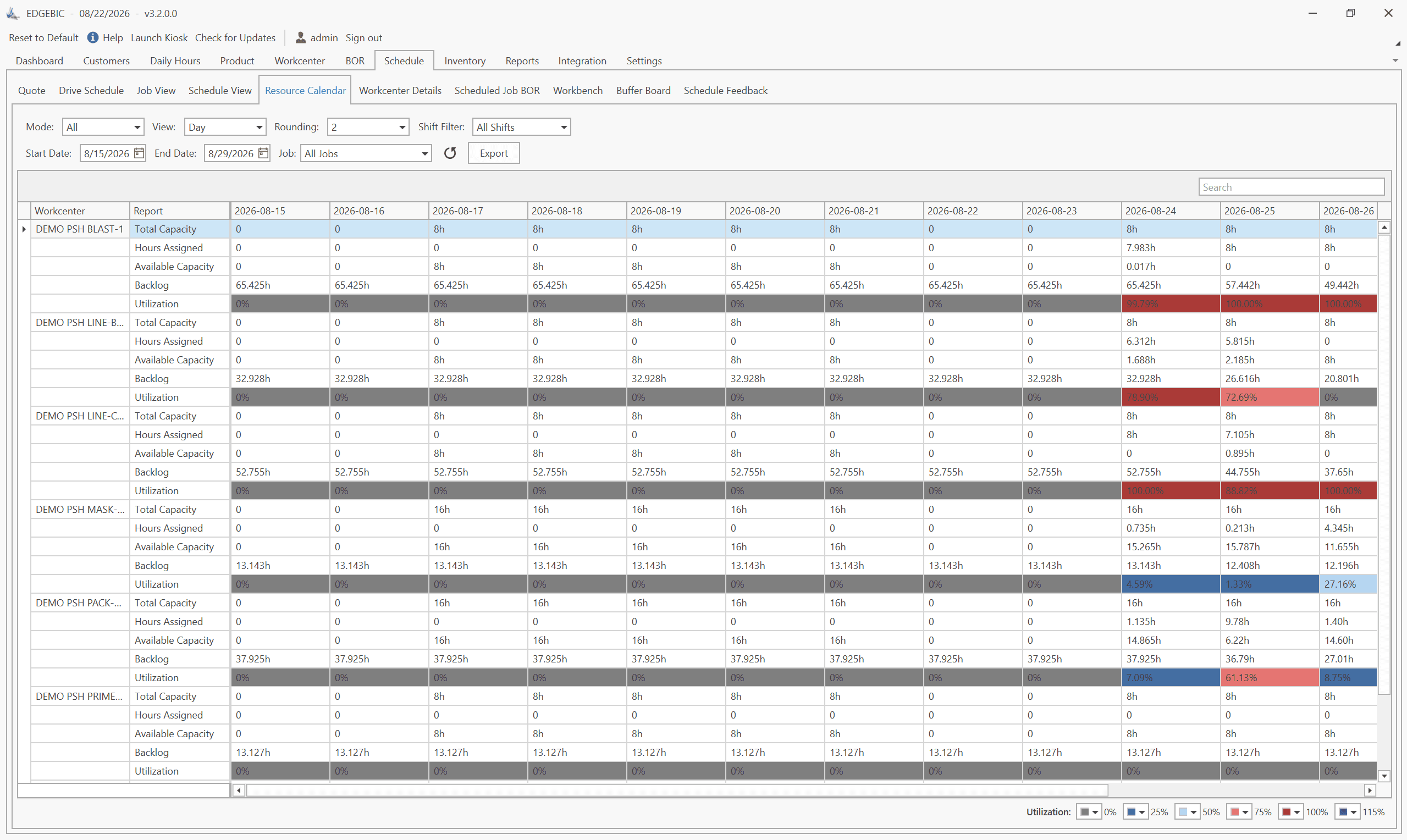
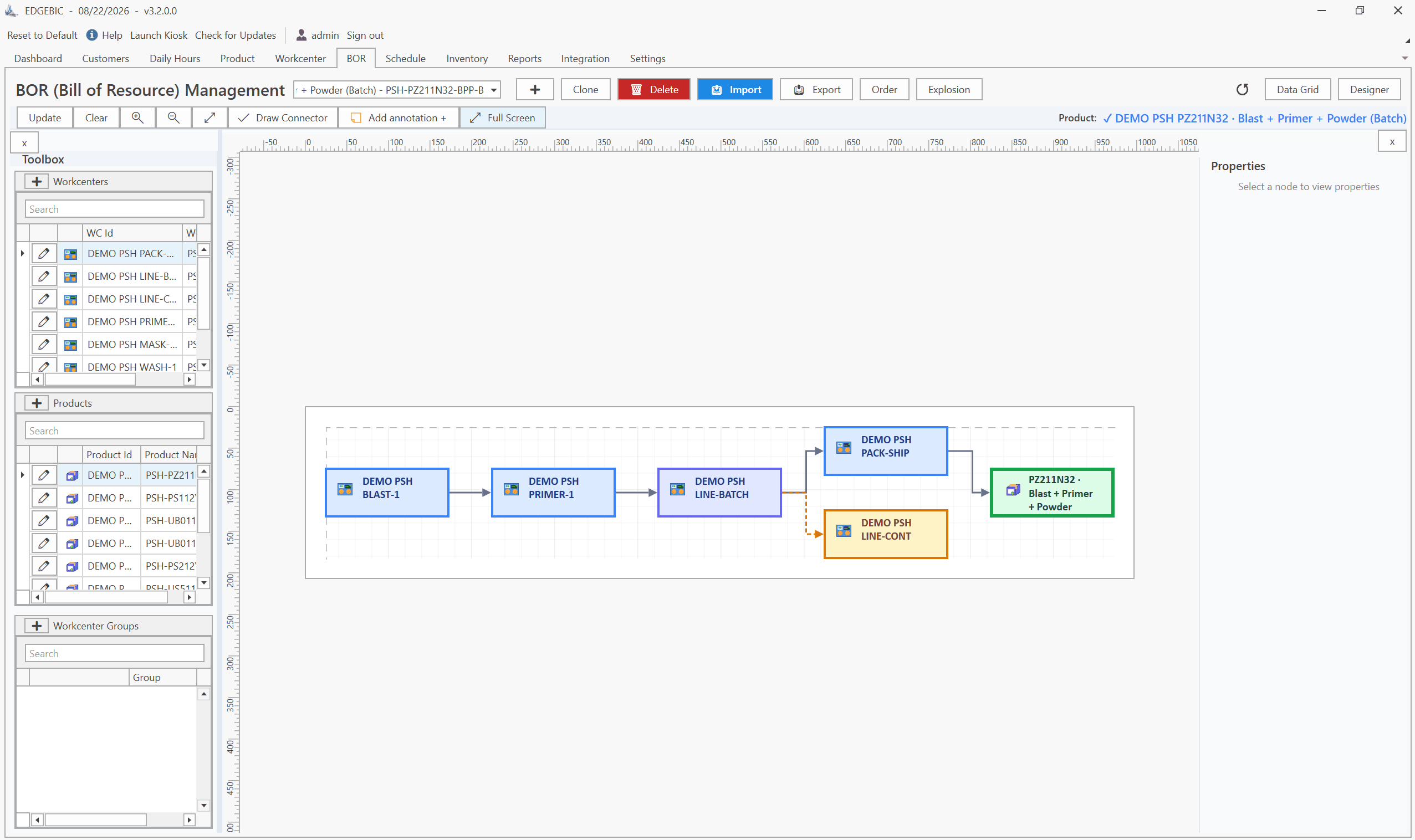
RMDB from User Solutions handles multi-constraint scheduling natively. Combined with EDGEBI's visual Gantt charts, schedulers can see constraint conflicts visually and resolve them through drag-and-drop interaction. The system checks all constraints on every move, ensuring the schedule stays feasible.
Refine Over Time
As with all scheduling data, constraint definitions improve with use. Start with the most impactful constraints and add others as your scheduling maturity grows.
Multi-constraint scheduling is not a luxury for complex shops - it is a necessity for any manufacturer where jobs require more than just a machine. The alternative is a schedule that looks complete on paper but falls apart on the shop floor.
Contact User Solutions to see multi-constraint scheduling in action with your production data.
Multi-constraint scheduling is a production scheduling approach that considers multiple resource constraints simultaneously - machines, labor, tooling, materials, and more - when creating the schedule. A job is only scheduled when ALL required resources are available at the same time.
Common constraints include primary machine availability, secondary machine or fixture requirements, operator skill qualifications, tooling availability, material readiness, predecessor operation completion, and shift/calendar restrictions. Advanced systems also handle shared resources and batch constraints.
Single-constraint scheduling (typically machine-only) ignores the reality that a job needs more than just a machine. A CNC operation may require the machine AND a skilled programmer AND a specific fixture AND the raw material. If any one of these is missing, the job cannot run - even if the machine is available.
Yes. RMDB from User Solutions is designed for multi-constraint scheduling. It schedules across machines, labor pools, tooling, materials, and secondary resources simultaneously, ensuring that every operation in the schedule has all required resources available at the assigned time.
Expert Q&A: Deep Dive
Q: We have tooling that is shared across multiple machines. How does multi-constraint scheduling handle that?
A: Shared tooling is one of the most common secondary constraints in manufacturing. In RMDB, you define the tool as a shared resource with a quantity (e.g., 3 available). When a job needs that tool, the scheduler checks not just machine availability but also tool availability. If all three tools are in use on other machines, the job waits - even if the machine is free. This prevents the real-world problem where a job gets scheduled on a machine, the operator sets up, and then discovers the required fixture is on another machine across the shop. That kind of wasted time disappears with proper multi-constraint scheduling.
Frequently Asked Questions
Ready to Transform Your Production Scheduling?
User Solutions has been helping manufacturers optimize their production schedules for over 35 years. One-time license, 5-day implementation.

User Solutions Team
Manufacturing Software Experts
User Solutions has been developing production planning and scheduling software for manufacturers since 1991. Our team combines 35+ years of manufacturing software expertise with deep industry knowledge to help factories optimize their operations.
Share this article
Related Articles
How to Create a Production Schedule in 7 Steps (Free Template)
How to create a production schedule step by step: horizon, real capacity, work orders, load check, sequence, dates, then publish. Worked example included.
Production Planning and Control (PPC): Functions and Examples
Production planning and control explained: routing, loading, scheduling, sequencing, dispatching and expediting, the types of scheduling, and worked examples.

Sequence-Dependent Setup Times: The Scheduling Problem That Costs You Capacity
When changeover time depends on what ran before, standard scheduling fails. Learn how setup matrices, sequence optimization, and APS software recover 10-25% of hidden capacity in paint lines, food, and coating operations.