
15 Best Production Scheduling Software Compared (2026)
 User Solutions Team
Choosing the best production scheduling software is one of the highest-impact decisions a manufacturer can make. The right production scheduling software replaces spreadsheet chaos with automated, constraint-aware scheduling that cuts lead times, improves on-time delivery, and reduces overtime costs. The wrong tool wastes months on implementation and gathers dust on the server.
This guide compares 15 leading production scheduling software solutions for 2026, covering features, pricing models, strengths, weaknesses, and the types of manufacturers each tool serves best. Whether you run a small job shop or a multi-plant operation, this comparison will help you narrow your shortlist. For a broader overview of what production scheduling software does and why it matters, see our complete guide to production scheduling software. Disclosure: User Solutions publishes this comparison and makes RMDB and EDGEBIC, which are included in the list.
How We Evaluated Each Tool
We assessed each solution across six criteria that matter most to manufacturers:
- Scheduling capability - finite capacity, multi-constraint, optimization quality
- Ease of use - learning curve, UI quality, drag-and-drop functionality
- Integration - ERP compatibility, API availability, data import/export
- Implementation speed - time from purchase to productive use
- Pricing model - subscription vs. perpetual, total cost of ownership
- Customer fit - company size, manufacturing type, and industry focus
The 15 Best Production Scheduling Software Solutions
1. RMDB by User Solutions (now EDGEBIC) - Best Overall for Small to Mid-Size Manufacturers
RMDB (Resource Manager DB) is a finite capacity scheduling and planning system built specifically for small to mid-size manufacturers. Developed by User Solutions over 35+ years, it delivers enterprise-grade scheduling capability at a fraction of the cost of larger APS systems. Today RMDB is sold as EDGEBIC, its current generation.
Key strengths:
- True finite capacity scheduling with multi-constraint support
- One-time perpetual license - no recurring subscription fees
- 5-day implementation gets you live in a single business week
- Works as an add-on to virtually any ERP system (SAP, Oracle, Epicor, JobBOSS, Sage, and more)
- Drag-and-drop Gantt chart rescheduling, plus schedule optimization (Google OR-Tools CP-SAT) in EDGEBIC
- What-if scenario analysis for testing schedule changes before committing
- Handles job shop, make-to-order, and mixed-mode environments
Pricing: RMDB is now sold as EDGEBIC, a published one-time perpetual license: $25,000 for EDGEBIC APS and $35,000 for EDGEBIC Complete (adds MRP, inventory and purchasing). Updates included, no per-seat annual fee. See pricing.
Best for: Job shops, make-to-order manufacturers, and any shop with 10-500 employees looking for powerful scheduling without subscription costs.
Potential limitations: Focused on scheduling rather than full ERP - but that is by design. It complements your existing ERP rather than replacing it.
2. PlanetTogether - Best for Mid-Market APS
PlanetTogether offers Advanced Planning and Scheduling with strong visualization tools and integration with major ERP systems. Their Galaxy platform provides finite capacity scheduling with resource optimization.
Key strengths:
- Strong Gantt chart visualization
- Good ERP integration ecosystem
- Scenario comparison tools
- Multi-plant scheduling capability
Pricing: Subscription-based, typically $200-$400+ per user/month.
Best for: Mid-size manufacturers with 50-500 employees who are willing to pay subscription pricing for a polished APS interface.
Potential limitations: Subscription costs add up significantly over time. Implementation typically takes weeks to months.
3. Siemens Opcenter APS (formerly Preactor)
Siemens Opcenter APS is a well-established APS platform that offers both reactive and interactive scheduling modules. It is part of the broader Siemens digital manufacturing ecosystem.
Key strengths:
- Mature, proven scheduling engine
- Strong constraint modeling
- Part of a comprehensive digital manufacturing suite
- Handles very complex scheduling scenarios
Pricing: Enterprise pricing, typically $50,000+ for licenses plus implementation services.
Best for: Large manufacturers (200+ employees) already in the Siemens ecosystem or needing very complex scheduling logic.
Potential limitations: High cost, long implementation cycles (3-6 months), steep learning curve.
4. SAP Integrated Business Planning (IBP)
SAP IBP is SAP's cloud-based planning and scheduling solution, designed for companies already running SAP ERP.
Key strengths:
- Deep integration with SAP ERP and S/4HANA
- Strong demand planning and supply planning modules
- Cloud-based with regular updates
- Multi-plant and global supply chain support
Pricing: Enterprise pricing, often $100,000+ including implementation.
Best for: Large enterprises already invested in the SAP ecosystem.
Potential limitations: Overkill for small to mid-size manufacturers. Implementation timelines measured in months. High ongoing costs.
5. Oracle Advanced Scheduling
Oracle's scheduling module integrates with Oracle Cloud ERP and E-Business Suite, offering finite capacity scheduling within the Oracle ecosystem.
Key strengths:
- Tight integration with Oracle ERP
- Constraint-based scheduling
- Cloud-based option available
- Strong reporting and analytics
Pricing: Enterprise pricing, typically bundled with Oracle ERP licensing.
Best for: Companies already running Oracle ERP.
Potential limitations: Limited value outside the Oracle ecosystem. High cost and complexity.
6. Lillyworks Visual DBR
Lillyworks specializes in Drum-Buffer-Rope (DBR) scheduling based on Theory of Constraints principles. It focuses on throughput maximization rather than traditional job sequencing.
Key strengths:
- Strong Theory of Constraints foundation
- Visual buffer management
- Focused on bottleneck scheduling
- Good for high-mix environments
Pricing: Perpetual license model, mid-range pricing.
Best for: Manufacturers who embrace Theory of Constraints methodology and want throughput-focused scheduling.
Potential limitations: Niche approach - may not suit all scheduling philosophies.
7. MRPeasy
MRPeasy is a cloud-based manufacturing ERP that includes basic production scheduling. It targets very small manufacturers and startups.
Key strengths:
- Low starting price point
- Easy to set up and use
- Includes MRP, CRM, and basic scheduling
- Cloud-based, accessible from anywhere
Pricing: Starting at approximately $49-$149/user/month.
Best for: Very small manufacturers (under 20 employees) looking for an all-in-one cloud solution.
Potential limitations: Scheduling capability is basic - lacks true finite capacity scheduling, what-if analysis, and sophisticated constraint handling. You will outgrow it as complexity increases.
8. JobPack by Herplan
JobPack is a finite capacity scheduling tool that focuses on job shop and make-to-order environments with strong Gantt chart visualization.
Key strengths:
- Purpose-built for job shops
- Good Gantt chart interface
- Finite capacity scheduling
- Reasonable pricing for small shops
Pricing: Mid-range perpetual licensing.
Best for: Small job shops looking for straightforward finite capacity scheduling.
Potential limitations: Smaller vendor with limited support resources compared to larger players.
9. Delmia Ortems (Dassault Systemes)
Delmia Ortems is part of Dassault Systemes' manufacturing operations suite, offering planning and scheduling with optimization capabilities.
Key strengths:
- Strong optimization algorithms
- Integration with Delmia MES
- Handles complex multi-plant scenarios
- Good simulation capabilities
Pricing: Enterprise pricing, typically $30,000+.
Best for: Mid to large manufacturers in the Dassault ecosystem or needing advanced optimization.
Potential limitations: Complex implementation, significant consulting required.
10. Asprova
Asprova is a Japanese-origin APS system that has gained traction globally, particularly in automotive and electronics manufacturing.
Key strengths:
- Very fast scheduling engine
- Handles extremely large data sets
- Strong in automotive and electronics
- Detailed constraint modeling
Pricing: Enterprise pricing, mid to high range.
Best for: High-volume manufacturers, particularly in automotive or electronics.
Potential limitations: Steeper learning curve, less presence in North American job shop market.
11. Infor CloudSuite Industrial (SyteLine) Scheduling
Infor's scheduling module integrates with their CloudSuite Industrial ERP, offering APS functionality within the Infor ecosystem.
Key strengths:
- Tight ERP integration within Infor
- Cloud and on-premise options
- Industry-specific configurations
- Constraint-based scheduling
Pricing: Bundled with Infor ERP licensing, subscription-based.
Best for: Manufacturers already running Infor CloudSuite Industrial.
Potential limitations: Tied to the Infor ecosystem, difficult to use standalone.
12. Epicor Advanced MES (Mattec)
Epicor's manufacturing execution system includes scheduling capabilities integrated with Epicor ERP.
Key strengths:
- Real-time shop floor data collection
- Integration with Epicor ERP
- Machine monitoring included
- Good for tracking schedule adherence
Pricing: Subscription-based, bundled with Epicor ecosystem.
Best for: Epicor ERP customers looking for integrated scheduling and MES.
Potential limitations: Scheduling is secondary to MES - not as deep as dedicated APS tools.
13. Acumatica Manufacturing Edition
Acumatica's cloud ERP includes production scheduling modules with Gantt chart views and resource management.
Key strengths:
- Cloud-native architecture
- Unlimited user pricing model
- Good basic scheduling with Gantt charts
- Growing manufacturing feature set
Pricing: Subscription-based, consumption-based pricing model.
Best for: Small manufacturers looking for a cloud ERP with basic built-in scheduling.
Potential limitations: Scheduling capabilities are basic compared to dedicated APS tools.
14. Schedlyzer
Schedlyzer is a newer entrant offering AI-powered scheduling optimization for discrete manufacturers.
Key strengths:
- AI-driven schedule optimization
- Modern cloud interface
- Fast scenario generation
- Good data visualization
Pricing: Subscription-based, premium pricing.
Best for: Manufacturers interested in AI-driven scheduling approaches.
Potential limitations: Newer product with less track record. AI capabilities still maturing.
15. Optessa
Optessa specializes in sequencing and scheduling optimization for complex manufacturing, particularly automotive and multi-plant operations.
Key strengths:
- Advanced sequencing algorithms
- Handles extremely complex constraint sets
- Strong in automotive
- Multi-plant optimization
Pricing: Enterprise pricing.
Best for: Large, complex manufacturers with sophisticated sequencing challenges.
Potential limitations: Overkill for small to mid-size shops. High cost and implementation complexity.
Comparison Summary Table
| Software | Best For | Pricing Model | Implementation | Finite Capacity |
|---|---|---|---|---|
| RMDB / EDGEBIC (User Solutions) | SMB manufacturers | One-time license | 5 days | Yes |
| PlanetTogether | Mid-market | Subscription | Weeks | Yes |
| Siemens Opcenter APS | Enterprise | Enterprise license | 3-6 months | Yes |
| SAP IBP | SAP ecosystem | Enterprise subscription | Months | Yes |
| Oracle Advanced Scheduling | Oracle ecosystem | Enterprise | Months | Yes |
| Lillyworks Visual DBR | TOC practitioners | Perpetual license | Weeks | Yes (DBR) |
| MRPeasy | Very small shops | Subscription | Days | Basic |
| JobPack | Small job shops | Perpetual license | Weeks | Yes |
| Delmia Ortems | Mid-large manufacturers | Enterprise | Months | Yes |
| Asprova | High-volume manufacturing | Enterprise | Months | Yes |
| Infor CloudSuite | Infor ecosystem | Subscription | Weeks-months | Yes |
| Epicor Advanced MES | Epicor ecosystem | Subscription | Weeks | Basic |
| Acumatica | Cloud-first SMBs | Subscription | Weeks | Basic |
| Schedlyzer | AI-forward shops | Subscription | Weeks | Yes |
| Optessa | Complex sequencing | Enterprise | Months | Yes |
How to Choose the Right Solution
The right scheduling software depends on your specific situation. Here are the key decision factors:
Company size matters. Enterprise tools like SAP IBP and Siemens Opcenter are designed for large organizations with big IT teams and big budgets. Small to mid-size manufacturers get better value and faster time-to-value from focused tools like RMDB.
ERP ecosystem matters. If you are deeply invested in SAP, Oracle, Epicor, or Infor, evaluate those vendors' scheduling modules first. But be honest about whether their built-in scheduling is sufficient - many manufacturers find they need a dedicated add-on for true finite capacity scheduling.
Pricing model matters. Subscription costs compound relentlessly. A $300/user/month tool costs $18,000/year for 5 users - $90,000 over 5 years. A one-time license like RMDB can deliver equivalent capability at a fraction of that total cost. See our buyer's checklist for a detailed evaluation framework.
Implementation speed matters. Every week spent implementing is a week without improvement. User Solutions' 5-day implementation approach means you can be scheduling live within a single business week, compared to months for many competing solutions.
Manufacturing type matters. Job shops and high-mix environments need different capabilities than repetitive or process manufacturers. Make sure the tool you choose handles your specific scheduling challenges - sequence-dependent setups, alternate routings, overlapping operations, and multi-constraint scheduling.
For a detailed step-by-step evaluation framework, see our how to choose production scheduling software guide.
Our Recommendation
For small to mid-size manufacturers - the shops doing $2M to $50M in revenue with 10 to 500 employees - RMDB from User Solutions offers the best combination of scheduling power, implementation speed, and total cost of ownership. Now sold as EDGEBIC, with drag-and-drop Gantt scheduling, what-if scenarios and a built-in optimizer at a published one-time price, it delivers the core capabilities most manufacturers need without an enterprise subscription or a 6-month implementation timeline.
Ready to see how RMDB compares against your current process? Contact us for a personalized demo using your own data. We will show you exactly what your schedule could look like - in just one meeting.
For small manufacturers (under 50 employees), RMDB by User Solutions, now EDGEBIC, is our pick because of its one-time license with published pricing, implementation in days, and finite capacity scheduling that works as an ERP add-on. Other strong options include Lillyworks Visual DBR and MRPeasy for very small shops.
Costs range widely. Cloud subscriptions run $100-$500+ per user per month. On-premise perpetual licenses like RMDB, now sold as EDGEBIC, are one-time purchases: $25,000 (APS) or $35,000 (Complete, with MRP). Enterprise APS systems from SAP or Oracle can exceed $100,000. Over 5 years, one-time license models typically cost 50-70% less than subscriptions.
Yes. Most modern scheduling tools integrate with major ERP systems (SAP, Oracle, Epicor, JobBOSS, Sage) through APIs, file imports, or direct database connections. RMDB from User Solutions integrates with virtually any ERP through its flexible import/export engine.
Essential features include finite capacity scheduling, Gantt chart visualization, drag-and-drop rescheduling, what-if scenario analysis, ERP integration, multi-constraint handling, and reporting/KPI dashboards. For job shops, also look for support for alternate routings and sequence-dependent setups.
It depends on your priorities. Cloud offers lower upfront cost and automatic updates. On-premise offers data control, no recurring fees, and often better performance. For manufacturers concerned about long-term cost and data security, on-premise solutions like RMDB are often the better value.
Expert Q&A: Deep Dive
Q: We are a 40-person job shop evaluating scheduling software for the first time. What should our selection process look like?
A: Start with your pain points, not feature lists. Document your top 3-5 scheduling challenges - missed deliveries, excessive overtime, bottleneck blind spots, whatever hurts most. Then evaluate each tool against those specific problems. Request demos with your own data if possible. Generic demos with sample data rarely reveal how well a tool handles your specific complexity. Ask vendors about implementation timelines and what data preparation you will need to do. At User Solutions, we run our 5-day implementation with your actual jobs and routings so you can see real results immediately. Finally, talk to reference customers in your industry. A tool that works for a repetitive process manufacturer may not suit a high-mix job shop.
Q: We have looked at several tools but the subscription costs feel excessive for our size. Are there alternatives?
A: You are not alone - subscription fatigue is real among small manufacturers. A $200/user/month tool with 5 users costs $12,000/year, or $60,000 over 5 years. That is significant for a shop doing $3-5M in revenue. User Solutions addresses this directly with a one-time perpetual license model. You pay once for RMDB and own it outright. Annual maintenance is optional and a fraction of subscription costs. Over 5 years, our customers typically save 50-70% compared to subscription alternatives with equivalent capability.
Frequently Asked Questions
Ready to Transform Your Production Scheduling?
User Solutions has been helping manufacturers optimize their production schedules for over 35 years. One-time license, 5-day implementation.

User Solutions Team
Manufacturing Software Experts
User Solutions has been developing production planning and scheduling software for manufacturers since 1991. Our team combines 35+ years of manufacturing software expertise with deep industry knowledge to help factories optimize their operations.
Share this article
Related Articles
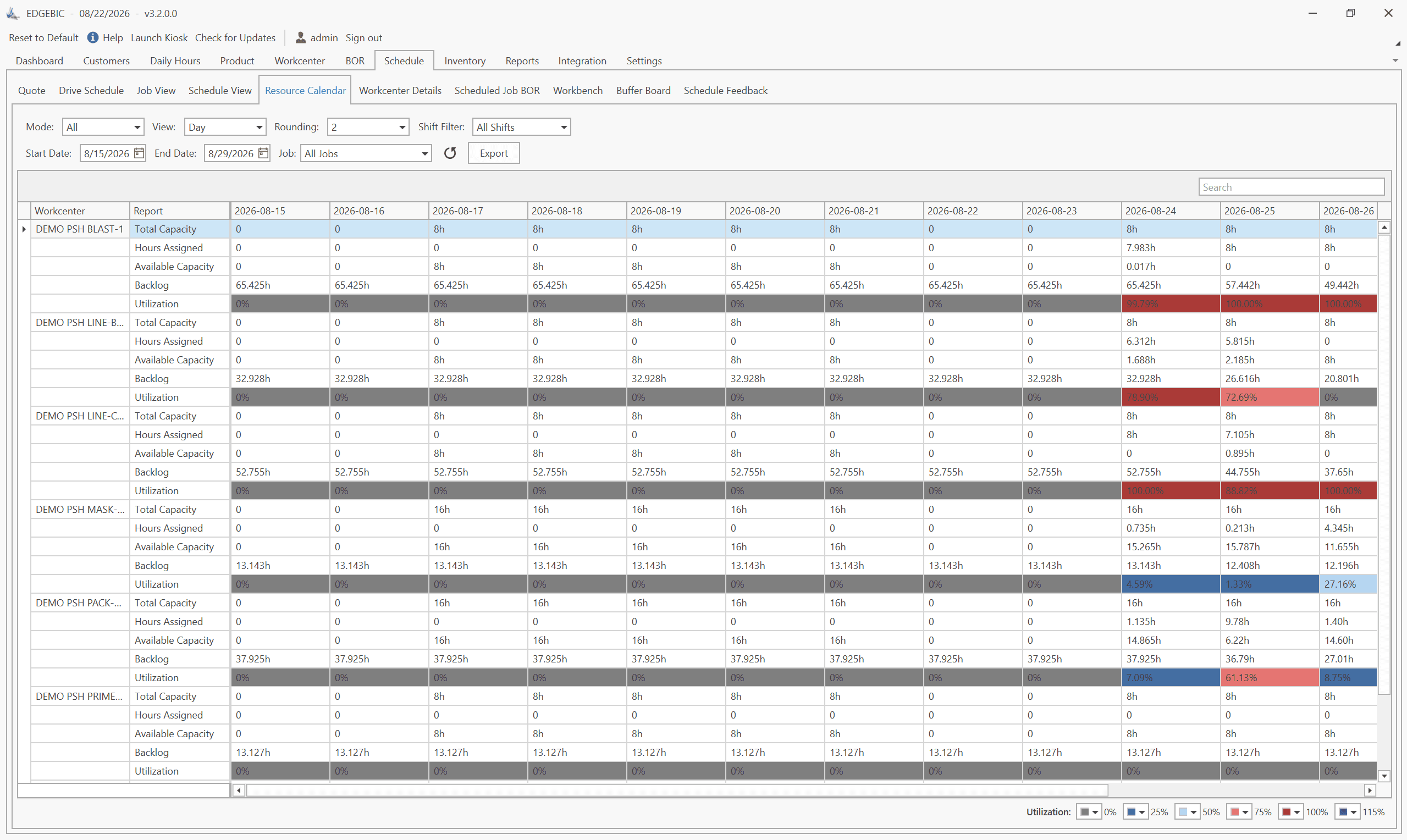
How to Create a Production Schedule in 7 Steps (Free Template)
How to create a production schedule step by step: horizon, real capacity, work orders, load check, sequence, dates, then publish. Worked example included.
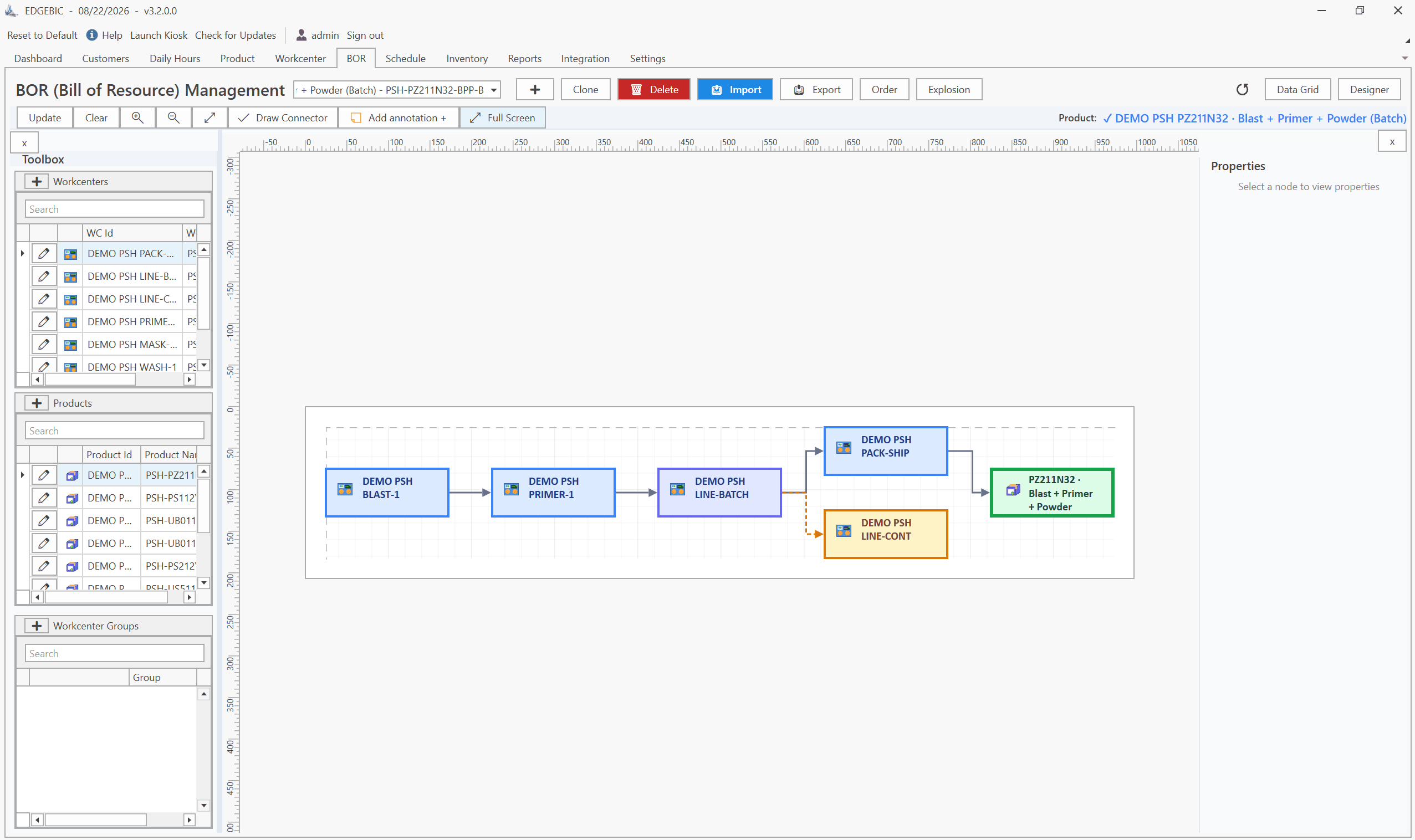
Production Planning and Control (PPC): Functions and Examples
Production planning and control explained: routing, loading, scheduling, sequencing, dispatching and expediting, the types of scheduling, and worked examples.
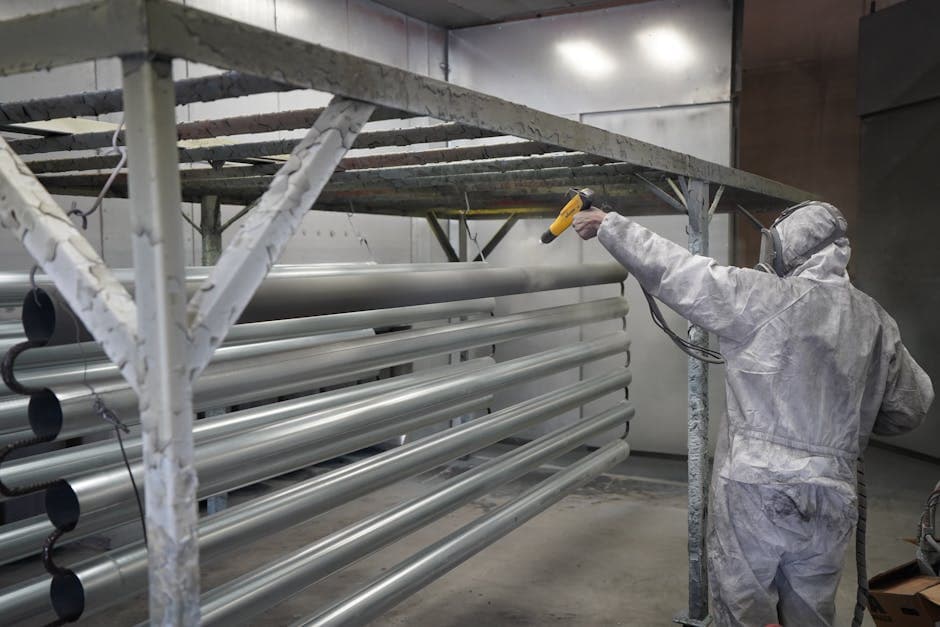
Sequence-Dependent Setup Times: The Scheduling Problem That Costs You Capacity
When changeover time depends on what ran before, standard scheduling fails. Learn how setup matrices, sequence optimization, and APS software recover 10-25% of hidden capacity in paint lines, food, and coating operations.