

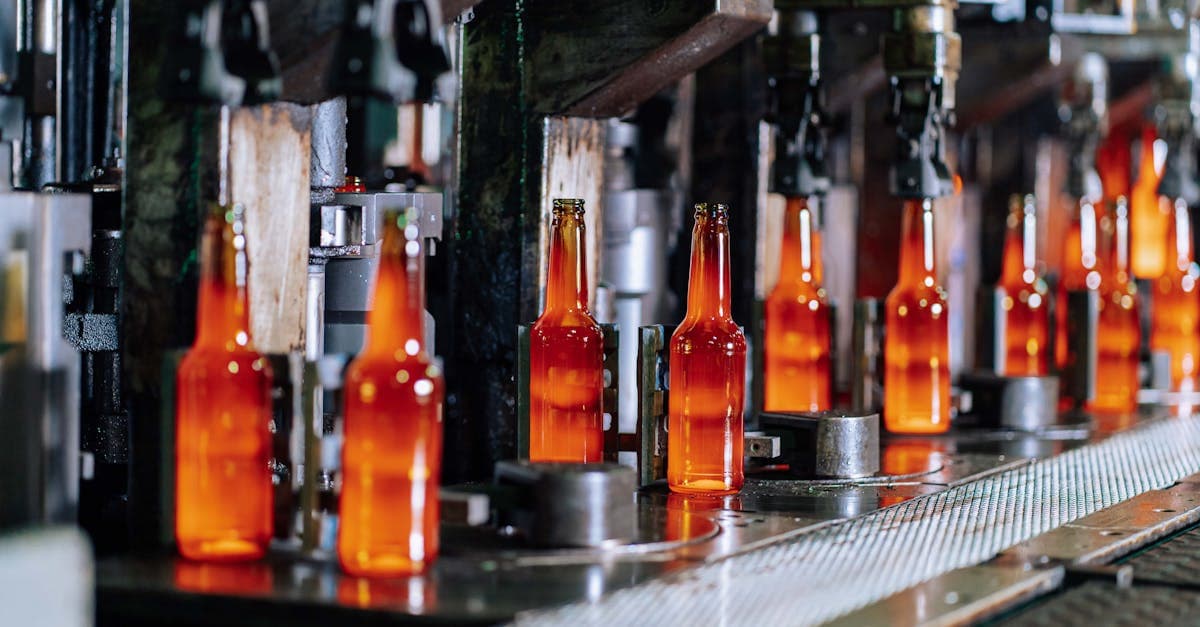
What is a Bottleneck?
A bottleneck is the resource, machine or process step whose capacity is lower than the demand placed on it, so it caps the output of the whole production system. Work piles up in front of it because it cannot process jobs as fast as upstream operations deliver them, and the plant can never ship more than the bottleneck can finish.
What Are Bottlenecks? The Plural Is the Point
People usually ask about bottlenecks in the plural, and they are right to. A plant does not have one permanent bottleneck. It has a handful of resources sitting close together in capacity, and the constraint moves between them: relieve the slowest one and the next slowest takes over, often inside the same week.
That is why bottleneck hunting is a routine and not a one-time project. The useful habit is to track the top three candidates together, with their capacity and their current load side by side, so the next constraint is already named when the current one is relieved. The shops that get surprised are the ones that fixed a bottleneck once and stopped looking.
How Bottlenecks Work in Manufacturing
Every production environment has at least one bottleneck. It might be a specific machine, a shared resource like a paint booth, a quality inspection station, or even a skilled operator who is the only person certified to run a particular process. The bottleneck is identifiable by the queue of work waiting in front of it.
The Theory of Constraints, developed by Eliyahu Goldratt, teaches that improving any resource other than the bottleneck does not increase total throughput. If your CNC lathe is the bottleneck running at 98 percent utilization, buying a faster saw for the upstream cutting operation just builds a bigger pile of blanks waiting for the lathe. The only way to increase output is to increase the bottleneck's effective capacity.
How to Fix a Bottleneck
The order matters, because the cheapest moves are also the fastest. Work down this list and stop when the constraint moves somewhere else.
- Stop starving it. The constraint must never wait for material, a program, a tool or an operator. An hour lost at the bottleneck is an hour lost by the whole plant, and it cannot be recovered anywhere else.
- Cut setup time on it. Setup at the constraint is capacity burned without output. Sequencing similar work together is free capacity.
- Move work off it. Any operation that an alternative machine can do, even slower, should leave the constraint.
- Stop rework reaching it. A part reworked at the bottleneck consumes its capacity twice.
- Add hours. Overtime, a staggered shift, or a second operator.
- Buy capacity. Last, not first, and only once the five cheaper moves are exhausted.
Because plant output tracks bottleneck capacity one for one, a 10 percent improvement at the constraint is a 10 percent improvement in plant output, while the same 10 percent anywhere else is worth nothing at all.
Bottleneck Example, with the Arithmetic
A sheet metal shop has five departments: laser cutting, bending, welding, powder coating and assembly. Laser cutting processes 40 jobs per day, bending 50, welding 30, powder coating 45 and assembly 60.
The arithmetic of a serial process is a single line:
System throughput = the capacity of the slowest resource in the chain
So before any change: min(40, 50, 30, 45, 60) = 30 jobs per day. Welding is the bottleneck. Every other department has spare capacity and the shop still cannot ship more than 30 completed jobs per day, because output is decided by one number and that number is 30. Work piles up between bending and welding while powder coating and assembly sit waiting.
The shop adds a second welder on a staggered shift, lifting welding to 42 jobs per day. Recompute: min(40, 50, 42, 45, 60) = 40 jobs per day. Output rises by 10 jobs a day, 33 percent, from one focused change, and the constraint has moved to laser cutting. Note what the formula also tells you: welding gained 12 jobs of capacity and the plant gained only 10, because the laser caps it. Buying the third welder would gain nothing.
| Department | Capacity, jobs per day | Utilization while shipping 30 | Utilization while shipping 40 |
|---|---|---|---|
| Laser cutting | 40 | 75 percent | 100 percent, the new bottleneck |
| Bending | 50 | 60 percent | 80 percent |
| Welding | 30, then 42 | 100 percent, the bottleneck | 95 percent |
| Powder coating | 45 | 67 percent | 89 percent |
| Assembly | 60 | 50 percent | 67 percent |
Read the right-hand column before spending the money. The second welder was worth buying because it bought 10 jobs a day, and the next dollar belongs at the laser, not at welding. Spend it anywhere else and output does not move at all.
How to Find a Bottleneck
On paper, compare each resource capacity against the demand placed on it and take the lowest number, exactly as the table above does. Most shops cannot do that from memory, because capacity is in one system and demand is in another.
On the floor, the constraint gives itself away with four symptoms that appear together. One alone can mislead; all four on the same resource is conclusive.
| Symptom | What you see | Why it points at the constraint |
|---|---|---|
| The longest queue | work waiting in front of one resource, days deep | arrivals exceed what the resource can finish |
| The highest utilization | that resource is the only one near 100 percent | nothing else is limiting output |
| Downstream starvation | the next operations keep running out of work | they can only get what the constraint releases |
| Expedite pressure | every hot job has to pass through it | the schedule is built around waiting for it |
The queue is the most reliable of the four on a shop floor, and the most misleading in a report, because a big queue can also mean work was simply released too early. That is why the capacity comparison and the queue have to agree before you spend money. Our walkthrough of finding the constraint on a live floor goes through the data pass step by step.
Why Bottlenecks Matter for Production Scheduling
Effective scheduling software identifies bottlenecks and schedules around them. The bottleneck resource should be scheduled first, with all other operations timed to feed it without starving it or overloading it. This drum-buffer-rope approach is covered in detail in our guide to scheduling a plant around its constraint.
Scheduling tools like Resource Manager DB (RMDB) and its successor EDGEBIC (RMDB 2.0) provide utilization reports and visual Gantt charts that make bottlenecks immediately visible. When planners can see that one machine has a 3-day backlog while others sit at 50 percent utilization, they can act: resequence jobs, split operations across alternate machines, or adjust priorities to keep the bottleneck running at full capacity.
Seeing the constraint at all requires loading every work center against the hours it actually has, because an infinite-capacity plan shows every resource as feasible and therefore hides the one that is not. Where the constraint moves between departments week to week, planners model the whole plant in one pass so the next constraint is visible before it bites.
What It Is Worth, Measured
These are our own customers, named, with the numbers they reported.
| Manufacturer | Before | After |
|---|---|---|
| GE Railcar Services | 30 percent on-time shipping | over 90 percent on-time shipping |
| Technical Glass Products | existing workload, existing workforce | 4 percent more business, same workforce |
Neither bought its way out of the constraint. Both stopped spending effort on resources that were never the limit, which is the only thing bottleneck thinking actually asks of a plant.
Related Terms
- Throughput - The rate of output that is directly constrained by the bottleneck
- Utilization - The percentage of available capacity being used, highest at the bottleneck
- Finite Capacity - Scheduling method that respects resource limits and reveals bottlenecks
Common Questions About Bottlenecks
What is the difference between a bottleneck and a constraint?
A bottleneck is a physical resource inside the plant whose capacity sits below demand. A constraint is the broader idea: whatever limits the system, which can equally be a supplier, a tooling set, a certification, a cash limit or the market itself. Every bottleneck is a constraint; not every constraint is a machine on your floor.
Can a plant have more than one bottleneck?
Every plant has one active constraint at a time, but several resources usually sit close together in capacity. When the active bottleneck is relieved the next one takes over, often within the same week. Shops that track the top three candidates together are not surprised when the constraint shifts.
Why are bottlenecks important in manufacturing?
Bottlenecks determine the maximum output of the whole facility. Improving efficiency anywhere except the bottleneck does not increase total throughput, and a 10 percent gain at the bottleneck is a 10 percent gain in plant output. That asymmetry is why the constraint is the first thing a planner should schedule and the last thing to leave idle.
Learn more in our complete manufacturing glossary or production scheduling guide.
Frequently Asked Questions
Ready to Transform Your Production Scheduling?
User Solutions has been helping manufacturers optimize their production schedules for over 35 years. One-time license, 5-day implementation.

User Solutions Team
Manufacturing Software Experts
User Solutions has been developing production planning and scheduling software for manufacturers since 1991. Our team combines 35+ years of manufacturing software expertise with deep industry knowledge to help factories optimize their operations.
Share this article
Related Articles
What Is FMEA (Failure Mode and Effects Analysis)? Manufacturing Guide
FMEA (Failure Mode and Effects Analysis) is a systematic risk method that scores failure modes by severity, occurrence, and detection to prioritize corrective actions.

What Is RCA (Root Cause Analysis)? Definition, Methods, and Manufacturing Examples
RCA (Root Cause Analysis) is a systematic process that identifies the fundamental cause of a problem so corrective actions prevent recurrence, not just fix symptoms.
What Is SCM (Supply Chain Management)? Definition and Manufacturing Guide
SCM (Supply Chain Management) is the active coordination of planning, sourcing, production, delivery, and returns to maximize customer value and competitive advantage.