

What is a Job Shop?
A job shop is a manufacturing environment built around general-purpose equipment, where each job can follow its own routing through the shop. Job shops make low-volume, high-variety custom work, so every order may have different materials, dimensions, tolerances and processing steps. Machine shops, tool and die shops, custom fabricators and prototype houses are the classic examples.
The defining characteristic is flexibility: the same equipment produces a wide range of parts by changing tooling, fixtures and programs. The cost of that flexibility is scheduling difficulty, which is a large enough subject to have its own guide. If you came here for the scheduling side, start with what job shop scheduling is and how it works, which is the owner page for that topic on this site.
How a Job Shop Works
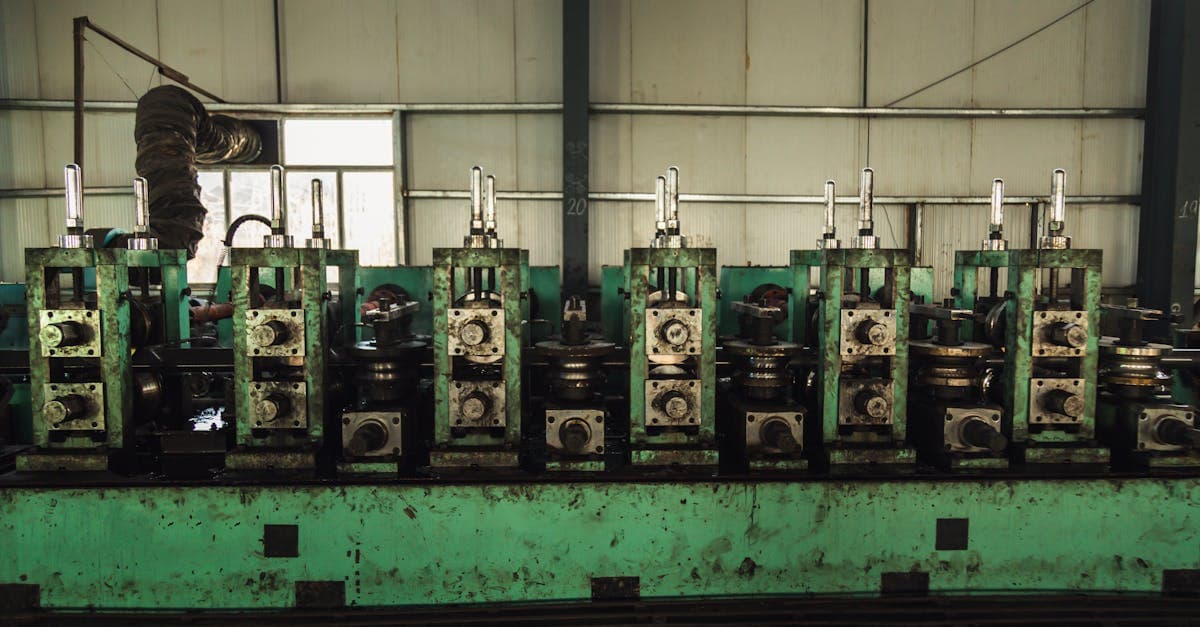
In a job shop, equipment is typically organized by function rather than by product flow. All lathes are in one area, all mills in another, all grinders in a third. A job arrives with a routing that specifies which operations are needed and in what sequence: perhaps sawing, then turning, then milling, then grinding, then inspection. The next job might skip turning entirely and go from sawing to milling to heat treating to grinding.
Each job competes with other jobs for time on shared resources. A CNC mill might process a stainless steel bracket at 8:00 AM, an aluminum housing at 10:00 AM, and a tool steel die block at 1:00 PM - each requiring different tooling, programs, and cutting parameters. Setup times between dissimilar jobs can be significant, making job sequencing critical for shop efficiency.
Work-in-process inventory in a job shop is typically high because jobs spend much of their time waiting in queues rather than being processed. Studies show that in a typical job shop, a job spends 80 to 90 percent of its lead time waiting and only 10 to 20 percent being actively processed. Reducing queue time is the primary lever for shortening lead times.
Job shops track each job with a traveler or work order that accompanies the physical parts through the shop. The traveler lists each operation, the work center, setup and run time estimates, and spaces for operators to record actual times, quantities, and inspection results.
What a Job Shop Looks Like
A typical precision machining job shop runs 22 CNC machines: 6 lathes, 8 vertical mills, 4 horizontal mills, 2 surface grinders and 2 wire EDM machines. It carries about 180 active jobs for 45 customers, with lot sizes from 1 piece to 500 and routings between 2 and 12 operations long, averaging 5.
That profile is the whole definition in concrete form. No two of those 180 jobs need the same path, no machine is dedicated to one product, and the mix changes every week. A shop like this is not a smaller version of a production line, it is a different kind of operation.
Why the Definition Matters
Because scheduling a job shop is a genuinely different problem. With 180 jobs across 22 machines the number of possible sequences is astronomically large, and the job shop scheduling problem is formally NP-hard in operations research. Resource Manager DB (RMDB) and its successor EDGEBIC (RMDB 2.0) were built for exactly this environment, handling a unique routing per job, sequence-dependent setup times and finite capacity on every machine.
The methods, the worked examples and the software selection criteria are covered in the owner guide for this topic: what job shop scheduling is, how it works and the best practices. If you are comparing environments rather than scheduling one, job shop against flow shop is the direct contrast.
Related Terms
- Discrete Manufacturing - The broader manufacturing category that includes job shops
- Sequencing - The process of determining the order in which jobs are processed at each work center
- Shop Floor - The physical production area where job shop work is executed
Learn more in our complete manufacturing glossary or production scheduling guide.
Frequently Asked Questions
Ready to Transform Your Production Scheduling?
User Solutions has been helping manufacturers optimize their production schedules for over 35 years. One-time license, 5-day implementation.

User Solutions Team
Manufacturing Software Experts
User Solutions has been developing production planning and scheduling software for manufacturers since 1991. Our team combines 35+ years of manufacturing software expertise with deep industry knowledge to help factories optimize their operations.
Share this article
Related Articles
What Is FMEA (Failure Mode and Effects Analysis)? Manufacturing Guide
FMEA (Failure Mode and Effects Analysis) is a systematic risk method that scores failure modes by severity, occurrence, and detection to prioritize corrective actions.

What Is RCA (Root Cause Analysis)? Definition, Methods, and Manufacturing Examples
RCA (Root Cause Analysis) is a systematic process that identifies the fundamental cause of a problem so corrective actions prevent recurrence, not just fix symptoms.
What Is SCM (Supply Chain Management)? Definition and Manufacturing Guide
SCM (Supply Chain Management) is the active coordination of planning, sourcing, production, delivery, and returns to maximize customer value and competitive advantage.