

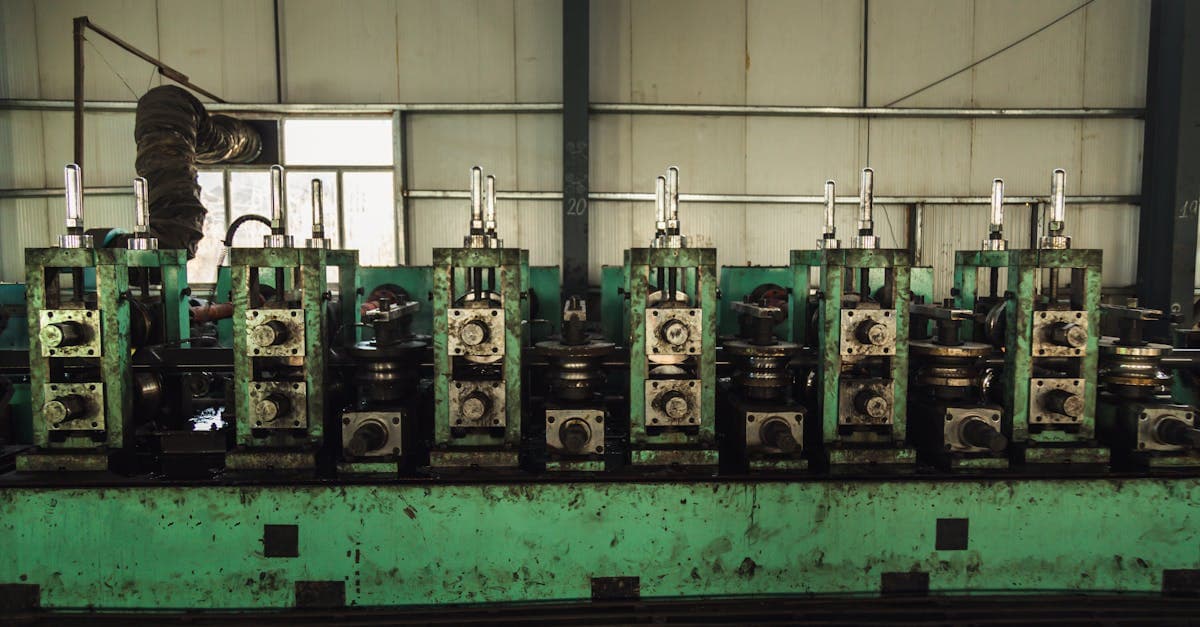
What is a Stockout?
A stockout is the moment an inventory item reaches zero available quantity while something still needs it, either a production order on the floor or a customer order waiting to ship. Stockouts are the failure condition every inventory system exists to prevent, and in manufacturing they are among the most expensive events a plant can have.
The word gets used both ways, and the distinction is worth keeping. A stockout is the single event on one item. Stockouts, in the plural, is how a plant describes the pattern: how often it runs out, on which items, and what that adds up to over a year. Both are measured through service level, the share of demand filled from stock.
In a manufacturing context, stockouts have cascading effects. When a single component is unavailable, the entire assembly operation stops. Downstream operations that depend on the output of the stalled operation are also delayed. Machine capacity sits idle. Labor is unproductive. Customer delivery dates slip.
The true cost of a stockout extends far beyond the cost of the missing item. It includes idle labor and equipment costs during the outage, expediting charges for emergency shipments from the supplier, overtime costs to recover the lost production time, potential customer penalties for late delivery, lost future sales if customers seek alternative suppliers, and the administrative cost of replanning and rescheduling.
These costs are why manufacturers invest in safety stock, reorder points, and demand planning systems - the cost of preventing a stockout is almost always less than the cost of experiencing one.
How Stockouts Work in Manufacturing
Stockouts come from a mismatch between supply and demand, and five mechanisms account for nearly all of them. Each leaves a different trace in the data, which is what makes them catchable in advance.
| Cause | What happens | Where it shows up first |
|---|---|---|
| Demand above forecast | orders or production requirements run higher than planned and safety stock cannot absorb the gap | consumption running ahead of the plan, week over week |
| Supplier delay | the replenishment order is late because of the supplier, freight or customs | a purchase order past its promise date with stock still burning down |
| Quality rejection | incoming material fails inspection, so the usable quantity is below the received quantity | received-versus-accepted quantity on the receiving report |
| Inventory record error | the system shows stock that is missing, damaged or consumed without being recorded | a cycle count variance on a part the scheduler is planning against |
| Demand spike | one large order or an engineering change creates demand nobody planned for | a new requirement dated inside the purchasing lead time |
The last one is the hardest to defend against with inventory alone, because no reasonable safety stock covers an unplanned order. It is defended against with visibility instead: seeing the new requirement land inside the lead time, early enough to expedite or resequence.
Across all five, manufacturers measure the outcome through the service level metric, the percentage of demand fulfilled from available stock. A 95% service level means stockouts occur in 5% of replenishment cycles.
Stockout Example
A manufacturer of industrial pumps runs out of cast iron impeller housings. The assembly line stops for two days and the recovery takes three more.
| Line item | Arithmetic | Cost |
|---|---|---|
| Idle labor, line stopped 2 days | 8 assemblers x 16 hours x $38 | $4,864 |
| Expedite freight | emergency air freight, against $380 by ground | $2,200 |
| Overtime to recover the schedule | 8 assemblers x 24 hours x $57 | $10,944 |
| Late delivery penalties | 4 customer orders, contractual | $3,800 |
| Total cost of one stockout | $21,808 |
Now price the prevention. The safety stock that would have covered it is 40 housings at $95, which is $3,800 of inventory, carried at 25% a year for $950. One stockout cost 23 times what a year of prevention costs, and the housings would still be on the shelf afterwards.
That ratio is the whole argument, and it is why the honest question is never whether safety stock is expensive. It is which items deserve it. Our safety stock calculation walkthrough shows how to size it from real demand and lead time variability instead of a flat week of cover.
After this event, the manufacturer adjusts the reorder point for impeller housings, increasing safety stock from 15 to 40 units and tightening the supplier delivery monitoring process.
Why Stockouts Matter for Production Scheduling
Stockouts are the most immediate and visible failure of the scheduling-to-inventory connection. When material is not available at the scheduled start time, the whole production plan cascades into disruption, and the cost lands on labor and delivery dates rather than on inventory.
Production scheduling software like Resource Manager DB (RMDB) and its successor EDGEBIC (RMDB 2.0) prevents stockouts by showing material requirements against the upcoming schedule rather than against a monthly report. When the scheduler can see that current inventory plus inbound orders will not cover planned production, there is still time to resequence, expedite or substitute. Our walkthrough of how a shortage surfaces before the job starts shows that view in use.
Two capabilities do most of the work here. The first is netting requirements down the whole bill of material so a shortage three levels deep is visible at the top. The second is sequencing the floor against the hours it actually has, because a schedule that overloads a work center will consume material earlier than planned and pull a shortage forward. GE Railcar Services went from 30 percent to over 90 percent on-time shipping after putting its schedule on that footing.
Effective scheduling also prevents stockouts indirectly by leveling production demand. Smooth, predictable production creates smooth, predictable material consumption - which is easier for inventory systems to manage than erratic, lumpy demand.
Related Terms
- Safety Stock - buffer inventory specifically designed to prevent stockouts
- Reorder Point - the trigger level that initiates replenishment before a stockout occurs
- Service Level - the metric that measures how successfully stockouts are being prevented
Common Questions About Stockouts
What are stockouts in manufacturing?
Stockouts, in the plural, is how a plant describes the pattern rather than the single event: how often it runs out, on which items, and what that costs over a year. The measure is service level, the share of demand filled from stock. A 95 percent service level means stockouts happen in 5 percent of replenishment cycles.
What causes stockouts in manufacturing?
Five causes account for almost all of them: demand running above forecast, a supplier delivering late, quality rejections cutting the usable quantity below the received quantity, inventory records that do not match the physical count, and a sudden demand spike from a large order or an engineering change. The table above gives the first place each one shows up.
How much does a stockout cost a manufacturer?
The bill is idle labor and equipment, expedite freight, the overtime needed to recover the schedule, and any contractual late delivery penalty. The worked example above comes to $21,808 for one stockout on one housing, against $950 a year to carry the safety stock that would have prevented it.
How do you prevent stockouts?
Size safety stock against real demand and lead time variability rather than a flat week of cover, set reorder points that trigger before the stock runs down, keep inventory records accurate enough to plan against, and compare upcoming production requirements with current stock plus inbound orders so a shortage is visible weeks before the job is due to start.
This term is part of our Manufacturing & Production Scheduling Glossary. Learn more about inventory management, scheduling, and manufacturing terminology.
Frequently Asked Questions
Ready to Transform Your Production Scheduling?
User Solutions has been helping manufacturers optimize their production schedules for over 35 years. One-time license, 5-day implementation.

User Solutions Team
Manufacturing Software Experts
User Solutions has been developing production planning and scheduling software for manufacturers since 1991. Our team combines 35+ years of manufacturing software expertise with deep industry knowledge to help factories optimize their operations.
Share this article
Related Articles
What Is FMEA (Failure Mode and Effects Analysis)? Manufacturing Guide
FMEA (Failure Mode and Effects Analysis) is a systematic risk method that scores failure modes by severity, occurrence, and detection to prioritize corrective actions.

What Is RCA (Root Cause Analysis)? Definition, Methods, and Manufacturing Examples
RCA (Root Cause Analysis) is a systematic process that identifies the fundamental cause of a problem so corrective actions prevent recurrence, not just fix symptoms.
What Is SCM (Supply Chain Management)? Definition and Manufacturing Guide
SCM (Supply Chain Management) is the active coordination of planning, sourcing, production, delivery, and returns to maximize customer value and competitive advantage.