
When Tooling Is Your Bottleneck: Scheduling Tools, Fixtures, and Dies Like Machines
 User Solutions Team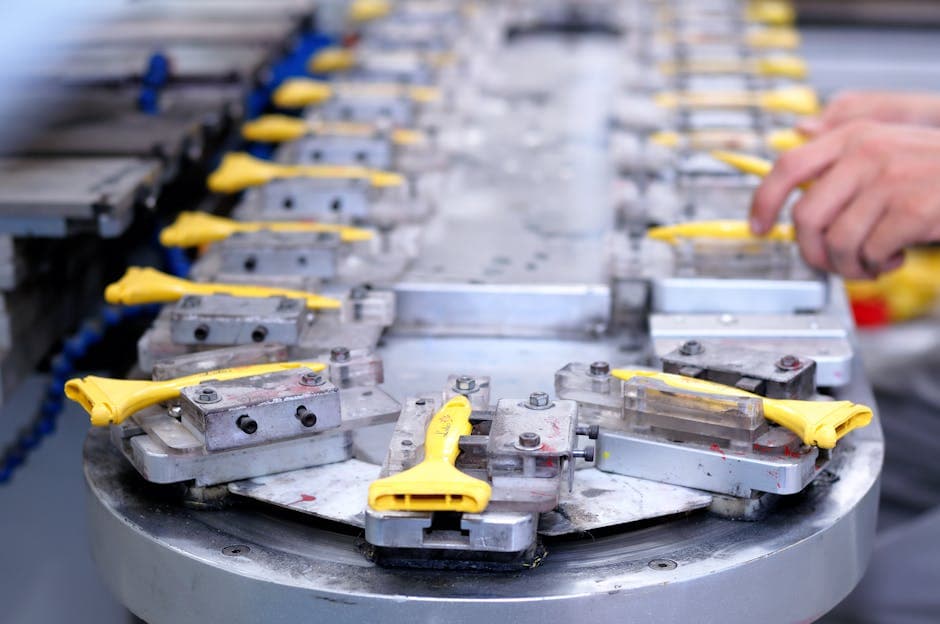
Your machines are sitting at 65% utilization. Your planners swear they're booking jobs back-to-back. Yet you're still missing delivery dates and your work-in-process queue stretches three weeks deep. You've looked at labor, you've looked at machine uptime, you've even brought in a lean consultant - but nobody has looked at where the $200,000 injection mold actually is right now, or whether the shared CMM fixture is already tied up until Thursday.
In 35+ years of working with manufacturers across aerospace, automotive, medical devices, and general job shop machining, we've watched this pattern repeat hundreds of times. The schedule looks optimized on paper. The machines look underloaded by every metric. And yet throughput is choked - because the real constraint is a shared die, a fixture set with only two members, or a CMM program that only runs on one specific inspection table. Tooling bottlenecks are the most underdiagnosed capacity constraint in discrete manufacturing.
For broader context on constraint-based scheduling, see our complete guide to production scheduling software.
Why Tooling Bottlenecks Hide in Plain Sight
Machine utilization is easy to measure. Every ERP system tracks machine run time, downtime, and queue depth. But tooling - fixtures, jigs, dies, molds, special cutters, and inspection equipment - usually lives in a separate asset management system, a spreadsheet, or a rack in the corner of the tool crib with no digital tracking at all.
When your scheduling software builds a production plan, it typically asks: "Is Machine #4 available at 8 AM Tuesday?" It almost never asks: "Is the fixture set for Part #P-2247 available at 8 AM Tuesday, and if not, when does it come free from the job currently running on Machine #2?"
The result is a schedule that looks achievable at the machine level but collapses at the floor level the moment two jobs compete for the same die or fixture. Planners learn quickly that the official schedule can't be trusted, and they revert to informal priority lists managed through tribal knowledge. By the time leadership notices the delivery problem, the tooling bottleneck has been invisible for months or years.
The Three Categories of Tooling Constraints
Not all tooling constraints behave the same way. Understanding the type determines how you model and schedule around it.
Dedicated tooling belongs to a single part number and lives on or near the machine that runs it. Capacity impact is minimal because the tooling is never shared. The only scheduling concern is maintenance windows: if the dedicated mold needs re-texturing, that part can't run at all until it returns from the toolmaker.
Shared tooling is the primary source of tooling bottlenecks. A fixture set used across multiple part families, a CMM program that runs on a single inspection table, a welding jig shared between two work cells - these create hidden resource contention. Every time two jobs require the same shared tool at the same time, one job must wait. That wait doesn't appear in any machine utilization report. It shows up only as unexplained WIP pileup and missed dates.
Perishable tooling - cutting tools, grinding wheels, electrodes - creates a different kind of constraint: availability and lead time. A job scheduled to run Monday may be delayed because the required insert grade isn't in stock and lead time is 10 days. This is less a scheduling problem and more a purchasing and inventory problem, but it must be surfaced in the scheduling system as a material availability constraint, not a machine constraint.
How to Identify Tooling as Your True Constraint
Before you can fix a tooling bottleneck, you have to prove it exists. Three diagnostics cut through the noise:
The fixture utilization audit. List every shared fixture, die, mold, and jig in your shop. For each one, calculate actual hours in use versus hours available during the past 90 days. Any tool running above 75% utilization is a bottleneck candidate. Tools running above 85% are active constraints. We consistently find that shops with "65% machine utilization" have shared fixture utilization above 90% in the same time window.
The wait-for-tool tracking exercise. For two weeks, have floor supervisors log every instance where a job at a machine is waiting for a tool or fixture to come off another machine. Quantify in hours. At the end of two weeks, most shops are surprised to find 8-25 hours per week of machine idle time attributable to tooling waits - not machine downtime, not labor shortage, not material delays. Tooling waits.
The job router audit. Pull your routing records for the 20 jobs that missed their due dates last quarter. For each job, trace the delay back to root cause. In our experience, 30-40% of late jobs in shops with shared tooling will trace at minimum one significant delay event to a tooling conflict that wasn't visible in the original schedule.
Modeling Tooling Availability in Scheduling Software
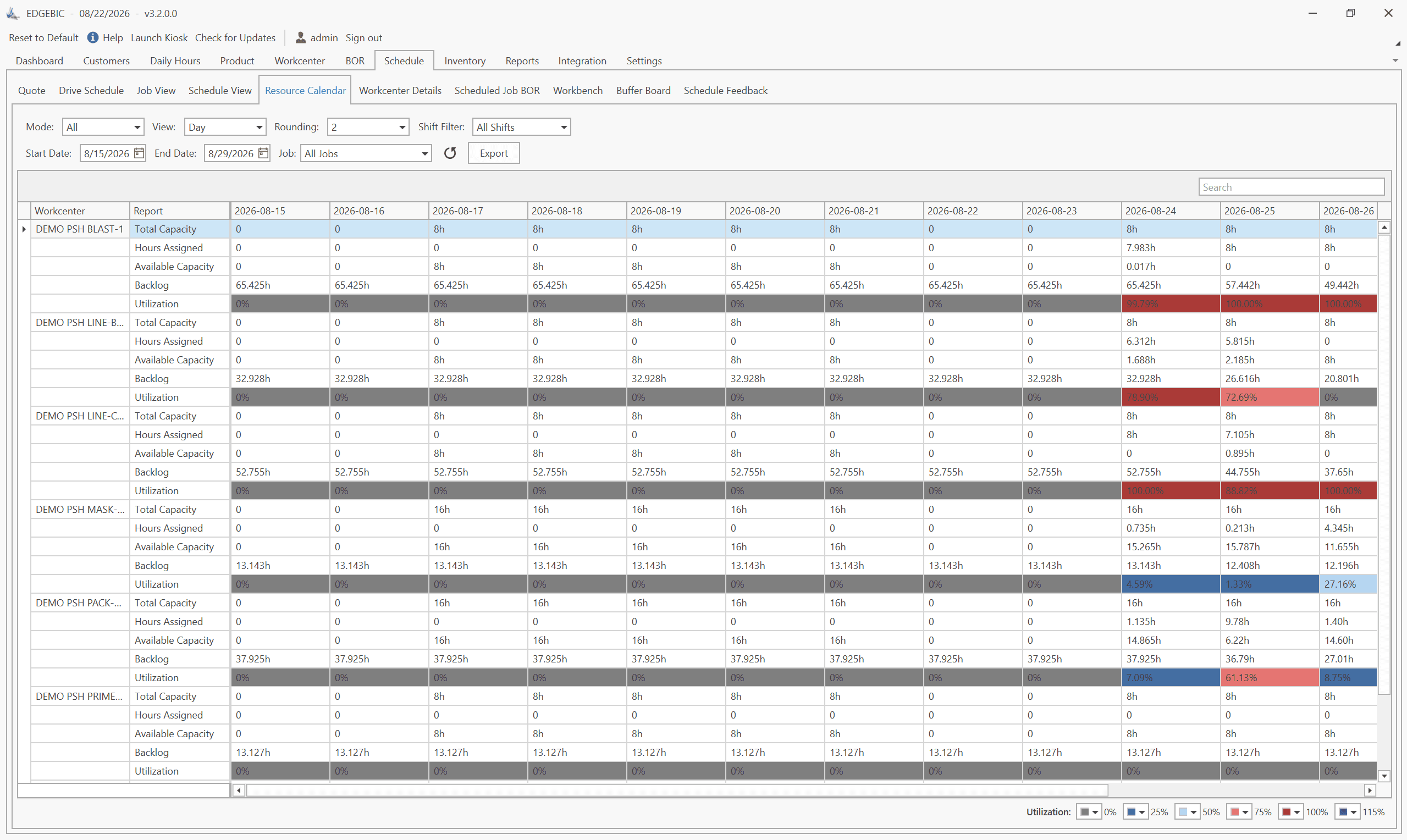
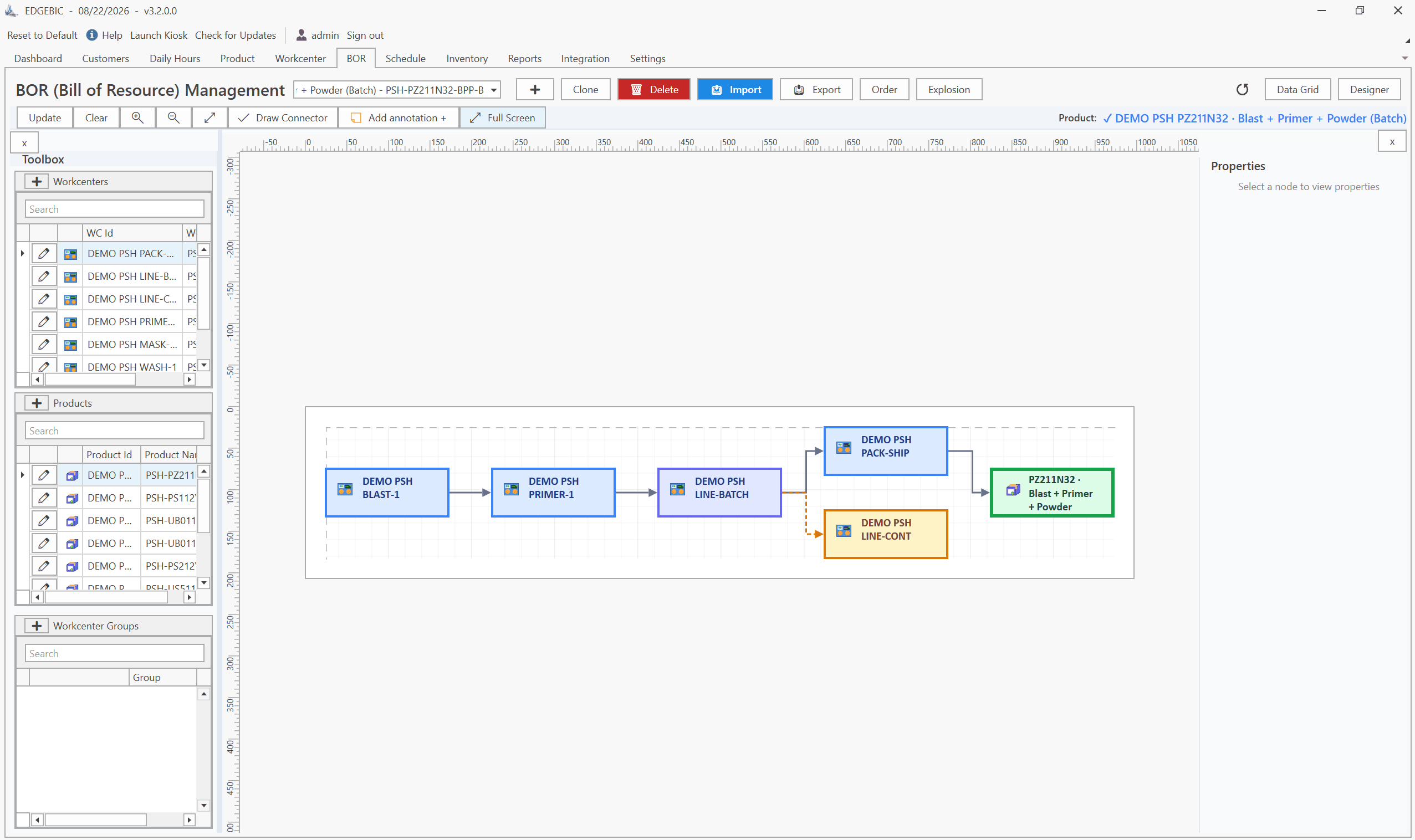
The right approach is to model shared tooling as a secondary resource - a resource required to execute an operation alongside the primary machine resource. In RMDB, this is handled through resource dependency rules: a job routing step specifies both the machine group required and the tooling resource required. The scheduler checks both calendars before committing a time slot.
Concretely, this means your scheduling database needs:
- A resource record for each shared tool, fixture, or die set - with a quantity field (e.g., "Fixture Set A: quantity 2")
- An availability calendar for each tooling resource, including planned maintenance windows
- A link from each job routing step to the tooling resources it requires
- A capacity rule that prevents the scheduler from double-booking a tooling resource across simultaneous operations
This setup allows the scheduler to answer the right question: "Machine #3 is free Thursday at 6 AM, but the fixture needed for Job #4477 is already committed to Machine #1 until Friday noon - so the earliest available slot for Job #4477 on Machine #3 is Friday at 2 PM."
Without tooling modeled as a resource, the scheduler shows Machine #3 as available Thursday and books the job - creating a promise that will be broken on the floor.
Injection Mold Scheduling: The High-Stakes Case
Injection molding shops face the most severe version of the tooling bottleneck problem. A single mold can represent $50,000 to $500,000 in capital, serve multiple presses, require 4-8 hour changeovers, and need periodic maintenance at defined shot-count intervals. Scheduling errors aren't just inconvenient - they cascade across the entire press floor.
The critical scheduling data for each mold includes: which press families it's qualified for, current location (in press, in rack, or at toolmaker), next PM due date and estimated PM duration, changeover time from any other mold on the same press, and whether it's currently under any repair or modification order.
Shops that track all of this in their scheduling system - rather than relying on the tool crib manager's memory - typically see 15-25% improvement in press utilization without adding any capacity. The improvement comes entirely from eliminating unplanned downtime caused by mold conflicts, mold searches, and surprise PM pull-ins.
CNC Fixtures and Welding Jigs: The Mid-Volume Case
In job shops running CNC machining, fixture conflicts are particularly common in shops that have grown through product line expansion. Early in a shop's history, fixtures are purpose-built and dedicated. As the part mix grows, engineers start designing "flexible" fixtures that accommodate multiple part families - which is excellent from a tooling cost perspective but creates shared resource contention at scheduling time.
A practical rule of thumb: any fixture used for more than three distinct part families is a shared resource that needs to be tracked and scheduled as a capacity-constrained asset. Below three part families, the contention probability in a typical job shop is low enough to manage informally. Above three, informal management breaks down.
Welding jigs present a similar pattern. A jig built for a structural weldment is often adapted for similar assemblies as the product line evolves. When two hot jobs both require the same jig and there's only one, the informal priority system determines which job waits - usually the one whose customer calls first, not the one with the worst due-date performance.
Tooling Maintenance Windows and Scheduling
Tooling maintenance is too often treated as an emergency event rather than a planned scheduling input. The result: a mold that needs re-texturing after 500,000 shots gets pulled from a press during a critical production run, and the 48-hour toolmaker repair becomes a 3-day crisis because nobody reserved the maintenance window in advance.
The correct approach mirrors how you handle machine PM in the schedule. Every tooling resource with a predictable maintenance cycle should have a maintenance calendar maintained in the scheduling system. When the scheduler builds the week's plan, it sees the tooling resource as unavailable during the PM window the same way it sees Machine #4 as unavailable during its quarterly PM.
This requires two inputs that most shops don't currently track: the PM trigger (shots fired, hours run, calendar interval) and the PM duration estimate. Both are knowable - the toolmaker has this data in their head. Getting it into the scheduling system is a process change, not a technology limitation.
The Cost of Untracked Tooling Bottlenecks
The financial cost of a tooling bottleneck has three components, all of which are underestimated because they don't appear on any single report.
Machine idle cost. A machining center with $150/hour fully-loaded cost running at 65% utilization instead of 85% due to tooling waits loses $30/hour, or $240/day, or roughly $60,000 per year in recoverable capacity - without spending a dollar on capital equipment.
Expedite cost. Every time a tooling conflict causes a job to miss a promised delivery date, someone scrambles. Expedite freight, overtime, partial shipments, and customer relationship repair all cost money. These costs are typically scattered across multiple GL accounts and never aggregated as "tooling bottleneck cost."
Schedule credibility cost. This is the most expensive and least measured cost. When the schedule can't be trusted because tooling conflicts blow it up repeatedly, planners stop using it. They revert to whiteboard priority systems. Lead times inflate to protect against uncertainty. Quoted lead times extend to cover chronic unreliability. And over time, the shop becomes uncompetitive on lead time even though its machines are sitting at 65% utilization.
Practical First Steps
If you've recognized your shop in this article, the path forward is straightforward:
- Audit your shared tooling and create resource records for any tool used across more than one job simultaneously
- Conduct the two-week wait-for-tool logging exercise to quantify the real cost
- Require that all job routings specify tooling resources alongside machine resources
- Enter known maintenance windows for high-utilization tooling into your scheduling calendar
- Run your finite capacity scheduler against both machine and tooling resources together
You don't need to do all of this at once. Start with the top three highest-utilization shared tools. Model them as resources. Run two weeks of schedules with them modeled. The improvement in schedule accuracy will be visible immediately - and it will build the organizational case to extend the same treatment to all shared tooling.
A tooling bottleneck occurs when shared tools, fixtures, dies, jigs, or inspection equipment - rather than machine capacity - limit throughput. The machine sits idle waiting for the right fixture or die to become available from another job.
Track machine utilization alongside tool/fixture utilization. If machines regularly wait for tooling - even when their queues are full - tooling is the constraint. Signs include long tool changeover queues, shared CMM fixtures causing inspection delays, and jobs stacking up waiting for a specific mold or die.
Yes. Advanced scheduling software like RMDB models tooling as a separate resource class with its own availability calendar, maintenance windows, and assignment logic. When a job requires a specific die or fixture, the scheduler checks both machine availability and tooling availability before committing the slot.
Tooling maintenance windows should be entered as resource downtime in your scheduling system the same way machine PMs are. A $200K injection mold that needs 8 hours of preventive maintenance every 500,000 shots should block scheduling of any job requiring that mold during those hours.
Ready to schedule tooling constraints alongside machines? Contact User Solutions to see how RMDB and EDGEBI model secondary resources - including fixtures, dies, and shared inspection equipment - so your schedule reflects what the floor can actually execute. Trusted by GE, Cummins, BAE Systems, and hundreds of job shops for 35+ years.
Expert Q&A: Deep Dive
Q: We have three CNC machining centers but only two fixtures for our highest-volume part family. The machines are only running at 60% utilization but we can't hit our output targets. How do we model this in a schedule?
A: This is a textbook tooling bottleneck. Your machines aren't the constraint - your fixture count is. In a proper finite capacity scheduler, you model the fixture set as a separate resource with a quantity of two. Any job requiring those fixtures competes for them regardless of which machine it runs on. The scheduler will then reveal that your true capacity ceiling is two-fixture-equivalents of simultaneous work, and it will sequence jobs accordingly. The practical fix is usually either (a) invest in a third fixture set, which typically costs 5-15% of what a new machine costs, or (b) sequence jobs to minimize the overlap window when both fixtures are occupied. We've seen shops run at 60% machine utilization for years before someone checks fixture utilization and finds it at 95%.
Q: We run injection molding and our mold changes take 4-6 hours. Some molds are shared across multiple presses. Our scheduler doesn't know which mold is where. What should we be tracking?
A: You need a mold location registry updated in real time - ideally integrated into your scheduling system. Every scheduling decision that involves a mold should check: (1) where is the mold currently, (2) is it in the press, in the rack, or at the toolmaker, (3) when does it need PM next, and (4) which other jobs are competing for it this week. The 4-6 hour changeover is painful but manageable if it's planned. The real killer is the unplanned changeover - when a job gets to the press and the mold is on the wrong press across the shop or is with the toolmaker for an unlogged repair. We recommend treating mold location as a first-class field in your job routing, updated at each transition. Shops that do this typically cut mold-search time by 70-80% and reduce surprise changeover events by over half.
Frequently Asked Questions
Ready to Transform Your Production Scheduling?
User Solutions has been helping manufacturers optimize their production schedules for over 35 years. One-time license, 5-day implementation.

User Solutions Team
Manufacturing Software Experts
User Solutions has been developing production planning and scheduling software for manufacturers since 1991. Our team combines 35+ years of manufacturing software expertise with deep industry knowledge to help factories optimize their operations.
Share this article
Related Articles
How to Create a Production Schedule in 7 Steps (Free Template)
How to create a production schedule step by step: horizon, real capacity, work orders, load check, sequence, dates, then publish. Worked example included.
Production Planning and Control (PPC): Functions and Examples
Production planning and control explained: routing, loading, scheduling, sequencing, dispatching and expediting, the types of scheduling, and worked examples.
Sequence-Dependent Setup Times: The Scheduling Problem That Costs You Capacity
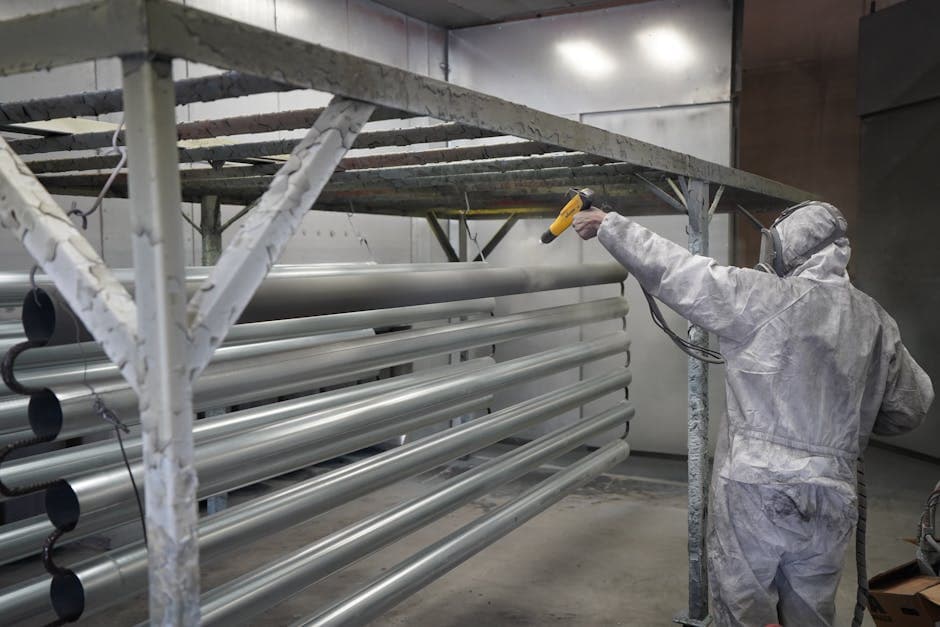
When changeover time depends on what ran before, standard scheduling fails. Learn how setup matrices, sequence optimization, and APS software recover 10-25% of hidden capacity in paint lines, food, and coating operations.