
Manufacturing Automation: Types, Benefits, and Implementation Guide
 User Solutions Team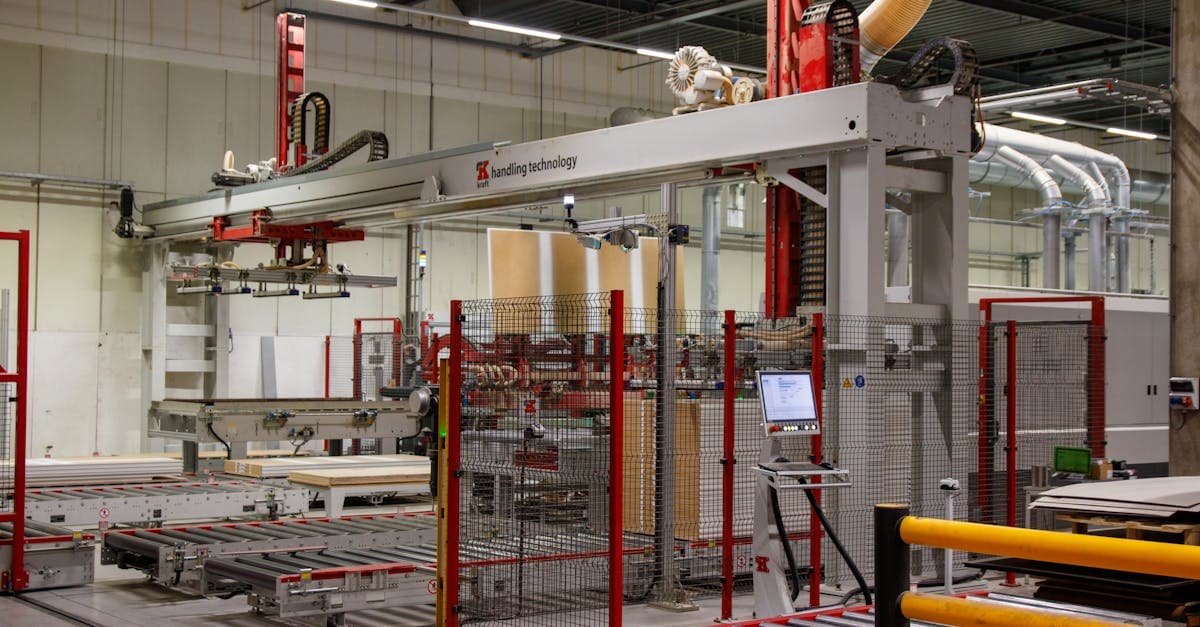
Manufacturing automation ranges from a simple pneumatic fixture that saves an operator 3 seconds per cycle to a fully robotic production cell that runs lights-out overnight. The spectrum is vast, and the right level of automation depends on your production volume, product mix, labor situation, and budget. This guide covers the types of automation, practical applications, scheduling implications, and how to prioritize automation investments for maximum ROI.
For the broader smart manufacturing context, see our Industry 4.0 guide.
Types of Manufacturing Automation
Fixed Automation
Dedicated equipment designed for one specific production task. High throughput, low flexibility. Examples: transfer lines, automated assembly machines, dedicated welding fixtures.
Best for: High-volume, single-product or low-mix production. Automotive body panels, bottling lines, semiconductor wafer processing.
Scheduling impact: Fixed automation creates predictable, consistent cycle times that make production scheduling straightforward. The challenge is scheduling around changeovers when product changes are required.
Programmable Automation
Equipment that can be reprogrammed for different products. Moderate throughput, moderate flexibility. Examples: CNC machines, programmable robots, injection molding machines with quick-change molds.
Best for: Batch production with moderate variety. Most job shop machining operations fall here.
Scheduling impact: Sequence-dependent setup times between different products create optimization opportunities. Scheduling software that minimizes changeovers can recover 10-20% of capacity lost to setups.
Flexible Automation
Systems that switch between products with minimal changeover. Lower throughput per product, high flexibility. Examples: flexible manufacturing cells, collaborative robots (cobots), AGVs.
Best for: High-mix, low-volume environments where product changes happen frequently.
Scheduling impact: Flexible automation simplifies scheduling by reducing setup constraints but requires careful capacity planning because throughput rates vary by product.
Practical Automation Applications
Machine Tending
Robotic machine tending - loading and unloading CNC machines, presses, or molding machines - is one of the highest-ROI automation applications. A cobot can tend 2-3 CNC machines simultaneously, enabling:
- Extended unmanned operation (second/third shifts, weekends)
- Consistent cycle times without operator fatigue variation
- Redeployment of skilled operators to setup, programming, and quality tasks
Welding Automation
Robotic welding delivers consistent quality, higher travel speeds, and extended operation hours. Both MIG and TIG welding are widely automated, with cobots making smaller-volume welding automation feasible.
Inspection and Quality
Automated inspection using vision systems and coordinate measuring machines (CMMs) provides:
- 100% inspection at production speed
- Consistent measurement without inspector fatigue
- Digital data for SPC and traceability
- Immediate feedback for process control
Material Handling
Automated guided vehicles (AGVs), autonomous mobile robots (AMRs), and conveyor systems reduce material handling labor and improve throughput by ensuring work-in-process flows efficiently between operations.
Assembly Automation
From simple pick-and-place to complex multi-step assembly, automation reduces assembly labor, improves consistency, and enables higher throughput. Cobots have made partial automation of assembly operations practical for smaller manufacturers.
Automation and Scheduling: The Connection
Automation changes scheduling dynamics in important ways:
More Predictable Cycle Times
Automated processes run at consistent speeds without the variation that comes from operator skill, fatigue, and attention differences. This makes finite capacity scheduling more accurate because planned times match actual times more closely.
Setup and Changeover Constraints
Automated cells often have more complex changeover procedures - fixture changes, program loading, gripper changes, vision system recalibration. Scheduling software that optimizes sequence to minimize changeovers becomes more valuable as changeover complexity increases.
Maintenance Windows
Automated equipment requires planned maintenance windows that must be scheduled alongside production. RMDB handles resource unavailability constraints that keep maintenance from conflicting with production commitments.
Extended Operation Hours
Automation enables second and third shift operation without proportional labor cost increases. Scheduling software must manage extended time horizons and plan work across automated and manual shifts.
Mixed Manual/Automated Operations
Most manufacturers have a mix of automated and manual operations. Scheduling must balance both, considering that automated operations have different capacity profiles (consistent but bounded) than manual operations (variable but flexible).
ROI Analysis Framework
Direct Savings
- Labor cost reduction: Operator hours saved or redeployed
- Throughput increase: More parts per hour from faster, more consistent operation
- Extended hours: Production during shifts that cannot be staffed manually
- Quality improvement: Reduced scrap, rework, and warranty costs
Indirect Savings
- Scheduling accuracy: Consistent cycle times improve delivery performance
- Safety: Reduced exposure to hazardous operations
- Capacity flexibility: Ability to absorb demand spikes without overtime
- Employee satisfaction: Removing tedious, repetitive tasks improves retention
Typical ROI Timelines
| Automation Type | Investment | Typical ROI Period |
|---|---|---|
| Cobot machine tending | $25,000-$75,000 | 12-18 months |
| Robotic welding cell | $75,000-$250,000 | 18-30 months |
| Vision inspection | $30,000-$100,000 | 12-24 months |
| Automated material handling | $50,000-$200,000 | 24-36 months |
| Full automated cell | $200,000-$1,000,000 | 24-48 months |
What to Automate First
Prioritize based on three factors:
- Pain level: Which operations are hardest to staff, most error-prone, or most dangerous?
- Volume: Higher-volume operations deliver faster ROI from automation
- Technical feasibility: Simple, repetitive tasks with consistent part presentation are easier to automate
The ideal first automation project is a high-volume, repetitive, labor-intensive operation that currently constrains throughput. Machine tending for CNC operations is often the best starting point because the ROI is clear, the technology is proven, and the risk is low.
Automation Without Over-Automating
Not everything should be automated. Lean manufacturing principles apply to automation decisions:
- Automate to eliminate waste, not to look modern
- If a $50 fixture solves the problem, you do not need a $50,000 robot
- Maintain flexibility - over-automation of low-volume operations creates expensive rigidity
- Consider total cost including maintenance, programming, and integration - not just the hardware
Frequently Asked Questions
Fixed automation (dedicated machines for high-volume, single-product production), programmable automation (reprogrammable equipment for batch production), and flexible automation (systems that switch between products with minimal changeover). Most job shops use programmable and flexible automation.
Costs range from $25,000-$75,000 for a collaborative robot (cobot) to $500,000-$2,000,000+ for a full automated cell. ROI timelines typically run 12-36 months depending on labor savings, throughput improvement, and quality gains. Start with the highest-labor-cost, most-repetitive operations.
Automation changes jobs more than it eliminates them. Operators become machine tenders and programmers. In practice, most manufacturers automate because they cannot find enough workers, not to replace existing ones. The labor shortage in manufacturing makes automation a workforce supplement, not a replacement.
Automated processes typically have more consistent cycle times and fewer operator-dependent variations, which improves scheduling accuracy. However, automation also creates scheduling complexity through setup/changeover constraints, maintenance windows, and the need to balance automated and manual operations.
Start with operations that are high-volume, highly repetitive, physically demanding, quality-critical, or a labor bottleneck. The best automation candidates combine high labor cost with low complexity - operations where the ROI is clear and the technical risk is low.
Schedule Your Automated and Manual Operations Together
Whether you run cobots, CNC machines, or manual assembly, RMDB schedules all your resources with finite capacity intelligence. See how integrated scheduling handles your mix of automated and manual operations. Contact User Solutions for a demo with your data.
Frequently Asked Questions
Ready to Transform Your Production Scheduling?
User Solutions has been helping manufacturers optimize their production schedules for over 35 years. One-time license, 5-day implementation.

User Solutions Team
Manufacturing Software Experts
User Solutions has been developing production planning and scheduling software for manufacturers since 1991. Our team combines 35+ years of manufacturing software expertise with deep industry knowledge to help factories optimize their operations.
Share this article
Related Articles
AI in Manufacturing: Practical Applications Beyond the Hype
Explore real-world AI applications in manufacturing: scheduling optimization, quality prediction, predictive maintenance, and demand forecasting for any size shop.
Cloud Manufacturing Software: Benefits, Risks, and When to Stay On-Premise
Evaluate cloud vs on-premise manufacturing software. Security, reliability, cost, and practical guidance for scheduling, ERP, and MES deployment decisions.
Cybersecurity for Manufacturers: Protecting Your Shop Floor and Data
Essential cybersecurity guidance for manufacturers. OT/IT security, common threats, CMMC compliance, practical steps, and how to protect scheduling and production data.