
Smart Manufacturing & Industry 4.0: A Practical Guide
 User Solutions Team
Smart manufacturing is reshaping how factories operate - and it is not just for Fortune 500 companies. Whether you run a 20-person job shop or a multi-plant operation, the convergence of sensors, software, and data analytics now makes it possible to schedule production dynamically, predict equipment failures before they happen, and make decisions based on facts instead of gut feel. This smart manufacturing Industry 4.0 guide breaks down what matters, what doesn't, and how to get started without wasting six figures on technology you don't need.
At User Solutions, we have spent 35+ years helping manufacturers move from reactive firefighting to proactive, data-driven operations. This guide distills what we have learned from hundreds of real implementations.
What Is Smart Manufacturing?
Smart manufacturing is the integration of information technology, operational technology, and human expertise to optimize every aspect of production. At its core, it replaces manual observation and static plans with real-time data and automated decision-making.
Here is what that looks like in practice:
- Sensors on machines report cycle times, temperatures, vibration, and throughput every few seconds
- Software platforms aggregate that data into dashboards operators and managers can act on immediately
- Scheduling algorithms adjust production plans automatically when a machine goes down or a rush order arrives
- Analytics engines identify patterns - like a spindle that always fails after 2,300 hours - before they cause unplanned downtime
The key distinction between smart manufacturing and traditional automation is connectivity. A CNC machine with a programmable controller has been "automated" since the 1980s. A CNC machine that streams its status to a scheduling system, triggers a maintenance work order when vibration exceeds a threshold, and adjusts its feed rate based on material batch properties - that is smart manufacturing.
The Three Pillars of Smart Manufacturing
| Pillar | What It Means | Example |
|---|---|---|
| Visibility | Knowing what is happening on the shop floor in real time | Live OEE dashboards showing machine utilization across all work centers |
| Connectivity | Systems talking to each other without manual data entry | ERP order data flowing automatically into finite capacity scheduling |
| Intelligence | Using data to predict, optimize, and automate decisions | AI-driven scheduling that resequences jobs when a machine goes offline |
Most manufacturers today have some visibility (they can see what happened yesterday) but lack real-time connectivity and intelligence. The smart manufacturing journey is about closing those gaps incrementally.
Industry 4.0: The Fourth Industrial Revolution Explained
Industry 4.0 is the label for the current wave of industrial transformation. Understanding where it fits historically helps clarify why this moment is different.
The Four Industrial Revolutions
| Revolution | Era | Defining Technology | Manufacturing Impact |
|---|---|---|---|
| Industry 1.0 | Late 1700s | Steam power, mechanization | Factories replaced cottage industries |
| Industry 2.0 | Late 1800s | Electricity, assembly lines | Mass production became possible |
| Industry 3.0 | 1970s | Computers, PLCs, basic automation | CNC machines, early ERP systems |
| Industry 4.0 | 2010s-present | IoT, AI, cloud, cyber-physical systems | Connected, intelligent, self-optimizing factories |
The defining characteristic of Industry 4.0 is cyber-physical integration - the merging of the digital and physical worlds. A digital model of your factory floor stays synchronized with what is actually happening in real time. When something changes physically (a machine breaks down, a shipment arrives early), the digital model updates instantly, and the software adjusts plans accordingly.
Industry 4.0 is not a product you buy. It is an architectural approach to manufacturing that treats data as a first-class asset. Organizations like NIST have developed frameworks to help manufacturers assess their readiness and plan their transition.
Why Now?
Three converging trends have made Industry 4.0 practical for mainstream manufacturers:
- Sensor costs have plummeted. An industrial IoT sensor that cost $50 in 2015 now costs under $5. Retrofitting legacy equipment with connectivity is no longer prohibitively expensive.
- Cloud computing eliminated infrastructure barriers. You no longer need a server room and a full-time IT staff to run sophisticated analytics. Scheduling does not need a server room either: EDGEBIC, the current generation of RMDB, installs as a Windows application and runs on SQLite or SQL Server.
- AI/ML algorithms matured. Predictive maintenance, demand forecasting, and dynamic scheduling algorithms have moved from academic research to production-ready tools with proven track records.
Key Technologies Driving Smart Manufacturing
Understanding the technology landscape helps you prioritize investments. Not every technology is relevant to every manufacturer, and the right starting point depends on your biggest pain points.
Internet of Things (IoT)
IoT in manufacturing means equipping machines, conveyors, environmental systems, and even tooling with sensors that report data continuously. The most common IoT applications for manufacturers include:
- Machine monitoring: Cycle counts, run/idle/down status, energy consumption
- Environmental monitoring: Temperature, humidity, air quality (critical for food, pharma, aerospace)
- Asset tracking: RFID or BLE tags on WIP containers, tooling, and carts
- Quality sensing: In-process measurement (dimensional, weight, visual inspection)
Practical tip: Start with the machines that represent your biggest bottleneck. If one CNC cell controls your throughput, instrumenting those 3-5 machines delivers more value than scattering sensors across 50 machines.
Artificial Intelligence and Machine Learning
AI in manufacturing is not about robots making decisions without humans. It is about augmenting human judgment with pattern recognition that operates at a scale and speed no person can match.
The highest-value AI applications for most manufacturers are:
- Demand forecasting: Predicting order volumes 4-12 weeks out using historical data, seasonality, and market indicators
- Dynamic scheduling: Reoptimizing production sequences in real time when conditions change - a core capability of RMDB
- Predictive maintenance: Forecasting equipment failures days or weeks before they occur
- Quality prediction: Identifying process parameter combinations that correlate with defects
Digital Twins
A digital twin is a virtual replica of a physical asset or process that stays synchronized with real-time data. For manufacturers, digital twins serve three primary purposes:
- Simulation: Test a new production layout, scheduling rule, or product introduction in the virtual model before committing resources on the actual floor
- Monitoring: Visualize the current state of a complex process (like a multi-stage heat treatment line) in a way that makes anomalies immediately obvious
- Optimization: Run thousands of "what-if" scenarios to find the best operating parameters for yield, throughput, or energy efficiency
Digital twins are most valuable for capital-intensive processes where the cost of experimentation on actual equipment is high - foundries, semiconductor fabs, continuous process plants, and complex assembly operations.
Cloud and Edge Computing
The cloud versus edge debate in manufacturing is not an either/or choice. The right architecture uses both.
| Factor | Cloud | Edge |
|---|---|---|
| Latency | 100-500ms typical | 1-10ms typical |
| Best for | Historical analytics, reporting, cross-plant comparisons | Real-time machine control, time-critical alerts |
| Data volume | Aggregated summaries | Raw, high-frequency sensor data |
| Availability | Requires internet connectivity | Operates independently during outages |
| Cost model | Pay-per-use, scales easily | Fixed hardware cost, limited scalability |
Most manufacturers benefit from edge processing for real-time decisions (is this part within tolerance right now?) and cloud analytics for strategic decisions (which product mix maximizes margin this quarter?).
Additive Manufacturing (3D Printing)
While not exclusively an Industry 4.0 technology, additive manufacturing integrates naturally into smart factory architectures. Key applications include:
- Rapid prototyping that accelerates new product introduction by weeks
- Tooling and fixture production on-demand, eliminating lead times from external suppliers
- Spare parts on demand for maintenance, reducing inventory carrying costs
- Low-volume production of customized components that are uneconomical with traditional methods
MES: Manufacturing Execution Systems Explained
A Manufacturing Execution System (MES) is the software layer that sits between your ERP (business planning) and your shop floor equipment (PLCs, CNCs, robots). If ERP answers "what should we make?" then MES answers "how are we making it right now?"
Core MES Functions
- Production tracking: Recording actual start/stop times, quantities produced, and scrap counts per operation
- Work order management: Dispatching work orders to specific machines and operators with routing instructions
- Quality management: Enforcing inspection checkpoints, recording measurements, triggering holds on nonconforming material
- Labor tracking: Capturing who worked on what, for how long, supporting both costing and compliance
- Material genealogy: Tracing raw material lots through every production step to the finished product (essential for aerospace, automotive, medical device, and food manufacturing)
MES and Scheduling: The Critical Connection
An MES without good scheduling is like a GPS without route planning - it can tell you where you are, but not the best way to get where you're going. The real power emerges when MES data flows into a finite capacity scheduling system:
- MES reports that Machine 7 finished Job 4521 ten minutes ahead of schedule
- The scheduling engine immediately evaluates whether to pull the next job forward or insert a high-priority rush order
- The updated schedule pushes back to the MES, which dispatches the new work order to the operator's terminal
- The operator sees the change in real time - no phone calls, no walking to the whiteboard
This closed loop between execution and scheduling is what separates smart factories from factories that merely have software installed.
How Smart Manufacturing Transforms Production Scheduling
Production scheduling is where smart manufacturing delivers its most immediate and measurable ROI. Traditional scheduling methods - spreadsheets, whiteboards, tribal knowledge - break down as complexity increases.
The Scheduling Problem in Numbers
Consider a modest job shop with:
- 15 machines across 5 work centers
- 200 active jobs with 3-8 operations each
- 10 different setup configurations per machine
- Customer priority levels, material availability constraints, and operator skill matrices
The number of possible valid schedules for this scenario exceeds 10^50 - more than the number of atoms in the solar system. No human can evaluate even a fraction of these options. No spreadsheet can model the constraints. This is exactly why software like RMDB and its current generation, EDGEBIC, exist.
How Smart Scheduling Works
Smart scheduling combines three capabilities:
1. Real-time data ingestion Instead of working from yesterday's numbers, the scheduler receives live updates:
- Machine status (running, idle, down, in setup)
- Job progress (actual vs. planned completion)
- Material availability (received, in QC hold, released)
- Labor availability (who is clocked in, skill certifications)
2. Constraint-based optimization The algorithm respects hard constraints (machine capabilities, tooling availability, regulatory holds) while optimizing for business objectives (on-time delivery, machine utilization, setup minimization, preferred sequencing).
3. What-if simulation Before committing to a schedule, planners can simulate scenarios:
- "What happens if we accept this rush order?"
- "What if Machine 3 is down for maintenance Thursday?"
- "Can we move the Johnson order up without impacting the Apex delivery?"
These simulations run in seconds, giving planners the confidence to make decisions quickly - a capability we have refined over 35+ years at User Solutions working with manufacturers of every size.
Measurable Outcomes
Manufacturers who move from manual to smart scheduling typically see:
| Metric | Typical Improvement |
|---|---|
| On-time delivery | +15-25% |
| Machine utilization (OEE) | +10-20% |
| Setup time | -20-35% |
| Scheduling labor hours | -50-70% |
| Rush order disruption | -40-60% |
These are not hypothetical figures. They reflect outcomes reported by manufacturers using production scheduling tools to replace spreadsheet-based and whiteboard-based planning. Check our success stories for specific examples.
Building a Smart Factory: A Practical Roadmap
The biggest risk in smart manufacturing is not technology failure - it is trying to do too much too fast. Here is a phased roadmap that balances ambition with pragmatism.
Phase 1: Assess and Prioritize (Months 1-3)
Goal: Identify your highest-value use case and establish a baseline.
- Map your current state: Document every production process, data source, and manual workaround. Where do people re-key data? Where do they walk to a machine to check status? Where do schedules break?
- Quantify pain points: Put dollar figures on downtime, late deliveries, scrap, and overtime. This becomes your business case.
- Select your pilot: Choose one area where the pain is acute, the scope is manageable, and you have a champion on the shop floor (not just in the front office).
- Define success metrics: Pick 3-5 KPIs you will measure before and after. OEE, on-time delivery, and scrap rate are solid starting points.
Phase 2: Pilot and Prove (Months 3-9)
Goal: Demonstrate measurable value with a contained deployment.
- Implement your first use case: For most manufacturers, this is either production scheduling (replacing spreadsheets with finite capacity scheduling) or machine monitoring (connecting 5-10 critical machines with IoT sensors and a dashboard).
- Train operators early and often: The technology is worthless if operators don't trust it. Involve them in configuration, show them the data, and incorporate their feedback.
- Measure relentlessly: Compare your KPIs weekly against the baseline. Document every win - and every problem.
- Build internal capability: Designate at least one person as your smart manufacturing champion who understands both the technology and the shop floor reality.
Phase 3: Scale and Integrate (Months 9-18)
Goal: Expand the pilot to additional lines, machines, or use cases and connect systems.
- Roll out to remaining work centers: Apply lessons from the pilot to accelerate deployment across the factory.
- Integrate systems: Connect your scheduling software to your ERP, MES, and quality systems. Eliminate manual data bridges.
- Add intelligence: Layer in predictive maintenance, advanced analytics, or AI-driven scheduling optimization.
- Standardize data models: Establish naming conventions, tag structures, and data quality rules that will scale.
Phase 4: Optimize and Innovate (Months 18-36)
Goal: Move from reactive improvements to proactive optimization.
- Cross-plant visibility: If you operate multiple facilities, aggregate data for enterprise-level decision-making.
- Advanced simulation: Use digital twins to evaluate capital investments, new product introductions, and process changes before committing resources.
- Continuous improvement automation: Set up systems that automatically identify improvement opportunities - machines running below capability, scheduling patterns that create bottlenecks, quality trends that predict failures.
Data-Driven Manufacturing: From Data to Decisions
Collecting data is easy. Turning it into decisions that operators, supervisors, and executives can act on is the hard part.
The Manufacturing Data Hierarchy
Think of manufacturing data as a pyramid:
- Raw data (bottom): Machine cycle counts, sensor readings, timestamps - high volume, low immediate value
- Information: Aggregated and contextualized data - "Machine 7 ran at 82% OEE yesterday"
- Insight: Patterns and correlations - "Machine 7's OEE drops below 75% every time we run alloy grade X after grade Y without a cleaning cycle"
- Decision (top): Actionable choice - "Add a mandatory 15-minute cleaning cycle to the routing when switching from grade Y to grade X on Machine 7"
Most manufacturers get stuck at level 1 or 2. They have dashboards full of data but lack the analytical processes to extract insights and convert them to decisions.
Building a Data-Driven Culture
Technology alone does not create a data-driven culture. You also need:
- Visible dashboards: Mount screens on the shop floor showing real-time OEE, schedule adherence, and quality metrics. When data is visible, behavior changes.
- Daily standups using data: Replace anecdotal shift handoffs with structured reviews of actual performance against plan. What deviated? Why? What do we adjust today?
- Empowered operators: Give operators the authority (and training) to act on data. If the SPC chart shows a trend toward the control limit, the operator should be able to adjust the process - not wait for an engineer.
- Closed-loop feedback: When someone makes a data-driven decision, track the outcome. Did the change improve the metric? This reinforces the culture and builds institutional knowledge.
Key Manufacturing Metrics
| Metric | Formula | Target Range |
|---|---|---|
| OEE | Availability x Performance x Quality | 65-85% (world-class: 85%+) |
| On-Time Delivery | Orders delivered on time / Total orders | 95%+ |
| First Pass Yield | Good units first time / Total units started | 95%+ |
| Schedule Adherence | Jobs completed per schedule / Total scheduled jobs | 90%+ |
| Mean Time Between Failures | Total operating time / Number of failures | Varies by equipment |
| Inventory Turns | COGS / Average inventory value | 6-12 for discrete manufacturing |
Tools like EDGEBIC, the current generation of RMDB, report OEE, utilization, on-time delivery and earned value from shop-floor kiosk actuals, replacing the manual spreadsheet exercises that consume hours of management time every week.
Predictive Maintenance and Its Impact on Scheduling
Unplanned downtime is the enemy of every production schedule. When a critical machine fails unexpectedly, the entire schedule cascades - jobs are late, overtime spikes, expediting costs mount, and customers lose confidence.
Reactive vs. Preventive vs. Predictive Maintenance
| Approach | Strategy | Pros | Cons |
|---|---|---|---|
| Reactive | Fix it when it breaks | No upfront investment | Maximum unplanned downtime, emergency repair costs |
| Preventive | Maintain on a fixed schedule (every 500 hours) | Reduces unplanned failures | Over-maintains healthy equipment, under-maintains stressed equipment |
| Predictive | Maintain based on actual condition data | Optimizes maintenance timing, minimizes both downtime and unnecessary maintenance | Requires sensors and analytics investment |
How Predictive Maintenance Works
- Sensors collect condition data: Vibration, temperature, current draw, acoustic emissions, oil particle counts
- Algorithms establish baselines: Machine learning models learn what "normal" looks like for each machine under various operating conditions
- Anomaly detection identifies degradation: When a bearing's vibration signature starts deviating from its baseline, the system flags it - days or weeks before failure
- Maintenance is scheduled proactively: The work order is created automatically and coordinated with the production schedule to minimize disruption
The Scheduling Connection
The real value of predictive maintenance is not just avoiding breakdowns - it is integrating maintenance into the production schedule. When you know Machine 5 needs bearing replacement within the next 10 days, the scheduler can:
- Shift load to alternative machines during the repair window
- Schedule the maintenance during a planned changeover or low-demand period
- Pre-stage parts and assign the right maintenance technician
- Communicate revised delivery dates proactively (not reactively after a breakdown)
This integration between maintenance prediction and production scheduling is where manufacturers see the combined value of their smart manufacturing investments - and it is a core design principle behind how RMDB handles capacity planning.
Industry 5.0: Human-Centric Manufacturing
While Industry 4.0 focuses on connectivity and automation, Industry 5.0 asks a different question: how do we put humans back at the center of an increasingly automated factory?
The European Commission has championed Industry 5.0 around three pillars:
1. Human-Centricity
Technology should augment workers, not replace them. This means:
- Collaborative robots (cobots) that work alongside humans on physically demanding or ergonomically challenging tasks
- Decision support systems that present options and recommendations while leaving final judgment to experienced operators
- Upskilling programs that prepare the workforce for higher-value roles as routine tasks become automated
- Ergonomic design of workstations informed by data from wearable sensors and motion analysis
2. Sustainability
Manufacturing accounts for roughly 21% of global CO2 emissions. Industry 5.0 emphasizes:
- Energy optimization using real-time monitoring to reduce consumption during non-productive periods
- Waste reduction through better scheduling (fewer changeovers mean less scrap), predictive quality (catching defects earlier), and circular economy principles
- Carbon tracking integrated into production planning - understanding the carbon cost of scheduling decisions
3. Resilience
Recent supply chain disruptions have exposed the fragility of optimized-for-cost-only manufacturing networks. Resilience means:
- Multi-sourcing strategies supported by agile scheduling that can accommodate different material lead times
- Distributed manufacturing closer to end markets, enabled by digital coordination
- Scenario planning capabilities built into scheduling tools - "what if our primary supplier is delayed by 3 weeks?"
Industry 5.0 is not a replacement for Industry 4.0 - it is an evolution that recognizes technology works best when it amplifies human capabilities rather than trying to eliminate them.
Expert Q&A: Deep Dive
The biggest mistake is trying to digitize everything at once. We have seen hundreds of manufacturers start with a grand vision, buy expensive platforms, and then struggle with adoption because operators were never involved in the process. The manufacturers who succeed start with one painful bottleneck - usually production scheduling or machine downtime tracking - prove the value in 90 days, and then expand. Technology is never the hard part. Change management is.
Job shops face a unique challenge because every job is different. High-volume plants can optimize around repetitive processes, but job shops need flexibility. The priority for job shops should be real-time visibility into job status and machine availability, followed by finite capacity scheduling that accounts for setup times and tooling constraints. Our RMDB engine, now continued in EDGEBIC (RMDB 2.0), was designed specifically for this kind of variability - where no two weeks look the same on the shop floor.
For a mid-size manufacturer with 50-200 employees, a realistic timeline is: months 1-3 for assessment and pilot planning, months 3-9 for first pilot deployment (usually scheduling or OEE monitoring), months 9-18 for scaling to additional lines and integrating MES data, and months 18-36 for advanced analytics, predictive maintenance, and cross-plant visibility. Trying to compress this below 18 months for a full transformation usually leads to burnout and abandoned projects.
Track five metrics before and after implementation: Overall Equipment Effectiveness (OEE), on-time delivery rate, scrap and rework percentage, unplanned downtime hours, and schedule adherence. Most of our customers see OEE improvements of 10-20% within the first year, which alone typically justifies the investment. The key is establishing a clean baseline before you start. See how other manufacturers have quantified their results on our success stories page.
Frequently Asked Questions
Smart manufacturing is the practice of using connected sensors, software, and data analytics to monitor, control, and optimize manufacturing processes in real time. It replaces guesswork with data-driven decisions across every stage of production - from scheduling and machine operation to quality control and maintenance.
Industry 4.0 is the broader economic and technological shift - the fourth industrial revolution driven by cyber-physical systems. Smart manufacturing is the practical application of Industry 4.0 principles on the shop floor, including IoT sensors, AI-driven scheduling, and real-time analytics. Think of Industry 4.0 as the "why" and smart manufacturing as the "how."
Costs vary widely. A pilot project connecting 5-10 machines with IoT sensors and a dashboard can start at $50,000-$150,000. Full-scale smart factory transformations range from $500,000 to several million dollars, but most manufacturers see ROI within 12-24 months through reduced downtime, scrap, and labor inefficiency. Starting with production scheduling software is often the most cost-effective first step.
Absolutely. Small and mid-size manufacturers often see the fastest ROI because they have fewer legacy systems to integrate. Starting with production scheduling software and basic IoT monitoring delivers measurable gains without massive capital investment. Many of our customers started with under 50 employees and scaled their smart manufacturing capabilities as the business grew.
A digital twin is a virtual replica of a physical asset, process, or entire production line. It uses real-time sensor data to mirror what is happening on the shop floor, allowing engineers to simulate changes, predict failures, and optimize performance without disrupting actual production. Digital twins are especially valuable for complex, capital-intensive processes.
Smart manufacturing feeds real-time machine status, inventory levels, and order data into scheduling algorithms. This allows schedulers to react instantly to disruptions, optimize changeovers, and keep delivery promises - replacing static spreadsheet-based plans with dynamic, responsive schedules. Tools like RMDB are purpose-built for this capability.
Edge computing processes data locally on or near the factory floor rather than sending everything to a remote cloud server. This reduces latency to milliseconds, keeps production running during internet outages, and handles the massive data volumes that hundreds of sensors generate every second. Most smart factories use a hybrid architecture: edge for real-time decisions, cloud for historical analytics and reporting.
Smart manufacturing is not a destination - it is an ongoing process of using technology to make better decisions, faster. The manufacturers who succeed are not the ones with the biggest budgets or the most sensors. They are the ones who start with clear objectives, measure relentlessly, and never lose sight of the people who make the factory run.
Ready to take the first step? Explore our scheduling solutions or contact our team to discuss how we can help you build a smarter factory - one practical step at a time.
Continue exploring this cluster
Dive deeper into specific aspects of smart manufacturing and Industry 4.0 with these related guides from our content library:
- AI in Manufacturing: Practical Applications Beyond the Hype
- Cloud Manufacturing Software: Benefits, Risks, and When to Stay On-Premise
- Cybersecurity for Manufacturers: Protecting Your Shop Floor and Data
- Data-Driven Manufacturing: How to Use Production Data for Better Decisions
- Digital Twins in Manufacturing: What They Are and How to Use Them
- Industry 5.0: Human-Centric Manufacturing Explained
- IoT in Manufacturing: Practical Guide for Shop Floor Connectivity
- Manufacturing Automation: Types, Benefits, and Implementation Guide
- MES (Manufacturing Execution System): Complete Guide for Manufacturers
- Predictive Maintenance in Manufacturing: From Reactive to Proactive
- Smart Factory Implementation: A Step-by-Step Guide for Manufacturers
- What Is Industry 4.0? A Manufacturer's Plain-Language Guide
Expert Q&A: Deep Dive
Q: We have 35+ years in manufacturing software. What is the single biggest mistake manufacturers make when starting their smart manufacturing journey?
A: The biggest mistake is trying to digitize everything at once. We have seen hundreds of manufacturers start with a grand vision, buy expensive platforms, and then struggle with adoption because operators were never involved in the process. The manufacturers who succeed start with one painful bottleneck - usually production scheduling or machine downtime tracking - prove the value in 90 days, and then expand. Technology is never the hard part. Change management is.
Q: How should a job shop approach smart manufacturing differently than a high-volume plant?
A: Job shops face a unique challenge because every job is different. High-volume plants can optimize around repetitive processes, but job shops need flexibility. The priority for job shops should be real-time visibility into job status and machine availability, followed by finite capacity scheduling that accounts for setup times and tooling constraints. Our RMDB engine, now continued in EDGEBIC (RMDB 2.0), was designed specifically for this kind of variability - where no two weeks look the same on the shop floor.
Q: What does a realistic Industry 4.0 maturity timeline look like?
A: For a mid-size manufacturer with 50-200 employees, a realistic timeline is: months 1-3 for assessment and pilot planning, months 3-9 for first pilot deployment (usually scheduling or OEE monitoring), months 9-18 for scaling to additional lines and integrating MES data, and months 18-36 for advanced analytics, predictive maintenance, and cross-plant visibility. Trying to compress this below 18 months for a full transformation usually leads to burnout and abandoned projects.
Q: How do you measure ROI on smart manufacturing investments?
A: Track five metrics before and after implementation: Overall Equipment Effectiveness (OEE), on-time delivery rate, scrap and rework percentage, unplanned downtime hours, and schedule adherence. Most of our customers see OEE improvements of 10-20% within the first year, which alone typically justifies the investment. The key is establishing a clean baseline before you start.
Frequently Asked Questions
Ready to Transform Your Production Scheduling?
User Solutions has been helping manufacturers optimize their production schedules for over 35 years. One-time license, 5-day implementation.

User Solutions Team
Manufacturing Software Experts
User Solutions has been developing production planning and scheduling software for manufacturers since 1991. Our team combines 35+ years of manufacturing software expertise with deep industry knowledge to help factories optimize their operations.
Share this article
Related Articles
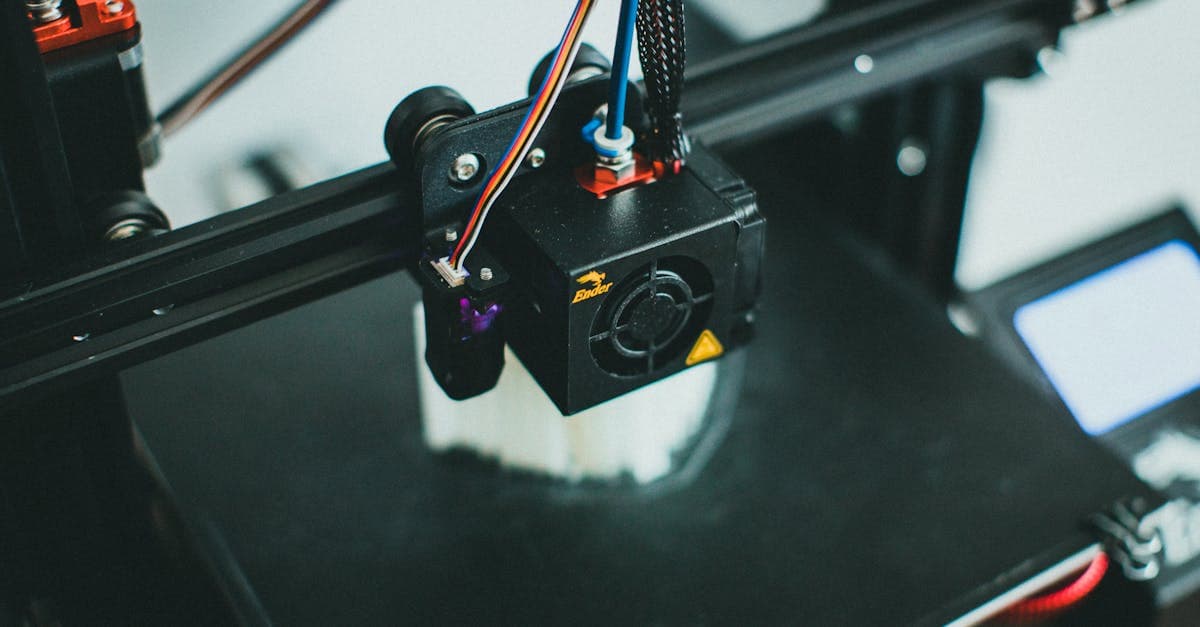
AI in Manufacturing: Practical Applications Beyond the Hype
Explore real-world AI applications in manufacturing: scheduling optimization, quality prediction, predictive maintenance, and demand forecasting for any size shop.
Cloud Manufacturing Software: Benefits, Risks, and When to Stay On-Premise
Evaluate cloud vs on-premise manufacturing software. Security, reliability, cost, and practical guidance for scheduling, ERP, and MES deployment decisions.
Cybersecurity for Manufacturers: Protecting Your Shop Floor and Data
Essential cybersecurity guidance for manufacturers. OT/IT security, common threats, CMMC compliance, practical steps, and how to protect scheduling and production data.