
Weld Shop and Custom Fabrication Scheduling: Managing Certified Welders, Inspection Holds, and Multi-Operation Jobs
 User Solutions Team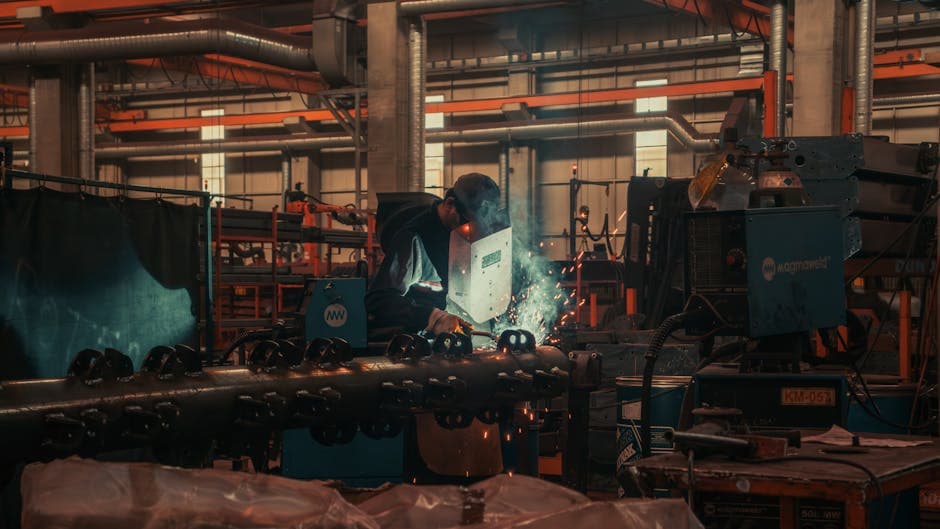
Custom weld shops and metal fabricators operate in one of the most demanding scheduling environments in discrete manufacturing. Every job is a custom assembly built to a specific engineering drawing. Operations must follow a defined sequence that cannot be reversed - you cannot grind before you inspect, and you cannot inspect before you weld. Certified welders must be matched to jobs based on their specific qualification scope, not just their availability. And for pressure-containing or structural applications, mandatory inspection holds stop the job at defined points regardless of how urgently the customer needs the part.
A generic production scheduling system that ignores these realities - treating all welders as interchangeable, treating inspection as instantaneous, and ignoring PWHT furnace constraints - produces a schedule that fails within hours of hitting the shop floor. The result is the familiar pattern: jobs managed on sticky notes and whiteboard, due dates tracked in a spreadsheet, and supervisors spending their mornings fighting fires instead of managing throughput.
For over 35 years, User Solutions has worked with job shops and custom fabricators who build exactly this kind of schedule. This post covers the scheduling constraints specific to weld shops and metal fabrication and explains how to address them systematically.
Certified Welder Assignment: Code Compliance as a Scheduling Constraint
Welding is not a generic manufacturing skill - it is a code-qualified process. Structural welding codes (AWS D1.1 for structural steel, D1.2 for aluminum), pressure vessel codes (ASME Section IX), and pipeline codes (API 1104) require that welding be performed only by welders who have been tested and certified to the specific Welding Procedure Specification (WPS) governing the joint.
A WPS defines the essential variables of the welding process: base material type, filler metal classification, joint geometry, welding process (SMAW, GMAW, GTAW, FCAW, SAW), position (flat, horizontal, vertical, overhead), preheat and interpass temperature requirements, and post-weld requirements. A welder who is certified on one WPS is not automatically certified on a different WPS with different essential variables.
For scheduling, this means:
Welder qualification records must be maintained and accessible. The scheduling system must store each welder's current qualification scope - which WPS numbers they are qualified on, which positions, which processes, and when each qualification expires. Qualification expiration is a real constraint: a welder who has not used a specific process within 6 months may require requalification before being assigned to work under that WPS.
Job requirements must specify the applicable WPS. When a job is entered, the engineering requirements should specify which WPS governs the weld joints. The scheduling system uses this to filter the pool of eligible welders for the job.
The scheduler matches job requirements to welder qualifications. When assigning welders to jobs, the system presents only welders who are currently qualified to the applicable WPS. This prevents code violations from scheduling errors - it is no longer possible to assign an unqualified welder simply because they are available.
Crew size and weld position constraints. Some joints require simultaneous welding by two certified welders (back-to-back welding of large nozzle joints in pressure vessels, for example). Others require welding in a specific position that only certain qualified welders can perform. These constraints are modeled in the scheduling system along with the basic WPS requirement.
Weld Procedure Specification Matching Beyond Certification
WPS compliance extends beyond welder certification. The shop must also confirm that the WPS itself is applicable to the job:
Base material group compatibility. ASME Section IX groups base materials into P-numbers based on composition and weldability. A WPS qualified for P1 carbon steel is not applicable to P8 austenitic stainless steel. The scheduling system must verify that the job's base material falls within the WPS's material scope, not just that the welder is certified.
Preheat requirements as scheduling predecessors. Many low-alloy and high-carbon steels require preheating to a minimum interpass temperature before welding begins and between passes. Preheat operations - using induction heaters, resistance pads, or torch preheating - take time and must be scheduled as predecessor operations to the weld. A job that goes directly from fit-up to welding without the scheduled preheat operation will violate the WPS.
Interpass temperature monitoring. Some WPS documents specify maximum interpass temperatures in addition to minimum preheat. At high heat input, the joint may require cooling between passes to stay within the maximum interpass limit. Scheduling must account for this potential waiting time in cycle time estimates for high-constraint joints.
Post-Weld Heat Treatment: Furnace Scheduling for Code-Mandated Operations
Post-weld heat treatment is required by code for specific combinations of material type and wall thickness in pressure vessels, piping, and structural applications. ASME Section VIII, for example, requires PWHT for carbon steel components above certain thickness thresholds. The purpose is to relieve residual weld stress and improve toughness in the heat-affected zone.
PWHT is a furnace operation with a defined thermal cycle: the part is heated to a specified soak temperature at a controlled rate, held at temperature for a specified duration (typically 1 hour per inch of wall thickness), and then cooled at a controlled rate. The cycle cannot be shortened. A part that exits the furnace before completing the full soak duration has not received the qualified PWHT and must be re-run or downgraded.
PWHT furnace as a batch resource. Most shops use either a gas-fired furnace or local resistance heating (PWHT blankets) for heat treatment. A furnace is a batch resource: multiple weldments can be processed together if they share the same thermal cycle and physically fit in the furnace. Scheduling should group jobs with compatible PWHT requirements into furnace loads to minimize the number of furnace cycles per week.
Fixed operation duration enforcement. The scheduling system must enforce the minimum PWHT soak duration per job, including heat-up and controlled cool-down time. Planners cannot manually shorten the PWHT operation duration to recover schedule; the system prevents this modification.
Time-temperature chart review as a post-PWHT hold. After each PWHT cycle, the thermocouple-recorded time-temperature chart must be reviewed and accepted by the responsible engineer or inspector before the weldment can proceed to NDT. This review step is a hold state: the job cannot advance until the chart is reviewed. Scheduling builds this hold into the operation sequence.
Local PWHT with resistance blankets. For field work or for weldments that are too large for the available furnace, PWHT may be performed using resistance heating blankets applied locally to the weld zone. Local PWHT has different setup requirements and qualification constraints than furnace PWHT. Scheduling must distinguish between the two methods and assign the appropriate resources - blanket equipment and a qualified PWHT operator - to local PWHT operations.
NDT Inspection Holds: Managing the Post-Weld Queue
Non-destructive testing is a mandatory gate for all code-governed weld inspection. The method required depends on the applicable code, the joint type, and the criticality of the application:
- Radiographic testing (RT): X-ray or gamma-ray imaging of the weld joint to detect volumetric defects (porosity, inclusions, incomplete fusion). Requires a radiographic technician (RT Level II), a film reader, and film processing time or digital detector review.
- Ultrasonic testing (UT): High-frequency sound wave inspection for planar defects. May be performed in-house if UT-certified personnel are available, or outsourced.
- Magnetic particle testing (MT): Surface and near-surface defect detection on ferromagnetic materials. Faster and less expensive than RT; performed at defined hold points during fabrication.
- Liquid penetrant testing (PT): Surface defect detection on any metallic material. Used for stainless steel and non-ferrous materials where MT is not applicable.
The scheduling implications of NDT are consistent across all methods:
NDT as a resource with throughput limits. Whether inspection is performed by in-house personnel or an outside service, it has a defined capacity - inspectors per shift, units per inspector per day. When multiple jobs complete welding simultaneously and arrive at the NDT hold point at the same time, the NDT queue builds. A scheduler that treats NDT as instantaneous will produce a schedule that looks valid until all the jobs arrive at the inspection queue simultaneously and create a multi-day delay.
External RT service lead times. Many fabrication shops outsource radiographic inspection. The RT service provider has a scheduled route and typically provides service 2-3 times per week. A job that misses the RT service visit waits until the next visit - potentially 2-4 days. Scheduling must model the RT service visit as an external resource with a defined availability calendar, not as an on-demand resource available any hour.
Rejection and repair routing. Welds that fail NDT inspection must be repaired - the defect must be removed (typically by grinding or gouging), the area rewelded, and the repair weld re-inspected. Repair routing is a rework loop that adds significant time to the job. The scheduling system must model reject-and-repair as a possible routing branch, with its own resource requirements and durations, rather than assuming 100% first-time acceptance.
Grinding, Finishing, and Surface Preparation Sequencing
Weld spatter, weld profile non-conformance, and heat discoloration are addressed by grinding and finishing operations after weld completion and NDT acceptance. For painted or coated fabrications, surface preparation (abrasive blasting to Sa 2.5 or equivalent) must follow grinding and precede primer application.
Sequence dependency enforcement. The correct sequence - weld complete, NDT clear, grind and finish, blast, prime, final inspection - must be enforced by the scheduling system. Out-of-sequence work (grinding before NDT, priming before blast) can invalidate the inspection results or contaminate the coating system. The scheduling system enforces predecessors: an operation cannot be scheduled until its predecessor operations are confirmed complete.
Surface preparation and paint as environmental-sensitive operations. Abrasive blasting must be performed under controlled humidity and temperature conditions to achieve the specified surface cleanliness. Paint application has minimum and maximum temperature windows. Scheduling must account for blast booth and paint booth availability as constrained resources with environmental requirements that may limit scheduling to certain times of day or seasons.
Dimensional inspection before final assembly. Complex fabricated assemblies typically require dimensional inspection against the drawing before final weld of sub-assemblies or before fit-up to the main structure. Coordinate measuring machine (CMM) time or laser tracker availability is a scheduling constraint for high-precision fabrications.
Multi-Operation Fabrication Scheduling: The Complete Job View
A typical custom fabrication job passes through 8–12 distinct operations from material release through final inspection. Each operation has a defined predecessor, a defined resource requirement, and a defined duration. A scheduling system that models all of these as a connected network - rather than tracking each operation independently on a spreadsheet - provides the fabrication manager with a complete picture of job status at any moment.
RMDB from User Solutions models exactly this network of operations and dependencies, scheduling welded fabrications from material procurement through final NDT acceptance. Finite capacity scheduling ensures that certified welder assignments, PWHT furnace loads, and NDT queue depths are managed against real resource constraints rather than optimistic assumptions.
EDGEBI provides the analytics layer - welder utilization by certification type, NDT queue trends, PWHT furnace efficiency, on-time delivery by job type - that gives fabrication managers the visibility to manage throughput proactively rather than reactively.
Welding codes - AWS D1.1, D1.2, ASME Section IX, API 1104 - require that welders be qualified to specific Welding Procedure Specifications (WPS) that define the joint type, base material, filler metal, process, and position. A welder qualified under one WPS is not necessarily qualified under another. Assigning a welder to a job outside their qualification scope is a code violation that can result in rejected welds, failed inspections, customer claims, and potential regulatory action.
PWHT is a mandatory process step for many pressure vessel, piping, and structural applications - it relieves residual weld stress and is required by code for certain material-thickness combinations. PWHT furnace runs are batch operations with fixed thermal cycles that cannot be shortened. A weldment that requires PWHT cannot proceed to NDT, final machining, or shipment until the PWHT cycle is complete and the time-temperature chart has been reviewed and accepted.
NDT inspection is a mandatory gate in the fabrication sequence for code-governed work. A weldment in NDT hold cannot proceed to the next operation until the inspection is complete and the result is accepted. If the inspector is backlogged or if an external RT service has a lead time, the entire job waits. Scheduling that treats inspection as a resource with throughput limits can project hold queue depth and alert planners to impending bottlenecks before they delay shipments.
Structural fabrication follows a defined sequence: fit-up and tack, weld, inspection hold, PWHT (if required), NDT, grinding and finishing, blast, prime, final inspection. Each operation has a predecessor dependency. A scheduling system that models these dependencies prevents out-of-sequence work and enforces the correct sequence automatically rather than relying on job travelers and operator knowledge alone.
Still managing weld shop jobs on a whiteboard and hoping certified welders show up for the right jobs? Contact User Solutions to see how RMDB handles certified welder assignment, PWHT furnace scheduling, and NDT hold queue management for custom fabrication shops. Trusted by GE, Cummins, and BAE Systems for 35+ years.
Expert Q&A: Deep Dive
Q: We have 20 welders with different certifications and codes. How do we assign jobs without making errors?
A: This is exactly the kind of constraint that a scheduling system must encode rather than leaving to a foreman's memory. In RMDB, each welder resource carries a set of qualification attributes - which WPS numbers they are qualified on, which base material groups, which positions, which processes. Each job carries its WPS requirements. The scheduler matches job requirements to welder qualifications automatically, presenting only qualified welders as eligible resources for each operation. The foreman makes the assignment from a pre-filtered list of eligible welders rather than trying to remember certification status for 20 people across multiple codes.
Q: Our NDT vendor has a 3-day lead time and we have 10 jobs waiting for X-ray. How do we recover schedule?
A: After 35 years working with fabrication shops, this situation usually has two components: a short-term problem and a systemic one. Short-term, you prioritize the NDT queue by ship date and customer criticality - the 3-day lead time is fixed, so you put your highest-priority jobs at the front of the vendor's queue immediately. Systemically, the issue is usually that weld completion and NDT release are not staggered - everything finishes at once because it all started at once. A schedule that staggers job starts by 1-2 days spreads the NDT arrivals over time rather than creating a simultaneous surge. RMDB does this automatically when it resolves resource conflicts across active jobs.
Frequently Asked Questions
Ready to Transform Your Production Scheduling?
User Solutions has been helping manufacturers optimize their production schedules for over 35 years. One-time license, 5-day implementation.

User Solutions Team
Manufacturing Software Experts
User Solutions has been developing production planning and scheduling software for manufacturers since 1991. Our team combines 35+ years of manufacturing software expertise with deep industry knowledge to help factories optimize their operations.
Share this article
Related Articles
Composite Manufacturing Scheduling: Cure Time Constraints, Autoclave Capacity, and Layup Sequencing
Composite manufacturing scheduling software that handles autoclave cure cycles, prepreg shelf life, layup sequencing, and NDT inspection holds for aerospace and automotive suppliers.

Fastener and Hardware Manufacturing Scheduling: High-Throughput, Die-Constrained Production
Fastener manufacturing scheduling software that manages heading die life, heat treat batch loads, plating line capacity, and kanban replenishment for screws, bolts, and rivets.
PCB Fabrication Scheduling: Managing Phototool Sequences, Plating Tanks, and Layer Constraints
PCB fabrication scheduling software that handles phototool sequencing, plating bath chemistry, drill allocation, and AOI queues. Built for electronics manufacturers.