
Tooling and Die Shop Scheduling: Managing Complex Single-Unit Jobs from Design to Delivery
 User Solutions Team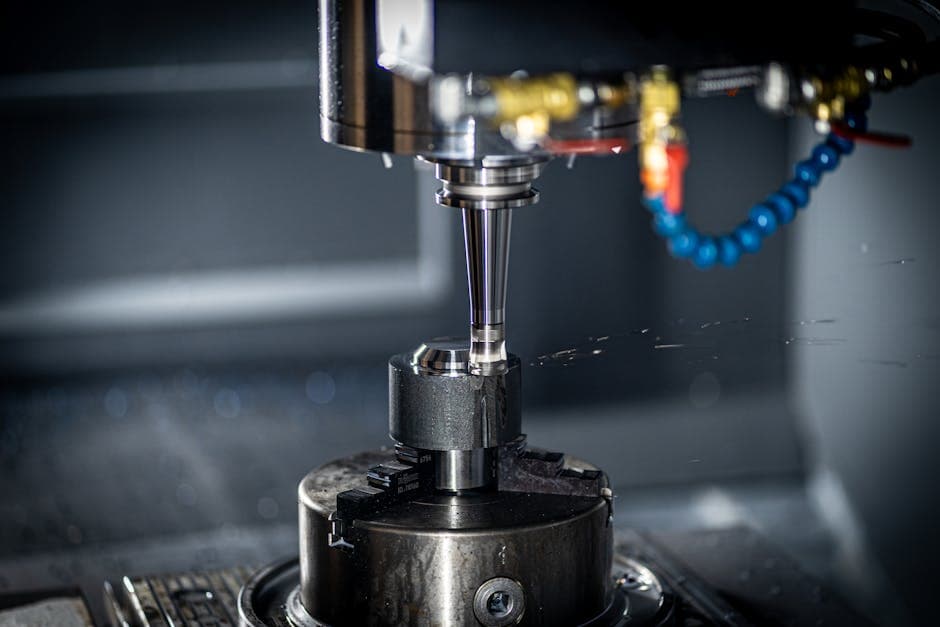
Tool and die shops occupy a unique position in the manufacturing supply chain. They do not make the product - they make the tooling that makes the product. Every stamping die, injection mold, forging die, extrusion die, and casting pattern that flows through a manufacturer's press or molding machine was first engineered and built by a tool and die shop. The quality, precision, and delivery performance of the tooling shop directly determines whether the customer's production line starts on time.
The scheduling environment in a tool and die shop is the most complex in discrete manufacturing. Every job is a unique, single-unit project. Engineering definitions are often incomplete at job start. Design changes arrive mid-job and alter scope. Operations like wire EDM and sinker EDM have variable cycle times driven by geometry complexity. Heat treatment, grinding, and spotting must be sequenced around external delays. And the final milestone - first-shot try-out - depends on the customer's schedule, not just the shop's.
User Solutions has worked with tool makers and die shops for over 35 years. This post covers the scheduling constraints that are unique to tooling manufacture and explains how finite capacity scheduling applies to single-unit project environments.
Every Job Is a Project: Scheduling Without Repetition
In a production machine shop, the routing for a known part is established on the first run and executed identically on every subsequent run. Cycle times are measured, standards are set, and schedules are planned with high confidence. In a tool and die shop, this stability almost never exists: every tool is a new design with a new configuration of machining, EDM, grinding, and fitting operations.
This makes standard production scheduling logic - release a job with a routing, track it against standard times - insufficient. Tool and die scheduling requires project-like treatment of each job:
Operations are planned at job release, not predefined. When a new tooling job is entered, the scheduler and the shop planner review the tool design and construct the operation sequence: what rough machining is needed, which surfaces require sinker EDM, which contours require wire EDM, what heat treat cycle is specified, and what grinding and finishing sequence is required. This construction happens per job, not from a standard routing.
Cycle time estimates are based on similar historical jobs. The most accurate cycle time estimate for an EDM operation on a given cavity geometry is the actual cycle time from the most similar cavity the shop has previously machined. Shops with good historical records develop estimating norms tied to geometry complexity (projected area, depth, electrode count) that improve estimating accuracy over time.
The schedule is a living document. Tool jobs change. Customers revise the design, add features, or change the material specification. Each change updates the operation sequence and the completion date estimate. A scheduling system that treats the job plan as a static document fails to track these changes; one that maintains the plan as a live record can calculate the revised completion date immediately when a change is entered.
Design Changes: The Leading Cause of Late Tooling
Design changes mid-job are the single largest cause of missed delivery dates in tool and die shops. A change that arrives after rough machining is complete may require re-cutting surfaces, redoing EDM geometry, or returning to the heat treat queue - erasing days or weeks of elapsed production time.
The scheduling challenge with design changes is twofold:
Calculating the true schedule impact. When a design change arrives, the shop must assess: which completed operations are affected? Which must be redone? Which can stand as-is? The scheduling system must allow planners to mark affected operations for re-execution and calculate the revised completion date immediately.
Communicating the impact to the customer before committing to new work. The customer issuing the design change often does not realize how far back through the job the change will set the schedule. A scheduling system that can instantly generate a revised completion date - and a cost impact estimate - gives the shop the information it needs to have an honest conversation with the customer before additional resources are committed. Shops that absorb design changes without communicating the schedule impact end up with late jobs and customer disputes.
Design freeze as a scheduling prerequisite. The most disciplined shops establish a design freeze date - a point in the tooling schedule before which design changes are accepted with normal impact assessment, and after which changes trigger a formal scope change with documented cost and schedule impact. Scheduling software that tracks milestones, including design freeze, supports this discipline.
EDM Operations: Managing the Bottleneck
Electrical discharge machining - both sinker (die-sinking) EDM and wire EDM - is typically the critical constraint in tool and die manufacturing. The material removal mechanism is slow: spark erosion removes material one microscopic discharge at a time. Complex cavity geometry with fine surface finish requirements may require 40–80 hours of sinker EDM time on a single job.
Because EDM machines are capital-intensive and EDM operators are among the most skilled workers in the shop, EDM capacity is almost always the tightest resource. Scheduling that does not treat EDM as the explicit bottleneck will consistently find EDM machines overloaded and jobs queued and waiting.
Sinker EDM cycle time estimation. Sinker EDM cycle time is a function of projected area, depth, required surface finish (roughness Ra), and electrode wear rate for the material. Shops with good historical data can estimate sinker EDM hours with reasonable accuracy using these parameters. The scheduling system should incorporate these estimates into operation durations rather than using a single generic EDM cycle time.
Electrode preparation as a prerequisite operation. Sinker EDM requires electrodes - typically graphite or copper - that are machined to the inverse geometry of the cavity being eroded. Electrode machining is a separate operation that must be completed before the EDM operation can begin. Scheduling must link the electrode machining operation to the EDM operation as a predecessor: EDM cannot be scheduled until the electrode is ready.
Wire EDM path complexity. Wire EDM cycle time is a function of the total cutting path length and the number of required passes for finish. A 2D contour that seems simple may require 4–6 passes at different power settings for the required surface finish and dimensional tolerance. Scheduling must use path-length-based cycle time estimates rather than assuming all wire EDM jobs have similar duration.
Lights-out EDM scheduling. EDM machines can run unattended - with automatic electrode changers and workpiece changers on equipped machines - during off-shifts and weekends. Scheduling that explicitly plans lights-out EDM operations can recover significant capacity from the existing machine base without adding shifts. The scheduling system should support off-shift resource availability windows that differ from regular-shift windows.
Heat Treat Integration: Coordinating with External Processors
Most tool steel requires heat treatment to achieve the specified hardness - typically tool steels are hardened and tempered to 58–62 HRC for cold work dies, or annealed and stress-relieved at specific stages of machining. Heat treatment in a tool and die shop is usually performed by an outside vendor, introducing external lead time into the operation sequence.
Heat treat as a supplier operation. The scheduling system must model heat treatment as a supplier-performed operation with a defined external lead time (typically 3–7 business days for most tool steels). The job cannot proceed to finish machining, grinding, or EDM finish passes until the heat treat cycle is complete and the workpiece has returned from the vendor.
Heat treat sequence positioning. Many tooling designs require semi-finish machining to be performed before heat treatment - leaving sufficient stock for finish operations after hardening - and then finish machining after hardening. The scheduling system must correctly position heat treatment in the operation sequence, not lump it at the end of the job.
Distortion and stress relief cycles. Complex tooling may require intermediate stress relief cycles before final hardening to minimize distortion. These additional heat treat operations add cycle time and external lead time to the schedule. Shops that fail to plan for stress relief cycles find their tools coming back from final hardening with dimensions outside tolerance, requiring rework.
Coordination with heat treat capacity. When multiple jobs require heat treatment simultaneously, the heat treat vendor may have queue time. Scheduling should track when each job will need to ship to the heat treat vendor and flag conflicts where multiple jobs are competing for the same vendor lead time window.
Spotting and Try-Out: The Final Scheduling Milestones
After machining, EDM, grinding, and assembly, a stamping die must be tried out in a press to verify fit and function. An injection mold must be sampled in a molding machine to produce and measure the first shots. This final stage - spotting and try-out - is where the tool is validated before delivery to the customer.
Spotting press scheduling. Die spotting - the process of cycling the die in a shop spotting press with spotting compound to identify contact points that require bench-fitting - requires dedicated press time. The spotting press is a shared resource that must be scheduled explicitly. Jobs that need spotting press time are queued against press availability, not run on demand.
First-shot try-out scheduling. First shots in the customer's press require both the customer's press and the customer's engineering or quality representative to be present. This dual external dependency makes try-out scheduling particularly complex: the shop must coordinate with the customer's production schedule to find a press window and confirm the customer's representative availability simultaneously.
Try-out rework cycle. First shots rarely run perfectly. Corrections - reducing core pins, modifying cavity dimensions, adjusting cooling circuits - are normal parts of the try-out process. Each round of corrections followed by a subsequent try-out shot must be scheduled as a rework cycle: return to the shop, perform corrections, return to the customer's press. Scheduling must accommodate multiple try-out rework cycles in the job plan, with realistic estimates of how many rounds are typical for the tool complexity.
Quoting Accuracy as a Scheduling Input
In tool and die shops, quoting accuracy and scheduling accuracy are inseparable. A quote that underestimates EDM hours by 40% produces a job that takes 40% longer than planned - which creates a late delivery and a cost overrun simultaneously. The discipline of building accurate job plans at quote time is the foundation of reliable scheduling.
Over 35 years, User Solutions has seen the shops that maintain detailed actual-vs.-estimated records per operation build the most accurate quoting models - and consequently deliver the most reliable schedules. The estimating data and the scheduling data live in the same system, reinforcing each other with every job completed.
RMDB from User Solutions is built on this principle: the job shop scheduling architecture that manages complex, single-unit tooling jobs from design review through first-shot acceptance, with live schedule updates when design changes arrive and explicit bottleneck management for EDM capacity. EDGEBI provides the analytics layer - EDM utilization, on-time delivery by tool type, quoting accuracy trends - that makes continuous improvement measurable.
A production machine shop runs known parts repeatedly - the routing, tooling, and cycle times are established. A tool and die shop makes unique, complex single-unit tooling where engineering definitions are often incomplete at job start, design changes alter scope mid-job, and operations like EDM sinker work have highly variable cycle times that depend on geometry complexity. Every job is essentially a project, and scheduling must accommodate scope uncertainty and design evolution rather than executing a fixed routing plan.
A design change mid-job is the leading cause of missed tool delivery dates in most shops. The change may require re-machining completed surfaces, redoing EDM geometry, or re-routing to operations that were already passed. A scheduling system that maintains the job's operation sequence as a live record can calculate the impact of the change, show the revised completion date, and prompt the customer for approval before work begins on the revised scope.
EDM operations are slow relative to conventional machining because the material removal mechanism is inherently slower than cutting. A complex cavity that takes 2 hours to rough mill may require 40+ hours of sinker EDM to achieve final geometry and surface finish. Because EDM machines are expensive and skilled operators are scarce, EDM capacity is almost always the tightest constraint in the shop.
First-shot try-out requires the customer's quality or engineering representative to witness the first production run in the customer's press. This adds an external dependency to the schedule - the try-out cannot happen until the customer's representative is available. Scheduling must treat this as a constrained resource appointment: the shop spotting press and the customer slot must both be available simultaneously.
Managing tooling jobs on whiteboards and tribal knowledge? Contact User Solutions to see how RMDB handles single-unit job scheduling, design change impacts, and EDM bottleneck management for tool and die shops. Trusted by GE, Cummins, and BAE Systems for 35+ years.
Expert Q&A: Deep Dive
Q: Every job in our shop is different. How do we quote and schedule accurately when we can barely estimate the work content?
A: After 35 years working with job shops, the answer to quoting accuracy in a tool and die environment is historical data discipline. Each job you complete should generate a record of actual hours by operation versus estimated hours, along with the part complexity, material, and EDM geometry type. Over time, you build an estimating database that ties actual cycle times to the characteristics that drive them. Your quotes become progressively more accurate as that database grows. The scheduling system uses those same actual cycle times to plan the work - so the schedule is grounded in what work actually takes in your shop, not what the engineering estimate said before the first chip fell.
Q: Our EDM machines are always the bottleneck but we can't afford another one. How do we get more out of the ones we have?
A: The first question is always utilization: how many hours per day are your EDM machines cutting? In most shops we see, the answer is 60-70% because of setup time, electrode changes, and unplanned interruptions. Scheduling the EDM machines as a constrained resource - giving the EDM operator the sequence of jobs in priority order, pre-staging electrodes for the next job before the current one finishes, and running lights-out during off-shifts - typically recovers 15-25% additional cutting hours from the existing machines without capital investment. That is usually enough to resolve the bottleneck for a year or two. After that, the scheduling data will tell you exactly how many hours per week of additional EDM capacity you need and you can justify the capital purchase with a real utilization record.
Frequently Asked Questions
Ready to Transform Your Production Scheduling?
User Solutions has been helping manufacturers optimize their production schedules for over 35 years. One-time license, 5-day implementation.

User Solutions Team
Manufacturing Software Experts
User Solutions has been developing production planning and scheduling software for manufacturers since 1991. Our team combines 35+ years of manufacturing software expertise with deep industry knowledge to help factories optimize their operations.
Share this article
Related Articles
Composite Manufacturing Scheduling: Cure Time Constraints, Autoclave Capacity, and Layup Sequencing
Composite manufacturing scheduling software that handles autoclave cure cycles, prepreg shelf life, layup sequencing, and NDT inspection holds for aerospace and automotive suppliers.
Fastener and Hardware Manufacturing Scheduling: High-Throughput, Die-Constrained Production
Fastener manufacturing scheduling software that manages heading die life, heat treat batch loads, plating line capacity, and kanban replenishment for screws, bolts, and rivets.
PCB Fabrication Scheduling: Managing Phototool Sequences, Plating Tanks, and Layer Constraints
PCB fabrication scheduling software that handles phototool sequencing, plating bath chemistry, drill allocation, and AOI queues. Built for electronics manufacturers.