
Remanufacturing Scheduling: Variable Yield, Uncertain Content, and Teardown-to-Rebuild Workflows
 User Solutions Team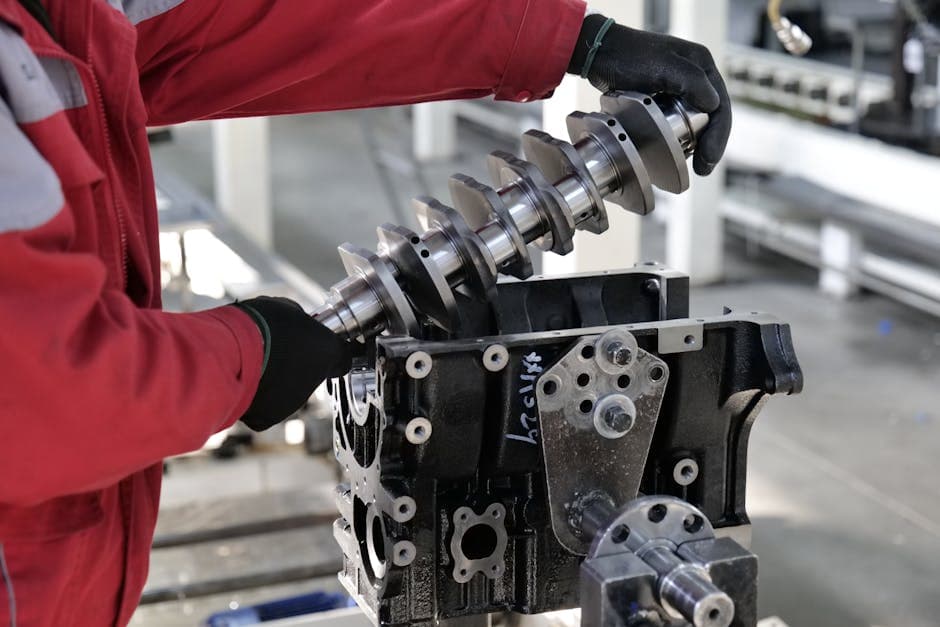
Remanufacturing - the process of restoring used, worn, or failed products to original equipment manufacturer (OEM) specifications - is fundamentally different from new manufacturing in one critical way: you do not know what you are making until you take it apart. The returned engine, transmission, compressor, or hydraulic component that arrives at the dock contains an unknown combination of worn components, damaged sub-assemblies, and serviceable parts. Teardown reveals the actual work content. Until that happens, the schedule is an estimate.
This is not a minor scheduling nuance. It means that remanufacturing cannot apply the standard production scheduling model - known inputs, defined routing, predictable cycle time - without significant adaptation. Facilities that try to force this model onto remanufacturing operations end up with schedules that are systematically wrong, capacity that is mis-allocated, and delivery commitments that cannot be met.
User Solutions has worked with manufacturers operating teardown-to-rebuild workflows for over 35 years. The scheduling approach that works for remanufacturing is different from new manufacturing scheduling in specific, addressable ways. This post covers each of them.
The Fundamental Problem: Work Content Is Unknown at Schedule Entry
In new manufacturing, a production order is entered with a defined bill of materials and a defined routing. The scheduler knows exactly what operations will be performed, in what sequence, on which resources, for how long. Capacity planning and due date commitment are deterministic.
In remanufacturing, a work order is entered when a core is received - but the actual routing is not known until teardown is complete. A returned diesel engine may require:
- Standard reconditioning: cleaning, dimensional inspection, machining of worn surfaces, replacement of seals and bearings, reassembly, and test
- Cylinder head replacement due to cracking
- Crankshaft regrind due to journal wear beyond standard tolerance
- Connecting rod replacement due to fatigue damage
- Scrap and core replacement if damage exceeds economic repair limits
Each scenario has different resource requirements, different cycle times, different replacement part demands, and different labor hours. A scheduler that treats all incoming cores as identical will systematically mis-allocate capacity.
The solution is probabilistic routing: using historical teardown data to assign probabilities to each possible repair path, then planning capacity against the expected mix rather than the best-case assumption.
Probabilistic Routing and Capacity Planning
Probabilistic routing begins with teardown data. For each product family, historical teardown records show what percentage of returned units followed each repair path:
- 55%: standard path (clean, inspect, standard machine, reassemble, test)
- 25%: cylinder head replacement required
- 12%: crankshaft regrind required
- 6%: connecting rod replacement required
- 2%: scrap (core beyond economic repair)
These percentages are not exact predictions for any individual unit, but they are stable estimates of the population mix for production planning purposes. A remanufacturing scheduler uses them to:
Estimate workload per resource per planning period. If 40 cores are planned for teardown this week, the scheduler estimates: 22 units following the standard path, 10 requiring head replacement, 5 requiring crankshaft regrind, 2.4 requiring connecting rod work, and 0.8 scrapped. Each path has defined resource requirements; the sum gives expected capacity demand per resource.
Pre-position replacement parts. If 25% of incoming units historically require cylinder head replacement, procurement can hold safety stock for approximately 25% of the planned teardown volume. Waiting for teardown results before ordering replacement parts creates lead time delays that extend the rebuild cycle unnecessarily.
Set realistic delivery commitments. When quoting delivery lead times for remanufactured units, the schedule must reflect the probability distribution of work content rather than the best-case standard path. Commitments based on the standard path will be missed for the 45% of units that follow a longer repair path.
Core Availability as a Scheduling Constraint
The core - the returned, used product that serves as the starting point for remanufacturing - is the primary material input. Unlike raw material that can be ordered from multiple suppliers on standard lead times, cores come from returns: customer trade-ins, warranty returns, dealer buybacks, or third-party core brokers.
Core supply is therefore subject to variability that raw material supply is not:
Core arrivals are lumpy. Large customers may return cores in batches tied to their maintenance cycles. A fleet operator who services equipment quarterly may return 20 cores at once, then none for three months. The remanufacturing schedule must absorb this variability rather than assuming steady core flow.
Core condition varies. Even among cores of the same model number, condition varies significantly. A core from a well-maintained fleet unit may be in near-standard condition; a core from a failure event may be severely damaged. Core condition assessment at receiving - before teardown - helps pre-sort cores into condition categories that roughly predict which repair paths they will follow.
Core inventory drives capacity planning. When core inventory is high, the schedule can plan for maximum throughput. When cores are scarce, the scheduler must prioritize: which customers or programs get rebuilt units first? Priority rules - customer tier, warranty urgency, replacement parts availability - must be encoded in the scheduling system rather than decided ad hoc each morning.
Core procurement from brokers. When core supply from returns is insufficient to meet production targets, some remanufacturers source cores from brokers. Broker cores often have less condition certainty than customer returns, increasing the variance in probabilistic routing. The scheduler must track whether a core is from a known fleet (more predictable) or a broker (less predictable) and adjust capacity estimates accordingly.
Variable Yield: Scheduling When Not Every Unit Completes
In new manufacturing, yield loss is an exception - a defect rate that affects a small percentage of production. In remanufacturing, yield variability is structural. A percentage of every incoming core population will be unrecoverable. Schedulers must plan for this explicitly rather than treating every core as a successful rebuild.
Scrap rate by product family. Historical teardown data provides a reliable scrap rate estimate per product family. If 5% of diesel engine cores are scrapped annually, a plan to deliver 100 rebuilt units must start with approximately 105 cores in process to account for expected scrap. A scheduler that plans 100 cores for 100 deliveries will consistently miss output targets.
Core replacement sourcing. When a core is scrapped mid-process, the work order for that unit must be cancelled and replaced with a new work order against a replacement core. If replacement cores are not available in inventory, the customer delivery is delayed. The scheduler must model the lead time for sourcing replacement cores and adjust delivery commitments accordingly.
Partial completion salvage. Some units that cannot be completed as original models may be salvageable as a lower specification rebuild. Scheduling must support rerouting a scrapped unit to an alternate product specification when a suitable lower-grade rebuild path exists, recovering some value from the core rather than discarding it entirely.
Teardown as a Scheduled Operation
Teardown is not a side activity - it is a real operation with resource requirements, cycle time, and scheduling implications. A teardown bay staffed with trained technicians has a defined throughput rate. If teardown is not scheduled explicitly, it becomes an informal activity that does not appear in capacity plans, leading to bottlenecks when incoming core volumes surge.
Teardown bay as a resource. The teardown bay - physical space, lifting equipment, wash equipment, and trained technicians - is a constrained resource that must appear in the production schedule. Core arrivals trigger teardown work orders; teardown is scheduled against teardown bay capacity.
Condition assessment as a teardown output. The output of teardown is not just disassembled components - it is a condition assessment that defines the repair path for each unit. The scheduling system must receive this assessment and update the routing for each work order based on actual teardown findings, replacing the probabilistic estimate with the confirmed repair path.
Teardown-to-parts cleaning pipeline. After teardown, components that will be reused must be cleaned before dimensional inspection. Parts cleaning equipment is a shared resource. Teardown throughput must be matched to parts cleaning capacity to avoid creating a queue of disassembled components waiting for the wash.
Serial Number Traceability Through the Rebuild
Remanufactured products carry warranty obligations from the remanufacturer. When a customer reports a warranty failure, the remanufacturer must be able to determine: which core was used, what replacement parts were installed and from which lots, which technicians performed each operation, and what test results were recorded at final inspection.
This traceability requirement is not optional - it is a contractual and often regulatory obligation. It must be built into the scheduling system at the unit level:
Serial number tracking through all operations. The work order for each remanufactured unit carries the core serial number as its primary identifier. Every operation completed, every replacement part consumed, and every test result recorded is linked to that serial number.
Replacement part lot tracking. When a crankshaft bearing kit is installed, the lot number of the bearing kit is recorded against the unit serial number. When a batch of defective bearings is identified six months later, the remanufacturer can identify every rebuilt unit that received bearings from the affected lot and initiate targeted recalls rather than blanket field service campaigns.
Test result archival. Final functional testing - hot test, cold test, pressure test, leak test - produces results that must be archived per unit. The schedule must confirm that testing is complete and results are accepted before a unit is released to finished goods inventory.
Managing Replacement Parts Demand Uncertainty
Replacement parts consumption in remanufacturing is stochastic - it depends on teardown findings that vary by unit. However, at the program level, parts consumption rates are predictable based on historical teardown data.
Statistical parts demand forecasting. If 25% of cylinder heads require valve seat replacement, and valve seat replacement consumes 8 seats per head, then for every 100 cores in process, the expected valve seat demand is 25 × 8 = 200 seats. Procurement can plan purchase orders against this statistical demand rather than waiting for individual teardown results.
Replacement parts as a scheduling constraint. When a specific replacement part is out of stock, the units that require it cannot complete their rebuild. The scheduler must track replacement parts availability per routing path and delay the affected units to the parts availability date rather than advancing them through the schedule to a dead stop at the unavailable operation.
Consignment and vendor-managed inventory for common replacement parts. For high-velocity replacement parts - seals, bearings, gasket sets - vendor-managed inventory or consignment arrangements eliminate purchase order lead time as a constraint. The scheduler can plan against immediate availability rather than accounting for procurement lead time.
Integrating Remanufacturing Scheduling with Finite Capacity Planning
The scheduling model for remanufacturing - probabilistic routing, core availability constraints, variable yield, teardown as a planned operation, and serial number traceability - requires a scheduling system flexible enough to handle uncertainty at the unit level while providing stable capacity plans at the program level.
RMDB from User Solutions supports the variable routing, conditional operations, and resource constraints that remanufacturing requires. Unlike scheduling systems built for repetitive manufacturing, RMDB's job shop scheduling architecture accommodates the individual routing flexibility and exception-handling that teardown-to-rebuild workflows demand.
EDGEBI provides the analytics layer, giving remanufacturing program managers visibility into core yield rates, teardown-to-completion cycle times, replacement parts consumption patterns, and delivery performance - turning the inherent variability of remanufacturing into measurable, improvable metrics.
New manufacturing starts with known inputs - defined raw material, defined routing, known cycle times - producing a deterministic schedule. Remanufacturing starts with cores of unknown condition: teardown reveals what is damaged, missing, or beyond remanufacturing tolerance only after the unit arrives. Work content varies by unit, routing varies by condition, and yield is probabilistic. Scheduling must account for all three sources of variability rather than treating each unit as identical.
The core is the used, worn, or failed part that serves as the starting point for remanufacturing. Remanufacturing cannot begin without an available core. Core availability is therefore a material constraint on the production schedule, similar to raw material availability in new manufacturing. When core supply is tight, scheduling must prioritize which units to reman based on core condition, customer priority, and available replacement parts.
In remanufacturing, each unit may follow a different repair path depending on what teardown reveals. Probabilistic routing assigns a probability to each possible repair path based on historical teardown data, allowing the scheduler to estimate expected workload per routing option and plan capacity accordingly without waiting for teardown results on every unit.
Every remanufactured unit must be traceable to its core lot, all replacement parts used, the technicians who performed each operation, and the test results at final inspection. Serial number tracking through the scheduling system ensures that the schedule and the production record are aligned - the job traveler for each unit records what was done, what was replaced, and who did it.
Scheduling remanufacturing on spreadsheets built for new production? Contact User Solutions to see how RMDB handles variable work content, probabilistic routing, and core availability constraints for rebuilt engine and equipment manufacturers. Trusted by GE, Cummins, and BAE Systems for 35+ years.
Expert Q&A: Deep Dive
Q: We don't know the work content until we tear down the unit. How can we possibly schedule that?
A: This is the central scheduling challenge in remanufacturing, and we've spent 35 years helping manufacturers work through it. The answer is probabilistic planning. You don't schedule each unit individually before teardown - you plan capacity based on the statistical distribution of work content across your historical teardown population. If 60% of your returned cylinder heads need standard processing, 30% need valve seat replacement, and 10% are scrap, you plan capacity for that mix. When teardown reveals the actual condition, you confirm or update the routing. The schedule is never perfectly accurate per unit, but at the program level it is stable enough to staff and material plan against.
Q: Our core suppliers are unreliable and our core inventory swings wildly. How do we schedule around that?
A: Core variability is the equivalent of raw material supply uncertainty in new manufacturing - and the scheduling response is the same: safety stock and demand prioritization. In RMDB, we model core inventory as a material constraint on the production schedule. When core inventory is high, we schedule to maximize throughput. When cores are scarce, the scheduler automatically prioritizes units by customer priority, warranty urgency, and replacement parts availability - making sure the most valuable or most time-sensitive units are rebuilt first. You stop discovering on Friday morning that the priority unit can't start because the right core isn't in stock.
Frequently Asked Questions
Ready to Transform Your Production Scheduling?
User Solutions has been helping manufacturers optimize their production schedules for over 35 years. One-time license, 5-day implementation.

User Solutions Team
Manufacturing Software Experts
User Solutions has been developing production planning and scheduling software for manufacturers since 1991. Our team combines 35+ years of manufacturing software expertise with deep industry knowledge to help factories optimize their operations.
Share this article
Related Articles
Composite Manufacturing Scheduling: Cure Time Constraints, Autoclave Capacity, and Layup Sequencing
Composite manufacturing scheduling software that handles autoclave cure cycles, prepreg shelf life, layup sequencing, and NDT inspection holds for aerospace and automotive suppliers.

Fastener and Hardware Manufacturing Scheduling: High-Throughput, Die-Constrained Production
Fastener manufacturing scheduling software that manages heading die life, heat treat batch loads, plating line capacity, and kanban replenishment for screws, bolts, and rivets.

PCB Fabrication Scheduling: Managing Phototool Sequences, Plating Tanks, and Layer Constraints
PCB fabrication scheduling software that handles phototool sequencing, plating bath chemistry, drill allocation, and AOI queues. Built for electronics manufacturers.