

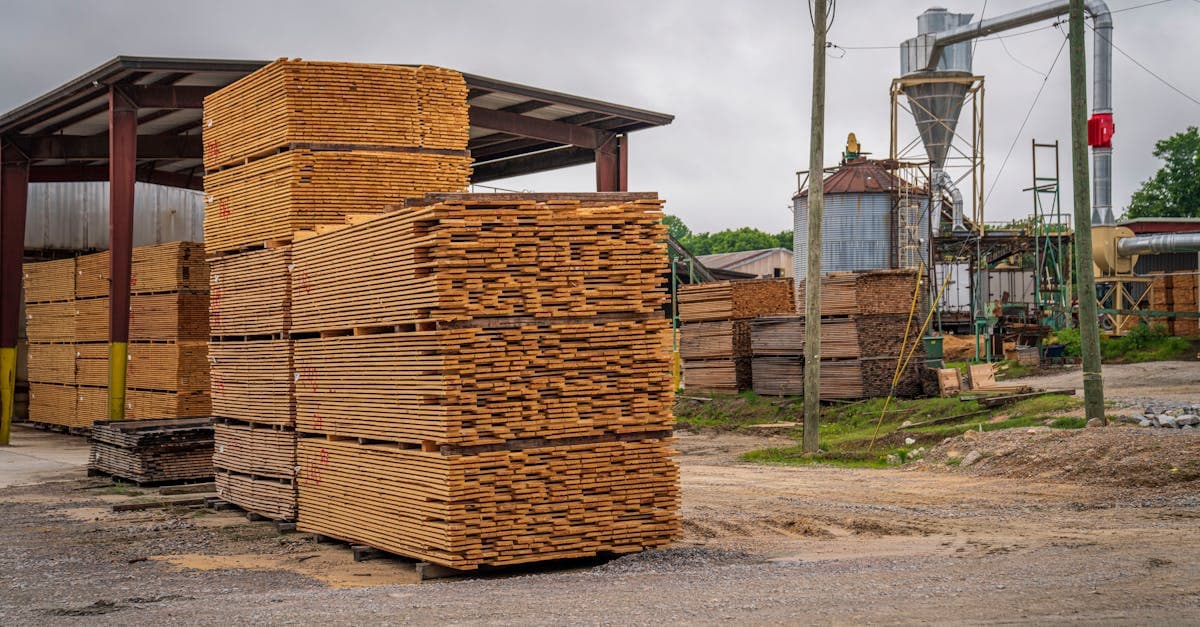
When Jeffery K. Winter started implementing Resource Manager DB at a large plywood sawmill operation, he faced significant resistance. The prevailing belief was that even though plywood production is "Old Technology" manufacturing, the intricacies of different species, methods of deconstructing logs into various sizes of veneer, and reassembling them into plywood was "too difficult to schedule."
A year later, that belief was proven wrong. RMDB delivered five distinct operational improvements that transformed how the sawmill operates.
Read the full sawmill success story.
The Challenge: Complexity That Defied Scheduling
Plywood manufacturing presents scheduling challenges unlike typical discrete manufacturing. Raw material - logs - varies by species, grade, and size. The deconstructing process (peeling logs into veneer) produces variable outputs depending on the log. The reassembly process (layering and pressing veneer into plywood) involves numerous product configurations.
The initial reluctance to implement scheduling software was understandable. Staff believed the process was too variable and complex for any system to model effectively.
The Results: Five Measurable Improvements
After a year of increasing adoption, the sawmill achieved five documented improvements:
1. Reduced finish-end manning - By knowing when each machine center would be needed, the sawmill could staff the finish end based on actual scheduling data rather than having everyone present at all times. This is labor scheduling in its most practical form.
2. Reduced aged inventory - The system enforced a process of netting out what was already in inventory versus what was incrementally needed to meet sales demand. This eliminated the buildup of aged inventory that had been hidden by previous scheduling methods.
3. Increased on-time shipments - RMDB showed which machine center would be the bottleneck in any given week, enabling the team to plan around it. When you know where the constraint is, you can manage it proactively.
4. Highlighted hidden raw material supply issues - The scheduling process revealed raw material supply problems that had been invisible under the previous manual approach. Seeing these issues early enabled proactive procurement adjustments.
5. Improved maintenance planning - Maintenance staff could plan their work around machine usage schedules, performing maintenance when machines were idle rather than when they were needed for production.
Overcoming Scheduling Skepticism
The sawmill story carries an important lesson about overcoming organizational resistance to scheduling software.
Start Despite Skepticism
Jeffery described the implementation as "increasingly" adopted over the first year - it was not instant acceptance. The team started with basic scheduling and expanded as results became visible. This incremental approach built credibility that overcame initial resistance.
Let Results Speak
The five improvements listed above were not projected - they were observed. When the team could see reduced manning costs, lower inventory, and better on-time performance, the skepticism dissolved. Data beats opinions.
Hard Work Plus Software
Jeffery acknowledged that the results required "a lot of hard work in implementing it both by you and our staff." Scheduling software is not magic - it is a tool that amplifies the effort of skilled production teams. But the combination of effort and software produces results that effort alone cannot achieve.
Why Process Manufacturing Can Be Scheduled
The sawmill case proves that production scheduling software works even in process-type environments where outputs are variable and routings are complex. The key is that the scheduling software models the reality of the process - variable yields, multiple product configurations, and shared resources - rather than assuming a simplified, deterministic production flow.
If scheduling software can handle the complexity of converting raw logs into finished plywood across different species, sizes, and grades, it can handle your manufacturing complexity.
Frequently Asked Questions
Can scheduling software work for sawmill and plywood operations?
Yes. Despite initial skepticism that plywood production was too complex to schedule due to different species, veneer sizes, and reassembly combinations, RMDB proved capable of handling the intricacies of sawmill scheduling and delivered measurable improvements.
What scheduling improvements did the sawmill achieve?
The sawmill reduced finish-end manning by knowing when each machine center was needed, reduced aged inventory through netting inventory against demand, increased on-time shipments by identifying weekly bottlenecks, highlighted hidden raw material supply issues, and improved maintenance planning.
How does scheduling software help with lumber industry bottlenecks?
RMDB shows which machine centers will be the bottleneck in any given week, allowing the sawmill to plan around constraints proactively rather than discovering bottlenecks after they cause delays.
Schedule Your Complex Operations
If your team believes your operation is "too complex to schedule," the sawmill case study shows that complexity is exactly the reason you need scheduling software. Request a free demo and let us model your operation.
Read the full sawmill success story and explore all scheduling success stories.
Frequently Asked Questions
Ready to Transform Your Production Scheduling?
User Solutions has been helping manufacturers optimize their production schedules for over 35 years. One-time license, 5-day implementation.

User Solutions Team
Manufacturing Software Experts
User Solutions has been developing production planning and scheduling software for manufacturers since 1991. Our team combines 35+ years of manufacturing software expertise with deep industry knowledge to help factories optimize their operations.
Share this article
Related Articles

5-Day Implementation: Our Proven Scheduling Software Framework
How User Solutions implements production scheduling software in 5 days, not months. The day-by-day framework used for Plastilite, Technical Glass Products, and dozens of other manufacturers.
NIST MEP Improves On-Time Delivery
ACE Controls Inc., supported by NIST Manufacturing Extension Partnership, used Resource Manager to improve on-time delivery through visual workcenter loading and what-if scenario analysis.

BAE Systems: Eliminating Production Backlogs with RMDB
How BAE Systems Ordnance Systems used Resource Manager DB as an ERP add-on to eliminate production backlogs, reduce outsourcing costs, and gain finite capacity visibility their ERP could not provide.