Finite Capacity Scheduling of World's Largest Aircraft Carrier Nimitz
Discover how advanced finite capacity scheduling manages the complex maintenance operations of a nuclear-powered super carrier.
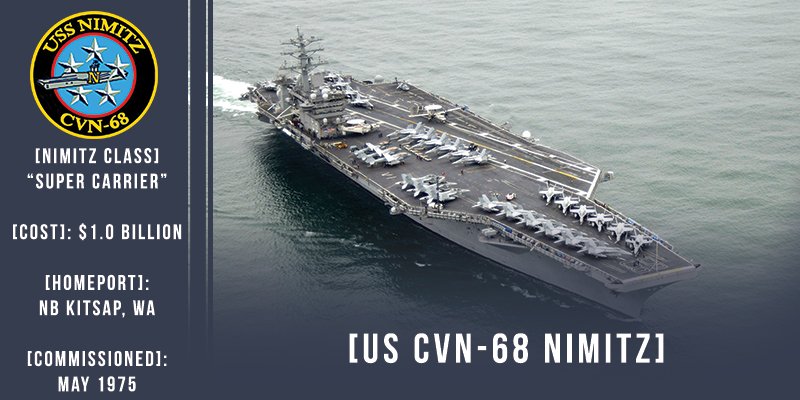
The USS Nimitz is one of the Navy's nuclear-powered aircraft carriers, classified as a "super carrier" and the lead ship of its class. With a displacement of 100K+ tons, a length of 1K+ feet, a 4 acre deck, a crew of 5K strong and only two locations in the world that can handle its dry dock maintenance needs, it needs to be scheduled two years out.
The Challenge
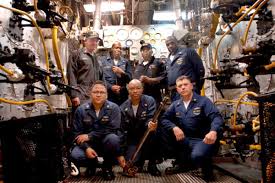
Christopher D. Gates, the Assistant Reactor Maintenance Officer, was tasked with augmenting a maintenance schedule system both in port and at sea for the power train of the aircraft carrier USS NIMITZ. This was to include the two nuclear reactors driving 4 propeller shafts driven by the steam propulsion systems, reactor department auxiliaries and steam and nuclear plant liaison inquiries.
According to Chris, "The problem I was trying to solve was level loading the over 26,000 tasks I receive from the Preventive Maintenance Program, due on a periodic-based schedule, along with the immediate 5,000 corrective maintenance jobs that are outstanding. Both sets of tasks rely on common resources and I needed an easy and reliable method to level load and schedule according to priority and finite capacity, the never ending task list."
The maintenance and production for the four plants received data from disparate, proprietary databases which, due to security access restrictions, could not be combined or integrated. Additionally, the schedule extended 2 years out to accommodate dry dock cycles and the maintenance inventory had to accommodate at-sea schedules averaging 4 to 10 months.
The disparate systems provided the preventative maintenance tasks and resource requirements from one, the corrective maintenance tasks and resource requirements from another and materials requirements from yet a third. Chris was trying to schedule using 10 separate master Excel files. Microsoft Project was an excellent tool for his Gantt charting but he was doing far too much importing and exporting with so much disparate information. Attempts with other project management systems still left Chris without capacity considerations.
Implementation was urgent so it would need to be easy and familiar enough for rapid adoption by some 400+ sailors and a non-proprietary software platform to avoid the required military quarantine and testing security process. With budget approvals as a possible impedance to rapid implementation, it was preferred a solution be found at the discretionary fund level, however, the added sophistication that was needed for finite capacity planning and level loading almost guaranteed that an impossibility.
Although a solid and rather impressive scheduling system had been developed by the user out of Excel, it did not possess the sophistication of a finite capacity planning and scheduling or load leveling system.
The Solution
"I found User Solutions while browsing the internet for Finite Capacity Scheduling and ERP systems based in Excel," Chris explained. "As soon as I started using their product Resource Manager for Excel™ (RMX), I could tell the flexibility of their product would be beneficial working with an at-sea schedule which changes almost by the hour."
Resource Manager for Excel (RMX) from User Solutions is, out of the box, a resource management planning, scheduling and tracking system that can perform intricate finite capacity scheduling combined with level loading and material requirements planning. Yet, with all that sophistication typically found in costly, cumbersome and rigid systems, RMX has preserved all the integration options, flexibility and analysis that are inherent in Excel, not to mention the famously rapid calculation speeds.
The new expanded version of RMX, v2014, which leverages the expanded version of Excel 2013, supporting 1,000,000 rows of data and 16k columns per sheet, along with unlimited sheets, was perfectly positioned to accommodate the Nimitz's needs.
"RMX is one of the fastest, if not the fastest, finite capacity scheduler combined with materials requirements planning (MRPII) due to its leveraging the speed with which Excel performs mathematical calculations," states Jim Convis, Product Manager for User Solutions. "With the new expansion, in addition to our handling small companies with no other production systems in place, RMX is now an ideal complement for traditional ERP systems at larger companies looking to drill down to fully optimize their production scheduling."
Chris funnels the data from the disparate systems into a Bill-of-Resource (BOR) in RMX. RMX is designed to adapt to whatever data the user has, which means in this case, Chris needs only to input that BOR and the BOR backfills the master operations/workcenter list, master product list, the production calendar, resource calendar, forecast calendar and the vendor list. Typical ERP systems require the user to start from a product list from which a Bill-of-Material (BOM) is built and a workcenter list from which a routing needs to be created. RMX's backfill feature is a major contributor to not only fast implementation, but also minimal on-going system upkeep.
The Results
With Resource Manager for Excel in place, Chris was able to consolidate the scheduling of over 31,000 maintenance tasks across all four nuclear plants into a single, unified system. The level loading and finite capacity scheduling capabilities allowed him to balance the 26,000 preventive maintenance tasks alongside 5,000 corrective maintenance jobs, ensuring that common resources were allocated according to priority without exceeding capacity constraints.
The solution replaced the 10 separate master Excel files that Chris had been managing manually, eliminating the constant importing and exporting of data between disparate systems. RMX's Bill-of-Resource backfill feature dramatically reduced both implementation time and ongoing system maintenance, critical factors for a vessel whose schedule changes by the hour while at sea.
Because RMX runs entirely within Excel, it met the Navy's requirement for a non-proprietary software platform, avoiding the lengthy military quarantine and security testing process. The familiarity of the Excel environment enabled rapid adoption by the 400+ sailors who interact with the scheduling system. Additionally, the solution fit within discretionary fund budget limits, removing the need for lengthy budget approval processes that would have delayed implementation.
Key Takeaways
- Consolidated 31,000+ maintenance tasks from multiple disparate databases into one finite capacity scheduling system
- Replaced 10 separate master Excel files with a single Bill-of-Resource driven workflow
- Enabled level loading across 26,000 preventive and 5,000 corrective maintenance jobs sharing common resources
- Achieved rapid adoption by 400+ sailors through Excel-based familiarity
- Met Navy security requirements without proprietary software quarantine
- Supported 2-year scheduling horizon including dry dock cycles and 4-10 month at-sea deployments