

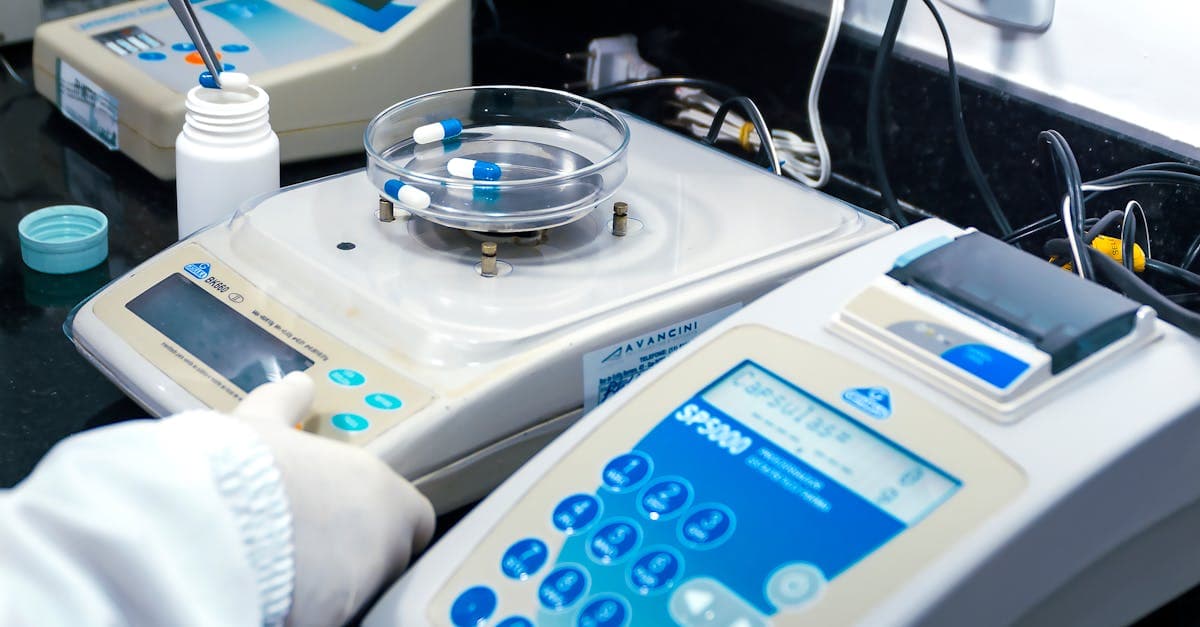
Quality control in manufacturing is the difference between a shop that ships product with confidence and one that holds its breath every time a customer opens a box. Whether you are a job shop machining aerospace components or a contract manufacturer assembling consumer electronics, the principles are the same: define what "good" looks like, measure against that standard, and catch deviations before they become customer complaints. This manufacturing quality control complete guide covers the methods, tools, standards, and economics that matter - with practical advice from our 35+ years working with manufacturers at User Solutions.
Quality is not a department. It is a system that touches scheduling, procurement, production, maintenance, and shipping. Get the system right, and individual quality problems become manageable. Ignore the system, and you are playing whack-a-mole with defects forever.
What Is Quality Control in Manufacturing?
Quality control (QC) is the set of activities that manufacturers use to verify products meet defined specifications. It operates at multiple stages of production:
- Incoming inspection: Verifying raw materials and purchased components meet specifications before they enter production
- In-process inspection: Checking critical dimensions, properties, or attributes during manufacturing operations
- Final inspection: Comprehensive verification that the finished product meets all requirements before shipping
- Outgoing audit: Statistical sampling of packed and ready-to-ship product as a final safeguard
QC is fundamentally about detection - finding problems that have already occurred. It answers the question: "Does this specific part or batch meet our requirements?"
The Quality Control Cycle
Effective QC follows a continuous cycle:
- Define standards: Establish measurable acceptance criteria based on customer requirements, engineering specifications, and industry standards
- Measure: Collect data through inspection, testing, and monitoring
- Compare: Evaluate measurements against acceptance criteria
- Act: Disposition nonconforming material (rework, scrap, use-as-is with concession) and initiate corrective action
- Improve: Feed data back into process improvement to prevent recurrence
This cycle operates at the individual part level (pass/fail decisions), the batch level (lot acceptance sampling), and the process level (statistical process control). The most effective manufacturers operate at all three levels simultaneously.
Quality Control vs. Quality Assurance: Key Differences
QC and QA are complementary but distinct disciplines. Confusing them leads to organizational gaps where neither prevention nor detection is done well.
| Aspect | Quality Control (QC) | Quality Assurance (QA) |
|---|---|---|
| Focus | Product | Process |
| Approach | Reactive - detect and correct | Proactive - prevent and design |
| Activities | Inspection, testing, SPC | Process design, audits, training, documentation |
| Question answered | "Is this part good?" | "Will our process consistently produce good parts?" |
| Responsibility | Inspectors, operators, QC technicians | Quality engineers, process engineers, management |
| Tools | Gages, CMMs, test equipment, control charts | Process maps, FMEAs, audit checklists, capability studies |
| Timing | During and after production | Before and during production |
The critical insight: QC without QA means you are inspecting quality in - an expensive and unreliable strategy. QA without QC means you trust the process blindly - dangerous when variation is inevitable. World-class manufacturers invest heavily in QA (prevention) while maintaining QC (detection) as a safety net.
A practical example: A QA activity is designing a fixture that automatically locates the part correctly so the operator cannot load it wrong (poka-yoke). A QC activity is measuring the critical dimension after machining to verify the fixture worked. Both are necessary. The fixture prevents most errors; the measurement catches the rest.
Statistical Process Control (SPC): Charts, Tools, and Implementation
Statistical Process Control is the backbone of manufacturing quality control. Developed by Walter Shewhart at Bell Labs in the 1920s and popularized by W. Edwards Deming, SPC uses statistical methods to monitor process performance and distinguish between normal variation and signals that something has changed.
Why SPC Matters
Every manufacturing process produces variation. A CNC lathe turning a 25.000 mm diameter shaft will produce parts ranging from, say, 24.995 to 25.005 mm - even when everything is working correctly. SPC helps you understand:
- How much variation is normal for your process (common cause variation)
- When something unusual has happened that requires investigation (special cause variation)
- Whether your process is capable of meeting the tolerance consistently (process capability)
Without SPC, you only know a part is bad after you measure it. With SPC, you can see the process drifting toward the specification limit and adjust before producing scrap.
SPC Control Chart Types
Different chart types serve different measurement situations. Choosing the right chart is essential for meaningful analysis.
| Chart Type | Data Type | What It Monitors | When to Use | Sample Size |
|---|---|---|---|---|
| X-bar and R | Variable (continuous) | Process mean and range | Subgroups of 2-10 parts, most common for dimensional measurements | 2-10 per subgroup |
| X-bar and S | Variable (continuous) | Process mean and standard deviation | Subgroups larger than 10, or when you need more precise variation estimates | 11+ per subgroup |
| Individual and Moving Range (I-MR) | Variable (continuous) | Individual values and point-to-point variation | Batch processes, destructive testing, slow production rates where subgrouping is impractical | 1 (individual readings) |
| P chart | Attribute (proportion) | Proportion of defective items | Inspecting for pass/fail attributes, variable sample sizes OK | 50+ per sample recommended |
| NP chart | Attribute (count of defectives) | Number of defective items | Same as P chart but with fixed sample sizes | Fixed sample size, 50+ recommended |
| C chart | Attribute (count of defects) | Number of defects per unit | Counting defects on a single unit (scratches per panel, solder defects per board) | Fixed inspection unit |
| U chart | Attribute (rate of defects) | Defects per unit when units vary | Same as C chart but with variable inspection unit sizes | Variable inspection unit |
Practical selection guide:
- If you are measuring dimensions (diameter, length, weight, temperature) use X-bar and R for subgrouped data or I-MR for individual measurements
- If you are classifying parts as pass/fail, use P chart (variable samples) or NP chart (fixed samples)
- If you are counting defects per unit (flaws per square meter, errors per assembly), use C chart (fixed units) or U chart (variable units)
Implementing SPC: A Step-by-Step Approach
-
Select critical characteristics: You cannot control everything with SPC. Focus on characteristics that affect fit, form, function, or safety - the ones your customers care about and your process struggles with.
-
Establish measurement capability: Before you can monitor the process, verify your measurement system can detect the variation you care about. Run a Gage R&R study - if your measurement system consumes more than 30% of the tolerance, improve the measurement before starting SPC.
-
Collect baseline data: Gather 25-30 subgroups of data under stable operating conditions. This data establishes your control limits.
-
Calculate control limits: Control limits are set at +/- 3 standard deviations from the process mean. They are not the same as specification limits. Control limits tell you what the process is doing; specification limits tell you what the customer needs.
-
Monitor and react: Plot new data points as production continues. When points fall outside control limits or exhibit non-random patterns (runs, trends, cycles), investigate the special cause and take corrective action.
-
Calculate process capability: Once the process is in statistical control, calculate Cp and Cpk to determine if it is capable of meeting specifications consistently. A Cpk of 1.33 or higher is generally considered capable; 1.67 or higher for safety-critical applications.
Tools like Spreadsheet QC simplify SPC implementation by automating chart generation, control limit calculations, and out-of-control alerts - making SPC accessible even to shops without a dedicated quality engineer.
The Eight Nelson Rules for Control Chart Interpretation
Beyond simple out-of-control points, these patterns signal special cause variation:
- One point beyond 3 sigma from the center line
- Nine consecutive points on the same side of the center line
- Six consecutive points steadily increasing or decreasing
- Fourteen consecutive points alternating up and down
- Two out of three consecutive points beyond 2 sigma (same side)
- Four out of five consecutive points beyond 1 sigma (same side)
- Fifteen consecutive points within 1 sigma of the center line (too little variation - stratification)
- Eight consecutive points beyond 1 sigma on either side (mixture pattern)
Training operators to recognize these patterns - not just out-of-limit points - dramatically improves the effectiveness of SPC programs.
Total Quality Management (TQM) Principles
Total Quality Management is a management philosophy that embeds quality into every aspect of an organization. While SPC is a tool, TQM is a mindset.
The Eight TQM Principles
-
Customer focus: Quality is defined by the customer, not by internal standards. If the customer perceives a problem, it is a problem - regardless of whether the part technically meets specifications.
-
Total employee involvement: Quality is everyone's responsibility, from the CEO to the newest operator. This requires training, empowerment, and a culture where raising quality concerns is rewarded, not punished.
-
Process-centered thinking: Outcomes are driven by processes. Improve the process, and the outcomes improve. Blame the process, not the person.
-
Integrated system: Quality management must be integrated across functions - design, procurement, production, shipping, and service. Siloed quality departments create gaps.
-
Strategic and systematic approach: Quality improvement must be planned, prioritized, and resourced like any other strategic initiative. Ad hoc improvement efforts rarely sustain.
-
Continual improvement: The Japanese concept of kaizen - small, continuous improvements compounding over time. No process is ever "good enough."
-
Fact-based decision making: Decisions about quality should be based on data, not opinions or anecdotes. This is where SPC, capability studies, and defect analysis become essential.
-
Communications: Transparent, bidirectional communication about quality goals, performance, and problems. Everyone needs to know where they stand.
TQM in Practice
TQM is not a certification or a program - it is a way of operating. Manufacturers that successfully implement TQM typically see:
- 50-70% reduction in scrap and rework costs over 3-5 years
- Significant improvements in on-time delivery (because quality problems are the number one cause of schedule disruption)
- Higher employee engagement (people take pride in quality work)
- Improved customer retention and referral rates
The challenge is sustainability. Many manufacturers launch TQM initiatives with enthusiasm, see early gains, and then let the discipline slip when other priorities compete for attention. The organizations that sustain TQM treat it as the operating system of the business, not a project with an end date.
ISO 9001 Certification for Manufacturers
ISO 9001 is the international standard for quality management systems (QMS). Published by the International Organization for Standardization (ISO), it provides a framework for consistently meeting customer and regulatory requirements.
What ISO 9001 Requires
ISO 9001:2015 (the current version) is structured around seven quality management principles and uses a process approach with the Plan-Do-Check-Act (PDCA) cycle. Key requirements include:
- Context of the organization: Understanding your operating environment, interested parties, and scope of the QMS
- Leadership: Top management commitment, quality policy, and organizational roles
- Planning: Addressing risks and opportunities, quality objectives, and planning of changes
- Support: Resources, competence, awareness, communication, and documented information
- Operation: Operational planning and control, requirements management, design and development, external provision, production and service provision, release, and nonconforming output
- Performance evaluation: Monitoring, measurement, analysis, evaluation, internal audit, and management review
- Improvement: Nonconformity, corrective action, and continual improvement
The Business Case for ISO 9001
Beyond customer requirements, ISO 9001 certification delivers tangible benefits:
| Benefit | How It Manifests |
|---|---|
| Market access | Many OEMs require ISO 9001 from suppliers. Certification opens doors to contracts you cannot bid without it. |
| Process discipline | The documentation and audit requirements force you to standardize processes that may currently depend on tribal knowledge. |
| Reduced quality costs | Manufacturers typically see 10-20% reduction in COPQ within the first two years after certification. |
| Continuous improvement | The management review and internal audit cycle creates a structured rhythm for improvement. |
| Customer confidence | Certification signals to customers that you take quality seriously and have independent verification. |
Common ISO 9001 Pitfalls
- Documentation for documentation's sake: Writing procedures nobody reads. Keep documentation practical and concise.
- Treating it as a quality department project: ISO 9001 is a management system. It requires leadership engagement across all functions.
- Preparing only for audits: If you only follow your QMS procedures before audits, the system has no value. The procedures should reflect how you actually work.
- Ignoring Clause 6 (Planning): Risk-based thinking is central to the 2015 revision. Manufacturers who skip this end up with a QMS that does not address their real vulnerabilities.
Root Cause Analysis Methods
When quality problems occur - and they will - the response matters as much as the detection. Root cause analysis (RCA) is the discipline of identifying why a problem occurred, not just what happened.
The Problem with Superficial Corrective Actions
Consider a CNC lathe producing oversized diameters. Superficial corrective actions might include:
- "Adjusted the offset" (treats the symptom)
- "Retrained the operator" (assumes operator error without evidence)
- "Increased inspection frequency" (adds cost without fixing the problem)
None of these address why the diameter went out of specification. Root cause analysis digs deeper.
5 Whys Analysis
The 5 Whys technique uses iterative questioning to peel back layers of causation:
- Problem: Shaft diameter is 0.015 mm oversize
- Why 1? The tool offset was incorrect
- Why 2? The offset was not updated after the insert was changed
- Why 3? The setup sheet does not include a step for offset verification after insert changes
- Why 4? Setup sheets have not been updated since the new insert grade was introduced
- Why 5? There is no process for reviewing setup sheets when tooling changes are made
Root cause: No management of change process for tooling updates. The corrective action - establishing a tooling change review process - prevents recurrence across all jobs, not just the one that failed.
Fishbone (Ishikawa) Diagram
The fishbone diagram organizes potential causes into categories, typically the 6 Ms:
- Man (people): Training, experience, fatigue, attention
- Machine: Condition, calibration, capability, maintenance
- Material: Composition, hardness, dimensions, supplier variation
- Method: Procedure, sequence, parameters, setup
- Measurement: Gage accuracy, technique, environment
- Mother Nature (Environment): Temperature, humidity, vibration, cleanliness
For the oversized shaft example, a fishbone analysis might reveal contributing factors across multiple categories - the insert grade change (Material), the outdated setup sheet (Method), and the lack of offset verification step (Method) all contributed.
Failure Mode and Effects Analysis (FMEA)
FMEA is a proactive RCA tool - it identifies potential failure modes before they occur. There are two primary types:
Design FMEA (DFMEA): Analyzes potential failure modes in product design. Used during product development.
Process FMEA (PFMEA): Analyzes potential failure modes in the manufacturing process. Used when developing or modifying production processes.
For each potential failure mode, FMEA assesses three factors on a 1-10 scale:
| Factor | Definition | Scale |
|---|---|---|
| Severity (S) | How serious is the effect if the failure occurs? | 1 (negligible) to 10 (safety/regulatory) |
| Occurrence (O) | How likely is the failure to occur? | 1 (extremely unlikely) to 10 (almost certain) |
| Detection (D) | How likely is the failure to be detected before reaching the customer? | 1 (almost certain detection) to 10 (no detection method) |
The Risk Priority Number (RPN) = S x O x D. High RPN items get priority for corrective action. However, modern FMEA practice (per the AIAG-VDA FMEA Handbook) uses Action Priority (AP) ratings instead of RPN to avoid the mathematical issues with multiplying ordinal scales.
FMEA is particularly valuable for manufacturers in automotive (IATF 16949 requires it), aerospace (AS9100), and medical device (ISO 13485) supply chains.
8D Problem-Solving
The 8 Disciplines (8D) methodology provides a structured framework for team-based problem-solving:
- D1: Establish the team
- D2: Define the problem (with data)
- D3: Implement containment actions (protect the customer now)
- D4: Identify root cause(s)
- D5: Define and verify corrective actions
- D6: Implement and validate corrective actions
- D7: Prevent recurrence (systemic changes)
- D8: Congratulate the team
8D is the standard corrective action format for many OEMs. If you supply automotive or aerospace customers, you will almost certainly need to complete 8D reports for quality issues.
Cost of Quality: Prevention, Appraisal, and Failure
Quality is not free - but poor quality is far more expensive than good quality. The Cost of Quality (COQ) framework, developed by Armand Feigenbaum and popularized by Philip Crosby, categorizes quality-related costs into four buckets.
The Four Quality Cost Categories
| Category | Type | Examples | Typical % of Quality Cost |
|---|---|---|---|
| Prevention | Investment | Training, process design, FMEA, SPC implementation, quality planning, supplier development | 5-10% |
| Appraisal | Investment | Inspection, testing, gage calibration, audit, CMM programming | 20-30% |
| Internal Failure | Waste | Scrap, rework, reinspection, downtime due to quality issues, sorting | 25-40% |
| External Failure | Waste | Warranty claims, returns, field service, customer complaints, lost customers, liability | 25-40% |
The Quality Cost Paradox
The counterintuitive insight of COQ analysis is that spending more on prevention reduces total quality costs. Here is why:
- A defect caught during in-process inspection costs roughly $10-50 to address (rework or scrap the part)
- The same defect caught at final inspection costs $50-200 (rework plus reinspection plus documentation)
- The same defect caught by the customer costs $500-5,000 (replacement, shipping, corrective action, customer relationship damage)
- The same defect causing a field failure or recall costs $5,000-500,000+ (liability, regulatory action, brand damage)
The 1-10-100-1000 rule: Every dollar spent on prevention saves $10 in appraisal, $100 in internal failure, and $1,000 in external failure.
Calculating Your Cost of Quality
Most manufacturers are shocked when they calculate their true COQ. Here is a simplified approach:
-
Gather data for the last 12 months:
- Scrap dollars (material and labor)
- Rework labor hours x loaded rate
- Warranty and return costs
- Inspection and testing labor hours x loaded rate
- Quality department salaries and overhead
- Training costs for quality-related activities
- Gage and equipment calibration costs
-
Categorize each cost into prevention, appraisal, internal failure, or external failure
-
Calculate COQ as a percentage of revenue:
- Below 10%: Good - you have a mature quality system
- 10-20%: Average - significant improvement opportunity
- Above 20%: Critical - quality costs are eroding profitability
-
Identify the highest-cost category and target improvement efforts there. If external failures dominate, you have a detection gap. If internal failures dominate, you have a process capability gap. If appraisal dominates, you may be over-inspecting and under-preventing.
How Scheduling Software Supports Quality Control
Production scheduling and quality control are more connected than most manufacturers realize. Poor scheduling is a root cause of quality problems - and good scheduling is a quality prevention tool.
The Scheduling-Quality Connection
| Scheduling Problem | Quality Impact |
|---|---|
| Rushed setups | Incorrect offsets, wrong tooling, skipped first-article inspection |
| Excessive overtime | Operator fatigue, reduced attention, higher error rates |
| Constant expediting | Jobs run out of sequence, process-sensitive operations disrupted |
| Overloaded work centers | WIP piles up, parts damaged in handling, confusion about which job is next |
| Inadequate changeover time | Cleaning and purging steps skipped, cross-contamination between products |
| Wrong operator assignment | Inexperienced operators on critical jobs, skill matrix violations |
Finite capacity scheduling directly addresses every one of these problems by creating realistic, achievable schedules that respect machine capacity, setup times, operator skills, and quality requirements.
How RMDB and EDGEBIC Support Quality
Our scheduling platforms include capabilities specifically designed to support quality objectives:
- Realistic setup allowances: The scheduler allocates actual setup time based on the specific job-to-job transition, including cleaning, tool changes, and first-article inspection
- Operator skill matching: Jobs are assigned to operators who are qualified for the specific operation, based on certification matrices maintained in the system
- Quality hold points: Mandatory inspection operations can be built into routings, and the scheduler does not advance the job until the hold point is cleared
- Capacity-aware loading: The scheduler prevents overloading that leads to rushed production and quality shortcuts
- What-if analysis: When a rush order arrives, planners can simulate the impact on the entire schedule - including whether quality inspection resources become a bottleneck
Combined with Spreadsheet QC for SPC charting and inspection data management, these tools create a quality-supporting scheduling environment that prevents the root causes of many quality failures.
Real-World Impact
Manufacturers who integrate scheduling and quality systems consistently report:
- 25-40% reduction in first-article rejection rates (because setups are not rushed)
- 15-30% reduction in scrap (because process-sensitive sequences are maintained)
- 20-50% reduction in customer complaints (because realistic schedules improve on-time delivery and reduce expediting errors)
These improvements compound over time. Better quality means less rework, which means more available capacity, which means better schedule adherence, which means less expediting, which means better quality. It is a virtuous cycle. Visit our success stories page to see specific examples from manufacturers who have experienced this transformation.
Building a Quality Control Program from Scratch
If you are starting with minimal quality infrastructure - no formal QMS, limited inspection records, reactive problem-solving - here is a practical roadmap.
Phase 1: Foundation (Months 1-3)
Goal: Establish basic documentation and start collecting data.
- Document your processes: Create simple, visual work instructions for your top 10 highest-volume or highest-risk operations. Include critical parameters, inspection requirements, and acceptance criteria. Do not write 50-page procedures nobody will read - use photos, bullet points, and one-page summaries.
- Create inspection checklists: Define what gets inspected, when, by whom, with what equipment, and what the acceptance criteria are. Start with incoming inspection for critical purchased materials and final inspection for shipped product.
- Establish a nonconformance process: Create a simple system for documenting, dispositioning, and tracking nonconforming material. At minimum: what is the problem, what is the quantity, what is the disposition (scrap, rework, use-as-is), and what corrective action was taken.
- Start tracking defect data: Even a spreadsheet is a starting point. Record defect type, quantity, job number, machine, operator, date, and shift. You cannot improve what you do not measure.
Phase 2: Analysis and Control (Months 3-6)
Goal: Use data to identify patterns and implement statistical controls.
- Pareto analysis: Take your 3 months of defect data and create Pareto charts. Identify the vital few defect types, machines, or operations that account for the majority of quality costs. Focus your improvement efforts there.
- Implement SPC on critical processes: Start with 2-3 processes where you have the highest scrap rate or customer complaint frequency. Use Spreadsheet QC or similar tools to create control charts and train operators to respond to out-of-control signals.
- Measurement system analysis: Run Gage R&R studies on your critical measurement equipment. If your measurement system is not capable, your SPC data is meaningless.
- Corrective action process: Formalize your approach to problem-solving. Adopt 5 Whys or 8D methodology. Require root cause analysis (not just corrective action) for recurring or significant quality issues.
Phase 3: Systematization (Months 6-12)
Goal: Build a sustainable quality management system.
- Quality manual: Document your quality policy, organizational structure, and process interactions. This becomes the backbone of your QMS.
- Internal audits: Train 2-3 people as internal auditors. Conduct audits quarterly against your own procedures. Fix gaps before an external auditor or customer finds them.
- Supplier quality: Establish quality requirements for your critical suppliers. Conduct incoming inspection, track supplier performance, and communicate expectations.
- Management review: Implement quarterly management reviews of quality data, customer complaints, audit findings, corrective actions, and improvement projects. This creates accountability and visibility.
Phase 4: Certification and Maturity (Months 12-18)
Goal: Formalize, certify, and continuously improve.
- ISO 9001 preparation: If certification is a goal, engage a consultant or registrar for a gap assessment. Address findings systematically.
- FMEA deployment: Implement process FMEAs for your highest-risk operations and for all new product introductions.
- Integration with scheduling: Connect your quality system with your production scheduling software so that quality requirements (inspection time, hold points, operator qualifications) are built into the schedule automatically.
- Advanced SPC: Expand SPC to additional processes, implement process capability studies (Cpk analysis), and establish statistical acceptance sampling plans for incoming and outgoing inspection.
Expert Q&A: Deep Dive
The most overlooked connection is setup time compression. When schedules are too tight or poorly sequenced, operators rush through setups and first-article inspections. We have seen this pattern across hundreds of manufacturers - the quality escapes almost always cluster around jobs that were expedited or ran during overtime shifts where experienced setup personnel were not available. Good scheduling software builds in realistic setup allowances and sequences jobs to minimize changeover complexity. That alone can reduce first-article rejects by 30-40%. It is one of the first things we address with RMDB implementations.
Job shops cannot afford the inspection infrastructure of a high-volume plant, but they also cannot afford quality escapes that damage customer relationships. The practical answer is risk-based inspection: classify jobs by quality criticality (aerospace and medical get full SPC and CMM inspection, commercial jobs get first-article plus random in-process checks), use digital travelers that enforce mandatory hold points, and invest in flexible measurement tools like portable CMMs and vision systems that work across part families. Our Spreadsheet QC tool was designed specifically for this kind of flexible, risk-based quality tracking across diverse job types.
Start with the basics and build. Months 1-3: document your processes, create inspection checklists, and start tracking defect data in a structured way - even a spreadsheet is better than nothing. Months 3-6: implement SPC on your highest-volume or highest-risk processes, establish corrective action procedures, and train operators on the seven basic quality tools. Months 6-12: formalize your quality management system, begin ISO 9001 preparation if applicable, and integrate quality data with your scheduling system. Months 12-18: pursue certification, implement FMEA for new product introductions, and establish supplier quality requirements. The key is consistency - a simple system that people actually follow beats a sophisticated system that sits on a shelf.
Most manufacturers dramatically underestimate this cost because they only count the replacement part. The true cost includes: the replacement part cost, freight for expedited shipping (often 5-10x normal), production disruption to make the replacement (bumping other orders), administrative time for the RMA process, sorting and inspection of suspect inventory, root cause investigation and corrective action, customer audit time if they require an on-site visit, and the hardest to quantify - erosion of customer confidence that affects future order volume. In our experience, a quality escape that reaches a customer costs 10-50x the manufacturing cost of the defective part. Prevention through good process design, proper scheduling, and effective SPC is always cheaper.
Frequently Asked Questions
Quality control in manufacturing is the set of processes, inspections, and tests used to verify that products meet defined specifications before they reach the customer. It includes incoming material inspection, in-process checks, final inspection, and statistical monitoring of process capability. QC is the detection side of quality - complementing quality assurance, which focuses on prevention.
Quality control (QC) focuses on detecting defects in finished or in-process products through inspection and testing. Quality assurance (QA) focuses on preventing defects by designing and maintaining processes, procedures, and standards that produce consistent results. QC asks "is this part good?" while QA asks "will this process consistently produce good parts?" Both are essential for a complete quality system.
The seven basic quality tools are: cause-and-effect diagrams (fishbone/Ishikawa), check sheets, control charts, histograms, Pareto charts, scatter diagrams, and stratification (or flow charts). Popularized by Kaoru Ishikawa, these tools provide a systematic framework for identifying, analyzing, and solving quality problems. Every manufacturing professional should be proficient with all seven.
The cost of poor quality (COPQ) typically ranges from 15-25% of revenue for manufacturers without formal quality programs. This includes scrap, rework, warranty claims, customer returns, expediting costs, and lost customers. Manufacturers with mature quality systems reduce COPQ to 5-10% of revenue. Calculating your specific COPQ is often the most powerful motivator for quality investment.
Statistical Process Control is a method of monitoring and controlling a manufacturing process using control charts to detect variation. SPC distinguishes between common cause variation (inherent to the process) and special cause variation (due to specific, identifiable factors), enabling operators to take corrective action before defects occur. It is the most widely used quality tool in manufacturing and forms the basis for process capability analysis.
ISO 9001 certification is not legally required for most manufacturers, but it provides significant business advantages. Many OEMs and prime contractors require ISO 9001 from their supply chain - without it, you cannot bid on those contracts. Beyond market access, the certification process forces you to document and standardize quality processes, which consistently improves performance. The investment typically pays for itself within 1-2 years through reduced quality costs and access to new customers.
Scheduling software improves quality by preventing the rushed production, excessive overtime, and constant expediting that are root causes of quality failures. Properly scheduled production ensures adequate setup time, maintains correct sequencing for process-sensitive operations, allocates time for in-process inspections, and assigns qualified operators to quality-critical jobs. The connection between scheduling and quality is one of the most underappreciated factors in manufacturing quality performance.
Failure Mode and Effects Analysis (FMEA) is a systematic method for identifying potential failure modes in a product or process, assessing their severity and likelihood, and prioritizing corrective actions. Manufacturers should use FMEA during new product introduction, when changing processes, after recurring quality escapes, and as part of Advanced Product Quality Planning (APQP) for automotive and aerospace supply chains. It is one of the most effective proactive quality tools available.
Quality control is not about perfection - it is about consistency, continuous improvement, and building systems that catch the inevitable variation before it reaches your customer. The manufacturers who excel at quality are not the ones with the most inspectors or the most expensive CMMs. They are the ones who treat quality as a system that integrates prevention, detection, and improvement into every aspect of their operation - from how they schedule production to how they respond when something goes wrong.
Ready to connect your quality and scheduling systems? Explore our solutions or contact our team to discuss how User Solutions can help you build a quality-driven manufacturing operation.
Continue exploring this cluster
Dive deeper into specific aspects of quality control in manufacturing with these related guides from our content library:
- CAPA in Manufacturing: Corrective and Preventive Action Guide
- Control Charts in Manufacturing: Types, Rules, and When to Use Each
- Cost of Quality in Manufacturing: How to Measure and Reduce It
- FMEA in Manufacturing: Failure Mode and Effects Analysis Guide
- Incoming Quality Inspection: Protecting Your Production From Bad Material
- ISO 9001 for Manufacturers: Requirements, Benefits, and Certification Path
- p-Chart for Quality Control: When and How to Use Proportion Defective Charts
- Root Cause Analysis in Manufacturing: Methods That Actually Work
- Statistical Process Control (SPC) in Manufacturing: A Complete Guide
- Total Quality Management (TQM) in Manufacturing: Principles and Implementation
- X-bar and R Charts: How to Build and Use Them in Manufacturing
- Zero Defect Manufacturing: Achievable Goal or Unrealistic Standard?
Expert Q&A: Deep Dive
Q: With 35+ years in manufacturing software, what is the most overlooked connection between scheduling and quality?
A: The most overlooked connection is setup time compression. When schedules are too tight or poorly sequenced, operators rush through setups and first-article inspections. We have seen this pattern across hundreds of manufacturers - the quality escapes almost always cluster around jobs that were expedited or ran during overtime shifts where experienced setup personnel were not available. Good scheduling software builds in realistic setup allowances and sequences jobs to minimize changeover complexity. That alone can reduce first-article rejects by 30-40%.
Q: How should a job shop balance quality control rigor with the flexibility needed for high-mix production?
A: Job shops cannot afford the inspection infrastructure of a high-volume plant, but they also cannot afford quality escapes that damage customer relationships. The practical answer is risk-based inspection: classify jobs by quality criticality (aerospace/medical get full SPC and CMM inspection, commercial jobs get first-article plus random in-process checks), use digital travelers that enforce mandatory hold points, and invest in flexible measurement tools like portable CMMs and vision systems that work across part families. Our Spreadsheet QC tool at /spreadsheet-qc was designed specifically for this kind of flexible, risk-based quality tracking.
Q: What does a realistic quality improvement roadmap look like for a manufacturer starting from scratch?
A: Start with the basics and build. Months 1-3: document your processes, create inspection checklists, and start tracking defect data in a structured way - even a spreadsheet is better than nothing. Months 3-6: implement SPC on your highest-volume or highest-risk processes, establish corrective action procedures, and train operators on the seven basic quality tools. Months 6-12: formalize your quality management system, begin ISO 9001 preparation if applicable, and integrate quality data with your scheduling system. Months 12-18: pursue certification, implement FMEA for new product introductions, and establish supplier quality requirements. The key is consistency - a simple system that people actually follow beats a sophisticated system that sits on a shelf.
Q: How do you calculate the true cost of a quality escape that reaches a customer?
A: Most manufacturers dramatically underestimate this cost because they only count the replacement part. The true cost includes: the replacement part cost, freight for expedited shipping (often 5-10x normal), production disruption to make the replacement (bumping other orders), administrative time for the RMA process, sorting and inspection of suspect inventory, root cause investigation and corrective action, customer audit time if they require an on-site visit, and the hardest to quantify - erosion of customer confidence that affects future order volume. In our experience, a quality escape that reaches a customer costs 10-50x the manufacturing cost of the defective part. Prevention is always cheaper.
Frequently Asked Questions
Ready to Transform Your Production Scheduling?
User Solutions has been helping manufacturers optimize their production schedules for over 35 years. One-time license, 5-day implementation.

User Solutions Team
Manufacturing Software Experts
User Solutions has been developing production planning and scheduling software for manufacturers since 1991. Our team combines 35+ years of manufacturing software expertise with deep industry knowledge to help factories optimize their operations.
Share this article
Related Articles

CAPA in Manufacturing: Corrective and Preventive Action Guide
Implement effective CAPA processes in manufacturing. Steps, forms, common mistakes, and how CAPA connects to root cause analysis, scheduling, and ISO 9001 compliance.
Control Charts in Manufacturing: Types, Rules, and When to Use Each
Complete guide to manufacturing control charts. X-bar R, p-charts, c-charts, Western Electric rules, and practical implementation for shop floor quality monitoring.

Cost of Quality in Manufacturing: How to Measure and Reduce It
Understand and measure the cost of quality. Prevention, appraisal, internal failure, external failure costs, and strategies to shift spending from failure to prevention.