

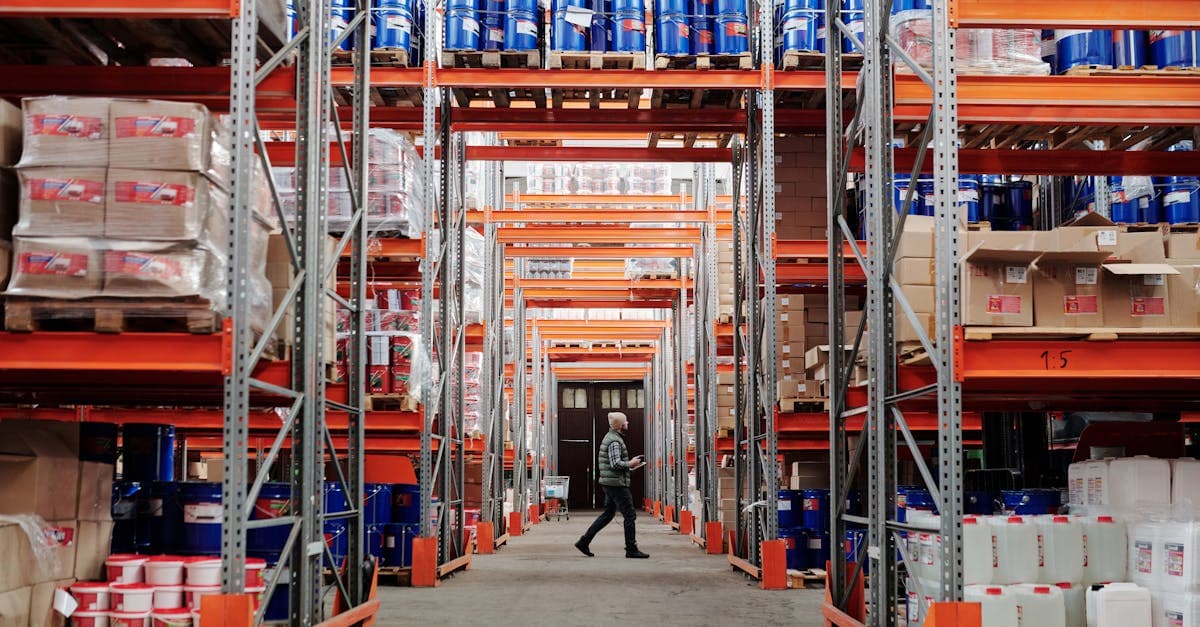
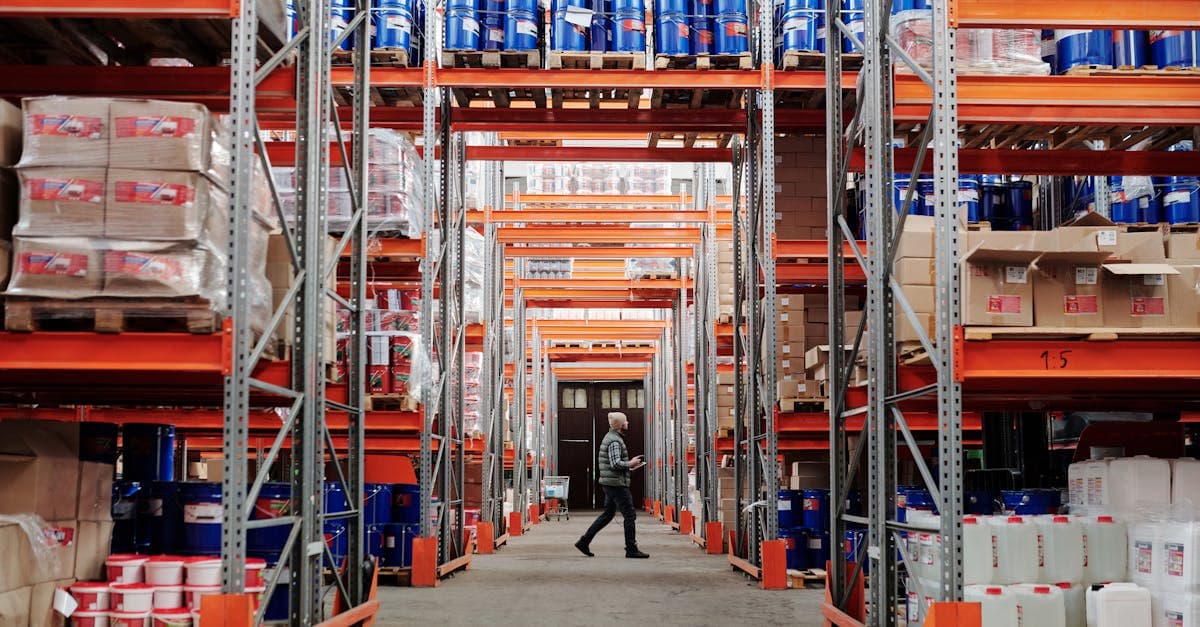
What is Safety Stock?
Safety stock (also called buffer stock) is additional inventory held beyond the expected demand during lead time to protect against uncertainty. It serves as insurance against two types of variability: demand variability (actual usage is higher than forecast) and supply variability (deliveries arrive later than expected or with quality problems that reduce usable quantity).
Without safety stock, any deviation from perfectly average demand or perfectly on-time delivery results in a stockout. Since perfect predictability never exists in manufacturing, some level of safety stock is almost always necessary.
The challenge is determining the right amount. Too much safety stock ties up working capital and increases carrying costs. Too little leads to stockouts that disrupt production schedules, cause late deliveries, and damage customer relationships. The optimal safety stock level balances the cost of holding extra inventory against the cost of a stockout — and this balance is different for every item.
Safety stock is a key component of the reorder point calculation: ROP = (average demand × lead time) + safety stock. It is also an input to min-max inventory parameters and MRP planning.
How Safety Stock Works in Manufacturing
Safety stock calculations require data on demand variability, lead time variability, and the desired service level:
Basic formula (when only demand varies): Safety stock = z × σd × √LT
Where z is the z-score for the desired service level, σd is the standard deviation of daily demand, and LT is the lead time in days.
Comprehensive formula (when both demand and lead time vary): Safety stock = z × √(LT × σd² + d² × σLT²)
Where d is average daily demand and σLT is the standard deviation of lead time.
The z-score corresponds to the desired protection level: 1.28 for 90% service, 1.65 for 95%, 2.33 for 99%, and 3.09 for 99.9%.
Manufacturers should differentiate safety stock levels by ABC classification:
- A items: Calculate statistically based on actual variability data and high service level targets (97-99%)
- B items: Use standard formulas with moderate service levels (93-97%)
- C items: Set simple rules of thumb (1-2 weeks of average demand) since the cost of detailed analysis may exceed the inventory value
Safety Stock Example
A manufacturer of assembly components uses a purchased motor in multiple product lines:
- Average daily demand: 40 motors
- Demand standard deviation: 8 motors/day
- Supplier lead time: 20 days
- Lead time standard deviation: 3 days
- Unit cost: $85
- Desired service level: 97.5% (z = 1.96)
Safety stock = 1.96 × √(20 × 64 + 1,600 × 9) = 1.96 × √(1,280 + 14,400) = 1.96 × √15,680 = 1.96 × 125.2 = 245 motors
At $85 each, this safety stock represents a $20,825 inventory investment. The annual carrying cost at 25% is $5,206.
Is this justified? If a stockout stops the assembly line (20 operators at $35/hour), one day of downtime costs $5,600 in direct labor alone — plus missed deliveries, expediting costs, and customer impact. The safety stock investment pays for itself by preventing even one stockout per year.
If the manufacturer improves supplier reliability (reducing lead time standard deviation from 3 to 1 day), safety stock drops to 106 motors ($9,010) — a 57% reduction achieved by addressing the root cause of variability rather than buffering against it.
Why Safety Stock Matters for Production Scheduling
Safety stock is the scheduler's insurance policy against material unavailability. Without adequate safety stock, the scheduler operates without a cushion — any demand spike or supplier delay immediately disrupts the production plan.
Properly calculated safety stock allows schedulers using tools like Resource Manager DB to commit to production dates with confidence. The buffer absorbs normal demand and supply variability, keeping the schedule on track.
However, safety stock is not a substitute for good scheduling and demand planning. Excessive safety stock masks underlying problems — poor forecasting, unreliable suppliers, long lead times — that should be addressed. The best approach combines lean safety stock levels with proactive scheduling and continuous improvement of the factors that drive variability.
Related Terms
- Reorder Point — the inventory level trigger that includes safety stock in its calculation
- Service Level — the target fill rate that determines how much safety stock is needed
- Stockout — the condition that safety stock is designed to prevent
FAQ
Safety stock is extra inventory held as a buffer against uncertainty in demand and supply lead times. It protects against stockouts caused by demand spikes, late deliveries, or quality rejections. The right amount balances the cost of holding extra inventory against the cost and consequence of running out of stock.
The comprehensive formula is: safety stock equals the z-score (based on desired service level) multiplied by the square root of (lead time times demand variance squared plus average demand squared times lead time variance squared). This accounts for variability in both demand and supply. The z-score is 1.65 for 95% service, 2.33 for 99%.
The right amount depends on the item's demand variability, supplier lead time variability, desired service level, and the consequences of a stockout. Critical A-class items with high variability need more safety stock. Stable C-class items need less. The best approach calculates safety stock statistically for each item based on actual variability data rather than applying blanket rules.
This term is part of our Manufacturing & Production Scheduling Glossary. Learn more about inventory management, scheduling, and manufacturing terminology.
Frequently Asked Questions
Ready to Transform Your Production Scheduling?
User Solutions has been helping manufacturers optimize their production schedules for over 35 years. One-time license, 5-day implementation.

User Solutions Team
Manufacturing Software Experts
User Solutions has been developing production planning and scheduling software for manufacturers since 1991. Our team combines 35+ years of manufacturing software expertise with deep industry knowledge to help factories optimize their operations.
Share this article
Related Articles

What is ABC Analysis? Definition & Manufacturing Examples
Learn what ABC analysis is in inventory management, how the Pareto principle classifies inventory, and why it matters for scheduling.

What is Acceptance Sampling? Definition & Manufacturing Examples
Learn what acceptance sampling is, how it works in manufacturing, and why it matters for production scheduling and quality control decisions.

What is Advanced Planning & Scheduling (APS)? Definition & Manufacturing Examples
Advanced Planning & Scheduling (APS) definition: software that uses algorithms to optimize production schedules against real constraints. Learn how APS works in manufacturing with examples.