


What is ISO 9001?
ISO 9001 is the internationally recognized standard for quality management systems (QMS), published by the International Organization for Standardization (ISO). The current version, ISO 9001:2015, specifies requirements for organizations that need to demonstrate their ability to consistently provide products and services that meet customer and applicable regulatory requirements, and to enhance customer satisfaction through effective application of the system, including processes for continual improvement.
ISO 9001 is not a product standard — it does not define what a product's specifications should be. Instead, it is a management system standard that defines how an organization should manage its processes to consistently deliver quality results. It applies to organizations of all sizes and industries, from three-person machine shops to global manufacturers with thousands of employees.
The standard is based on seven quality management principles: customer focus, leadership, engagement of people, process approach, improvement, evidence-based decision making, and relationship management. These principles provide the philosophical foundation for the specific requirements in the standard.
How ISO 9001 Works in Manufacturing
ISO 9001:2015 is organized into ten clauses. Clauses 1 through 3 cover scope, references, and terms. Clauses 4 through 10 contain the requirements:
Clause 4 — Context of the Organization. Understand internal and external factors affecting the QMS, identify interested parties and their requirements, and define the scope of the QMS.
Clause 5 — Leadership. Top management must demonstrate commitment to the QMS, establish a quality policy, and assign roles and responsibilities.
Clause 6 — Planning. Address risks and opportunities, establish quality objectives, and plan changes to the QMS.
Clause 7 — Support. Provide adequate resources (people, infrastructure, environment, monitoring equipment, knowledge), ensure competence, maintain awareness, manage communication, and control documented information.
Clause 8 — Operation. Plan and control operational processes, manage requirements for products and services, design and develop products, control externally provided processes and products, manage production and service provision, release products, and control nonconforming outputs.
Clause 9 — Performance Evaluation. Monitor, measure, analyze, and evaluate QMS performance through internal audits and management review.
Clause 10 — Improvement. Drive continual improvement through corrective action and enhancement of the QMS.
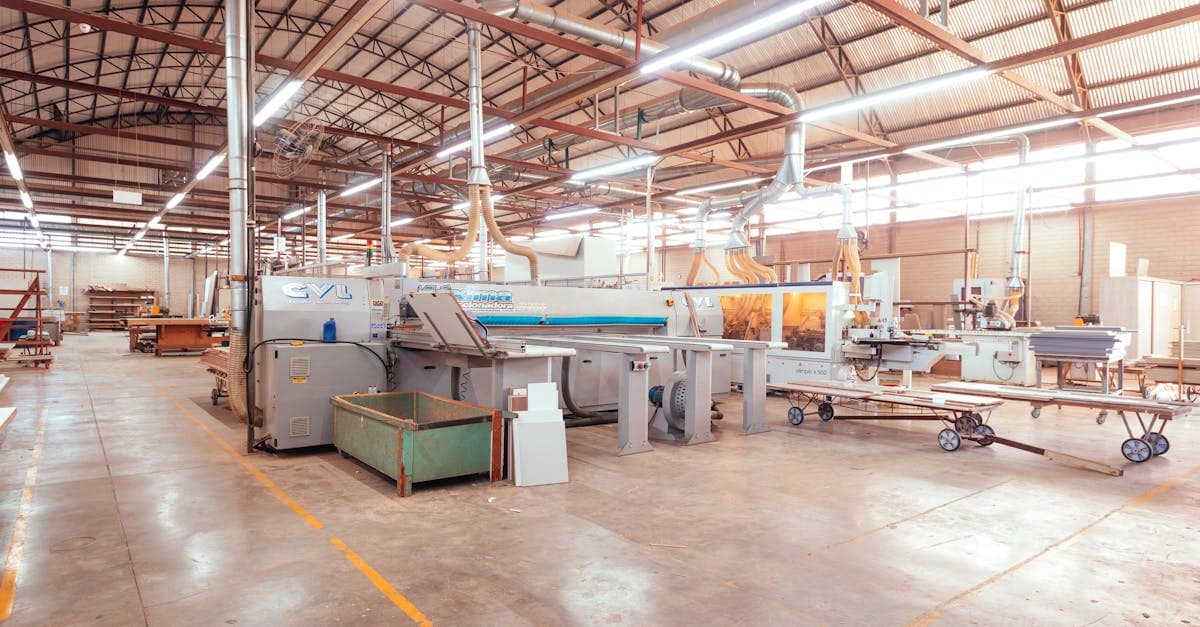
For manufacturers, the most operationally intensive clauses are 7 (Support) and 8 (Operation), which require documented procedures for production processes, calibrated measurement equipment, qualified personnel, and controlled production conditions.
ISO 9001 Example
A precision metal stamping company with 45 employees pursues ISO 9001 certification to qualify as an approved supplier for a major automotive OEM.
The implementation process includes:
Gap analysis (Month 1): A consultant assesses current practices against ISO 9001 requirements and identifies 23 gaps, including lack of documented procedures for key processes, no formal corrective action system, incomplete calibration records, and no management review meetings.
Documentation (Months 2-4): The quality team develops the quality manual, 12 standard operating procedures, 8 work instructions, and 15 forms and records templates. Existing tribal knowledge is captured in documented procedures for the first time.
Implementation (Months 4-7): Staff are trained on new procedures. The corrective action system is launched. Management reviews begin on a quarterly schedule. Internal audits are conducted by trained employees.
Certification audit (Month 9): A third-party registrar audits the QMS over three days. Two minor nonconformances are found and corrected within 30 days. The company receives ISO 9001 certification.
Results after 12 months: Customer complaints drop 40%. Scrap rate decreases from 3.8% to 2.1%. The company qualifies as an approved supplier for three new OEM customers, generating $620,000 in new annual revenue.
Why ISO 9001 Matters for Production Scheduling
ISO 9001 requires manufacturers to plan and control production processes — which directly aligns with production scheduling. Clause 8.5.1 requires organizations to implement production under controlled conditions, including defined processes, adequate resources, competent personnel, and monitoring and measurement at appropriate stages.
Effective production scheduling is a key enabler of these requirements. When production is properly scheduled using tools like Resource Manager DB, manufacturers can ensure that the right resources are available, setup procedures are followed without time pressure, in-process inspections occur as planned, and delivery commitments are met consistently.
ISO 9001 also requires evidence-based decision making (Principle 6), which means scheduling decisions should be based on actual capacity data, historical performance, and measured lead times — not guesswork. Scheduling software provides the data infrastructure that supports this requirement.
Related Terms
- Quality Assurance — the proactive quality discipline that ISO 9001 formalizes into a management system
- Corrective Action — a key requirement of ISO 9001 Clause 10 for driving improvement
- Total Quality Management — a broader quality philosophy that ISO 9001 formalizes into certifiable requirements
FAQ
ISO 9001 is an international standard for quality management systems published by the International Organization for Standardization. It defines requirements for organizations to consistently provide products and services that meet customer and regulatory requirements. Certification is achieved through third-party audits and demonstrates to customers that the organization has a structured, documented quality system in place.
ISO 9001 certification is not legally required for most manufacturers, but it is increasingly expected by customers. Many OEMs, prime contractors, and government agencies require ISO 9001 from their supply chain. Beyond meeting customer requirements, the certification process forces standardization and documentation of processes, which reduces variability, improves efficiency, and typically pays for itself through reduced quality costs and new customer opportunities.
For a small to mid-size manufacturer with 20 to 100 employees, ISO 9001 implementation and certification typically takes 6 to 12 months. This includes gap analysis, documentation development, staff training, implementation, internal audits, management review, and the third-party certification audit. Companies with some existing quality systems in place can move faster. Annual surveillance audits and a full recertification audit every three years maintain the certification.
This term is part of our Manufacturing & Production Scheduling Glossary. Learn more about quality control, scheduling, and manufacturing terminology.
Frequently Asked Questions
Ready to Transform Your Production Scheduling?
User Solutions has been helping manufacturers optimize their production schedules for over 35 years. One-time license, 5-day implementation.

User Solutions Team
Manufacturing Software Experts
User Solutions has been developing production planning and scheduling software for manufacturers since 1991. Our team combines 35+ years of manufacturing software expertise with deep industry knowledge to help factories optimize their operations.
Share this article
Related Articles

What is ABC Analysis? Definition & Manufacturing Examples
Learn what ABC analysis is in inventory management, how the Pareto principle classifies inventory, and why it matters for scheduling.
What is Acceptance Sampling? Definition & Manufacturing Examples
Learn what acceptance sampling is, how it works in manufacturing, and why it matters for production scheduling and quality control decisions.

What is Advanced Planning & Scheduling (APS)? Definition & Manufacturing Examples
Advanced Planning & Scheduling (APS) definition: software that uses algorithms to optimize production schedules against real constraints. Learn how APS works in manufacturing with examples.