

What is Attribute Data?
Attribute data is a type of qualitative data used in manufacturing quality control that classifies items into discrete categories. Each inspected item is categorized as either conforming or nonconforming, pass or fail, defective or acceptable. Unlike variable data which measures a continuous characteristic on a numerical scale, attribute data deals in counts and classifications.
There are two subtypes of attribute data. Defectives data counts the number of nonconforming units in a sample — each unit is either good or bad as a whole. Defects data counts the number of individual defects found on or within a unit — a single unit can have zero, one, or multiple defects. This distinction matters because the same product can pass as a non-defective unit while still containing minor defects that are within tolerance.
Attribute data is widely used because it is often faster and less expensive to collect than variable data. A visual inspection that categorizes a painted surface as acceptable or unacceptable is simpler than measuring the exact paint thickness at multiple points. However, attribute data provides less statistical information per observation, which means larger sample sizes are typically needed to achieve the same level of statistical confidence.
How Attribute Data Works in Manufacturing
Manufacturers collect attribute data at inspection stations throughout the production process. Operators or inspectors examine each item against a defined standard and record whether the item conforms or does not conform. The data is then aggregated and analyzed using attribute control charts to monitor process performance over time.
The most common attribute data collection scenarios include visual inspections for surface defects (scratches, dents, discoloration), functional tests (pass/fail for electrical circuits, leak tests, pressure tests), go/no-go gauge checks (part fits or does not fit the gauge), and presence/absence checks (label applied, hardware installed, seal in place).
Attribute data feeds into several SPC chart types. The p-chart tracks the proportion of defective items in each sample. The np-chart tracks the number of defective items when sample sizes are constant. The c-chart tracks the count of defects per inspection unit. Each chart type has specific assumptions and use cases that the quality team must understand to select the correct tool.
Data collection methods range from paper-based check sheets to barcode scanning systems and automated vision inspection. Regardless of the collection method, the key requirement is consistent inspection criteria. If different inspectors apply different standards for what constitutes a defect, the resulting data will be unreliable and the control charts meaningless.
Attribute Data Example
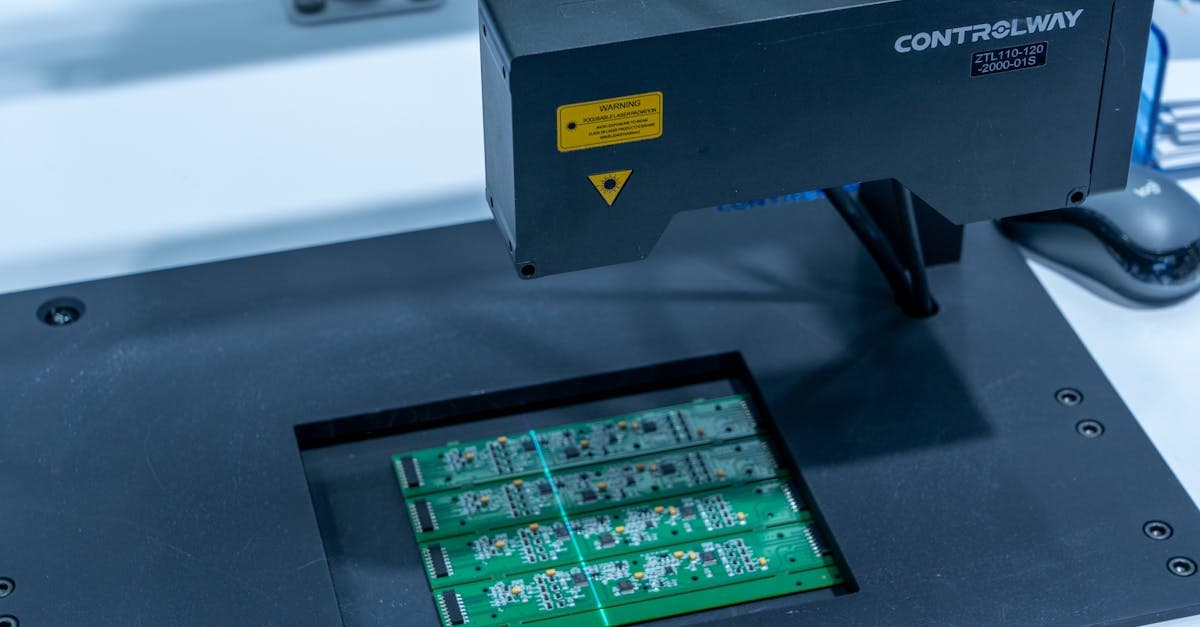
A circuit board manufacturer inspects 50 boards per hour for solder defects. Each board is examined under magnification, and the inspector records whether each board has any solder defects. Over an 8-hour shift, the results are:
| Hour | Boards Inspected | Defective Boards | Proportion Defective |
|---|---|---|---|
| 1 | 50 | 2 | 0.040 |
| 2 | 50 | 1 | 0.020 |
| 3 | 50 | 3 | 0.060 |
| 4 | 50 | 1 | 0.020 |
| 5 | 50 | 2 | 0.040 |
| 6 | 50 | 7 | 0.140 |
| 7 | 50 | 2 | 0.040 |
| 8 | 50 | 3 | 0.060 |
The average proportion defective is 0.053 (21 defective out of 400). Plotting this on a p-chart, hour 6 shows a spike to 14% defective — well above the upper control limit. This signals a special cause that requires investigation. The quality team discovers that a wave solder pot temperature dropped during hour 6, causing poor solder joints. This is attribute data in action: simple pass/fail classifications revealing meaningful process changes.
Why Attribute Data Matters for Production Scheduling
Attribute data directly influences scheduling decisions. When attribute control charts signal a process shift — like the solder temperature drop in the example above — the production scheduler needs to account for potential rework or scrap time in the schedule.
High attribute defect rates on specific operations may indicate that more time needs to be allocated for inspection, or that certain work centers need maintenance before the next production run. Scheduling tools like Resource Manager DB allow planners to build inspection time into operation sequences and adjust schedules when quality data indicates process problems.
Attribute data also helps schedulers prioritize work. If incoming material inspection using attribute sampling shows a batch of raw material is borderline, the scheduler can route those materials to less critical orders or adjust processing parameters and inspection frequency for jobs using that material.
Related Terms
- Variable Data — continuous measurement data that provides more information per sample than attribute data
- Control Chart — statistical charts used to monitor attribute and variable data over time
- P-Chart — the most common control chart for attribute data tracking proportion defective
FAQ
Attribute data is qualitative data that classifies items into discrete categories such as pass/fail, conforming/nonconforming, or defective/acceptable. It is collected through inspections where each item is categorized rather than measured on a continuous scale. Attribute data is widely used because it is fast and inexpensive to collect.
Attribute data categorizes items into discrete groups (good/bad, pass/fail) while variable data measures a continuous characteristic on a numerical scale (diameter in millimeters, weight in grams, temperature in degrees). Variable data provides more statistical information per sample and can detect smaller process shifts, but it requires measurement instruments and takes longer to collect. Attribute data requires larger sample sizes to achieve equivalent statistical power.
The four main attribute control charts are the p-chart (proportion defective with variable sample sizes), np-chart (number defective with constant sample sizes), c-chart (count of defects per unit with constant opportunity), and u-chart (defects per unit with varying sample sizes). The choice depends on whether you are tracking defective units or individual defects and whether your sample size is constant or variable.
This term is part of our Manufacturing & Production Scheduling Glossary. Learn more about quality control, scheduling, and manufacturing terminology.
Frequently Asked Questions
Ready to Transform Your Production Scheduling?
User Solutions has been helping manufacturers optimize their production schedules for over 35 years. One-time license, 5-day implementation.

User Solutions Team
Manufacturing Software Experts
User Solutions has been developing production planning and scheduling software for manufacturers since 1991. Our team combines 35+ years of manufacturing software expertise with deep industry knowledge to help factories optimize their operations.
Share this article
Related Articles

What is ABC Analysis? Definition & Manufacturing Examples
Learn what ABC analysis is in inventory management, how the Pareto principle classifies inventory, and why it matters for scheduling.

What is Acceptance Sampling? Definition & Manufacturing Examples
Learn what acceptance sampling is, how it works in manufacturing, and why it matters for production scheduling and quality control decisions.

What is Advanced Planning & Scheduling (APS)? Definition & Manufacturing Examples
Advanced Planning & Scheduling (APS) definition: software that uses algorithms to optimize production schedules against real constraints. Learn how APS works in manufacturing with examples.