

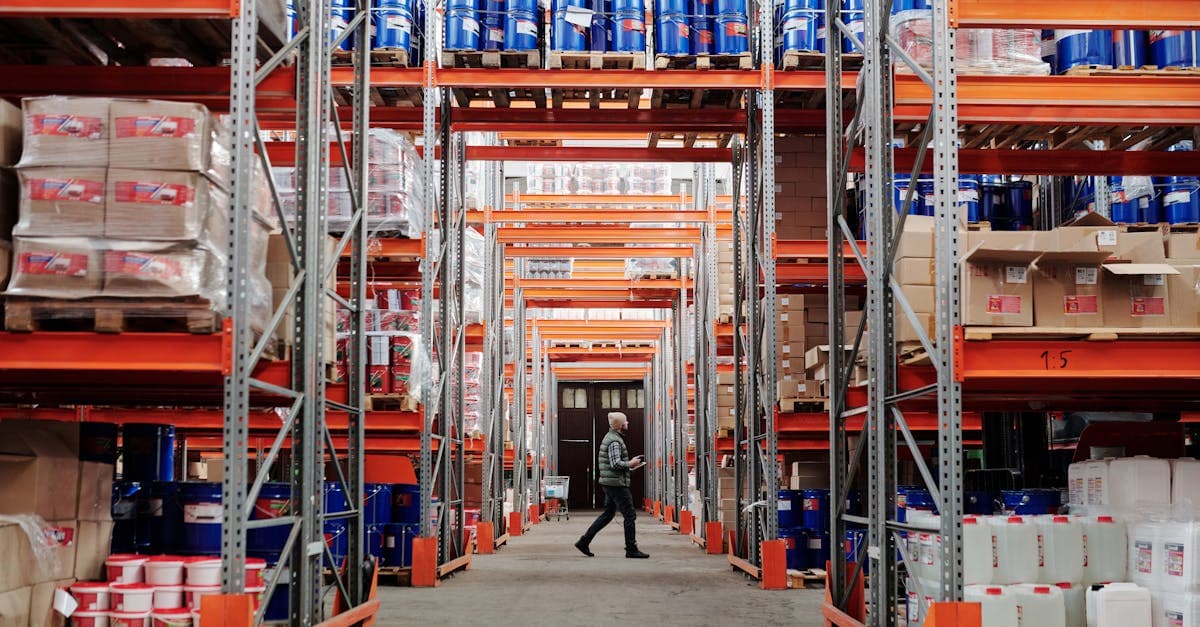
What is WIP Inventory?
WIP inventory — short for work-in-process inventory — refers to all materials, components, and assemblies that have entered the production process but have not yet been completed as finished goods. It includes raw materials that have been issued from the stockroom, parts waiting between operations, items currently being machined or assembled, and products awaiting inspection before moving to the next step. WIP represents the manufacturing pipeline: everything that sits between raw material receipt and finished goods availability.
How WIP Inventory Works
WIP inventory accumulates whenever work is released to the shop floor faster than it can be completed. Every job that leaves the stockroom adds to WIP, and every job that passes final inspection and moves to finished goods reduces it. The balance at any moment reflects both the volume of work in progress and the speed at which it flows through the factory.
On the balance sheet, WIP is valued at the cost of raw materials consumed plus direct labor and overhead applied to date. As a job moves through successive operations, its WIP value increases because more labor and machine time have been invested. This makes WIP the most expensive form of inventory per unit — more costly than raw materials but not yet saleable like finished goods.
High WIP levels are a symptom of scheduling and flow problems. Common causes include large batch sizes, long setup times, unbalanced workstation capacities, excessive rework, and push-based scheduling that releases jobs based on forecasts rather than actual downstream demand. Lean manufacturing principles target WIP reduction because lower WIP directly shortens manufacturing lead time — a relationship described by Little's Law: lead time equals WIP divided by throughput.
WIP Inventory Example
A precision machining shop runs 60 jobs per week through five operations: sawing, turning, milling, grinding, and inspection. Each operation takes an average of one day. Under ideal flow, every job spends five days in WIP — meaning 60 jobs are in process at any time.
However, the shop releases jobs in weekly batches and the grinding department is a bottleneck. Actual WIP averages 140 jobs. Jobs sit in queue an average of three extra days waiting for grinding, and two more days in various inter-operation buffers. Manufacturing lead time stretches to 11 days instead of five.
The shop implements finite capacity scheduling, reduces grinding batch sizes from 20 to 5, and staggers job releases daily instead of weekly. WIP drops to 80 jobs, lead time falls to seven days, and floor space freed from queue storage is repurposed for a new milling center that further relieves the grinding bottleneck.
The financial impact is significant: at an average WIP value of $350 per job, reducing WIP from 140 to 80 jobs frees $21,000 in working capital.
Why WIP Inventory Matters for Production Scheduling
WIP is the bridge between the production schedule and shop floor reality. Scheduling software like Resource Manager DB (RMDB) tracks job status at each operation, providing real-time visibility into WIP levels by work center. When WIP exceeds target levels, the system alerts planners to hold new releases or resequence jobs to relieve overloaded resources.
Finite capacity scheduling inherently controls WIP by not releasing work until downstream resources have capacity. This pull-oriented approach prevents the queue buildup that inflates lead times and makes due date promises unreliable. Lower WIP also makes the shop floor easier to manage — operators can see their priorities clearly when there are 10 jobs in queue rather than 50.
Related Terms
- Throughput — The rate at which WIP converts to finished goods
- Cycle Time — The time to complete one unit through an operation, a key driver of WIP levels
- Kanban — A pull system that limits WIP by controlling the number of active jobs
Frequently Asked Questions
Learn more in our complete manufacturing glossary or production scheduling guide.
Frequently Asked Questions
Ready to Transform Your Production Scheduling?
User Solutions has been helping manufacturers optimize their production schedules for over 35 years. One-time license, 5-day implementation.

User Solutions Team
Manufacturing Software Experts
User Solutions has been developing production planning and scheduling software for manufacturers since 1991. Our team combines 35+ years of manufacturing software expertise with deep industry knowledge to help factories optimize their operations.
Share this article
Related Articles

What is ABC Analysis? Definition & Manufacturing Examples
Learn what ABC analysis is in inventory management, how the Pareto principle classifies inventory, and why it matters for scheduling.

What is Acceptance Sampling? Definition & Manufacturing Examples
Learn what acceptance sampling is, how it works in manufacturing, and why it matters for production scheduling and quality control decisions.

What is Advanced Planning & Scheduling (APS)? Definition & Manufacturing Examples
Advanced Planning & Scheduling (APS) definition: software that uses algorithms to optimize production schedules against real constraints. Learn how APS works in manufacturing with examples.