
Total Productive Maintenance (TPM): Maximizing Equipment Reliability
 User Solutions Team
Total Productive Maintenance (TPM) is a lean manufacturing approach that maximizes equipment effectiveness by engaging every employee — particularly machine operators — in proactive maintenance activities. TPM eliminates the traditional wall between "operators run machines" and "maintenance fixes machines," replacing it with shared ownership of equipment reliability. This manufacturing glossary entry explains TPM, its key metric OEE, real-world results, and the direct connection to production scheduling.
What Is TPM?
TPM was developed at Nippondenso (now Denso) in Japan in the 1960s and formalized by the Japan Institute of Plant Maintenance. It is built on a simple insight: operators know their machines best. They notice the vibration change, the unusual sound, the slight temperature increase that precedes a breakdown — but in traditional organizations, they are not trained or empowered to act on these signals.
TPM rests on eight pillars:
- Autonomous Maintenance — Operators perform daily cleaning, inspection, lubrication, and minor adjustments. They become the first line of defense against equipment deterioration.
- Planned Maintenance — Scheduled preventive and predictive maintenance based on equipment condition data, not just calendar intervals.
- Focused Improvement — Cross-functional teams tackle the top equipment losses using root-cause analysis.
- Early Equipment Management — Design new equipment and processes for maintainability and reliability from the start.
- Quality Maintenance — Establish equipment conditions that produce zero defects.
- Training and Education — Build operator and maintenance skills continuously.
- Office TPM — Apply TPM principles to administrative processes.
- Safety, Health, and Environment — Achieve zero accidents through equipment and workplace improvements.
The OEE Metric
The cornerstone metric of TPM is Overall Equipment Effectiveness (OEE), which measures three dimensions:
- Availability = Operating Time / Planned Production Time (captures breakdowns and changeovers)
- Performance = Actual Output / Theoretical Output (captures slow cycles and minor stops)
- Quality = Good Units / Total Units Produced (captures defects and rework)
OEE = Availability x Performance x Quality
World-class OEE is 85%. Most manufacturers discover their actual OEE is 40-60% when they first measure — revealing that their expensive equipment is effectively operating at half capacity.
Example with Numbers
A manufacturer of precision turned parts implemented TPM across their 20 CNC lathes:
- Baseline OEE: 52% (Availability 78%, Performance 82%, Quality 81%).
- Unplanned breakdowns: 38 per month averaging 2.4 hours each = 91.2 hours of lost production monthly.
- After 12 months of TPM:
- Autonomous maintenance (daily operator checks) reduced breakdowns from 38 to 11 per month — a 71% reduction.
- Average breakdown duration dropped from 2.4 hours to 1.1 hours because operators caught problems earlier.
- OEE improved to 74% (Availability 91%, Performance 88%, Quality 92%).
- Recovered capacity: The OEE improvement from 52% to 74% across 20 machines represented 3,520 additional productive hours per month — equivalent to adding 7 machines to the shop.
- After 24 months: OEE reached 81%. Breakdown-related schedule disruptions dropped by 85%.
- Financial impact: $840,000 in annual recovered capacity value plus $112,000 in reduced emergency maintenance costs.
Why TPM Matters for Production Scheduling
TPM and scheduling have a critical interdependency:
- Reliable machines make reliable schedules. Every unplanned breakdown forces the scheduler to revise the plan, cascade changes to downstream operations, and potentially miss customer due dates. TPM reduces the frequency and duration of these disruptions.
- Maintenance windows must be scheduled. Production scheduling software like RMDB treats preventive maintenance as a scheduled constraint — blocking machine time for TPM activities just like it blocks time for production orders. This ensures maintenance actually happens instead of being perpetually deferred.
- Accurate capacity assumptions: OEE data feeds the scheduling system with realistic capacity figures. A machine with 52% OEE has dramatically less available capacity than one at 81%. Scheduling against actual OEE instead of theoretical capacity produces achievable schedules.
- Fewer schedule revisions: When breakdowns drop by 70-80%, the scheduler spends less time firefighting and more time optimizing.
The lean manufacturing guide explains that TPM provides the equipment reliability that Just-in-Time production requires — without reliable machines, pull systems and small-lot production are impossible because there is no buffer to absorb breakdowns.
Related Terms
- Muri (Overburden) — Equipment overburden from deferred maintenance that TPM prevents by ensuring machines operate within sustainable parameters.
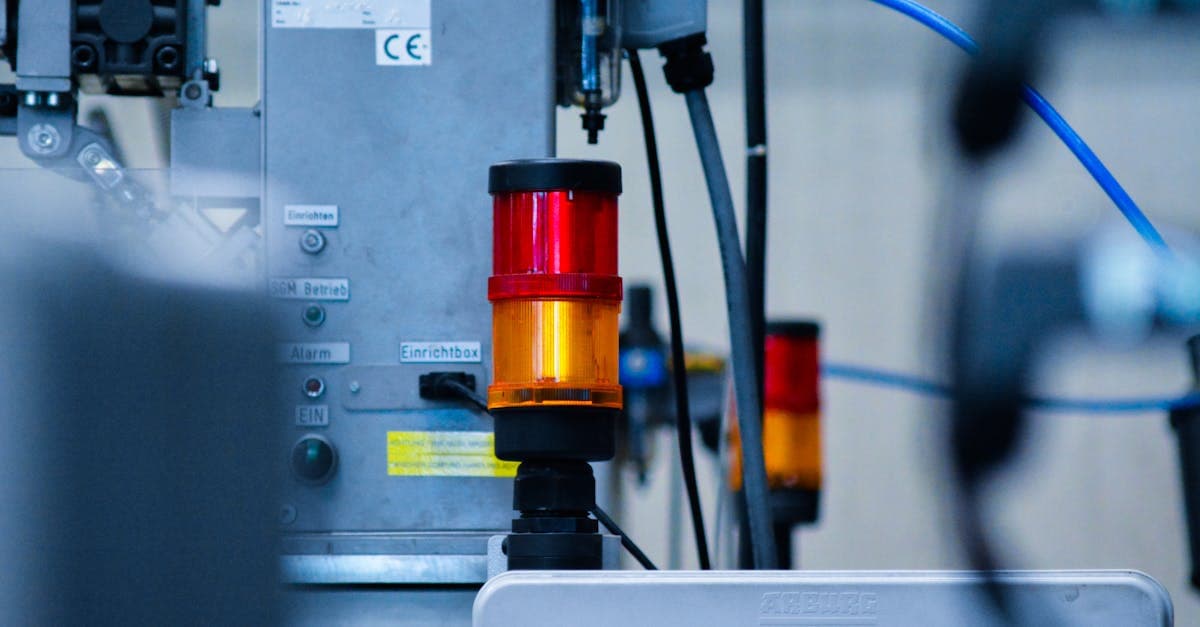
- Andon — The visual alert system that operators use to signal equipment issues detected during autonomous maintenance checks.
- Continuous Improvement — The ongoing improvement cycle that TPM's focused improvement pillar drives through systematic analysis of equipment losses.
See all lean and scheduling terms in the Manufacturing Glossary.
Frequently Asked Questions
Ready to Transform Your Production Scheduling?
User Solutions has been helping manufacturers optimize their production schedules for over 35 years. One-time license, 5-day implementation.

User Solutions Team
Manufacturing Software Experts
User Solutions has been developing production planning and scheduling software for manufacturers since 1991. Our team combines 35+ years of manufacturing software expertise with deep industry knowledge to help factories optimize their operations.
Share this article
Related Articles

What is ABC Analysis? Definition & Manufacturing Examples
Learn what ABC analysis is in inventory management, how the Pareto principle classifies inventory, and why it matters for scheduling.
What is Acceptance Sampling? Definition & Manufacturing Examples
Learn what acceptance sampling is, how it works in manufacturing, and why it matters for production scheduling and quality control decisions.
What is Advanced Planning & Scheduling (APS)? Definition & Manufacturing Examples
Advanced Planning & Scheduling (APS) definition: software that uses algorithms to optimize production schedules against real constraints. Learn how APS works in manufacturing with examples.