

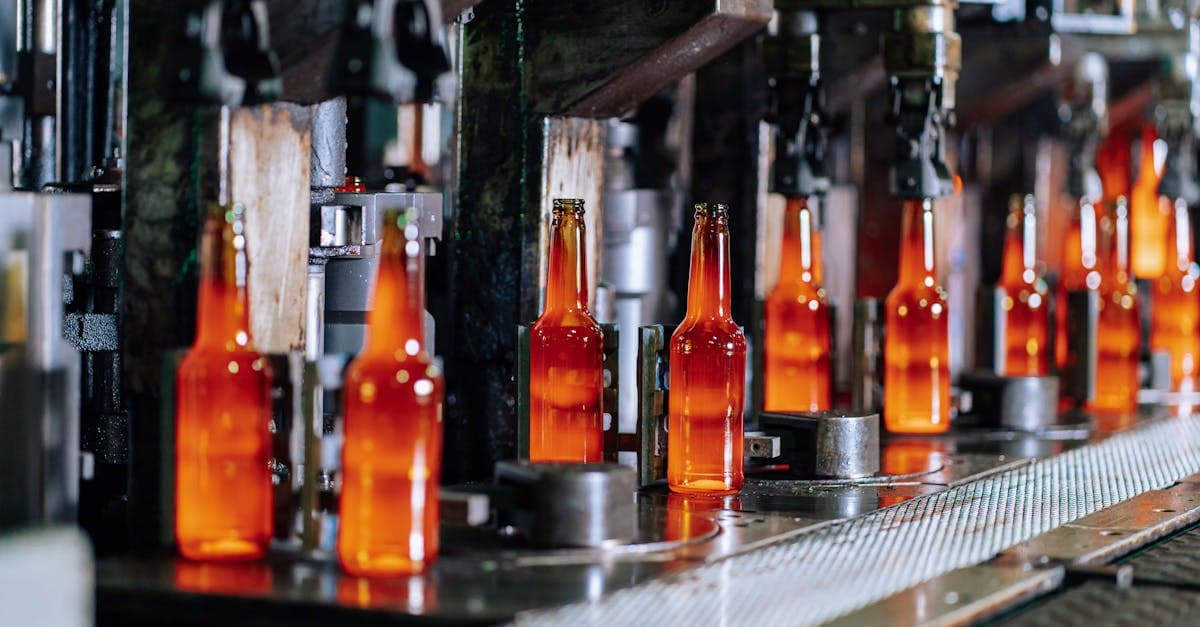
What is a Subassembly?
A subassembly is a partially completed unit composed of individual components that is manufactured as a separate step and subsequently incorporated into a larger final assembly. It is a building block — not a finished product by itself, but a self-contained module that simplifies the construction of the end item. A printed circuit board populated with components, a gearbox with gears and bearings installed, or a wiring harness with connectors attached are all subassemblies. They are built, often tested, and then fed into final assembly where they join other subassemblies and components to become the finished product.
How Subassemblies Work
In a multi-level bill of materials, the finished product sits at the top (level 0). Subassemblies occupy intermediate levels (levels 1, 2, or deeper), and individual raw materials and purchased components sit at the lowest levels. Each subassembly has its own BOM, routing, and production order. It is manufactured on its own timeline and can be built by different workers, on different machines, and even in different facilities than the final assembly.
The decision to use subassemblies is driven by several factors. Complexity management — breaking a 500-component product into 12 subassemblies of 40 components each makes the final assembly process manageable. Parallel production — multiple subassemblies can be built simultaneously on different work centers, shortening overall lead time compared to sequential assembly. Quality — subassemblies can be tested before entering final assembly, catching defects early when they are cheaper to fix. Inventory flexibility — common subassemblies used across multiple products can be stocked for faster response.
Subassemblies create convergence points in the production schedule. The final assembly operation cannot start until all required subassemblies are complete. If one subassembly is late, the entire final assembly is delayed — even if all other subassemblies are ready and waiting.
Subassembly Example
A manufacturer of industrial control panels builds panels with 3 main subassemblies: the power supply module (25 components, 2 hours build time), the PLC and I/O rack (40 components, 3 hours build time), and the operator interface panel (15 components, 1.5 hours build time). Final assembly — mounting the subassemblies in the enclosure, routing wiring between them, and functional testing — takes 4 hours.
Without subassemblies, a single assembler would need to install all 80 components and perform all wiring in sequence — roughly 10.5 hours per panel. With subassemblies, three assemblers work in parallel: one builds power supplies, one builds PLC racks, and one builds interface panels. The longest subassembly (PLC rack) takes 3 hours, then final assembly takes 4 hours. Total elapsed time: 7 hours per panel — a 33 percent reduction. And the shop can produce 3 panels per day instead of less than 1 per assembler.
Each subassembly is electrically tested before entering final assembly. The power supply is load-tested, the PLC rack has its I/O points verified, and the interface panel has its displays and buttons checked. This catches 85 percent of defects at the subassembly level, where troubleshooting is easier and repair costs are lower.
Why Subassemblies Matter for Production Scheduling
Subassemblies create scheduling dependencies that must be carefully managed. The scheduler must ensure that all subassemblies converge at the final assembly station at the right time — too early and WIP accumulates, too late and final assembly is blocked.
Scheduling software like Resource Manager DB (RMDB) handles multi-level scheduling by backward-scheduling from the final assembly due date to calculate when each subassembly must start. It coordinates parallel subassembly production on different work centers and flags convergence conflicts — for example, when a bottleneck machine delays one subassembly while others are ready.
Proper subassembly scheduling prevents the common problem of almost-complete final assemblies waiting for one missing subassembly while consuming floor space and tying up capital.
Related Terms
- Bill of Materials — The structured document that defines the components within each subassembly
- Assembly Line — The production arrangement where subassemblies are combined into finished products
- Assemble-to-Order — A strategy that stocks subassemblies and assembles them upon customer order
Frequently Asked Questions
Learn more in our complete manufacturing glossary or production scheduling guide.
Frequently Asked Questions
Ready to Transform Your Production Scheduling?
User Solutions has been helping manufacturers optimize their production schedules for over 35 years. One-time license, 5-day implementation.

User Solutions Team
Manufacturing Software Experts
User Solutions has been developing production planning and scheduling software for manufacturers since 1991. Our team combines 35+ years of manufacturing software expertise with deep industry knowledge to help factories optimize their operations.
Share this article
Related Articles
What is ABC Analysis? Definition & Manufacturing Examples
Learn what ABC analysis is in inventory management, how the Pareto principle classifies inventory, and why it matters for scheduling.
What is Acceptance Sampling? Definition & Manufacturing Examples
Learn what acceptance sampling is, how it works in manufacturing, and why it matters for production scheduling and quality control decisions.
What is Advanced Planning & Scheduling (APS)? Definition & Manufacturing Examples
Advanced Planning & Scheduling (APS) definition: software that uses algorithms to optimize production schedules against real constraints. Learn how APS works in manufacturing with examples.