
What is a Production Line? Definition & Manufacturing Examples
 User Solutions Team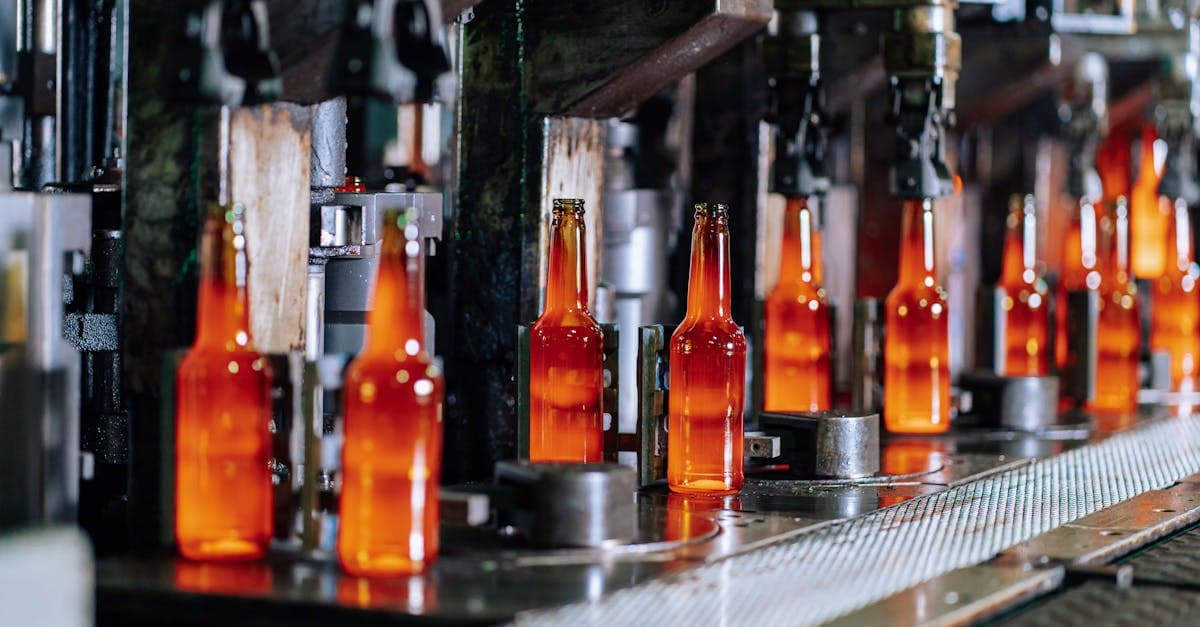
What is a Production Line?
A production line is a sequential arrangement of workstations, machines, and workers where a product moves through a fixed series of operations from raw material input to finished good output. Each station performs a specific task — cutting, forming, welding, painting, testing — and the product advances to the next station upon completion. Production lines are designed for medium to high-volume manufacturing of standardized products, trading flexibility for speed and efficiency.
How Production Lines Work
A production line is organized so that material flows in one direction through a predetermined sequence of operations. The physical layout follows the process flow: the first operation is at one end, the last operation is at the other, and material moves forward without backtracking.
The pace of the line is governed by the bottleneck — the station with the longest cycle time. If station 4 takes 60 seconds per unit while all other stations take 45 seconds or less, the line can produce at most one unit every 60 seconds. Balancing the line — redistributing work so all stations have similar cycle times — is essential for maximizing output and minimizing idle time.
Production lines can be paced or unpaced. A paced line moves products at a fixed rate, typically using a conveyor. Each station has exactly the same amount of time to complete its work. If a station falls behind, the line stops. An unpaced line allows products to move forward when the current station completes its task, with small buffers between stations to absorb variation in processing times.
Material delivery systems — conveyors, gravity feeds, automated guided vehicles — connect stations and maintain the flow. Incoming materials and components are delivered to each station through line-side storage, kitting carts, or automated replenishment systems.
Production Line Example
An automotive brake rotor manufacturer operates a production line with eight stations: raw casting receipt and inspection, CNC rough turning of both faces, CNC finish turning to final thickness tolerance, drilling of mounting holes, balancing and runout check, anti-corrosion coating application, final inspection and measurement, and packaging.
The line processes 480 rotors per 8-hour shift. Cycle times per station range from 55 to 62 seconds, with the finish turning station as the bottleneck at 62 seconds. At 62 seconds per unit, theoretical capacity is 465 units per shift. The additional output to reach 480 is achieved by running the line 30 minutes into the break period with a relief operator at the bottleneck station.
When the manufacturer needs to introduce a new rotor model, the changeover requires reprogramming three CNC stations, adjusting the drilling fixture, and updating the inspection parameters. Changeover takes 2 hours, during which the entire line is nonproductive. The scheduler groups orders by rotor model and minimizes changeovers to no more than two per week.
Why Production Lines Matter for Scheduling
Production line scheduling focuses on sequence optimization, changeover minimization, and line balancing rather than the individual job routing decisions that dominate job shop scheduling. The scheduler determines which products run on which days, in what sequence, and plans changeovers to minimize nonproductive time.
Scheduling software like Resource Manager DB (RMDB) helps production line planners by modeling the line as a single resource with defined changeover times between product families. The software optimizes the production sequence to minimize total changeover time while meeting customer due dates, and it coordinates material delivery schedules with line run schedules to prevent starvation.
For manufacturers with multiple production lines, the scheduling system also decides which products to assign to which lines based on line capabilities, current tooling, and available capacity — a product-to-line assignment problem that becomes complex when demand exceeds capacity on any single line.
Related Terms
- Assembly Line — A specific type of production line focused on joining components together
- Bottleneck — The constraining station that determines maximum production line output
- Takt Time — The required pace of the production line to meet customer demand
Frequently Asked Questions
Learn more in our complete manufacturing glossary or production scheduling guide.
Frequently Asked Questions
Ready to Transform Your Production Scheduling?
User Solutions has been helping manufacturers optimize their production schedules for over 35 years. One-time license, 5-day implementation.

User Solutions Team
Manufacturing Software Experts
User Solutions has been developing production planning and scheduling software for manufacturers since 1991. Our team combines 35+ years of manufacturing software expertise with deep industry knowledge to help factories optimize their operations.
Share this article
Related Articles
What is ABC Analysis? Definition & Manufacturing Examples
Learn what ABC analysis is in inventory management, how the Pareto principle classifies inventory, and why it matters for scheduling.
What is Acceptance Sampling? Definition & Manufacturing Examples
Learn what acceptance sampling is, how it works in manufacturing, and why it matters for production scheduling and quality control decisions.
What is Advanced Planning & Scheduling (APS)? Definition & Manufacturing Examples
Advanced Planning & Scheduling (APS) definition: software that uses algorithms to optimize production schedules against real constraints. Learn how APS works in manufacturing with examples.