
What is Process Manufacturing? Definition & Manufacturing Examples
 User Solutions Team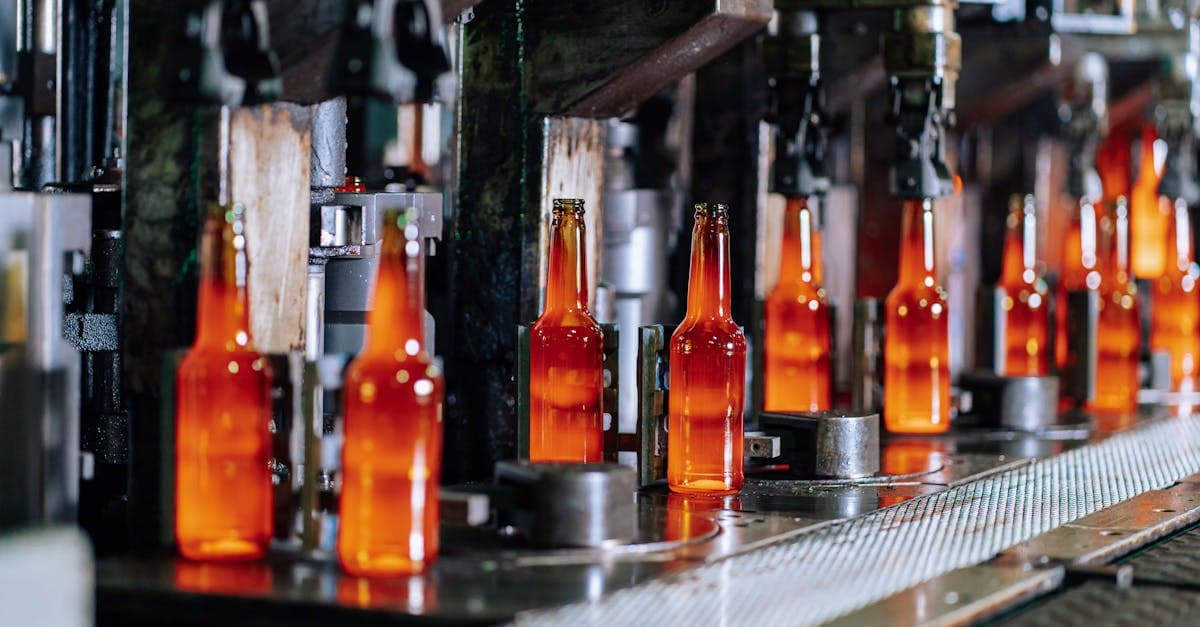
What is Process Manufacturing?
Process manufacturing is a production method where goods are created by combining raw materials and ingredients using formulas or recipes through processes such as mixing, blending, heating, cooling, fermenting, or chemical reaction. Once combined, the finished product cannot be disassembled back into its original components — you cannot un-bake bread or separate paint back into its pigments, solvents, and resins. This irreversibility is the defining characteristic that distinguishes process manufacturing from discrete manufacturing.
How Process Manufacturing Works
Process manufacturing follows a formula or recipe rather than a bill of materials. The formula specifies ingredients, quantities, processing parameters (temperature, pressure, time, speed), and the expected yield. A batch record documents the actual quantities used, processing conditions observed, and quality test results.
Production can be organized as batch processing or continuous processing. In batch processing, a fixed quantity of product is made in a single production run — a 5,000-gallon batch of paint, a 2,000-pound batch of rubber compound, or a 500-liter batch of pharmaceutical solution. Between batches, equipment is cleaned and prepared for the next run. In continuous processing, raw materials flow non-stop through the system and finished product exits continuously — as in oil refining or paper manufacturing.
Process manufacturing has unique planning challenges. Yield variability means the actual output quantity may differ from the theoretical yield due to processing losses, evaporation, or reaction efficiency. Co-products and by-products are common — refining crude oil produces gasoline, diesel, kerosene, and other products simultaneously. Shelf life and potency constraints mean some products must be used within a defined time window. Batch traceability is critical in regulated industries like food and pharmaceuticals, where manufacturers must be able to trace every ingredient back to its source.
Process Manufacturing Example
A paint manufacturer produces interior latex paint in 1,000-gallon batches. The formula calls for 400 gallons of water, 250 pounds of titanium dioxide pigment, 180 gallons of acrylic resin, 30 gallons of coalescent, and smaller quantities of thickeners, defoamers, preservatives, and pH adjusters. Total raw material cost per batch is $3,200.
The batch process takes 6 hours: ingredient weighing and staging (1 hour), sequential addition and high-speed dispersion (2.5 hours), letdown and adjustment (1 hour), quality testing (0.5 hours), and filling into 5-gallon pails (1 hour). Theoretical yield is 1,000 gallons; actual yield averages 975 gallons due to material retained in the mixing vessel, transfer lines, and filling equipment — a 2.5 percent process loss.
The manufacturer runs 4 batches per day on two mixing vessels, producing roughly 3,900 gallons daily. Color changeovers add 45 minutes of cleaning between dissimilar colors. The scheduler groups light colors first and dark colors last to minimize cleaning time, scheduling white batches at the start of each day and deep-base colors at the end.
Why Process Manufacturing Matters for Scheduling
Process manufacturing scheduling differs from discrete scheduling in several ways. Batch sizes are constrained by vessel capacity — you cannot make half a tank of product efficiently. Cleaning and changeover sequences between incompatible products must be planned carefully. Co-product output must be coordinated with demand for each product. And shelf-life constraints create hard deadlines for consuming intermediate products.
Scheduling software like Resource Manager DB (RMDB) helps process manufacturers optimize batch sequencing to minimize changeovers, schedule production to align with ingredient freshness requirements, and coordinate multiple vessels and downstream filling lines to prevent bottlenecks. Finite capacity scheduling ensures vessels are not double-booked and that cleaning time between batches is respected.
Many manufacturers operate hybrid environments with both process and discrete operations — for example, making paint (process) and then assembling paint cans into retail display kits (discrete). The scheduling system must handle both production modes and coordinate the handoff between them.
Related Terms
- Continuous Production — A subset of process manufacturing where material flows without interruption
- Discrete Manufacturing — The contrasting production method that assembles countable units from components
- Changeover — The cleaning and reconfiguration between batches in process manufacturing
Frequently Asked Questions
Learn more in our complete manufacturing glossary or production scheduling guide.
Frequently Asked Questions
Ready to Transform Your Production Scheduling?
User Solutions has been helping manufacturers optimize their production schedules for over 35 years. One-time license, 5-day implementation.

User Solutions Team
Manufacturing Software Experts
User Solutions has been developing production planning and scheduling software for manufacturers since 1991. Our team combines 35+ years of manufacturing software expertise with deep industry knowledge to help factories optimize their operations.
Share this article
Related Articles
What is ABC Analysis? Definition & Manufacturing Examples
Learn what ABC analysis is in inventory management, how the Pareto principle classifies inventory, and why it matters for scheduling.
What is Acceptance Sampling? Definition & Manufacturing Examples
Learn what acceptance sampling is, how it works in manufacturing, and why it matters for production scheduling and quality control decisions.
What is Advanced Planning & Scheduling (APS)? Definition & Manufacturing Examples
Advanced Planning & Scheduling (APS) definition: software that uses algorithms to optimize production schedules against real constraints. Learn how APS works in manufacturing with examples.