

Just-in-Time (JIT) is a lean manufacturing production strategy that eliminates waste by producing only what the customer needs, when they need it, in the exact quantity required. As one of the two pillars of the Toyota Production System alongside Jidoka, JIT manufacturing has transformed how factories worldwide manage inventory, schedule production, and synchronize supply chains. This manufacturing glossary entry explains how JIT works, shows real-world impact, and connects it to production scheduling.
What Is Just-in-Time?
Just-in-Time is built on a simple but radical idea: inventory is waste. Every piece of raw material sitting in a warehouse, every work-in-progress item waiting in a queue, and every finished product sitting in stock before it ships represents tied-up cash, consumed floor space, and risk of obsolescence or damage.
JIT attacks inventory waste by synchronizing three flows:
- Material flow — Raw materials arrive from suppliers just before they are needed in production, not weeks in advance.
- Production flow — Each operation produces only what the next operation needs, when it needs it. No overproduction, no building ahead.
- Delivery flow — Finished goods ship to customers as close to the completion date as possible, minimizing finished goods inventory.
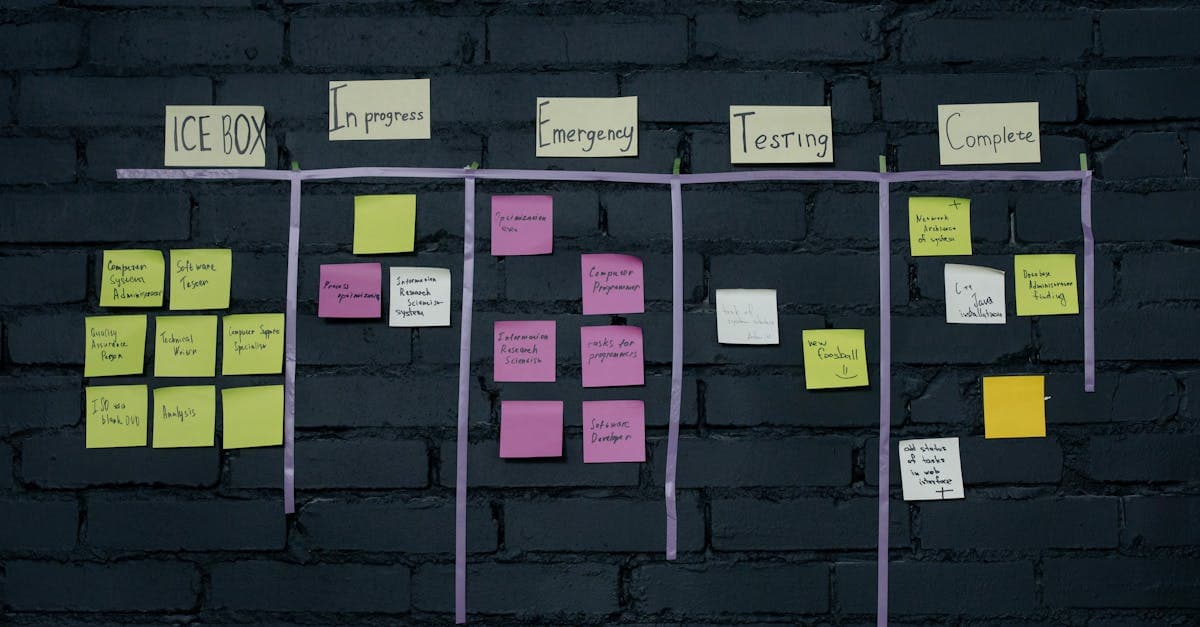
The mechanism that controls this synchronization is the pull system, often implemented through Kanban signals. Nothing is produced or purchased until a downstream signal requests it.
How JIT Works in Practice
JIT requires several supporting systems working together:
- Pull-based scheduling: Production is triggered by actual consumption, not forecasts. Kanban cards or electronic signals flow upstream from the point of use.
- Small lot sizes: Large batches create inventory. JIT pushes toward the smallest economical batch size, supported by SMED to reduce changeover time.
- Level production (Heijunka): Demand is smoothed across the production period so that material requirements are stable and predictable for suppliers.
- Reliable processes: JIT has zero tolerance for equipment breakdowns, quality defects, or missing materials because there is no buffer stock to absorb disruptions. TPM and Jidoka provide this reliability.
- Supplier partnerships: JIT extends beyond the factory walls. Suppliers must deliver smaller quantities more frequently with high reliability.
Example with Numbers
A manufacturer of industrial sensors transitioned from batch-and-queue production to JIT over 18 months:
- Raw material inventory dropped from $1.2M to $480K — a 60% reduction — as materials were ordered in smaller quantities aligned with weekly production needs.
- WIP inventory decreased from $680K to $210K by eliminating inter-operation queues and producing in one-piece flow where possible.
- Finished goods inventory fell from $950K to $380K as production was synchronized with actual shipping schedules.
- Total inventory reduction: $1.76M freed as working capital.
- Lead time shrank from 22 days to 8 days. Customers received orders faster despite lower inventory levels.
- Floor space freed up: 2,800 square feet previously occupied by WIP staging and material storage was reclaimed for a new product line.
- On-time delivery improved from 84% to 96% because shorter lead times gave the shop more flexibility to respond to changes.
Why JIT Matters for Production Scheduling
JIT and production scheduling are inseparable:
- Scheduling drives JIT execution. Without accurate, finite-capacity scheduling, JIT devolves into chaos. The scheduler must know exactly which operations to run, when, and in what sequence to maintain the synchronized flow that JIT demands.
- Smaller batches mean more scheduling decisions. JIT increases the number of production orders because batch sizes are smaller. Production scheduling software like RMDB handles this complexity by automatically sequencing thousands of operations while respecting capacity constraints.
- Material synchronization becomes critical. The schedule must align material arrivals with production start dates precisely — a day early ties up cash, a day late stops the line.
- What-if analysis is essential. JIT's thin buffers mean that any disruption — a machine breakdown, a quality issue, a late supplier — requires rapid rescheduling. Software that can simulate alternative scenarios in minutes, not hours, keeps JIT systems running.
The lean manufacturing guide describes JIT as the pillar that creates flow throughout the factory — and scheduling software is the tool that orchestrates that flow in practice.
Related Terms
- Pull System — The production control method that implements JIT by triggering production based on downstream consumption signals.
- Kanban — The visual signaling system that communicates pull signals between operations in a JIT environment.
- Heijunka — Production leveling that provides the stable demand pattern JIT requires to function effectively.
See all lean and scheduling terms in the Manufacturing Glossary.
Frequently Asked Questions
Ready to Transform Your Production Scheduling?
User Solutions has been helping manufacturers optimize their production schedules for over 35 years. One-time license, 5-day implementation.

User Solutions Team
Manufacturing Software Experts
User Solutions has been developing production planning and scheduling software for manufacturers since 1991. Our team combines 35+ years of manufacturing software expertise with deep industry knowledge to help factories optimize their operations.
Share this article
Related Articles
What is ABC Analysis? Definition & Manufacturing Examples
Learn what ABC analysis is in inventory management, how the Pareto principle classifies inventory, and why it matters for scheduling.
What is Acceptance Sampling? Definition & Manufacturing Examples
Learn what acceptance sampling is, how it works in manufacturing, and why it matters for production scheduling and quality control decisions.
What is Advanced Planning & Scheduling (APS)? Definition & Manufacturing Examples
Advanced Planning & Scheduling (APS) definition: software that uses algorithms to optimize production schedules against real constraints. Learn how APS works in manufacturing with examples.