


Jidoka is one of the two foundational pillars of the Toyota Production System, alongside Just-in-Time. Often translated as "autonomation" or "automation with a human touch," Jidoka builds quality directly into the manufacturing process by detecting abnormalities and stopping production before defects are passed downstream. This manufacturing glossary entry explains how Jidoka works, shows real production impact, and connects it to scheduling performance.
What Is Jidoka?
Jidoka originated in the early 1900s when Sakichi Toyoda invented a loom that automatically stopped when a thread broke. This simple innovation — a machine that could detect its own errors — revolutionized textile manufacturing and became a cornerstone of what would later become the Toyota Production System.
In modern manufacturing, Jidoka means that every process — whether automated or manual — has the built-in ability to:
- Detect when an abnormality occurs (wrong dimension, missing component, equipment malfunction)
- Stop the process immediately, either automatically or through operator intervention
- Fix the immediate condition to restore normal operation
- Prevent recurrence through root-cause analysis and permanent countermeasures
The critical insight is that stopping production to fix a problem costs less than continuing to produce defects. A 5-minute line stop costs far less than discovering 200 defective parts at final inspection — or worse, at the customer's facility.
How Jidoka Works in Practice
Jidoka operates through several mechanisms:
Machine-Level Jidoka
Sensors and devices detect abnormal conditions automatically. A CNC machine monitors spindle load and stops if it exceeds the threshold (indicating a broken tool). An assembly fixture checks for the presence of all components before releasing the part. A press monitors tonnage and halts if the force profile deviates from the standard.
Operator-Level Jidoka
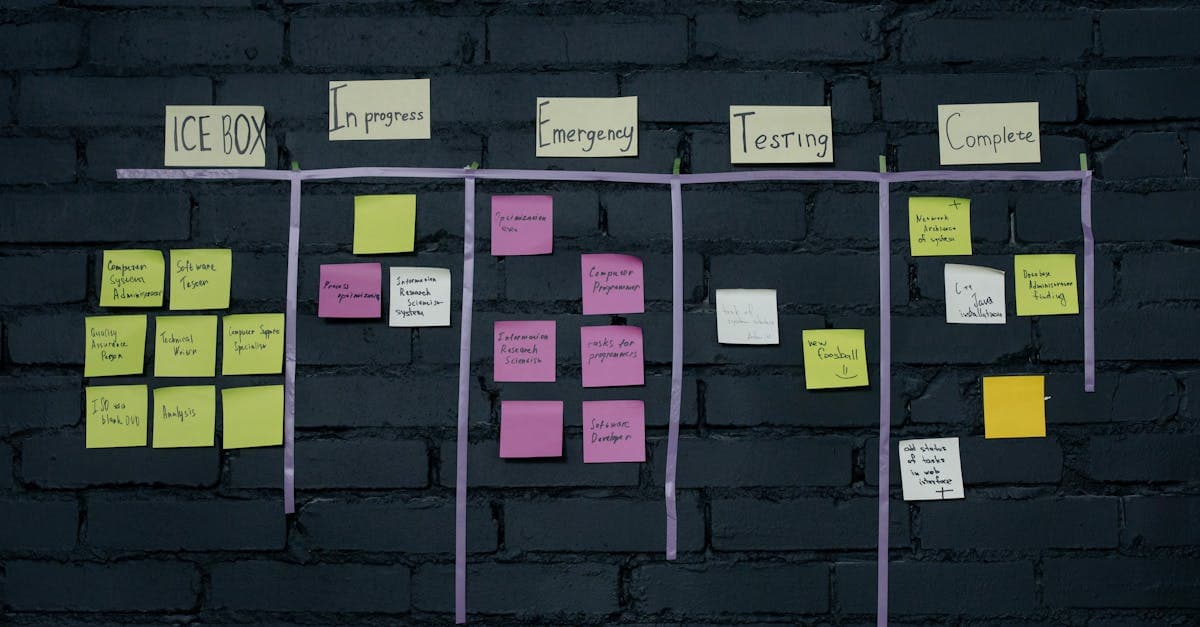
Operators are trained and empowered to stop the line when they see a problem. The Andon system provides the communication mechanism — pulling a cord or pressing a button signals the team leader and, if needed, stops the process. This requires a cultural shift: management must support stopping for quality rather than punishing it.
Process-Level Jidoka
Poka-yoke (error-proofing) devices prevent errors from occurring in the first place. A fixture that only accepts correctly oriented parts. A connector that physically cannot be plugged in backward. These simple, low-cost devices embody the Jidoka principle at the process level.
Example with Numbers
A manufacturer of hydraulic components implemented Jidoka principles across their machining department with 18 CNC machines:
- Installed in-process gauging on critical dimensions. Machines now measure every 10th part and auto-correct offsets or stop if out of tolerance.
- Empowered operators with Andon buttons at every machine. Average Andon activations: 8 per shift initially, dropping to 3 per shift after 6 months as root causes were eliminated.
- Scrap rate dropped from 3.8% to 0.9% — a 76% reduction saving $142,000 annually in material and rework labor.
- Customer returns decreased by 85% because defects were caught at the source, not at final inspection or in the field.
- Inspection headcount was redeployed from 4 full-time inspectors to 2, with the other 2 reassigned to process improvement roles.
Why Jidoka Matters for Production Scheduling
Jidoka has a direct impact on scheduling reliability:
- Fewer defects mean less rework looping through the schedule. Rework orders consume capacity the scheduler planned for new production, cascading delays across the entire schedule.
- Predictable yields allow the scheduler to plan more accurately. When scrap is 3.8%, the scheduler must over-release to compensate. At 0.9%, planned quantities match actual output more closely.
- Shorter lead times result from eliminating the rework loop and reducing inspection queue times. Parts flow through the value stream without detours.
- Higher effective capacity because machines spend time making good parts instead of scrap. Scheduling software like RMDB can load work centers more aggressively when yield rates are high and stable.
The lean manufacturing guide explains how Jidoka and JIT work together — JIT creates the flow, and Jidoka protects its quality.
Related Terms
- Andon — The visual signaling system that enables operators to communicate Jidoka stoppages to the rest of the team.
- Poka-Yoke — Error-proofing devices that prevent defects at the source, embodying Jidoka at the process design level.
- Continuous Improvement — The ongoing improvement process that Jidoka drives by surfacing problems and demanding permanent solutions.
See all lean and scheduling terms in the Manufacturing Glossary.
Frequently Asked Questions
Ready to Transform Your Production Scheduling?
User Solutions has been helping manufacturers optimize their production schedules for over 35 years. One-time license, 5-day implementation.

User Solutions Team
Manufacturing Software Experts
User Solutions has been developing production planning and scheduling software for manufacturers since 1991. Our team combines 35+ years of manufacturing software expertise with deep industry knowledge to help factories optimize their operations.
Share this article
Related Articles

What is ABC Analysis? Definition & Manufacturing Examples
Learn what ABC analysis is in inventory management, how the Pareto principle classifies inventory, and why it matters for scheduling.
What is Acceptance Sampling? Definition & Manufacturing Examples
Learn what acceptance sampling is, how it works in manufacturing, and why it matters for production scheduling and quality control decisions.
What is Advanced Planning & Scheduling (APS)? Definition & Manufacturing Examples
Advanced Planning & Scheduling (APS) definition: software that uses algorithms to optimize production schedules against real constraints. Learn how APS works in manufacturing with examples.