

Heijunka is the lean manufacturing practice of leveling production by both volume and product mix to create a smooth, predictable workflow. Pronounced "hay-JUNE-kah," this Japanese term is one of the most powerful yet underutilized concepts in production scheduling. This manufacturing glossary entry explains how Heijunka works, provides measurable results, and shows why it transforms scheduling performance.
What Is Heijunka?
Customer demand is inherently uneven. One week you might receive orders for 500 units of Product A and 100 of Product B. The next week it flips. Traditional manufacturing responds by building exactly what is ordered when it is ordered — creating wild swings in workload, overtime one week and idle time the next.
Heijunka takes a different approach: convert erratic demand into a level production pattern. Instead of building 500 units of A on Monday through Wednesday and 100 of B on Thursday, you produce a repeating sequence — AAABA AAABA — throughout the week. This levels both the total volume per day and the mix of products within each day.
The two dimensions of Heijunka are:
- Volume leveling — Produce the same total quantity each day rather than surging and starving.
- Mix leveling — Distribute different product types evenly across the production period rather than running large batches of each.
How Heijunka Works in Practice
Implementing Heijunka requires several supporting conditions:
- Fast changeovers: You cannot level the mix if switching between products takes hours. SMED (Single-Minute Exchange of Die) is the prerequisite.
- Reliable equipment: Leveling assumes machines run when scheduled. TPM provides this reliability.
- Finished goods buffer: A small, calculated buffer of finished goods absorbs demand variation so production can stay level even when orders fluctuate.
- Pitch-based scheduling: Production is released in small increments (pitch = takt time multiplied by pack quantity) rather than full-shift batches.
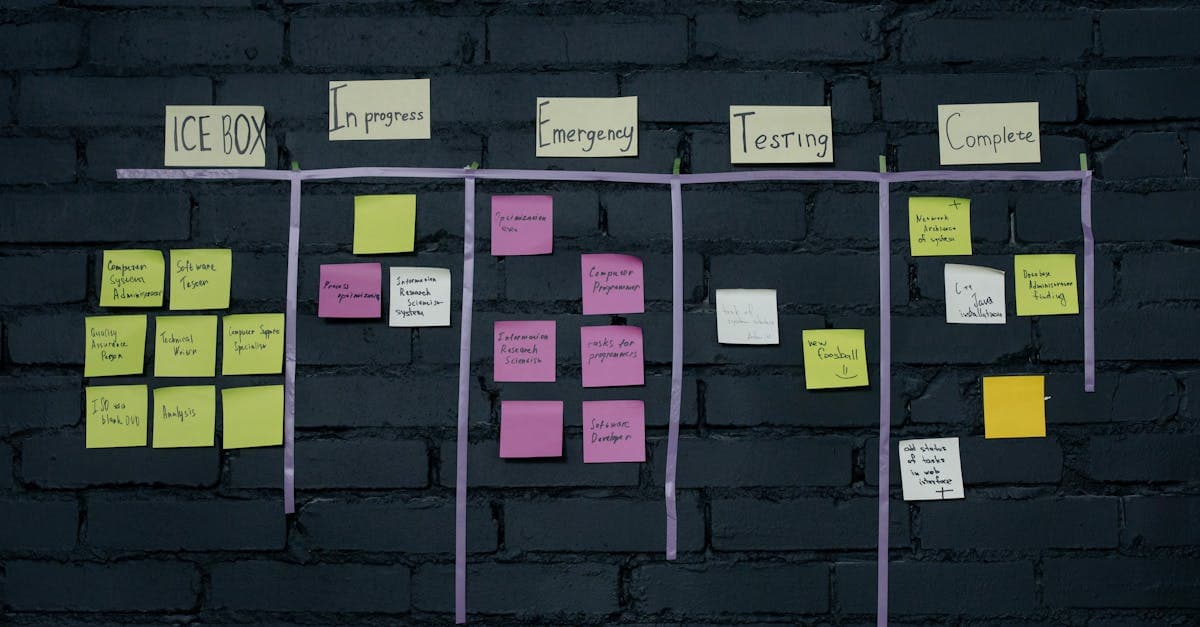
A Heijunka box — a physical or digital scheduling board — makes the level schedule visible to the entire shop floor. Cards representing production increments are placed in time slots, creating a visual sequence that operators follow throughout the day.
Example with Numbers
A manufacturer of industrial valves producing 4 product families implemented Heijunka after reducing changeover times through SMED:
- Before Heijunka: Products were batched weekly. Average batch size was 200 units. WIP inventory averaged $340,000. Lead time was 14 days. Overtime averaged 12% of total hours due to demand surges.
- After Heijunka: Production was leveled to a daily repeating pattern. Average batch size dropped to 40 units. WIP inventory fell to $185,000 — a 46% reduction freeing $155,000 in cash. Lead time decreased to 6 days. Overtime dropped to 3%.
- Schedule adherence improved from 81% to 94% because the leveled production plan was inherently more achievable than the lumpy batch schedule.
- Upstream suppliers benefited from predictable, level pull signals instead of erratic batch orders, reducing material shortages by 60%.
Why Heijunka Matters for Production Scheduling
Heijunka is arguably the lean concept most directly connected to production scheduling:
- Smoother resource utilization eliminates the feast-or-famine cycle that plagues most shops. Machines and people are loaded consistently every day.
- Reduced Mura (unevenness) means less Muri (overburden) on people and equipment, which in turn reduces Muda (waste).
- Smaller batches reduce queue times between operations, shortening total lead time and improving responsiveness to customer changes.
- Predictable patterns make scheduling simpler. When production scheduling software like RMDB applies finite capacity constraints to a leveled production plan, the resulting schedule is more stable and achievable than one based on lumpy batches.
The lean manufacturing guide identifies Heijunka as the foundation of a stable production system — without level production, pull systems and just-in-time delivery become impossible.
Related Terms
- Kanban — The pull-based signaling system that works with Heijunka to control production flow and prevent overproduction.
- Mura (Unevenness) — The type of waste that Heijunka directly eliminates by smoothing production volume and mix.
- Mixed-Model Production — The manufacturing approach that Heijunka enables, producing multiple product types in a leveled sequence.
See all lean and scheduling terms in the Manufacturing Glossary.
Frequently Asked Questions
Ready to Transform Your Production Scheduling?
User Solutions has been helping manufacturers optimize their production schedules for over 35 years. One-time license, 5-day implementation.

User Solutions Team
Manufacturing Software Experts
User Solutions has been developing production planning and scheduling software for manufacturers since 1991. Our team combines 35+ years of manufacturing software expertise with deep industry knowledge to help factories optimize their operations.
Share this article
Related Articles
What is ABC Analysis? Definition & Manufacturing Examples
Learn what ABC analysis is in inventory management, how the Pareto principle classifies inventory, and why it matters for scheduling.
What is Acceptance Sampling? Definition & Manufacturing Examples
Learn what acceptance sampling is, how it works in manufacturing, and why it matters for production scheduling and quality control decisions.

What is Advanced Planning & Scheduling (APS)? Definition & Manufacturing Examples
Advanced Planning & Scheduling (APS) definition: software that uses algorithms to optimize production schedules against real constraints. Learn how APS works in manufacturing with examples.