
What is Discrete Manufacturing? Definition & Manufacturing Examples
 User Solutions Team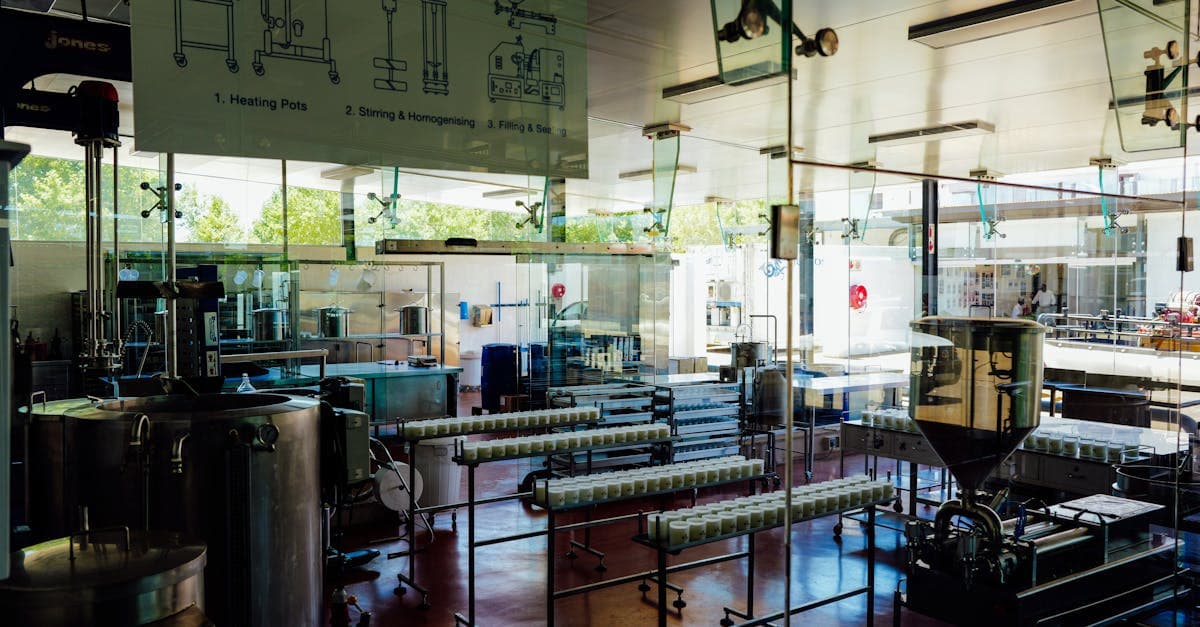
What is Discrete Manufacturing?
Discrete manufacturing is the production of distinct, countable items that can be individually identified, serialized, and tracked through the production process. Each finished product is a separate unit — an automobile, a computer, a piece of furniture, an aircraft engine. These items are assembled from components and subassemblies following a bill of materials and a defined routing. Unlike process manufacturing where ingredients are blended into a continuous output, discrete products can often be disassembled back into their component parts.
How Discrete Manufacturing Works
Discrete manufacturing follows a defined sequence of operations specified in a routing. Raw materials are cut, shaped, machined, or otherwise transformed into components. Components are assembled into subassemblies. Subassemblies converge into final assemblies. Each step has defined work centers, tooling requirements, setup times, and run times.
The production environment can take several forms. Job shops handle low-volume, high-variety custom work with flexible routings. Batch production runs medium quantities of similar products before changing over. Repetitive manufacturing produces high volumes of the same product on dedicated lines. Assembly lines move products through sequential stations at a fixed pace. Most discrete manufacturers operate some combination of these modes.
Bills of materials (BOMs) are central to discrete manufacturing. A BOM defines every component, subcomponent, and raw material needed to build one unit of the finished product, along with quantities, unit of measure, and the level at which each item enters the assembly. Complex products may have BOMs with hundreds or thousands of lines and multiple levels of nesting.
Production orders in discrete manufacturing specify a quantity to produce, the routing to follow, the materials to consume, and the due date. The scheduling system assigns each operation to a specific work center and time slot based on available capacity, material availability, and priority rules.
Discrete Manufacturing Example
A hydraulic valve manufacturer produces 200 different valve models across three product families. Each valve requires 15 to 45 components and follows a routing of 6 to 12 operations: bar cutting, CNC turning, CNC milling, deburring, heat treating, grinding, assembly, pressure testing, and packaging.
The shop operates 30 CNC machines, 4 heat treat ovens, 8 assembly stations, and 3 test stands. Weekly demand averages 1,500 valves with lot sizes ranging from 10 to 200 units. Setup times vary from 20 minutes for similar valve bodies to 90 minutes for a full tool change on the 5-axis mill.
Scheduling 1,500 valves across 30 machines with sequence-dependent setup times and multiple convergence points where subassemblies must arrive simultaneously is beyond manual capability. The manufacturer uses finite capacity scheduling to sequence jobs, minimize total setup time, synchronize subassembly timing, and ensure 95 percent on-time delivery.
Why Discrete Manufacturing Matters for Production Scheduling
Discrete manufacturing presents the most complex scheduling challenges in industry. Every job can have a unique routing, unique material requirements, and unique timing constraints. Subassemblies from different work centers must converge at the right time for final assembly. Setup times depend on the sequence of jobs. Machine capacities vary, and bottlenecks shift as the product mix changes.
Scheduling software like Resource Manager DB (RMDB) is specifically designed for discrete manufacturing environments. It handles finite capacity constraints, sequence-dependent setups, multi-level BOMs, and operation splitting across alternate machines. Visual Gantt charts show planners exactly where each job sits in the schedule and where conflicts or gaps exist.
The variety inherent in discrete manufacturing makes scheduling the primary lever for improving delivery performance, reducing lead times, and increasing throughput — without adding equipment or labor.
Related Terms
- Job Shop — A discrete manufacturing environment that handles high-variety, low-volume custom work
- Bill of Materials — The structured list of components needed to build a discrete product
- Routing — The sequence of operations a discrete product follows through the shop
Frequently Asked Questions
Learn more in our complete manufacturing glossary or production scheduling guide.
Frequently Asked Questions
Ready to Transform Your Production Scheduling?
User Solutions has been helping manufacturers optimize their production schedules for over 35 years. One-time license, 5-day implementation.

User Solutions Team
Manufacturing Software Experts
User Solutions has been developing production planning and scheduling software for manufacturers since 1991. Our team combines 35+ years of manufacturing software expertise with deep industry knowledge to help factories optimize their operations.
Share this article
Related Articles
What is ABC Analysis? Definition & Manufacturing Examples
Learn what ABC analysis is in inventory management, how the Pareto principle classifies inventory, and why it matters for scheduling.
What is Acceptance Sampling? Definition & Manufacturing Examples
Learn what acceptance sampling is, how it works in manufacturing, and why it matters for production scheduling and quality control decisions.
What is Advanced Planning & Scheduling (APS)? Definition & Manufacturing Examples
Advanced Planning & Scheduling (APS) definition: software that uses algorithms to optimize production schedules against real constraints. Learn how APS works in manufacturing with examples.