
Batch Production: Benefits, Drawbacks, and When It Makes Sense
 User Solutions Team
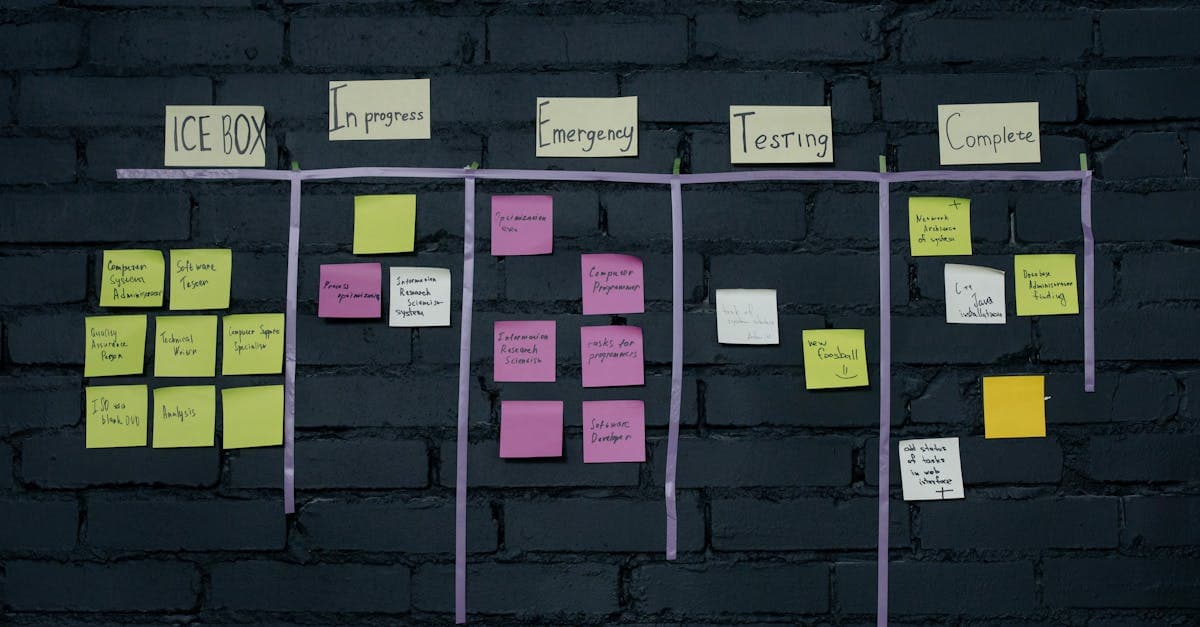
Batch production is a manufacturing method where products are produced in groups (batches or lots) rather than in continuous flow. Each batch is processed through one operation before the entire batch moves to the next operation. While lean manufacturing favors one-piece flow, batch production remains the dominant reality in job shops and many discrete manufacturers. This manufacturing glossary entry explains batch production, its trade-offs, and how scheduling software optimizes batch decisions.
What Is Batch Production?
In batch production, a defined quantity of identical parts is processed together:
- The entire batch is set up and run at Operation 1.
- The batch waits for all pieces to complete, then moves as a group to Operation 2.
- The process repeats through every operation until the batch is complete.
This creates a characteristic pattern: alternating periods of processing and waiting. A batch of 200 parts where each operation takes 1 minute per part requires 200 minutes at each station — and the first part must wait 199 minutes for the rest of the batch to finish before it can move forward.
Batch production is commonly used when:
- Setup times are significant: Running a larger batch spreads the fixed setup cost over more units, reducing the cost per piece.
- Product variety is high: Different products share the same equipment, requiring changeovers between products.
- Demand is intermittent: Products are made in batches to build stock, then the equipment switches to another product.
- Process requirements dictate: Heat treating, painting, and chemical processing often require batch handling.
How Batch Production Works in Practice
Batch decisions involve two key variables:
Production Batch Size
How many units to produce in one run. Larger batches reduce setup cost per unit but increase WIP, lead time, and inventory carrying costs. The Economic Order Quantity (EOQ) formula provides a mathematical starting point:
EOQ = sqrt((2 x Annual Demand x Setup Cost) / Holding Cost per Unit)
However, lean practitioners challenge the EOQ by reducing setup costs through SMED, which shifts the optimal batch size downward.
Transfer Batch Size
How many units move together between operations. The transfer batch can be smaller than the production batch — for example, producing in lots of 200 but transferring in containers of 50. Splitting transfer batches is one of the fastest ways to reduce lead time without changing the production batch.
Example with Numbers
A manufacturer of precision gears compared batch production performance before and after lean improvements:
Before (large batches, batch transfers):
- Production batch: 500 pieces
- Transfer batch: 500 pieces (entire lot moves together)
- 4 operations, each averaging 1.5 minutes per part
- Setup time: 45 minutes per operation
- Lead time per batch: 4 x (45 min setup + 750 min processing + 480 min queue) = 5,100 minutes (10.6 days)
- WIP: 8 batches in process simultaneously = $640,000
After SMED and transfer batch splitting:
- Production batch: 200 pieces (setup time reduced to 15 minutes, making smaller lots economical)
- Transfer batch: 50 pieces (parts move in sub-lots of 50)
- Setup time: 15 minutes per operation
- Lead time per batch: dramatically reduced because the first sub-lot of 50 arrives at Operation 2 after only 90 minutes instead of waiting 765 minutes for all 500 to finish.
- Effective lead time: 3.2 days (70% reduction from 10.6 days)
- WIP: $210,000 (67% reduction)
- On-time delivery: improved from 80% to 92%
The production method was still batch — but smaller, faster batches with overlapped transfers.
Why Batch Production Matters for Production Scheduling
Batch size decisions are one of the scheduler's most powerful levers:
- Batch size determines lead time: Larger batches have longer lead times (more time at each operation) and consume more capacity in large chunks. Production scheduling software like RMDB calculates optimal scheduling by considering setup time, batch size, and due dates together.
- Setup optimization: RMDB can sequence similar jobs back-to-back to reduce total setup time — a scheduling technique called setup minimization or family scheduling. This allows smaller batches without proportionally increasing setup time.
- Transfer batch splitting: Advanced scheduling software separates the production batch from the transfer batch, allowing overlapped operations that dramatically reduce lead time.
- Capacity balancing: Large batches create lumpy demand — one work center is overloaded while another waits. Smaller batches distributed across the schedule create smoother loading, reducing Mura (unevenness).
- Mixed scheduling: Real shops run a mix of batch sizes. RMDB handles this complexity by scheduling each order with its own batch parameters while maintaining overall capacity feasibility.
The lean manufacturing guide explains the lean ideal of reducing batch sizes progressively toward one-piece flow — but acknowledges that batch production remains practical and necessary for many manufacturing environments.
Related Terms
- Flow Production — The continuous production approach that eliminates batch-and-queue processing for suitable product types.
- One-Piece Flow — The lean ideal of producing and moving one unit at a time, the opposite extreme from large-batch production.
- SMED — The changeover reduction methodology that makes smaller batches economically viable by reducing setup time.
See all lean and scheduling terms in the Manufacturing Glossary.
Frequently Asked Questions
Ready to Transform Your Production Scheduling?
User Solutions has been helping manufacturers optimize their production schedules for over 35 years. One-time license, 5-day implementation.

User Solutions Team
Manufacturing Software Experts
User Solutions has been developing production planning and scheduling software for manufacturers since 1991. Our team combines 35+ years of manufacturing software expertise with deep industry knowledge to help factories optimize their operations.
Share this article
Related Articles

What is ABC Analysis? Definition & Manufacturing Examples
Learn what ABC analysis is in inventory management, how the Pareto principle classifies inventory, and why it matters for scheduling.

What is Acceptance Sampling? Definition & Manufacturing Examples
Learn what acceptance sampling is, how it works in manufacturing, and why it matters for production scheduling and quality control decisions.

What is Advanced Planning & Scheduling (APS)? Definition & Manufacturing Examples
Advanced Planning & Scheduling (APS) definition: software that uses algorithms to optimize production schedules against real constraints. Learn how APS works in manufacturing with examples.